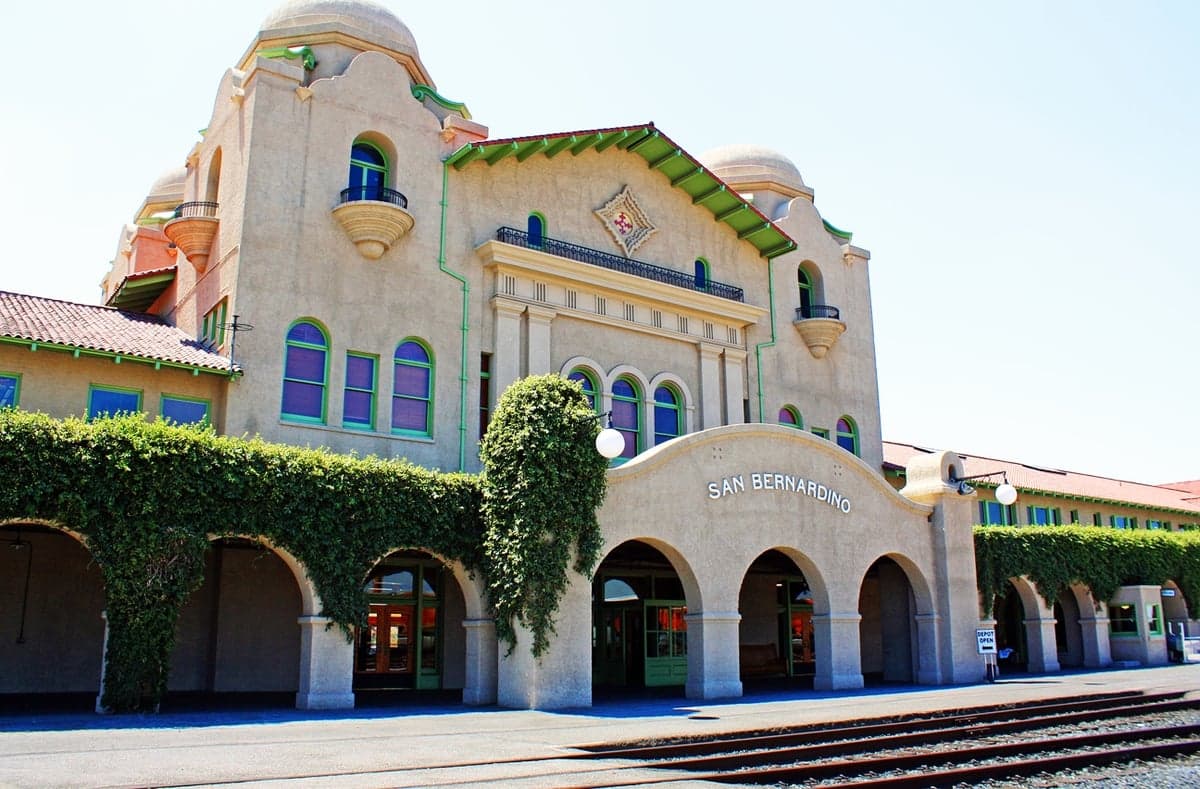
Photo: Wikipedia
Quality of Life in San Bernardino County
A livable area that tracks near national norms for affordability, walkability, and neighborhood health.
What does Quality of Life tell us?
Quality of Life measures an area by evaluating factors like cost of living, nearby amenities, country club access, airport proximity, socioeconomic signals and neighborhood character. For large states, this is a general average — quality of life can vary dramatically between metro areas, suburbs, and rural communities within the same state.
What does this tell us?
Quality of Life measures an area by evaluating factors like cost of living, nearby amenities, country club access, airport proximity, socioeconomic signals and neighborhood character. For large states, this is a general average — quality of life can vary dramatically between metro areas, suburbs, and rural communities within the same state.
Cost of Living
55% above national average
61%
The Real Cost of Living in San Bernardino County for 2026
| Tier | Individual | Family (4) |
|---|---|---|
| Survival | $27k | $51k |
| Comfortable | $92k | $136k |
| Luxury | $137k+ | $213k+ |
| Elite (Top 5%) | $161k+ | $250k+ |
Quality-of-Life Analysis
San Bernardino County, California, is a county of stark contrasts, offering a quality-of-life spectrum that ranges from dense, urbanized valleys to remote desert homesteads and mountain retreats. Spanning over 20,000 square miles, it is the largest county by area in the contiguous United States, and its character shifts dramatically from the commuter-heavy western end to the sparsely populated eastern deserts. The county draws a diverse mix of residents: long-haul commuters seeking affordable housing near Los Angeles, logistics and warehouse workers in the Inland Empire, retirees and outdoor enthusiasts in mountain communities, and those seeking solitude in the Mojave Desert.
Largest towns & population centers
The western "urban crescent" contains the county's major population centers, including the twin cities of San Bernardino (population ~220,000) and Riverside (though Riverside is the seat of neighboring Riverside County). Within San Bernardino County proper, the largest cities are Fontana, Rancho Cucamonga, Ontario, and Victorville. Daily life in these cities is defined by the Inland Empire's logistics economy: massive warehouse and distribution centers, a growing healthcare sector, and a heavy reliance on Interstate 10, Interstate 15, and the 210 Freeway. The average commute across the county is 32.5 minutes, but residents in the western cities often face longer drives into Los Angeles or Orange County for white-collar jobs. These population centers offer dense suburban amenities — shopping malls, chain restaurants, community colleges, and public transit via Omnitrans and Metrolink commuter rail. The area is culturally diverse, with large Latino and Asian American communities shaping the food and retail landscape.
Smaller towns & rural pockets
Beyond the urban corridor, San Bernardino County contains distinct smaller communities that offer a radically different pace of life. In the San Bernardino Mountains, towns like Big Bear Lake (year-round population ~5,000) and Running Springs provide a mountain resort lifestyle with skiing, hiking, and lake recreation, though housing inventory is limited and seasonal tourism drives up costs. In the High Desert, Apple Valley and Hesperia offer a semi-rural feel on larger lots, attracting families and retirees who want more space than the western suburbs provide. Further east, the Mojave Desert contains true rural pockets: Joshua Tree (unincorporated, population ~7,500) draws artists and off-grid homesteaders, while Needles (population ~5,000) sits on the Colorado River border with Arizona, offering a remote, low-cost lifestyle far from urban services. The unincorporated community of Wrightwood in the Angeles National Forest is a small mountain village popular with skiers and hikers. These areas often lack the retail density and public transit of the western cities, and residents must drive significant distances for groceries, healthcare, and employment.
Cost & lifestyle range
The county's overall cost of living index is 155 (55% above the national average), but this figure masks enormous internal variation. At the high end, the western suburbs of Rancho Cucamonga and Chino Hills command median home values well above the county median of $475,000, with newer developments and top-rated school districts driving prices toward $600,000–$700,000. Median rent across the county is $1,706, but rents in these desirable western cities often exceed $2,000 for a two-bedroom unit. At the low end, remote desert communities like Needles and Barstow offer significantly cheaper housing — homes under $200,000 are still findable — but residents trade affordability for limited job opportunities, extreme summer heat, and long drives to medical facilities and shopping. The mountain communities of Big Bear and Lake Arrowhead occupy a middle ground: home prices are elevated due to vacation demand, but daily costs for goods and services are higher due to remote supply chains. The lifestyle trade-off is clear: western cities offer jobs, schools, and amenities at a high price, while the deserts and mountains offer space and nature at the cost of convenience and employment options.
The residents who thrive in San Bernardino County are those who can align their priorities with a specific subregion. Commuters and logistics workers find opportunity in the western urban corridor. Outdoor enthusiasts and remote workers gravitate toward the mountains and desert. Retirees on fixed incomes may find affordability in the High Desert or remote river towns. The county's vast geography ensures that nearly every lifestyle preference — from dense suburban convenience to near-total isolation — is available somewhere within its borders, provided the resident is willing to accept the corresponding trade-offs in commute, climate, and access to services.

Crime in San Bernardino County
WARNING: The crime statistics are unreliable for this jurisdiction. Local authorities have either not reported or under reported their data to the FBI. This could be due to bad intentions, incompetence or technical issues. Regardless, we suggest skepticism.
Higher crime rates than 72% of comparable U.S. locations.
Violent CrimeViolent Crime Analysis
Property CrimeProperty Crime Analysis
Crime Analysis
San Bernardino County’s overall safety picture is defined by a violent crime rate of 434.4 incidents per 100,000 residents and a property crime rate of 1,818.4 per 100,000, figures that place the county above both the California state average and the national median for violent offenses. While the sprawling desert and mountain region contains pockets of genuine tranquility, its largest cities — particularly those with progressive district attorneys and lenient judicial policies — drive the county’s crime numbers upward. Residents in communities like Victorville, San Bernardino city, and Adelanto face notably higher risks, while Rancho Cucamonga, Chino Hills, and Yucaipa report substantially lower crime rates, creating a stark divide between the county’s high-crime urban corridors and its safer suburban enclaves.
Crime in context
San Bernardino County’s violent crime rate of 434.4 per 100,000 is roughly 20% higher than the California state average (approximately 360 per 100,000) and significantly exceeds the national rate of about 380 per 100,000. Property crime at 1,818.4 per 100,000 also runs above the national average of roughly 1,954, though it sits slightly below California’s statewide property crime rate. The county’s numbers are heavily influenced by its largest population centers: San Bernardino city itself reported a violent crime rate near 1,100 per 100,000 in recent years, while Victorville and Adelanto both exceed 700 per 100,000. By contrast, Rancho Cucamonga’s violent crime rate hovers around 200 per 100,000, and Chino Hills falls below 150 per 100,000 — comparable to the safest suburbs in Orange County. The county’s overall figures mask this extreme internal variation, making city-level data essential for anyone evaluating a move to the region.
What residents experience
Daily life for residents in high-crime areas of San Bernardino County involves heightened vigilance around property theft, vehicle break-ins, and gang-related violence. The San Bernardino County District Attorney’s Office, which has faced criticism for progressive charging policies in recent years, operates under a reform-minded approach that prioritizes diversion programs and reduced sentencing for non-violent offenders. Critics argue this approach has contributed to repeat offender cycles in cities like Victorville and Adelanto, where property crime rates exceed 2,500 per 100,000. In contrast, residents in Yucaipa and Chino Hills report far fewer encounters with crime, benefiting from well-funded local police departments and city councils that take a tougher stance on public safety. The county’s vast geography means that a 20-minute drive can separate a neighborhood with nightly gang activity from one where residents leave doors unlocked — a reality that makes hyperlocal research critical.
Neighborhood-level variation within San Bernardino County is extreme and directly tied to municipal governance and judicial philosophy. Rancho Cucamonga and Chino Hills, both in the county’s southwestern corner, benefit from proximity to Los Angeles County’s safer suburbs and maintain conservative-leaning city councils that fund robust police patrols. Meanwhile, San Bernardino city, Victorville, and Adelanto — all cities with larger populations of low-income residents and more progressive local leadership — struggle with gang proliferation, auto theft rings, and a revolving-door justice system. The San Bernardino County Superior Court has also drawn scrutiny for its pretrial release policies, which some law enforcement officials say release accused criminals back onto the streets before trial. For prospective residents, the safest strategy is to focus on the county’s southwestern cities or smaller mountain communities like Big Bear Lake, where crime rates remain a fraction of the county average, while avoiding the high-crime urban corridors that dominate the county’s statistical profile.
* Values derived from national, state, county, city and local statistics and may differ in a specific area. Last updated: 2026-07-12T09:18:14.000Z
Narrative content on this page is AI-generated and may contain mistakes. Verify any details that matter before acting on them.
ReloMaps may earn a commission from affiliate links at no extra cost to you.

