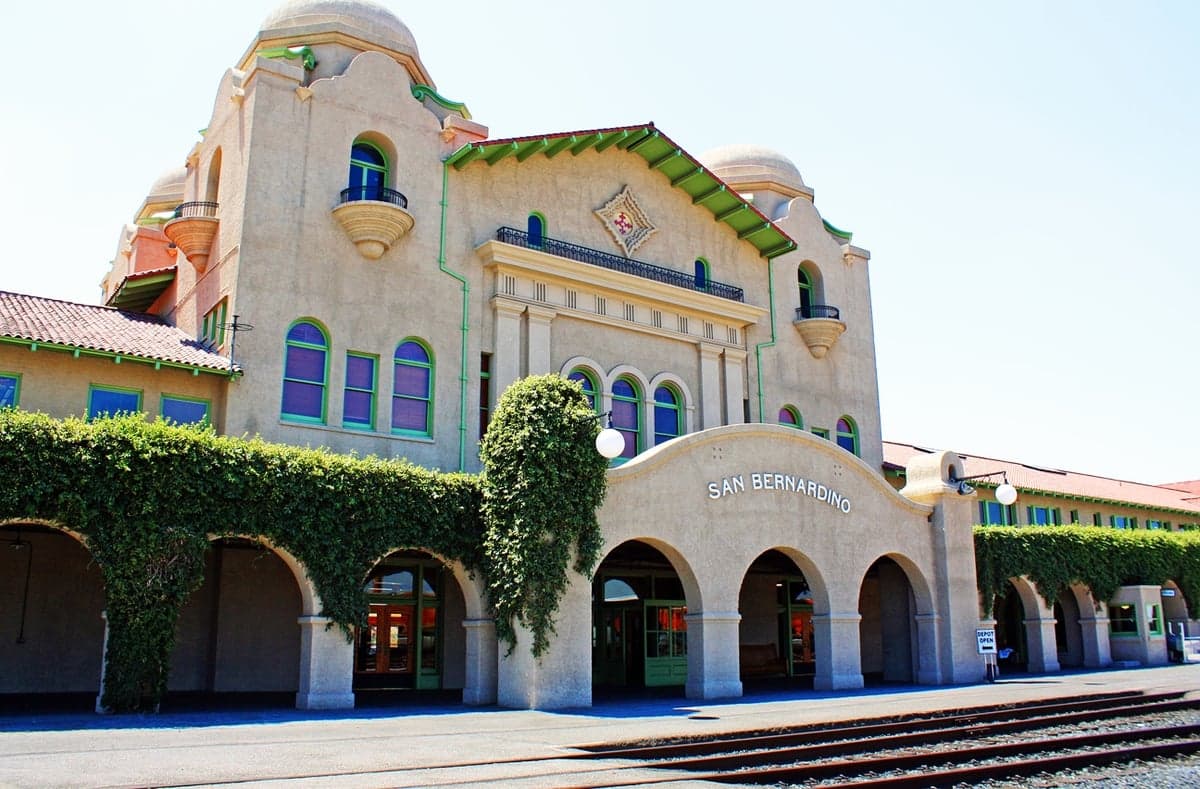
Photo: Wikipedia
Demographics of San Bernardino County
Affluence Level in San Bernardino County
A middle-class area roughly in line with national averages across income, home values, education, and employment.
People of San Bernardino County
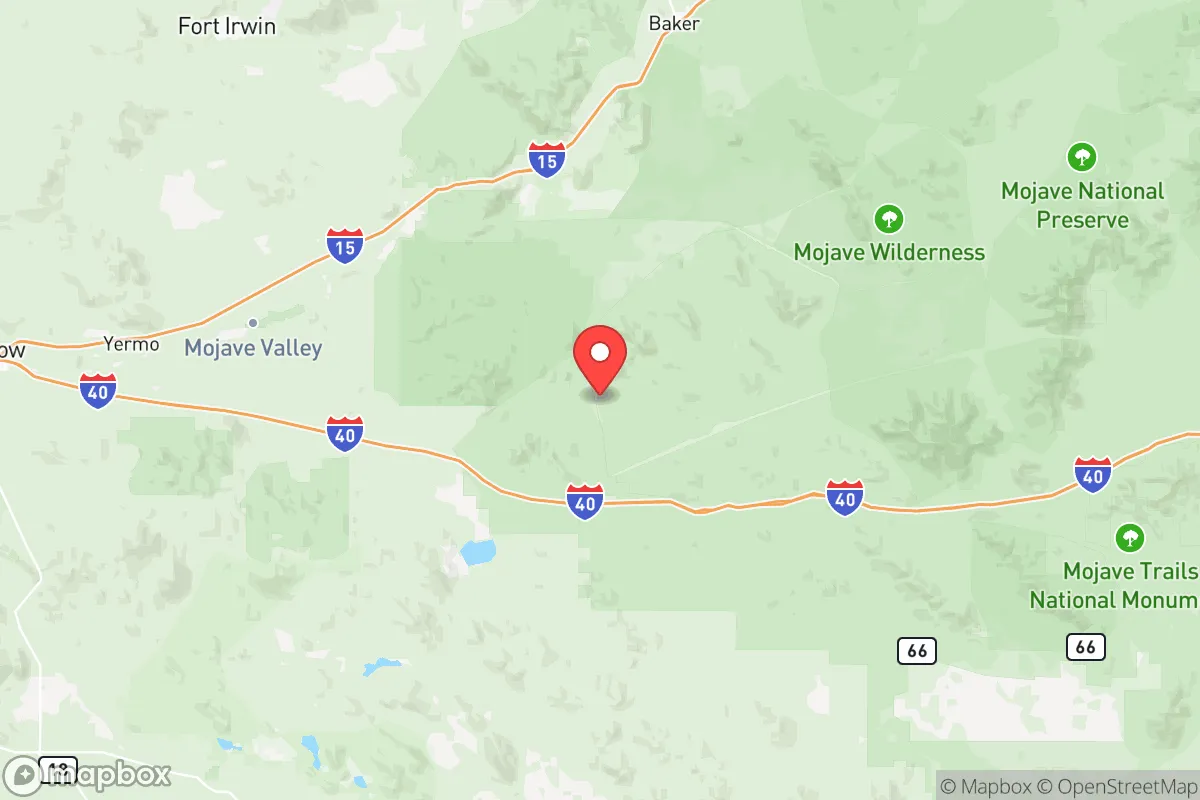
San Bernardino County is home to 2,187,816 residents, making it the fifth-most populous county in California and the largest by land area in the contiguous United States. The population is majority Hispanic (54.6%), with a White non-Hispanic share of 25.6%, Black residents at 7.6%, and East/Southeast Asian communities at 6.9%. This sprawling Inland Empire county—stretching from the Los Angeles exurbs east to the Nevada border—is defined by its desert-mountain geography, logistics-driven economy, and a cultural identity shaped by successive waves of migration from the Midwest, Mexico, Central America, and Asia.
Settlement & growth (pre-1960)
Long before European contact, the region was inhabited by several Native American nations, including the Serrano, Chemehuevi, and Cahuilla peoples, who lived in the Mojave Desert, San Bernardino Mountains, and along the Colorado River for thousands of years. Spanish missionaries established the San Bernardino de Sena Estancia in 1819 near present-day San Bernardino city, though the area remained sparsely populated under Mexican rule. The first major American settlement wave came with the Mormon colonists, who founded San Bernardino in 1851 as a farming outpost before being recalled to Utah in 1857. Their departure opened the door to Anglo-American ranchers and farmers, who established communities like Redlands (1880s) and Colton (1870s) around citrus and grape cultivation.
The railroad transformed the county. The Southern Pacific and Santa Fe lines arrived in the 1880s, turning Barstow and Needles into railroad towns and drawing workers from the Midwest and Great Plains. The 1910s and 1920s brought a wave of Dust Bowl migrants—Okies and Arkies—who settled in the San Bernardino Valley, working in agriculture and the emerging citrus packing industry. During World War II, the military established Fort Irwin (near Barstow) and the Marine Corps Logistics Base in Twentynine Palms, drawing service members and defense workers from across the country. The postwar boom of the 1950s saw rapid suburbanization in Ontario, Rancho Cucamonga, and Fontana, fueled by the Kaiser Steel mill in Fontana (opened 1942) and the expansion of Interstate 10. By 1960, the county's population had grown to roughly 500,000, still predominantly White non-Hispanic, with a small but established Mexican-American community concentrated in San Bernardino city and Colton.
Modern era (post-1965)
The 1965 Hart-Cellar Immigration Act fundamentally reshaped San Bernardino County. The law's family reunification provisions triggered large-scale immigration from Mexico and Central America, accelerating a demographic shift that had begun with the Bracero program (1942–1964). By the 1980s, Hispanic residents had become the largest ethnic group in the county, settling heavily in San Bernardino city, Colton, Rialto, and Bloomington. The 1990s and 2000s saw further growth from Central American immigrants—particularly from Guatemala and El Salvador—who joined established Mexican-American communities in the western Inland Empire.
Domestic migration also transformed the county. From the 1980s onward, Black families from Los Angeles County moved east to Victorville, Hesperia, and Apple Valley in the High Desert, seeking affordable housing and lower crime rates. The Black population in these Mojave Desert communities grew substantially, with Victorville now home to the county's largest Black concentration outside of San Bernardino city. Meanwhile, East and Southeast Asian immigrants—primarily Vietnamese, Filipino, and Chinese—began arriving in the 1980s and 1990s, clustering in Rancho Cucamonga, Chino Hills, and Ontario. These communities are now well-established, with Vietnamese and Filipino grocery stores, churches, and cultural centers visible along the Foothill Boulevard corridor. The Indian-subcontinent population (0.9%) is smaller but growing, with families drawn to the same western suburbs for their schools and newer housing stock.
The 2000s and 2010s saw explosive growth in the High Desert. Victorville grew from 64,000 in 1990 to over 138,000 by 2020, driven by affordable housing and the expansion of Southern California Logistics Airport. The Great Recession hit the county hard—especially the High Desert and San Bernardino city, which filed for bankruptcy in 2012—but population growth resumed by the mid-2010s. The county's foreign-born share (10.1%) is lower than California's overall rate (26.5%), reflecting the region's role as a destination for domestic migrants from within California and other states rather than a primary immigrant gateway.
The future
San Bernardino County is projected to continue growing, though at a slower pace than the 1990s and 2000s. The Hispanic share is expected to increase gradually, approaching 60% by 2040, driven by natural increase (higher birth rates) and continued immigration from Mexico and Central America. The White non-Hispanic share will continue to decline, while the Black and East/Southeast Asian shares are likely to remain stable or grow modestly. The Indian-subcontinent population, though small, is growing faster than any other group in percentage terms, particularly in the western suburbs of Rancho Cucamonga and Chino Hills.
Geographically, growth is dispersing. The western Inland Empire (Ontario, Rancho Cucamonga, Fontana) is largely built out, pushing new development east toward Rialto and San Bernardino city, and north into the High Desert. Hesperia and Apple Valley are adding master-planned communities aimed at families priced out of Los Angeles and Orange County. The county's cultural identity is evolving from a predominantly Anglo-American agricultural and railroad past to a majority-Hispanic, multiethnic present—a shift that is most visible in the western valley cities, where Spanish is heard as commonly as English in retail and public life. For newcomers, the county offers a lower cost of living than coastal California, but with trade-offs in commute times, summer heat, and public services that are still recovering from the 2012 bankruptcy.
San Bernardino County is becoming a more diverse, more suburban, and more logistics-driven region—a place where the American dream of affordable homeownership still exists, but at the cost of long commutes and a climate that demands resilience. For families and individuals moving in now, the county offers a middle ground between the high costs of Los Angeles and the isolation of the true desert, with a population that is increasingly young, Hispanic, and rooted in the Inland Empire's own distinct identity.

* Values derived from national, state, county, city and local statistics and may differ in a specific area. Last updated: 2026-07-12T09:18:14.000Z
Narrative content on this page is AI-generated and may contain mistakes. Verify any details that matter before acting on them.
ReloMaps may earn a commission from affiliate links at no extra cost to you.

