
Photo: Wikipedia
Personal Sovereignty in El Dorado County
Viable for self-reliance. Generally workable, though some barriers may limit total independence.
What does Personal Sovereignty tell us?
Personal Sovereignty measures your capacity for self-reliance and independence with minimal government friction. Higher scores mean fewer barriers between you and the way you want to live... but it assumes you have the space you need and good neighbors.
What does this tell us?
Personal Sovereignty measures your capacity for self-reliance and independence with minimal government friction. Higher scores mean fewer barriers between you and the way you want to live... but it assumes you have the space you need and good neighbors.
State Policy
Energy independence: Importer (33% of energy produced in-state)
Personal Liberty
Homesteading

Personal Liberty Analysis
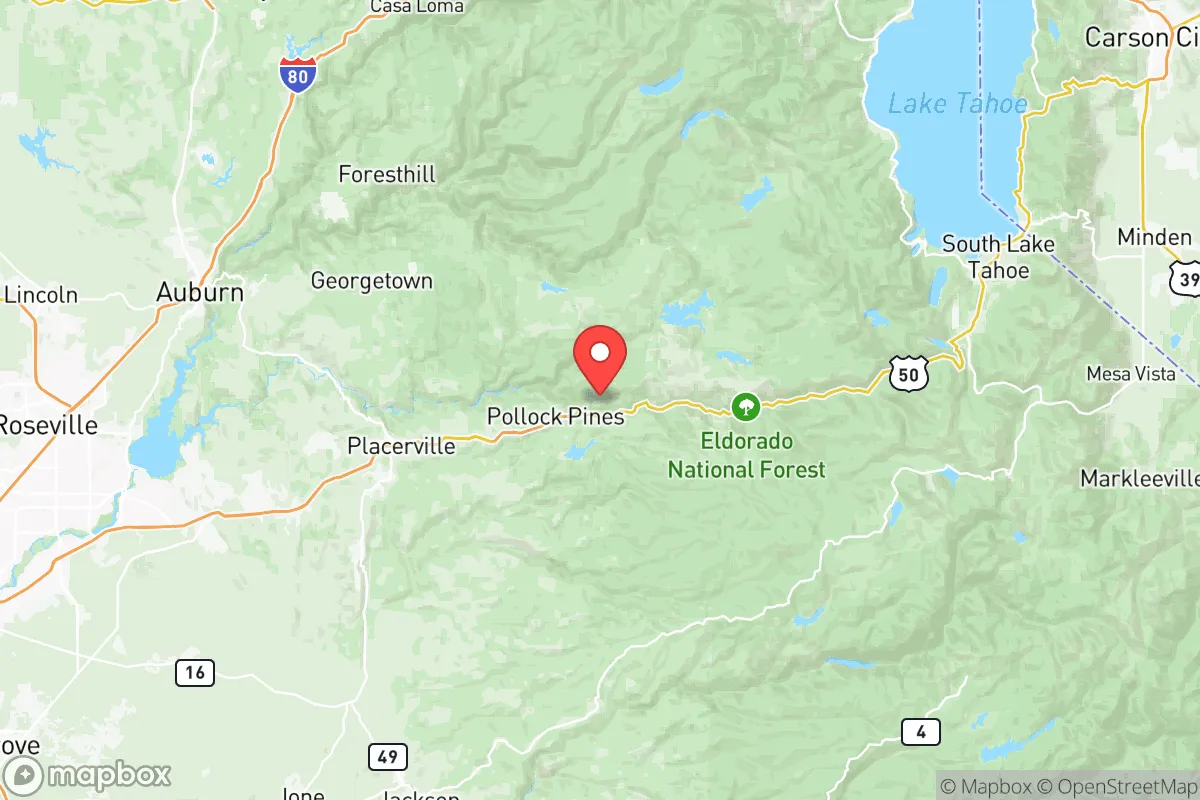
El Dorado County offers one of California’s strongest environments for personal sovereignty, blending a low regulatory footprint with deep-rooted traditions of self-reliance. Unlike the heavily managed urban corridors of the Bay Area or Los Angeles, this Sierra Nevada foothill region—anchored by the county seat of Placerville and stretching from the Sacramento Valley floor up to Lake Tahoe—maintains a governance culture that prioritizes individual autonomy over top-down control. For relocation-minded individuals and families who value independence, the county presents a compelling balance: you get California’s natural beauty and economic opportunities without the heavy-handed oversight found in coastal metros.
Tax burden and regulatory posture in El Dorado County
El Dorado County’s tax environment is notably lighter than much of California, thanks to a combination of state-level protections and local fiscal restraint. The county’s base property tax rate averages around 1.1% of assessed value, consistent with Proposition 13’s cap, but the effective rate often lands lower due to the county’s relatively modest parcel taxes and voter-approved bond measures. Sales tax sits at 7.25% in unincorporated areas—the state minimum—though cities like Placerville and South Lake Tahoe add local surcharges (8.25% and 8.75%, respectively). Income tax remains California’s progressive structure, but the county’s lack of a local income or payroll tax means residents avoid the double-dipping seen in cities like San Francisco. Regulatory posture is distinctly permissive: the county’s general plan emphasizes “rural character” and “limited government intervention,” with zoning codes that favor property rights over bureaucratic hurdles. For example, building permits in the unincorporated areas of Cameron Park and Shingle Springs typically process faster than in Sacramento County, and the county’s planning department explicitly prioritizes “ministerial” approvals for standard residential projects—meaning less discretionary review and fewer public hearings. This light-touch approach extends to business licensing, where home-based enterprises in places like Diamond Springs face minimal red tape compared to the state’s coastal jurisdictions.
Self-defense rights and gun law specifics in the county
El Dorado County is one of California’s most gun-friendly jurisdictions, with local law enforcement and elected officials actively resisting state-level firearm restrictions. The county sheriff’s office issues concealed carry permits (CCWs) under a “shall-issue” policy, and as of 2026, over 4,000 residents hold active permits—a per-capita rate roughly triple the state average. Unlike urban counties like Los Angeles or Santa Clara, where applicants face months-long waits and subjective “good cause” requirements, El Dorado County processes applications in 60 to 90 days with minimal friction. The county’s Board of Supervisors passed a Second Amendment Sanctuary resolution in 2023, declaring that local resources won’t be used to enforce certain state gun laws deemed unconstitutional. This has practical effects: sheriff’s deputies in Pollock Pines and El Dorado Hills generally do not enforce the state’s “unsafe handgun” roster for private transfers, and the county’s gun shows at the Placerville Fairgrounds operate without the harassment seen in some Bay Area venues. Open carry of unloaded firearms is legal in unincorporated areas, though most residents opt for concealed carry. For self-defense in the home, the county’s district attorney has a stated policy of not prosecuting lawful self-defense shootings under California’s “castle doctrine” and “stand your ground” principles—a stance that contrasts sharply with the aggressive prosecution seen in Alameda or San Francisco counties.
Self-reliance and homesteading viability across the county
Homesteading and off-grid living are not just possible in El Dorado County—they’re actively supported by local zoning and land-use policies. The county’s rural residential zones, particularly in areas like Georgetown, Cool, and the unincorporated stretches of Pleasant Valley, allow minimum lot sizes of 1 to 5 acres for single-family homes, with no requirement for connection to municipal water or sewer systems. Wells and septic systems are standard, and the county’s environmental health department processes well permits in 30 to 45 days—far faster than the six-month waits in Sonoma or Marin counties. Off-grid solar is straightforward: the county follows California’s net metering rules but does not impose additional permitting fees for standalone solar systems, and battery storage (like Tesla Powerwalls or Generac units) is explicitly allowed without special use permits. Rainwater catchment is legal and encouraged, with no volume limits for residential use. For those seeking true self-sufficiency, the county’s agricultural zoning (A-20 and A-40) permits livestock, beekeeping, and small-scale farming as a matter of right, with no conditional use permits needed for up to 50 animal units. The county’s “Right to Farm” ordinance protects agricultural operations from nuisance lawsuits, a critical safeguard for homesteaders in areas like Garden Valley or Lotus. However, note that the Lake Tahoe Basin portion of the county (around South Lake Tahoe) has stricter environmental regulations due to the Tahoe Regional Planning Agency, so off-grid projects there face more hurdles—stick to the western slope for maximum freedom.
Personal liberties: parental rights, medical autonomy, speech, and property
El Dorado County stands out for its robust protection of personal liberties across multiple domains. Parental rights are strongly upheld: the county’s school districts—including the El Dorado Union High School District and Buckeye Union Elementary—maintain opt-out policies for sex education and sensitive materials, and the county Board of Education has publicly opposed state mandates on gender identity notification. Medical autonomy is respected, with the county’s public health department taking a hands-off approach to vaccine mandates for adults and children; the county’s COVID-era policies were among the least restrictive in California, with no mask mandates or business closures enforced locally. Speech rights are protected by the county’s “free speech zone” policy, which treats public sidewalks and parks as traditional public forums without requiring permits for expressive activity—a contrast to cities like Sacramento that impose strict permitting. Property rights are the bedrock of the county’s identity: the county’s zoning code explicitly states that “property owners have the right to use their land for any lawful purpose,” and the county’s eminent domain authority is rarely exercised. In practice, this means residents in areas like Rescue and Coloma can build fences, install gates, and post “no trespassing” signs without the aesthetic review boards common in HOA-dominated suburbs. The county’s building department also recognizes “owner-builder” status, allowing homeowners to act as their own general contractor without a state license—a significant freedom for those building their own homes.
Overall, El Dorado County offers one of the highest levels of personal sovereignty in California, rivaled only by a handful of rural counties like Modoc or Siskiyou. For the relocation-minded individual or family who prioritizes autonomy—whether in self-defense, homesteading, or daily life—the county provides a practical, legally supported environment that respects individual choice. While California’s state-level taxes and gun laws remain constraints, the county’s local governance consistently pushes back against overreach, making it a standout destination for those who want to live freely without leaving the state entirely. The trade-off is a higher cost of living than the Central Valley, but for the freedom to live as you see fit, El Dorado County delivers.

* Values derived from national, state, county, city and local statistics and may differ in a specific area. Last updated: 2026-10-04T11:19:19.000Z
Narrative content on this page is AI-generated and may contain mistakes. Verify any details that matter before acting on them.
ReloMaps may earn a commission from affiliate links at no extra cost to you.

