Photo: Wikipedia
Demographics of El Dorado County
Affluence Level in El Dorado County
An upper-middle-class area. Household wealth, education levels, and homeownership run ahead of national benchmarks.
People of El Dorado County
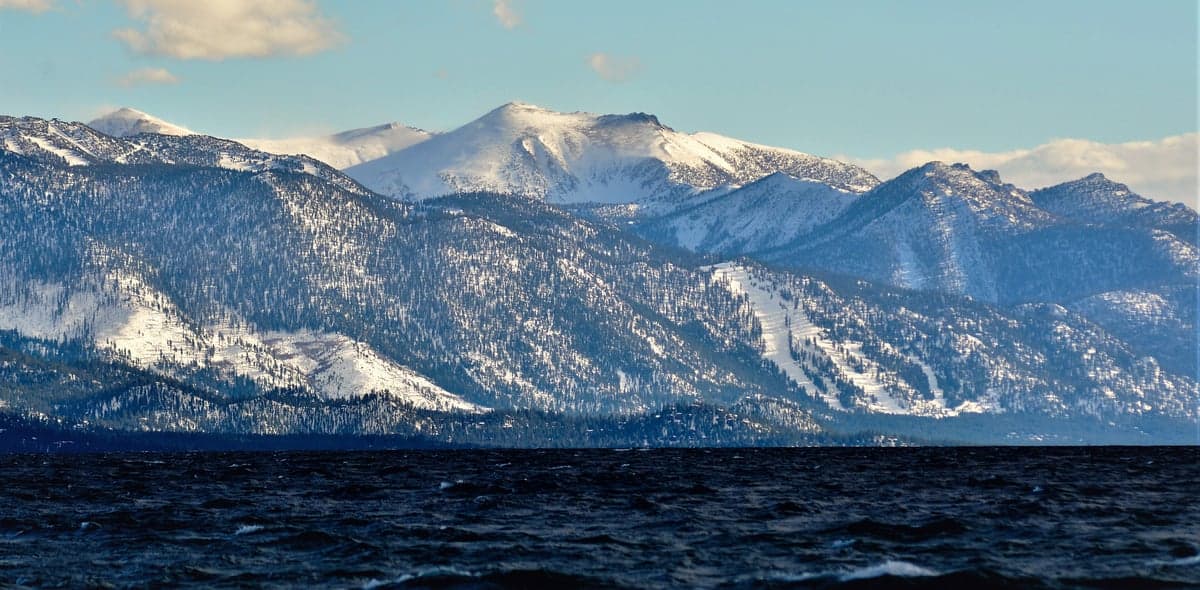
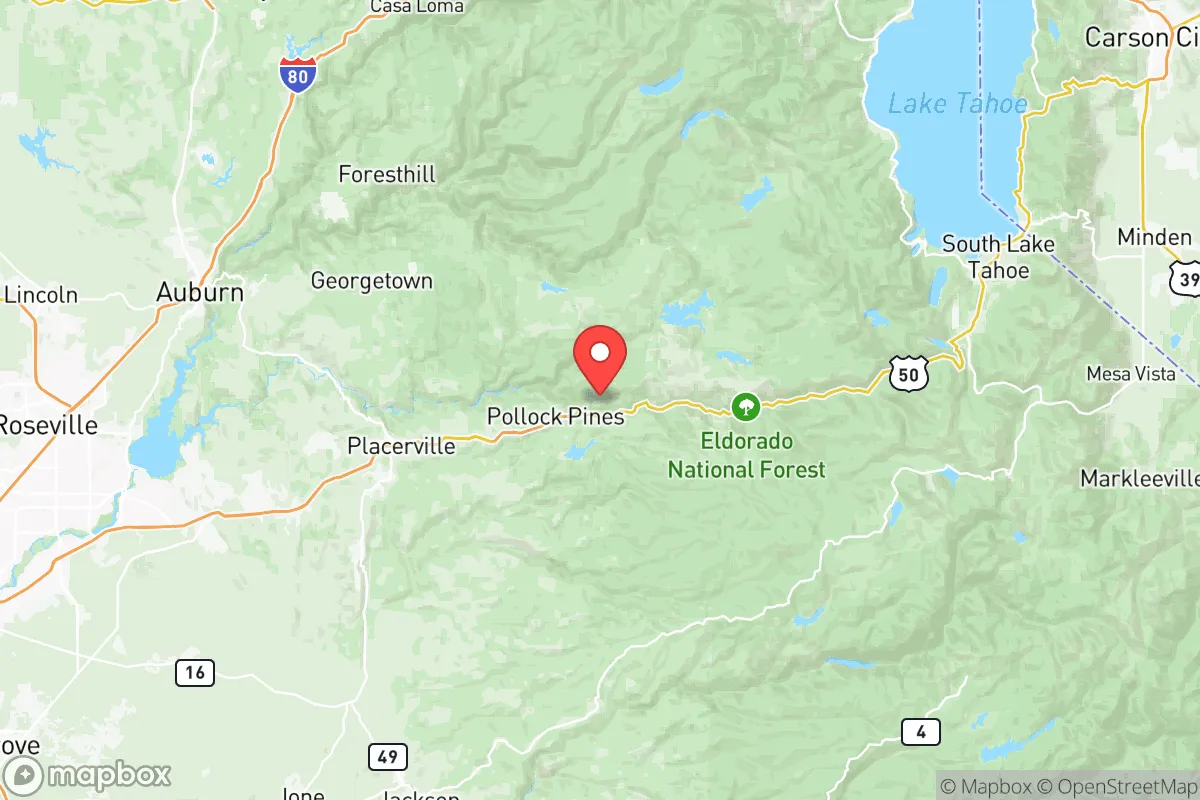
Today, El Dorado County’s 192,299 residents form a predominantly white (74.1%) and politically conservative-leaning population spread across a dramatic landscape that transitions from the Sacramento Valley floor to the Sierra Nevada crest. The county’s identity is shaped by a blend of Gold Rush heritage, suburban expansion from Sacramento, and a growing Hispanic (14.2%) and East/Southeast Asian (4.1%) presence, with a notably low foreign-born share of just 3.9%. This is a place where historic mining towns like Placerville and Coloma coexist with master-planned communities like El Dorado Hills, creating a distinctive character that values both rural tradition and modern opportunity.
Settlement & growth (pre-1960)
Long before European contact, the Nisenan people—a branch of the Maidu—inhabited the western slopes and foothills of what is now El Dorado County, living in small villages along the American River and its tributaries. Their population, estimated at several thousand, was devastated by disease and displacement following the arrival of Spanish and Mexican settlers in the early 1800s, though the Mexican land grant era left a lasting imprint in place names like Coloma and Placerville.
The county’s population exploded with the 1848 discovery of gold at Sutter’s Mill in Coloma, triggering the California Gold Rush. Between 1848 and 1855, an estimated 300,000 fortune seekers poured into California, with El Dorado County at the epicenter. The first wave was overwhelmingly male, young, and diverse: Anglo-Americans from the East Coast and Midwest arrived first, followed by Chinese immigrants who numbered in the thousands by the early 1850s, working claims abandoned by whites and building the county’s early infrastructure. European immigrants—Irish, German, French, Italian, and Cornish miners—flooded into camps that became permanent towns: Placerville (the county seat, originally “Hangtown”), Georgetown, Diamond Springs, and Pollock Pines. By 1860, the county’s population had reached roughly 20,000, making it one of California’s most populous regions.
The post-Gold Rush decades saw a dramatic contraction. By 1900, the population had fallen to about 8,000 as mining declined and many left for other regions. Those who stayed shifted to agriculture, timber, and ranching. Small farming communities like Camino, Shingle Springs, and Garden Valley became the new anchors, settled by second-generation Anglo-Americans and a smattering of European immigrants who worked orchards, vineyards, and cattle ranches. The Chinese population, once substantial, was driven out by discriminatory laws and violence, leaving only a handful of families by the early 1900s. The county remained sparsely populated and economically stagnant through the Great Depression, with the population barely reaching 16,000 by 1940.
World War II and the post-war boom brought the first modern growth spurt. The construction of U.S. Highway 50 and the expansion of Sacramento’s economy drew new residents seeking affordable land and a rural lifestyle within commuting distance. By 1960, the population had climbed to 29,390, still overwhelmingly white and native-born, with a small Hispanic presence from Mexican-American farmworkers who settled in Placerville and Diamond Springs.
Modern era (post-1965)
The 1965 Hart-Cellar Act had a muted effect on El Dorado County compared to coastal California. The county’s foreign-born population remains just 3.9%—far below the state average—reflecting its role as a destination for domestic, not international, migration. The major demographic shift since the 1970s has been suburban expansion from Sacramento, driven by families and professionals seeking larger lots, lower crime rates, and better schools.
The most dramatic growth occurred in the western portion of the county. El Dorado Hills, a master-planned community incorporated in 2000, grew from a few hundred residents in the 1970s to over 50,000 today, attracting upper-middle-class white families, many from the Bay Area and Sacramento. Cameron Park and Shingle Springs experienced similar, if less intense, suburbanization. This wave was overwhelmingly domestic: white, college-educated (38.8% of county residents now hold a bachelor’s degree or higher), and politically conservative, though with a growing libertarian streak.
Hispanic population growth has been steady but not explosive, rising from about 5% in 1990 to 14.2% today. This growth comes from both domestic migration (second- and third-generation Mexican-Americans from the Central Valley) and some international immigration, concentrated in Placerville, Diamond Springs, and South Lake Tahoe, where service-industry jobs in tourism and construction provide employment. The East/Southeast Asian population (4.1%) is a more recent phenomenon, largely composed of Chinese, Filipino, and Vietnamese professionals who moved to El Dorado Hills and Folsom (just across the county line) for tech-sector jobs. The Indian-subcontinent population (0.9%) follows a similar pattern, with families settling in the same western suburbs. The Black population remains tiny at 0.8%, concentrated in Placerville and South Lake Tahoe, with no significant enclave.
The county’s cultural identity has become a point of tension. Longtime residents in the historic foothill towns—Placerville, Georgetown, Pollock Pines—often view the western suburbs as culturally distinct: wealthier, more transient, and less connected to the county’s Gold Rush and timber heritage. The 2020 Census confirmed that the county’s population growth has slowed to about 1% annually, with the eastern portion (including South Lake Tahoe) actually losing residents due to housing costs and wildfire risk.
The future
El Dorado County is projected to become slightly more diverse over the next 20 years, but the pace will be slow. The Hispanic share is expected to reach 18-20% by 2040, driven by natural increase and continued migration from the Central Valley. The East/Southeast Asian and Indian populations will likely grow modestly, concentrated in El Dorado Hills and Cameron Park, as tech-adjacent professionals continue to seek affordable housing within commuting distance of Sacramento and the Bay Area. The white share will decline gradually but remain dominant, likely above 65%.
The biggest wildcard is housing affordability and wildfire risk. The 2021 Caldor Fire, which forced the evacuation of South Lake Tahoe and destroyed hundreds of homes, has made some potential buyers wary of the eastern, forested portions of the county. Development pressure is shifting westward, toward the flatter, less fire-prone areas near the Sacramento County line. This will likely accelerate the suburbanization of El Dorado Hills and Shingle Springs, while the historic foothill towns may see slower growth or even population stagnation.
Culturally, the county is likely to remain a conservative-leaning, family-oriented area with a strong sense of local identity. The divide between the western suburbs and the eastern mountain communities may deepen, but the county’s low crime rates, good schools (particularly in the El Dorado Union High School District), and outdoor recreation opportunities will continue to attract domestic migrants from across California and the West.
For someone moving in now, El Dorado County offers a stable, predominantly white, and politically conservative environment with a growing but still modest Hispanic and Asian presence. The population is becoming more suburban and more educated, but the county’s Gold Rush roots and rural character remain central to its identity. The future points toward continued slow growth, gradual diversification, and an ongoing tension between preservation and development—a place where newcomers can find both community and space, provided they respect the land and its history.

* Values derived from national, state, county, city and local statistics and may differ in a specific area. Last updated: 2026-10-04T11:19:19.000Z
Narrative content on this page is AI-generated and may contain mistakes. Verify any details that matter before acting on them.
ReloMaps may earn a commission from affiliate links at no extra cost to you.

