Photo: Wikipedia
Demographics of Burke, VA
Affluence Level in Burke, VA
An upper-middle-class area. Household wealth, education levels, and homeownership run ahead of national benchmarks.
People of Burke, VA
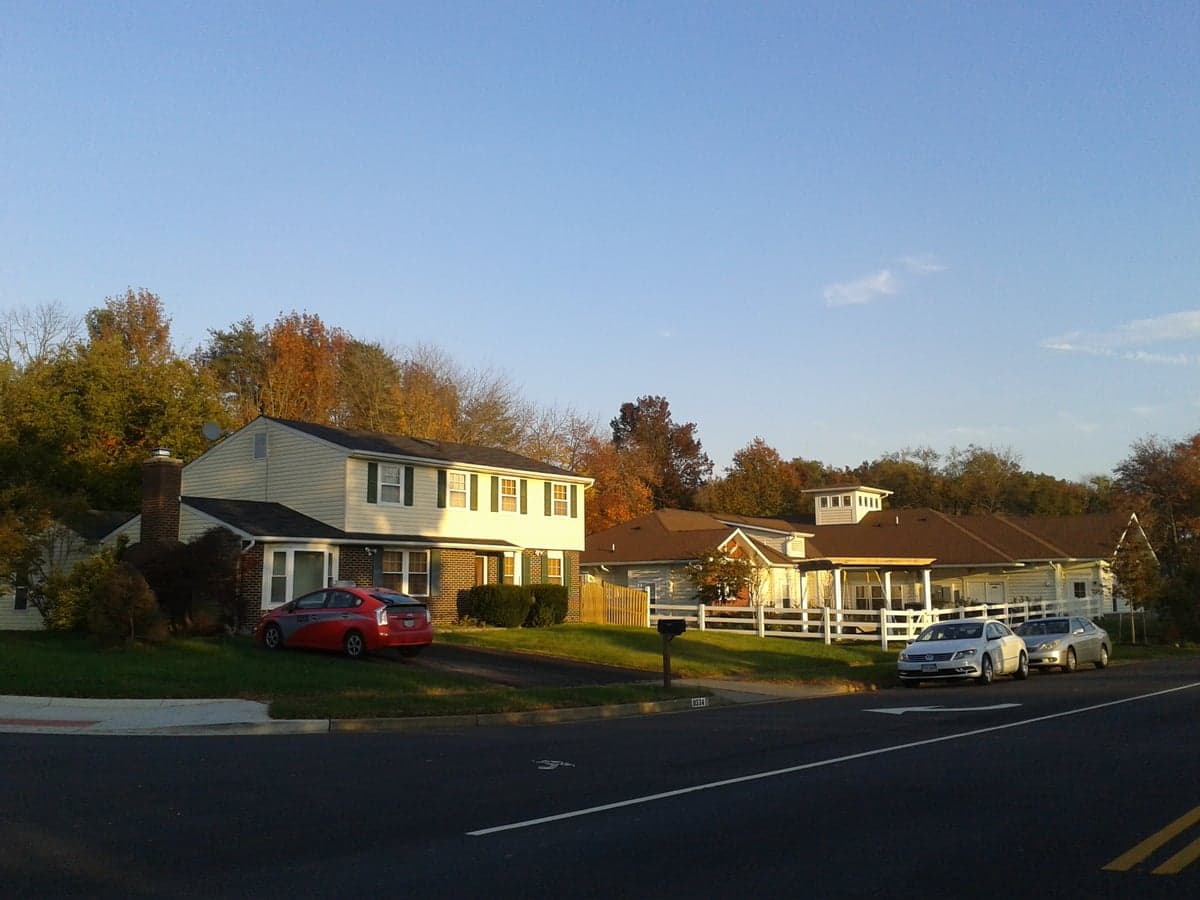
Burke, Virginia, is a predominantly white-collar, family-oriented suburb of Washington, D.C., with a population of 43,336 that is notably well-educated (68.3% college-educated) and increasingly diverse. The community is characterized by its large single-family homes, excellent public schools, and a strong sense of local identity centered around Burke Centre and the historic Burke Village. While still majority white (54.3%), the population has seen significant growth in Hispanic (16.2%) and East/Southeast Asian (12.8%) communities, alongside a smaller but established Indian-subcontinent population (4.3%) and a Black population of 6.4%.
How the city was settled and grew
Burke’s history as a populated place began not as a planned city but as a rural crossroads. The area was originally part of the vast land grants of the 17th and 18th centuries, with early settlers being English and Scots-Irish farmers who established small homesteads along the old Ox Road (Route 123). The arrival of the Orange and Alexandria Railroad in the 1850s created the Burke Station stop, around which a tiny hamlet formed. This original settlement, now referred to as Historic Burke Village, served as a trading post and gathering point for the surrounding agricultural community. For over a century, the population remained sparse and overwhelmingly white, tied to the land and the railroad. The real transformation did not begin until the mid-20th century, when the federal government’s expansion and the rise of the automobile made Fairfax County a prime target for suburban development.
Modern era (post-1965)
The modern population of Burke is almost entirely a product of post-1965 suburbanization. The passage of the 1965 Immigration and Nationality Act opened the door for new waves of immigrants, but Burke’s initial boom was driven by domestic migration. The construction of the Capital Beltway (I-495) and later the Fairfax County Parkway made the area accessible to Washington, D.C. commuters. The defining development was the creation of the Burke Centre planned community in the 1970s, a large-scale, mixed-use development of townhomes and single-family houses that attracted young, professional families—mostly white—seeking good schools and safe streets. This wave established Burke’s core identity as a family-oriented bedroom community.
From the 1990s onward, Burke began to diversify significantly. The strong job market in technology, defense, and federal contracting drew highly skilled immigrants. East/Southeast Asian families, particularly of Korean, Vietnamese, and Chinese descent, began settling in neighborhoods like Rolling Valley and the newer developments around Burke Lake Road, drawn by the reputation of Lake Braddock Secondary School and Robinson Secondary School. The Hispanic population, which now stands at 16.2%, grew steadily, with many families finding affordable housing in the older garden-style apartments and townhomes near the Burke VRE station and along Old Keene Mill Road. The Indian-subcontinent community (4.3%) is a smaller but visible presence, concentrated in the more recently built single-family homes in the South Run and Pohick Estates areas. The Black population (6.4%) is dispersed throughout the community, with no single dominant neighborhood. This demographic shift has made Burke a genuinely multi-ethnic suburb, though it remains less diverse than neighboring Annandale or Springfield.
The future
Burke’s population is trending toward greater diversity, though the pace of change is moderate compared to other parts of Fairfax County. The white share (54.3%) is slowly declining as older residents age in place and younger, more diverse families move in. The Hispanic and East/Southeast Asian populations are expected to continue growing, driven by both international immigration and domestic relocation from more expensive areas like Arlington and Alexandria. The Indian-subcontinent community is also likely to expand, as the area’s strong schools remain a major draw for professional families. New residential construction is limited, with most growth occurring through infill development and the conversion of older apartment complexes. The cultural identity of Burke is evolving from a predominantly white, middle-class suburb into a more cosmopolitan, multi-ethnic community, though it retains a distinctly family-oriented, suburban character. The next decade will likely see further diversification, but Burke will remain a stable, high-opportunity area rather than a rapidly changing one.
For someone moving in now, Burke offers a well-established, safe, and highly educated community that is becoming more diverse with each passing year. It is a place where a family can find excellent schools, a strong sense of neighborhood identity in areas like Burke Centre or South Run, and a population that is increasingly reflective of the broader Washington, D.C. region. The trend is toward a more varied cultural landscape, but the core values of community, education, and stability remain firmly in place.

* Values derived from national, state, county, city and local statistics and may differ in a specific area. Last updated: 2026-08-26T19:04:09.000Z
Narrative content on this page is AI-generated and may contain mistakes. Verify any details that matter before acting on them.
ReloMaps may earn a commission from affiliate links at no extra cost to you.

