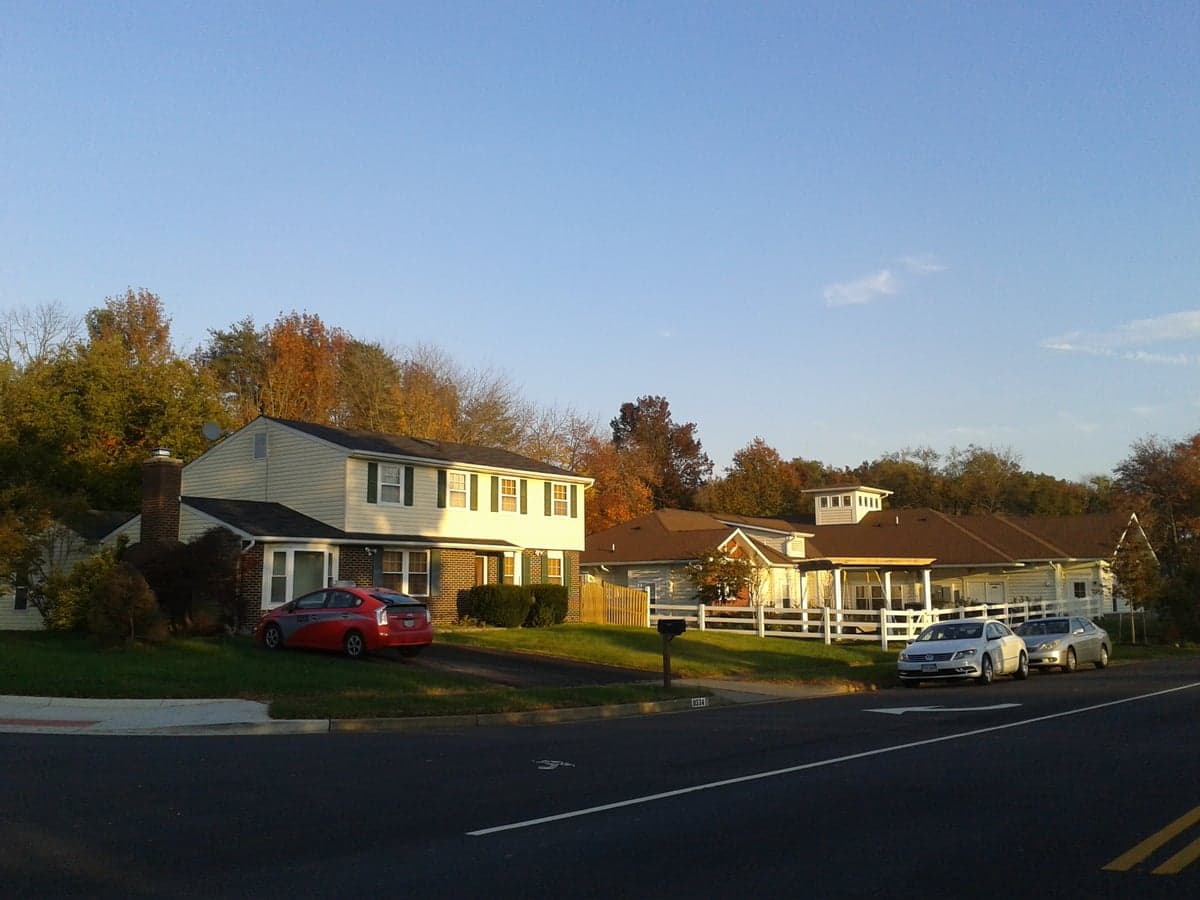
Photo: Wikipedia
Personal Sovereignty in Burke, VA
Viable for self-reliance. Generally workable, though some barriers may limit total independence.
What does Personal Sovereignty tell us?
Personal Sovereignty measures your capacity for self-reliance and independence with minimal government friction. Higher scores mean fewer barriers between you and the way you want to live... but it assumes you have the space you need and good neighbors.
What does this tell us?
Personal Sovereignty measures your capacity for self-reliance and independence with minimal government friction. Higher scores mean fewer barriers between you and the way you want to live... but it assumes you have the space you need and good neighbors.
State Policy
Energy independence: Importer (20% of energy produced in-state)
Personal Liberty
Homesteading

Personal Liberty Analysis
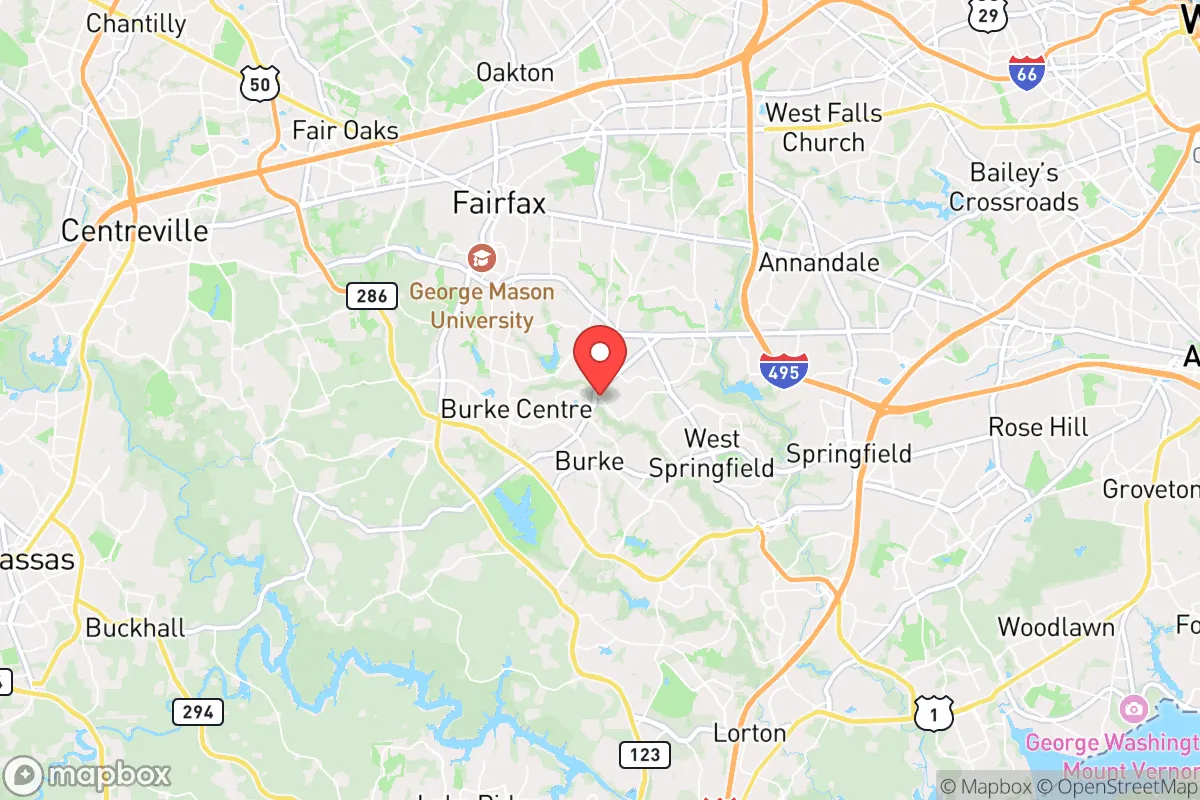
Burke, Virginia, offers a nuanced personal sovereignty environment that reflects its position within Fairfax County—a jurisdiction with substantial regulatory infrastructure—while benefiting from Virginia’s broader shift toward individual liberties under recent state leadership. For residents prioritizing autonomy, the trade-off is clear: you gain access to strong property rights and a relatively light state tax burden compared to neighboring Maryland or D.C., but you operate within a county-level framework that imposes stricter land-use rules, higher local taxes, and more permitting requirements than rural Virginia. The result is a middle-ground sovereignty profile—more freedom than inside the Beltway, less than in Fauquier or Loudoun’s exurban stretches.
Tax burden and regulatory posture in Fairfax County
Virginia’s state-level tax climate is broadly favorable to personal sovereignty. The state income tax is a flat 5.75% (as of 2026), with no progressive brackets, and the state sales tax is 5.3% (6% in Northern Virginia due to an additional 0.7% regional tax). Property taxes are assessed and collected at the county level, and here Burke’s location in Fairfax County matters significantly. Fairfax County’s real property tax rate is $1.115 per $100 of assessed value (2025 rate), which is moderate for the D.C. suburbs but roughly double the rate in more rural Virginia counties like Culpeper or Warren. The county also imposes a personal property tax on vehicles at $4.57 per $100 of assessed value, plus a state portion. This creates a tangible annual cost for families with multiple vehicles. Regulatory posture at the county level is moderately heavy-touch: building permits, zoning variances, and home occupation licenses require formal applications and fees. Fairfax County enforces a strict stormwater management ordinance and tree canopy requirements for new construction, which can add time and cost to property improvements. However, Virginia’s right-to-farm laws and property rights protections at the state level provide a baseline that limits some local overreach—for example, the state’s Dillon Rule interpretation has been moderated by recent legislation allowing localities more flexibility, but Fairfax County exercises that flexibility actively.
Self-defense and gun law specifics in Virginia
Virginia’s firearm laws have shifted toward greater individual sovereignty since the 2021 elections, and Burke residents operate under state preemption that limits local gun ordinances. Fairfax County cannot enact its own bans on firearms in public spaces beyond what state law allows. Virginia is a shall-issue state for concealed carry permits—applicants who meet basic criteria (age 21, no disqualifying criminal record, completion of a firearms safety course) receive a permit without discretionary denial. Open carry is legal for anyone 18 or older who can legally possess a firearm, though local ordinances restrict carrying in government buildings and public parks (the latter was a contentious issue resolved by state preemption in 2020). The state does not require registration of firearms, and there is no waiting period for purchases. Magazine capacity is not restricted by state law. Stand-your-ground principles apply: Virginia law does not impose a duty to retreat before using deadly force in self-defense when lawfully present. For Burke residents, the practical effect is that self-defense rights are robust at the state level, but the county’s law enforcement culture is generally professional and non-confrontational. The nearest gun ranges include the NRA Headquarters Range (about 15 minutes north in Fairfax) and Bull Run Shooting Center (about 20 minutes west in Centreville).
Self-reliance and homesteading viability in Burke
Burke’s residential character is suburban, with most lots ranging from 0.25 to 1 acre in established neighborhoods like Burke Centre, Kings Park, and the older single-family home areas near Burke Lake. Lot sizes large enough for meaningful homesteading—say, 2+ acres with room for gardens, chickens, or small livestock—are uncommon and expensive. Zoning in Fairfax County is predominantly R-1 (single-family residential) with minimum lot sizes of 20,000 to 40,000 square feet in most of Burke, but actual available parcels are smaller. The county allows backyard chickens (hens only, no roosters) on lots of at least 20,000 square feet, with a permit and coop setback requirements. Beekeeping is permitted with registration. However, off-grid living is effectively impossible within Burke’s suburban footprint: the county requires connection to public water and sewer in most areas, and building codes mandate grid-tied electrical systems for new construction. Solar panels are allowed but must comply with HOA covenants in many neighborhoods (Burke Centre has an active HOA with architectural review). Rainwater collection is legal but limited to 1,000 gallons per property without a permit. For residents seeking genuine self-reliance—raising meat animals, growing substantial food, or living without utility connections—Burke is not the right location. The exurban areas of western Fairfax County (Clifton, Centreville outskirts) or neighboring Prince William County offer larger lots and looser restrictions, but within Burke proper, homesteading is limited to hobby gardening and small-scale poultry.
Personal liberties: parental rights, medical autonomy, speech, and property
Virginia’s legal framework provides strong protections for several personal liberties that matter to sovereignty-minded residents. Parental rights are explicitly protected under state law: Virginia Code § 1-240.1 affirms that parents have a fundamental right to direct the upbringing, education, and care of their children. This has practical implications in Fairfax County Public Schools, where parents can opt their children out of specific instructional materials or activities (including sex education) without penalty. The state’s 2022 law requiring school boards to adopt policies for parental notification of changes in a student’s mental or physical health remains in effect, though enforcement varies by district. Medical autonomy is mixed: Virginia does not have a state-level vaccine mandate for adults, but COVID-era executive orders demonstrated that the governor can impose temporary restrictions. The state protects the right to refuse medical treatment, and there is no general requirement for medical procedures without consent. However, Virginia’s certificate-of-need (CON) laws for healthcare facilities limit competition and choice in medical services—a regulatory constraint that affects availability of alternative or direct-care providers. Free speech and property rights are well-protected. Virginia is a one-party consent state for recording conversations, and there are no state-level restrictions on political speech or assembly beyond standard public safety regulations. Property rights benefit from Virginia’s strong eminent domain protections (post-Kelo reforms limit takings for private economic development) and a relatively straightforward eviction process for landlords. Fairfax County does impose rental inspection programs and landlord licensing, which adds a layer of bureaucracy for property owners.
Overall, Burke’s personal sovereignty profile is best described as moderate with state-level buffers. The tax burden is higher than in rural Virginia but lower than in Maryland or D.C., and the regulatory environment is more intrusive than in exurban counties but less so than inside the Beltway. For a family or individual who values self-defense rights, parental control over education, and property protections, Burke offers a workable balance—you get the infrastructure and services of a well-run suburb without sacrificing the core legal freedoms that Virginia’s state government has strengthened in recent years. The trade-off is that true self-reliance (homesteading, off-grid living, minimal government interaction) requires moving farther west or south. For the reader who wants a safe, well-served suburb with solid constitutional protections and a conservative-leaning legal baseline, Burke delivers—but it is not a low-regulation frontier.

* Values derived from national, state, county, city and local statistics and may differ in a specific area. Last updated: 2026-08-26T19:04:09.000Z
Narrative content on this page is AI-generated and may contain mistakes. Verify any details that matter before acting on them.
ReloMaps may earn a commission from affiliate links at no extra cost to you.

