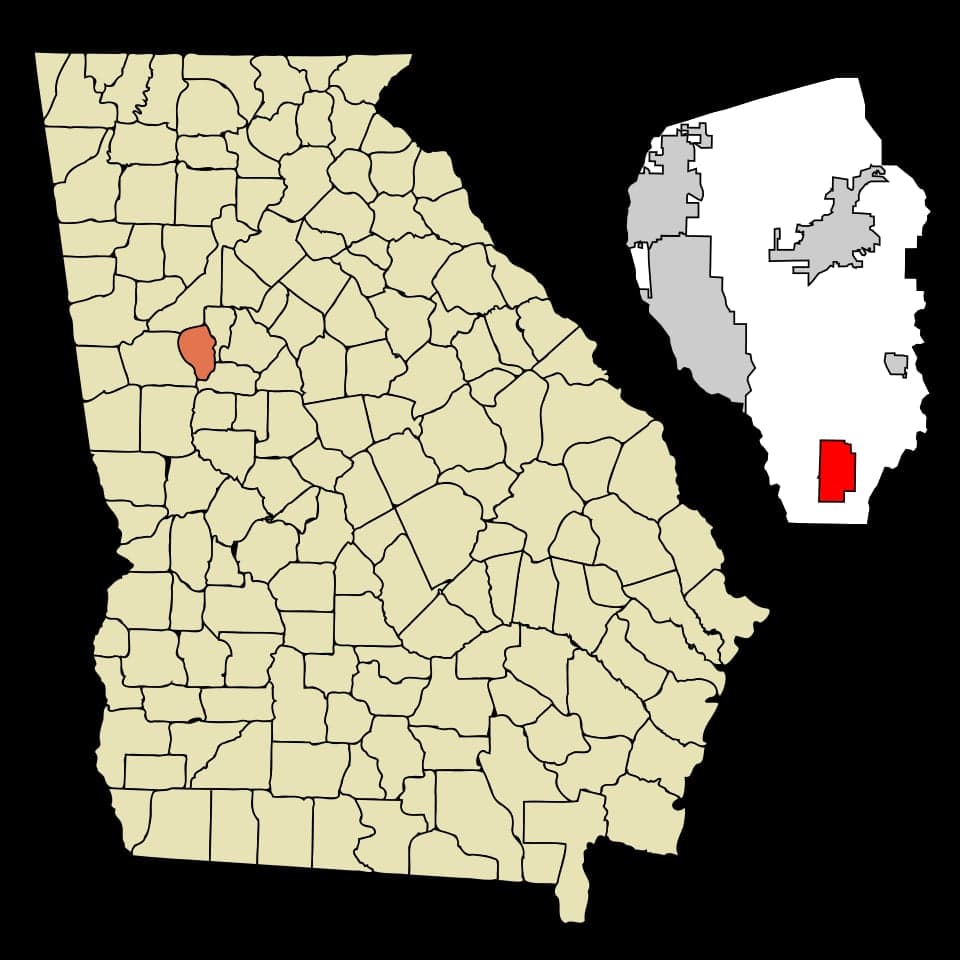
Photo: Wikipedia
Strategic Assessment of Brooks, GA
Workable tactical position. Some exposure to population density or targets, but generally defensible in a crisis.
What does the Strategic Assessment tell us?
Our Strategic Assessment grades tactical survivability of an area. Major population centers, military targets, fallout zones, natural disasters, and border exposure all drive risk — lower exposure means a more defensible position in a crisis.
This is heavily inspired by Joel Skousen's Strategic Relocation book. Highly recommended you checkout the book ($)What does this tell us?
Our Strategic Assessment grades tactical survivability of an area. Major population centers, military targets, fallout zones, natural disasters, and border exposure all drive risk — lower exposure means a more defensible position in a crisis.
This is heavily inspired by Joel Skousen's Strategic Relocation book. Highly recommended you checkout the book ($)Strategic Pillars
Key Distances
Regional Safe Places
Below is our recommended "safe zones" in Georgia and the surrounding area based on our strategic heuristics. For most people, it's unrealistic to live in a “safe zone” full-time due to work, family or other personal reasons. They tend to be more rural. However, many of these areas are perfect for second homes and retreat properties that double as a vacation home or even a short-term rental.
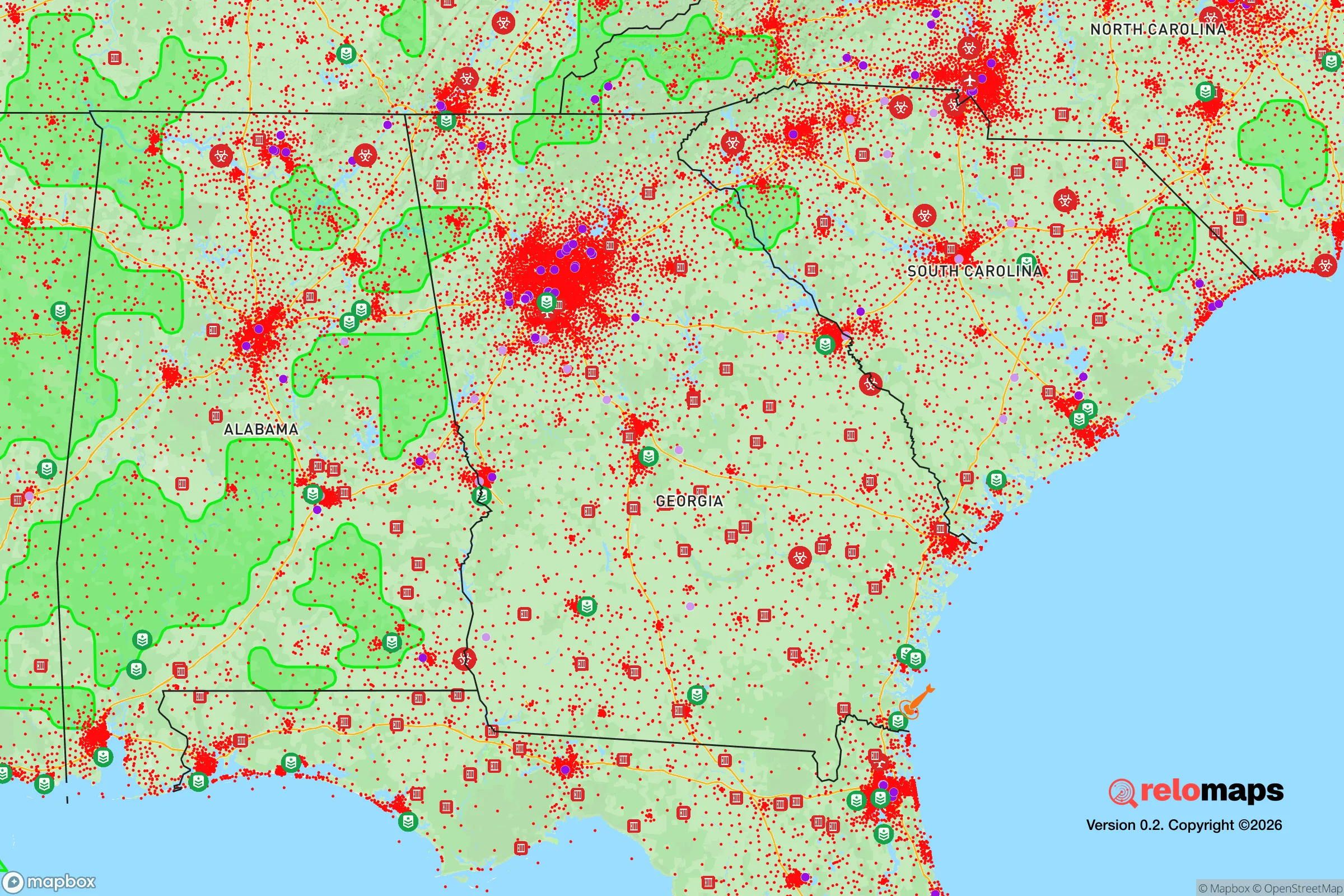
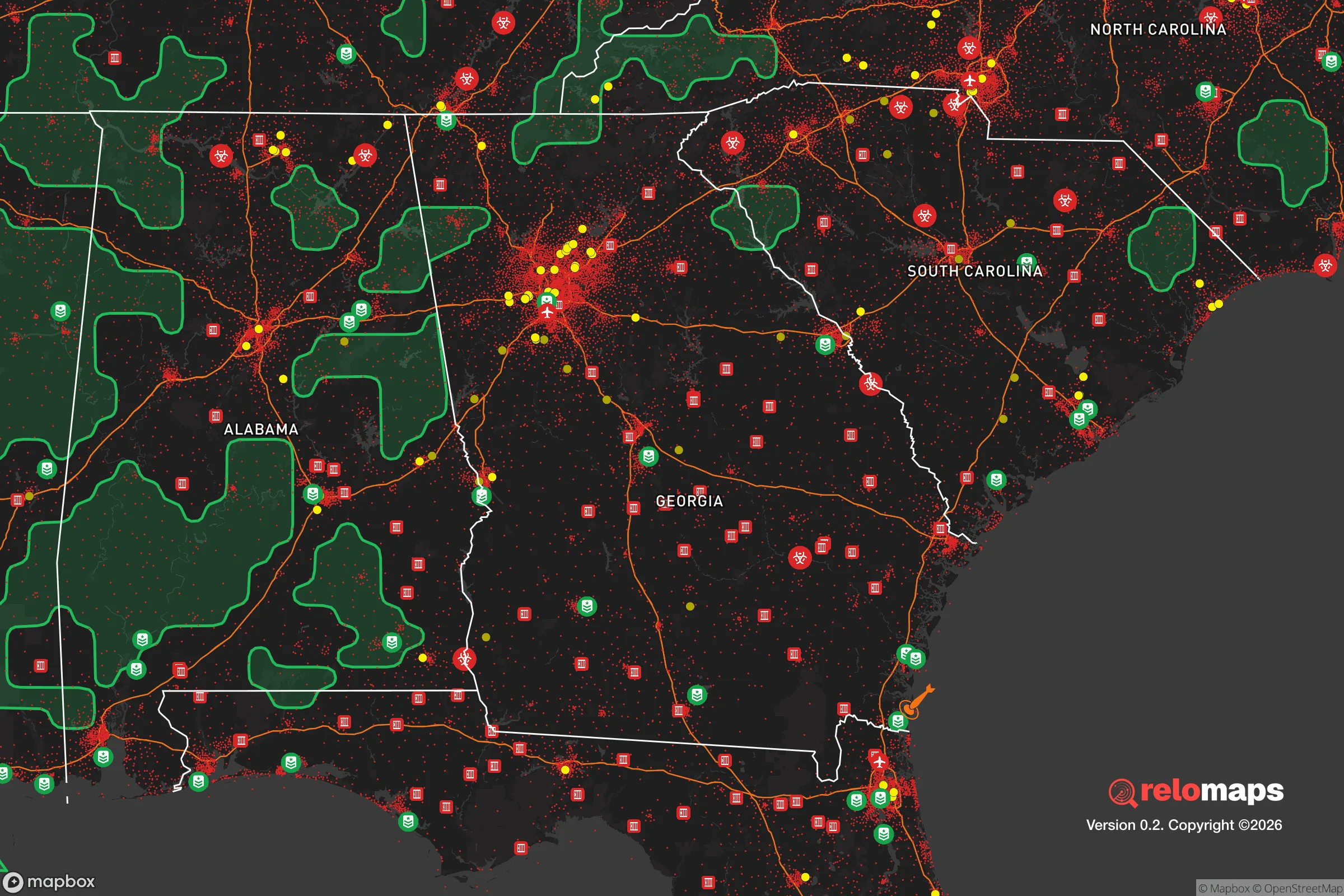


Important Note: For informational purposes only. This does not mean nothing bad ever happens in the green zones. Please use common sense. This is based on public data and modeled with AI. We tried to take a conservative approach but mistakes happen. We update this regularly as new information becomes available.
Solar Generator Recommendations
Backup power matters more here than in safer locations. We've picked three solar generators across budgets and capacity tiers — start with the budget unit if you only need a few essentials, or step up if you want to run a fridge and HVAC for days at a time.
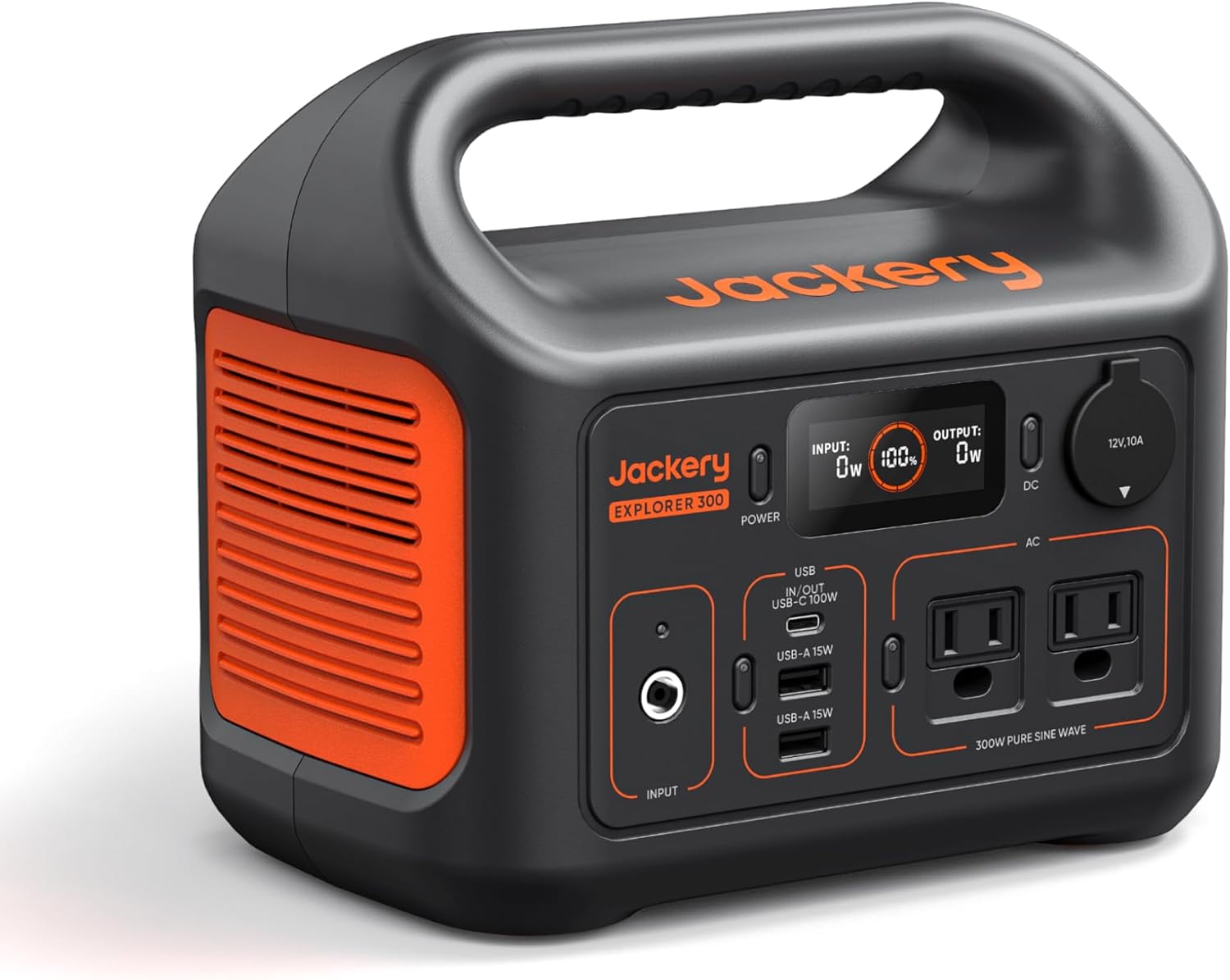
Jackery Portable Power Station Explorer 300
Budget OptionPower on the Go: Weighing only 11 lbs, it's convenient to set up and store with book-sized foldable solar panels

BLUETTI Portable Power Station AC180
Designed for both indoor and outdoor scenarios, AC180 is highly capable as it has a robost capacity and continuous output power.

EF ECOFLOW DELTA Pro Ultra Power Station
Upgraded PickEcoFlow DELTA Pro Ultra is a whole-home energy system designed to grow with your family. Integrated with the Smart Home Panel 2, it scales to meet your evolving energy needs — keeping your home powered, intelligent, and secure through every stage of life.
We earn a commission, at no additional cost to you.
Strategic Assessment Analysis
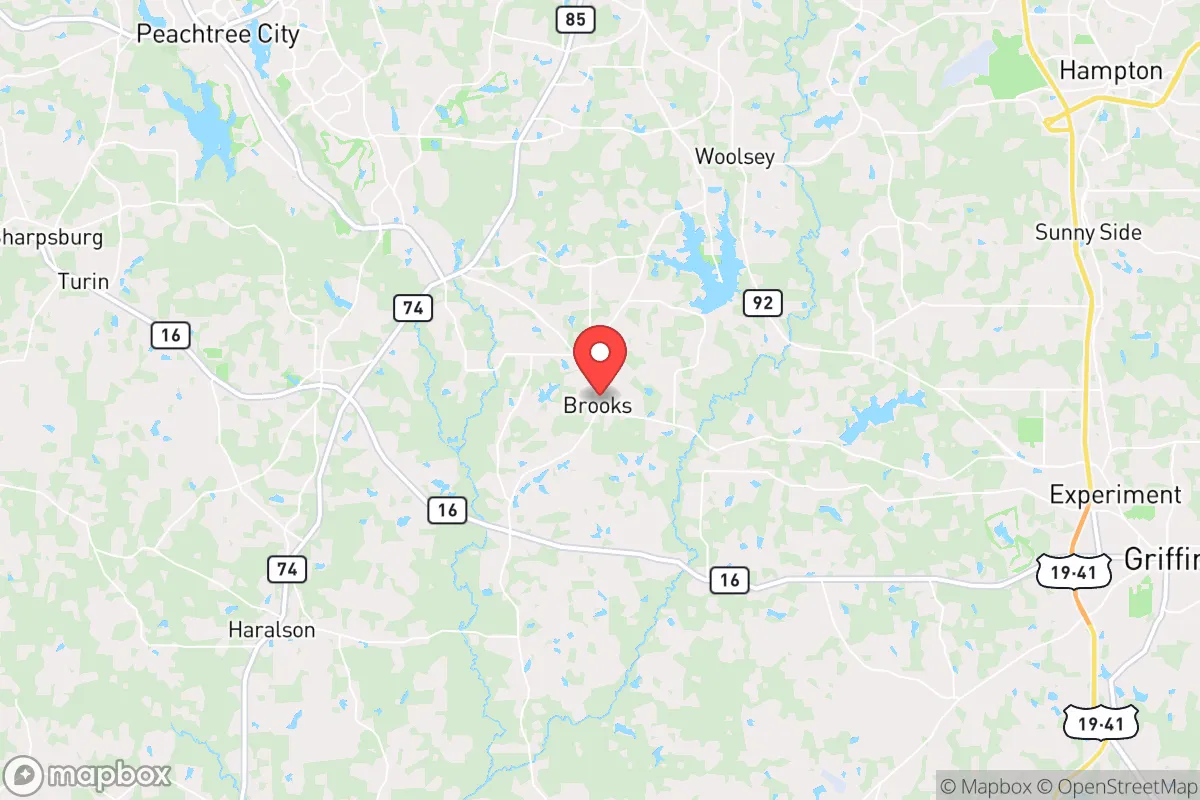
Brooks, Georgia, sits in a sweet spot for the disaster-conscious relocator: far enough from the coast to dodge hurricane storm surge, yet close enough to Atlanta to raise eyebrows about urban contagion. This small Fayette County town of roughly 600 residents offers a quiet, rural base with solid geographic fundamentals, but its resilience profile is a mixed bag. For someone thinking seriously about self-sufficiency and disaster readiness, Brooks provides a decent starting point—provided you understand the trade-offs of living within the Atlanta metro’s shadow.
Geographic position and natural advantages: why Brooks sits on solid ground
Brooks occupies the rolling Piedmont region, an area known for its stable bedrock, moderate elevation (around 800 feet), and well-drained soils. Unlike coastal Georgia, it faces zero risk from hurricane storm surge or sea-level rise. The region’s clay-heavy soils can be a challenge for gardening, but they also mean fewer issues with flooding compared to the floodplains along the Flint River a few miles west. The local climate is humid subtropical, with about 50 inches of rain annually—enough to support rain catchment systems and small-scale agriculture without the drought stress seen in the western U.S. Tornadoes are a real but moderate threat; Fayette County sits in the southern edge of Dixie Alley, where tornadoes are less frequent but can be strong. Still, the area’s rolling hills and tree cover offer some natural windbreak, and the lack of mobile home parks in Brooks proper reduces the typical tornado vulnerability. The biggest natural advantage is simple: Brooks is inland, elevated, and not on a major fault line. That alone puts it ahead of many coastal or seismic-prone relocation targets.
Risks, exposures, and proximity to fallout-relevant landmarks
Here’s where the analysis gets serious. Brooks is only 35 miles south of downtown Atlanta, and that proximity cuts both ways. For a relocator prioritizing resilience, being near a major metropolitan area is a net negative. Atlanta’s population density (over 500,000 inside the city, 6 million in the metro) means that in a widespread crisis—whether a pandemic, grid failure, or civil unrest—Brooks would feel the ripple effects. Hartsfield-Jackson Atlanta International Airport, the world’s busiest, lies just 25 miles north of Brooks. That airport is a prime target for any man-made disaster scenario, from a terrorist attack to a conventional strike. The I-85 corridor, a major freight and commuter artery, runs through the same zone, creating a chokepoint that could become impassable during an evacuation. Additionally, the nearby CSX rail lines and industrial zones in Forest Park and Morrow handle hazardous materials; a derailment or chemical release could affect air quality and water runoff into the Flint River watershed. Brooks itself is a low-profile community, but its location within the Atlanta metro means it shares the region’s vulnerabilities. For someone seeking to avoid fallout-relevant landmarks entirely, Brooks is too close for comfort. If you’re looking for a true bug-out location, you’d want to be another 50 miles south or east, away from the metro’s gravitational pull.
Practical resilience for a relocator: food, water, energy, and defensibility
On the practical side, Brooks offers a mixed but workable foundation for self-sufficiency. The surrounding Fayette County is still rural enough to support small farms, with several local producers of poultry, cattle, and vegetables. The county’s agricultural extension office provides resources for home gardening, and the growing season runs from March to November—long enough for two crop cycles. Water is a strong point: most homes in Brooks rely on private wells tapping into the Piedmont aquifer, which generally yields good-quality water at moderate depths (100–300 feet). Well ownership means you’re not dependent on municipal water treatment plants that could fail during a grid outage. Rainwater catchment is also viable, given the annual rainfall. Energy is the weak link. Brooks is served by Georgia Power, which relies heavily on the regional grid. The area has no natural gas distribution in many rural pockets, so heating and cooking often depend on propane or electricity. Solar potential is decent (about 4.5 peak sun hours per day), but the tree canopy can limit rooftop panel efficiency. For defensibility, Brooks is a double-edged sword. The town itself is small and tight-knit—everyone knows everyone—which fosters community mutual aid. But it’s not isolated; multiple paved roads connect it to Peachtree City and Senoia, meaning an influx of urban refugees could arrive quickly. Your best bet for defensibility is to buy acreage on a dead-end road with limited egress, which is still possible in the unincorporated areas around Brooks. Local law enforcement is the Fayette County Sheriff’s Office, with a response time of 10–15 minutes in rural areas—adequate for most situations but not instant.
Overall, Brooks, GA, presents a moderate resilience profile that suits a relocator who wants to stay within striking distance of Atlanta’s jobs and healthcare while still having room to garden, drill a well, and keep a low profile. It avoids the worst natural hazards and offers decent water security, but its proximity to a major city and critical infrastructure is a clear liability for anyone serious about disaster readiness. If you’re looking for a balanced location that isn’t a full retreat but is a step up from suburban sprawl, Brooks is worth a look. Just don’t mistake it for a remote safe zone—it’s a rural outpost on the edge of a big city’s shadow, and that shadow is the main risk you’ll need to plan around.

* Values derived from national, state, county, city and local statistics and may differ in a specific area. Last updated: 2026-10-14T23:27:47.000Z
Narrative content on this page is AI-generated and may contain mistakes. Verify any details that matter before acting on them.
ReloMaps may earn a commission from affiliate links at no extra cost to you.

