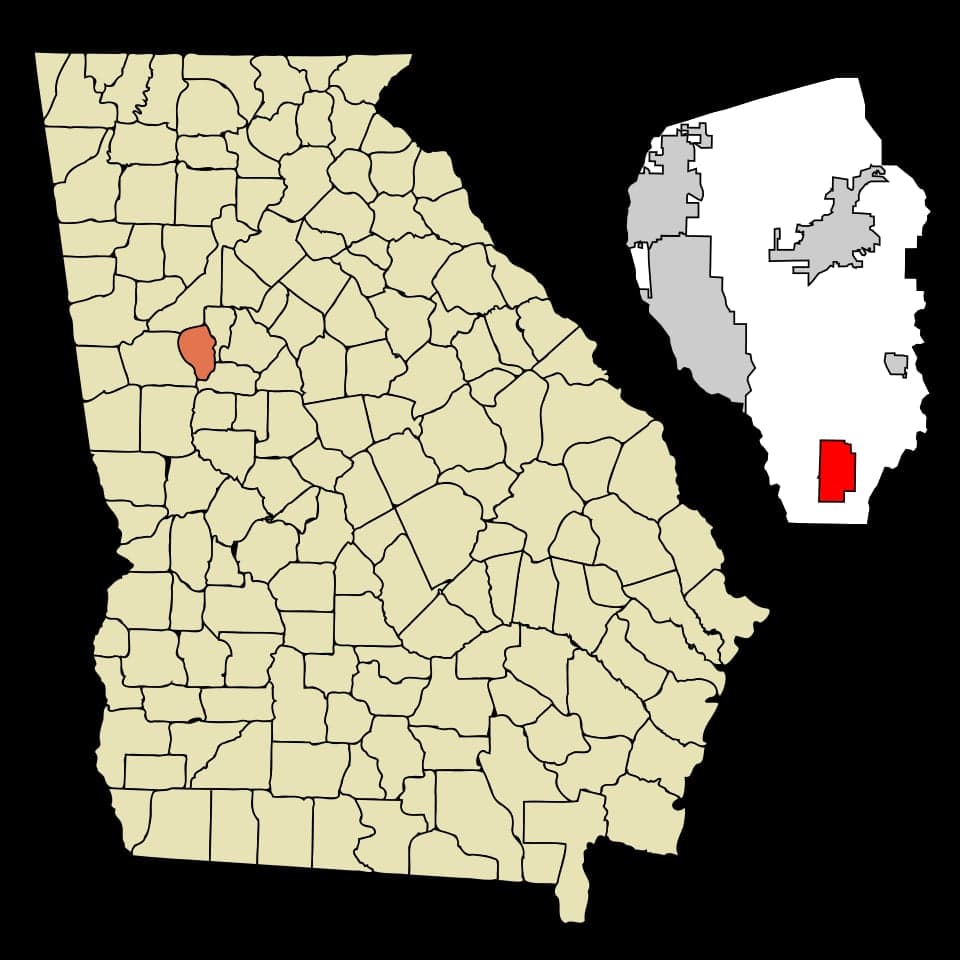
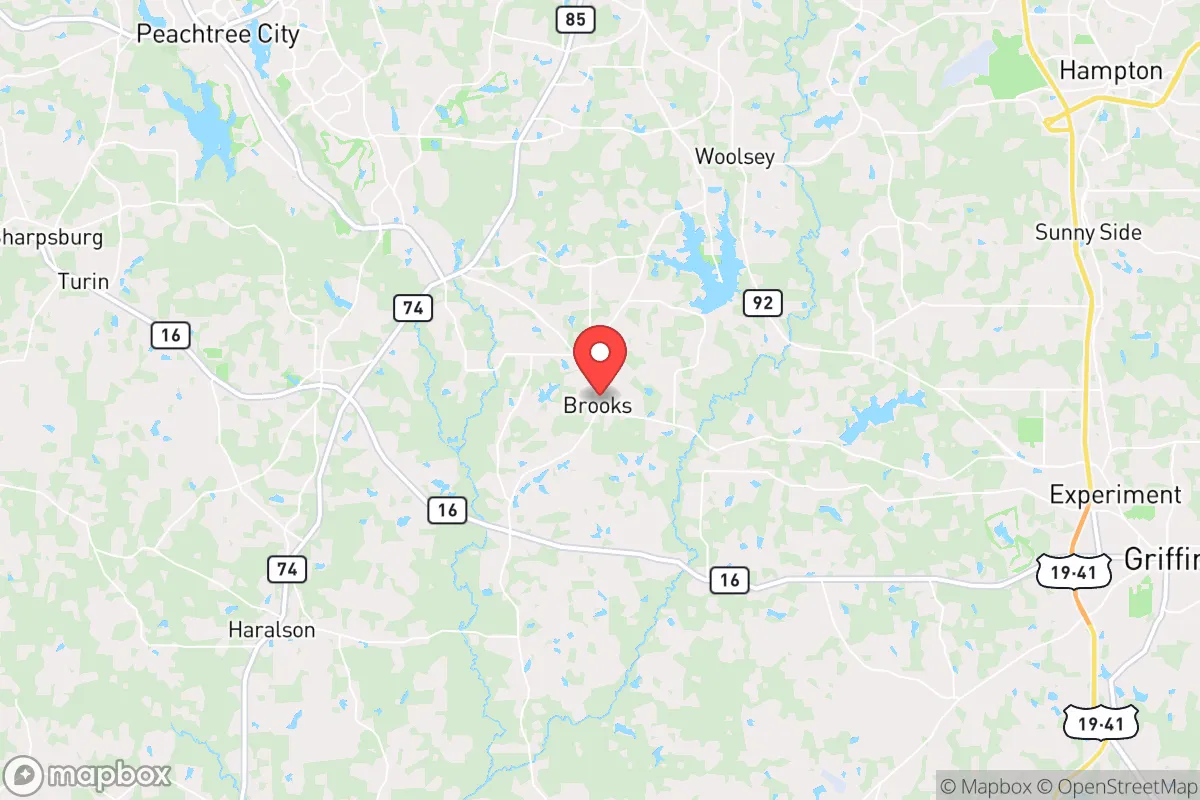
Photo: Wikipedia
Personal Sovereignty in Brooks, GA
Viable for self-reliance. Generally workable, though some barriers may limit total independence.
What does Personal Sovereignty tell us?
Personal Sovereignty measures your capacity for self-reliance and independence with minimal government friction. Higher scores mean fewer barriers between you and the way you want to live... but it assumes you have the space you need and good neighbors.
What does this tell us?
Personal Sovereignty measures your capacity for self-reliance and independence with minimal government friction. Higher scores mean fewer barriers between you and the way you want to live... but it assumes you have the space you need and good neighbors.
State Policy
Energy independence: Importer (12% of energy produced in-state)
Personal Liberty
Homesteading

Personal Liberty Analysis
Brooks, Georgia, offers a personal sovereignty environment shaped by its location in a deeply conservative state with a light-touch regulatory philosophy. As a small town in Fayette County, about 35 miles south of Atlanta, residents enjoy the legal protections of Georgia’s constitutional carry law, a flat income tax, and strong parental rights statutes, all within a community where local government tends to favor minimal interference in daily life. For individuals and families who prioritize autonomy, Brooks represents a place where state-level policies align with self-reliance, though the practical realities of suburban zoning and proximity to metro Atlanta impose some limits on off-grid living.
Tax burden and regulatory posture in Brooks and Fayette County
Georgia’s tax structure is among the most favorable in the Southeast for those seeking to keep more of their earnings. The state levies a flat personal income tax rate of 5.49% (as of 2026), with scheduled reductions toward a flat 4.99% by 2029. There is no state inheritance or estate tax. Property taxes in Fayette County are assessed at 40% of fair market value, and the county’s millage rate for 2025 was approximately 11.5 mills for the unincorporated area, translating to roughly $1,150 per $100,000 of assessed value — below the Georgia average. Brooks itself is a town with its own municipal services, but the combined county and city tax burden remains moderate. Sales tax in Fayette County is 7%, which includes a 1% local option. Regulatory posture at the state level is consistently business-friendly: Georgia is a right-to-work state, has no state-level occupational licensing for many trades beyond basic requirements, and maintains a relatively streamlined environmental permitting process. Local zoning in Brooks is typical of a small Georgia town — residential, commercial, and agricultural districts exist, but the town’s size (population around 600) means fewer layers of bureaucracy. Permits for home additions or small businesses are handled through the city or county planning department with reasonable turnaround times. Overall, the tax and regulatory environment in Brooks leans heavily toward personal economic freedom, with no state income tax on Social Security benefits and a homestead exemption that shields up to $10,000 of assessed value from county school taxes.
Self-defense and gun law specifics in Georgia and Brooks
Georgia is a constitutional carry state — since 2022, any legal gun owner aged 21 or older can carry a concealed handgun without a permit. This applies in Brooks, as state law preempts local firearm ordinances. There is no requirement to register firearms, no waiting period for purchases, and no state-level ban on standard-capacity magazines. The state does issue a Georgia Weapons Carry License for reciprocity purposes, but it is optional. Stand-your-ground laws are fully in effect: there is no duty to retreat before using deadly force if you are lawfully present and reasonably believe force is necessary to prevent death, great bodily harm, or a forcible felony. Castle doctrine protections extend to vehicles and places of business. For residents of Brooks, this means the legal framework for self-defense is among the most permissive in the country. Fayette County has a generally pro-Second Amendment sheriff’s office, and local law enforcement does not actively enforce any additional restrictions. The only notable limitation is that carrying in certain government buildings, schools (with exceptions for licensed carriers in pickup/drop-off zones), and places where alcohol is sold for on-site consumption is restricted. For a family or individual prioritizing the right to bear arms, Brooks offers a legal environment with minimal bureaucratic hurdles.
Self-reliance and homesteading viability in Brooks
Homesteading and self-reliance are feasible in Brooks, though the town’s suburban character imposes some constraints. Lot sizes in the town proper are typically 0.5 to 2 acres, while unincorporated Fayette County allows parcels as small as 1 acre for single-family homes. Agricultural zoning is available in the county, and properties of 5 acres or more can qualify for a conservation use valuation that reduces property tax assessments if the land is used for bona fide agricultural purposes (e.g., raising livestock, growing crops). Raising chickens is generally permitted on residential lots in Fayette County with a limit of six hens (no roosters) and a setback requirement. Goats and other small livestock are allowed on parcels of 2 acres or more with a permit. Off-grid living is legally possible but practically limited: Georgia has no state law requiring connection to municipal water or sewer if a private well and septic system are installed, but Fayette County requires permits for both and mandates that any dwelling meet the state’s minimum building code. Solar panels are permitted without special restrictions, and net metering is available from Georgia Power, though the payout rate is low. Rainwater collection is legal and encouraged for non-potable uses. The biggest hurdle for full off-grid independence is the county’s requirement that any habitable structure have a permanent foundation and meet building codes — tiny houses on wheels are not recognized as dwellings. For those seeking a balance of self-reliance and suburban convenience, Brooks offers a middle ground: you can grow food, keep some animals, and reduce utility dependence, but full autonomy would require a larger rural parcel outside town limits.
Personal liberties: parental rights, medical autonomy, speech, and property
Georgia has enacted several laws that bolster personal liberties in areas important to conservative-leaning families. Parental rights are explicitly protected under state law: parents have the right to direct the upbringing, education, and healthcare of their children, and schools must obtain parental consent before administering any medical or mental health services (with narrow exceptions). The state’s “Parents’ Bill of Rights” (O.C.G.A. § 20-2-780) requires schools to notify parents of any changes in a student’s services or monitoring related to mental, emotional, or physical health. Medical autonomy saw a significant boost during the COVID-19 pandemic: Georgia banned vaccine mandates for state employees and contractors, and the legislature passed a law prohibiting discrimination based on vaccination status. There is no state-level mask or vaccine mandate currently in effect. Healthcare decisions, including the choice to use alternative treatments, are generally left to the individual, though insurance coverage may vary. Speech and expression are protected under the First Amendment, and Georgia has no state-level hate speech law that would criminalize protected speech. Property rights are strong: Georgia is a “pure” at-will employment state, but for property owners, eminent domain is limited to public use with just compensation, and the state has a relatively low property tax cap (annual increases limited to 3% for homesteaded properties under the “floating homestead” provision). In Brooks, local ordinances are minimal — no noise ordinances beyond reasonable hours, no restrictions on political signs on private property, and no rental registration requirements. The overall atmosphere is one of trust in individual judgment rather than heavy-handed regulation.
Compared to other areas in the Southeast, Brooks, Georgia, ranks high for personal sovereignty. The combination of constitutional carry, a flat and declining income tax, strong parental rights, and minimal local regulation places it ahead of many suburban enclaves in states like Virginia or North Carolina. The main trade-off is proximity to Atlanta: you get the legal freedoms of a conservative state but with the zoning and building codes of a suburban county. For a family or individual who values self-reliance and wants a community where government stays out of daily life, Brooks offers a solid foundation — one where the law is on your side, and the practical limits are mostly a matter of lot size and budget, not bureaucracy.

* Values derived from national, state, county, city and local statistics and may differ in a specific area. Last updated: 2026-10-14T23:27:47.000Z
Narrative content on this page is AI-generated and may contain mistakes. Verify any details that matter before acting on them.
ReloMaps may earn a commission from affiliate links at no extra cost to you.

