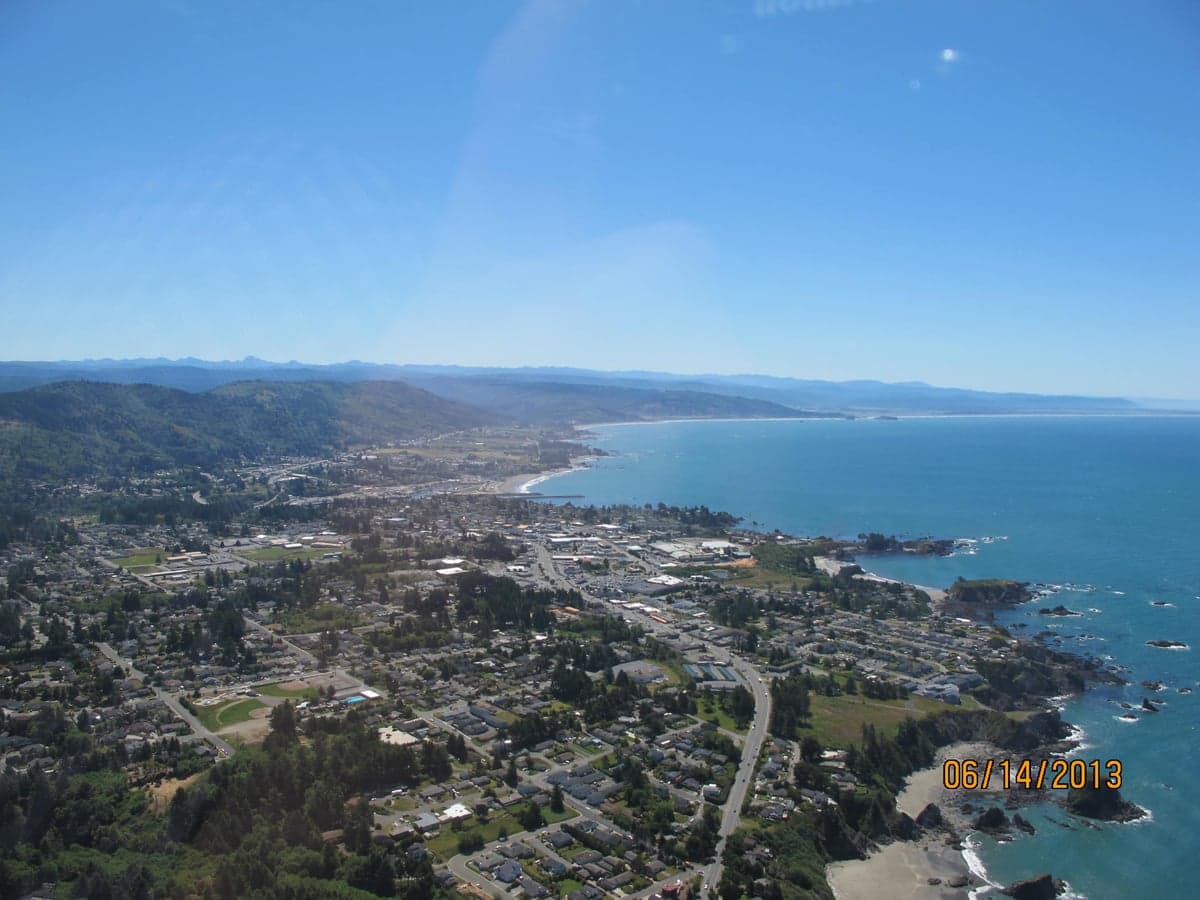
Photo: Wikipedia
Political ClimatePolitical Climate in Brookings, OR
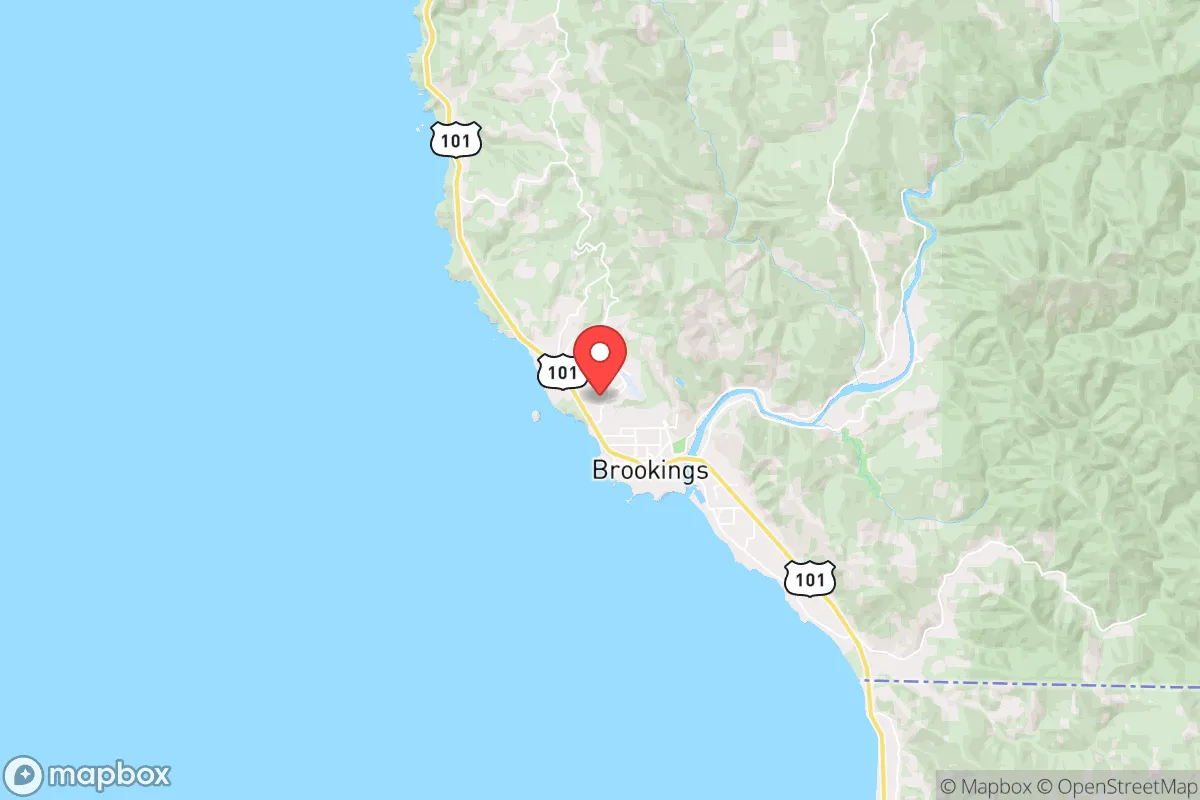
District shown is the primary district for this city’s centroid. Cities may span multiple districts.
Local Political AnalysisPolitical Analysis of Brookings, OR
Brookings, Oregon, sits in a unique political pocket along the southern coast. While the state of Oregon as a whole leans Democratic with a Cook PVI of D+8, Brookings and Curry County are notably more conservative, with the area carrying a Cook PVI of D+6. That number might sound blue, but it masks a reality where local elections and community sentiment often tilt right, especially compared to the more liberal bastions of the state like Portland or Eugene. Over the past decade, I've watched the area slowly shift—not dramatically, but enough to feel a growing tension between the old-guard libertarian-leaning locals and the newer, often more progressive, retirees moving in from California and the Willamette Valley.
How it compares
Drive an hour north to Coos Bay or an hour south to Crescent City, California, and you'll feel the political difference immediately. Coos Bay is even more conservative than Brookings, while Crescent City leans redder still. But the real contrast is with the state's interior. Brookings is a world away from Multnomah County. On a practical level, this means Brookings often votes for Republican candidates in statewide races—think gubernatorial or Senate contests—while the rest of the state's population centers push the final tally blue. The D+6 rating reflects a district that is competitive but still leans Democratic at the federal level, largely due to the sheer weight of Oregon's urban vote. Locally, however, the Curry County Commission and city council have a distinctly conservative flavor, with a focus on property rights, timber industry support, and skepticism of state-level environmental regulations.
What this means for residents
For a conservative resident, Brookings feels like a relative safe haven within a blue state. You can voice your opinions on land use or gun rights without getting sideways looks at the grocery store. Local government tends to be responsive to concerns about over-regulation from Salem. For a liberal resident, it can feel like swimming upstream. You'll find like-minded folks, especially among the newer arrivals and in the arts community, but you won't see many yard signs for progressive candidates outside of a few neighborhoods. The practical upshot is that both sides learn to coexist. The local school board and planning commission debates can get heated, but there's a strong undercurrent of "live and let live" that comes from a small town where everyone needs to get along.
One cultural distinction that really sets Brookings apart is its relationship with the environment. While the state pushes hard on climate policy and conservation, many locals here see the forest as a working landscape. The tension between protecting the spotted owl and preserving timber jobs isn't ancient history—it's a living memory that shapes how people vote. You'll also find a stronger libertarian streak here than in most of Oregon. People value their privacy and personal freedom, and they're quick to push back against what they see as overreach, whether it's from the state capitol or the county health department. That independent spirit is the real political constant in Brookings, and it's likely to remain the defining feature even as the area's demographics slowly evolve.

State Political ClimatePolitical Climate in Oregon
State Political AnalysisPolitical Environment in the State
Oregon has a Cook PVI of D+8, making it one of the more reliably Democratic states in the West, but that number hides a deeply fractured political reality. The state’s overall lean is driven almost entirely by the Portland metro area—Multnomah, Washington, and Clackamas counties—which together cast about half the state’s votes and deliver margins of 30 to 50 points for Democrats. Outside that corridor, much of Oregon votes like a red state, with many rural counties going 70% or more Republican. Over the last 20 years, the state has drifted leftward at the state level—Democrats have held the governorship since 1987 and supermajorities in the legislature for most of the last decade—but that trend has slowed and in some ways reversed since 2020, as suburban swing voters and rural independents have grown frustrated with Portland-centric policy.
Urban vs. rural divide
The political map of Oregon is essentially a story of three regions. The Willamette Valley, anchored by Portland, Salem, and Eugene, is the Democratic stronghold. Portland itself is one of the most progressive cities in the country, with a city council that has moved to defund the police, legalize drug possession (since partially reversed), and adopt ranked-choice voting. Eugene, home to the University of Oregon, is similarly left-leaning but with a stronger environmental activist streak. Central and Eastern Oregon—places like Bend, Redmond, Prineville, and Pendleton—are Republican territory, though Bend has become a notable swing area as California transplants and remote workers have moved in. Deschutes County (Bend) voted for Biden by 6 points in 2020 after going for Trump by 4 in 2016, a shift driven by younger, wealthier newcomers. Southern Oregon, including Medford, Ashland, and Grants Pass, is more mixed: Ashland is a liberal arts town, but Jackson and Josephine counties lean Republican overall. The coastal counties—Tillamook, Lincoln, Coos—are more purple, often splitting tickets between Democratic governors and Republican sheriffs.
Policy environment
Oregon has no state sales tax, which is a major draw for conservatives, but it has one of the highest combined state and local income tax rates in the country—top marginal rate is 9.9%—and property taxes are moderate but rising. The regulatory environment is generally business-friendly in name but burdensome in practice, especially for housing and land use. Oregon’s land-use planning system, established in the 1970s, strictly limits urban growth boundaries, which has driven up home prices in Portland and Bend. On education, Oregon spends above the national average per pupil but ranks near the bottom in graduation rates and test scores; school choice is limited, with no voucher program and a weak charter school law. Healthcare is dominated by the Oregon Health Plan, the state’s Medicaid expansion, which covers about one in four residents. Election laws are among the most accessible in the country: Oregon was the first state to vote entirely by mail (1998), and it has automatic voter registration, same-day registration, and no voter ID requirement. This is a double-edged sword for conservatives—it boosts turnout but also makes fraud allegations a persistent talking point.
Recent policy direction
The last five years have seen Oregon lurch left, then partially correct. In 2020, the legislature passed Measure 110, decriminalizing possession of small amounts of all drugs and redirecting tax revenue to treatment. The result was a visible spike in public drug use and overdoses, especially in Portland, and in 2024 the legislature re-criminalized possession (HB 4002) after a voter backlash. On guns, Oregon passed Measure 114 in 2022, requiring a permit to purchase and banning magazines over 10 rounds; it’s been tied up in court ever since, and many rural counties have declared themselves “Second Amendment sanctuaries.” On parental rights, Oregon has some of the strongest LGBTQ+ nondiscrimination laws in the country, including a 2023 law (HB 2002) that shields minors traveling for gender-affirming care from out-of-state legal action—a direct counter to red-state bans. Property rights are constrained by the land-use system, but there’s been a recent push to allow more accessory dwelling units and upzoning near transit. On taxes, voters passed Measure 118 in 2024, a corporate tax increase that funds a rebate for residents, but it’s already facing legal challenges. Voting access remains wide open, with no voter ID and universal mail ballots, which conservatives argue invites fraud, though no major case has been proven.
Civil unrest & political movements
Oregon has a long history of political activism, from the 2020 Portland protests—which saw nightly clashes between antifa-aligned groups and federal law enforcement—to the Walmart parking lot standoffs in rural towns like Grants Pass and Medford, where armed groups protested COVID restrictions. The Pacific Northwest is a hotbed for secessionist talk, with the “Greater Idaho” movement gaining traction: since 2020, 13 rural Oregon counties have voted to explore joining Idaho, citing cultural and political alienation from Portland. Immigration politics are less heated than in border states, but Portland is a sanctuary city (since 1987), and Multnomah County has refused to cooperate with ICE detainers. Election integrity is a live issue: the 2020 election saw Trump supporters gather at the Salem state capitol, and in 2022, a ballot drop box in Portland was firebombed. A new resident will notice the political graffiti and yard signs—in Portland, “Defund Police” and “Free Palestine” signs are common; in rural areas, “Don’t California My Oregon” and “Trump 2024” are everywhere. The divide is visible and sometimes tense, but actual violence is rare outside of Portland’s protest zone.
Projection
Over the next 5-10 years, Oregon is likely to continue its slow shift toward a more balanced partisan split, driven by two forces. First, in-migration from California has slowed and become more conservative—new arrivals are increasingly moving to Bend, Redmond, and Medford, not Portland. Second, the Democratic supermajority in the legislature is fragile; Republicans have walked out multiple times to block bills, and a few seat flips in the 2024 or 2026 cycles could break the supermajority. The Portland metro will remain deeply blue, but its influence is waning as the rest of the state grows faster. Expect more fights over land use (housing density vs. rural character), gun rights (Measure 114 will likely be upheld or replaced with a compromise), and education (school choice may gain traction as test scores stagnate). The Greater Idaho movement won’t succeed—it would require approval from both state legislatures and Congress—but it will keep rural resentment alive. A new resident moving in now should expect a state that is still left of center but increasingly pragmatic, with a legislature that has learned to compromise after the Measure 110 disaster.
For a conservative relocator, Oregon offers low property taxes, no sales tax, and beautiful landscapes, but you’ll be living in a state where your vote for governor or senator is unlikely to matter much. Your local sheriff and county commissioner will likely share your values, but state policy will often feel like it’s made for Portland. For a liberal relocator, Oregon is a dream on paper—progressive policies, strong environmental protections, and a culture of tolerance—but the reality includes high housing costs, struggling schools, and a growing rural backlash that makes governing harder every year. The bottom line: Oregon is a state of two countries, and your experience will depend almost entirely on which one you choose to live in. If you pick Bend or Ashland, you’ll find a purple community with good schools and outdoor access. If you pick Portland, you’ll get the full progressive experiment, warts and all. If you pick a small town in Eastern Oregon, you’ll feel like you’re in a red state that happens to be governed by a blue state. Know which one you’re signing up for.
* Values derived from national, state, county, city and local statistics and may differ in a specific area. Last updated: 2026-10-05T17:11:09.000Z
Narrative content on this page is AI-generated and may contain mistakes. Verify any details that matter before acting on them.
ReloMaps may earn a commission from affiliate links at no extra cost to you.

