Photo: Wikipedia
Demographics of Brookings, OR
Affluence Level in Brookings, OR
A middle-class area roughly in line with national averages across income, home values, education, and employment.
People of Brookings, OR
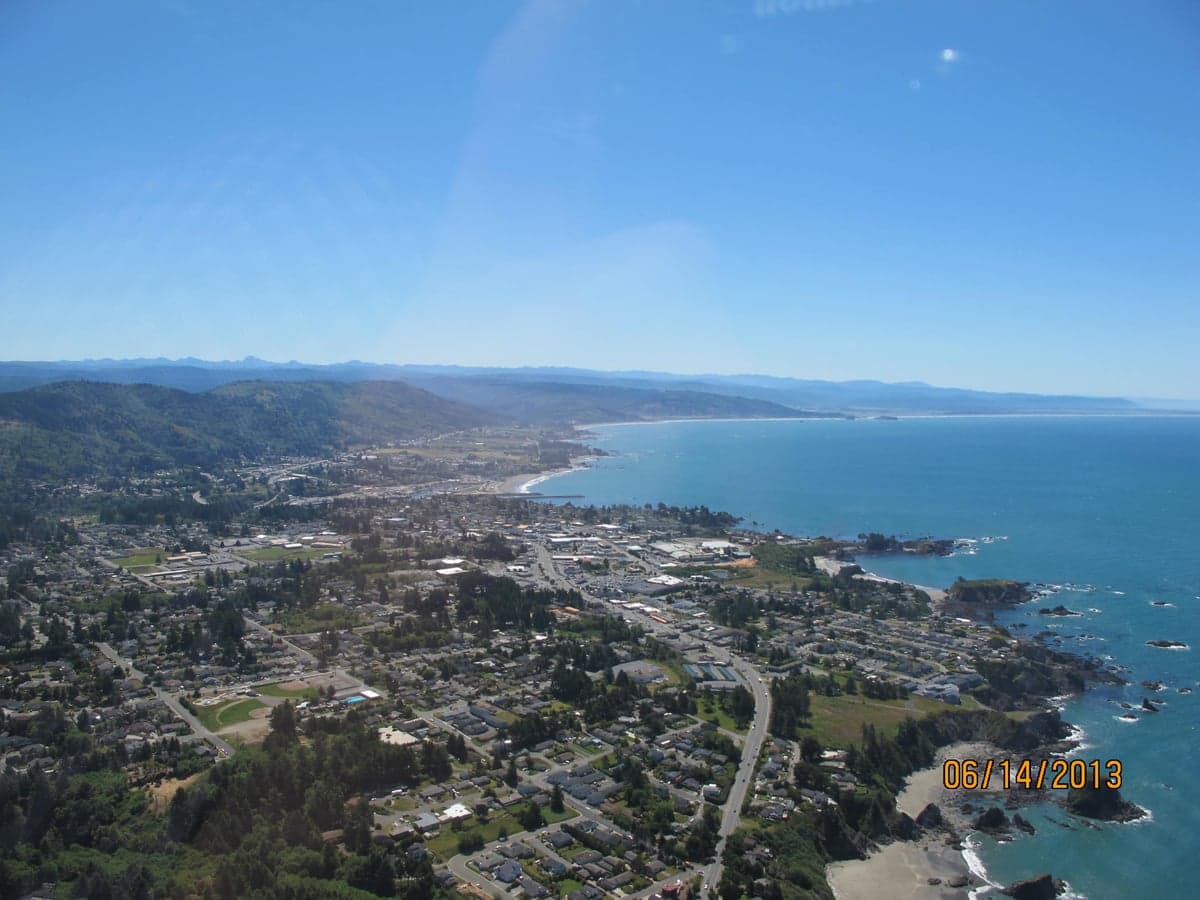
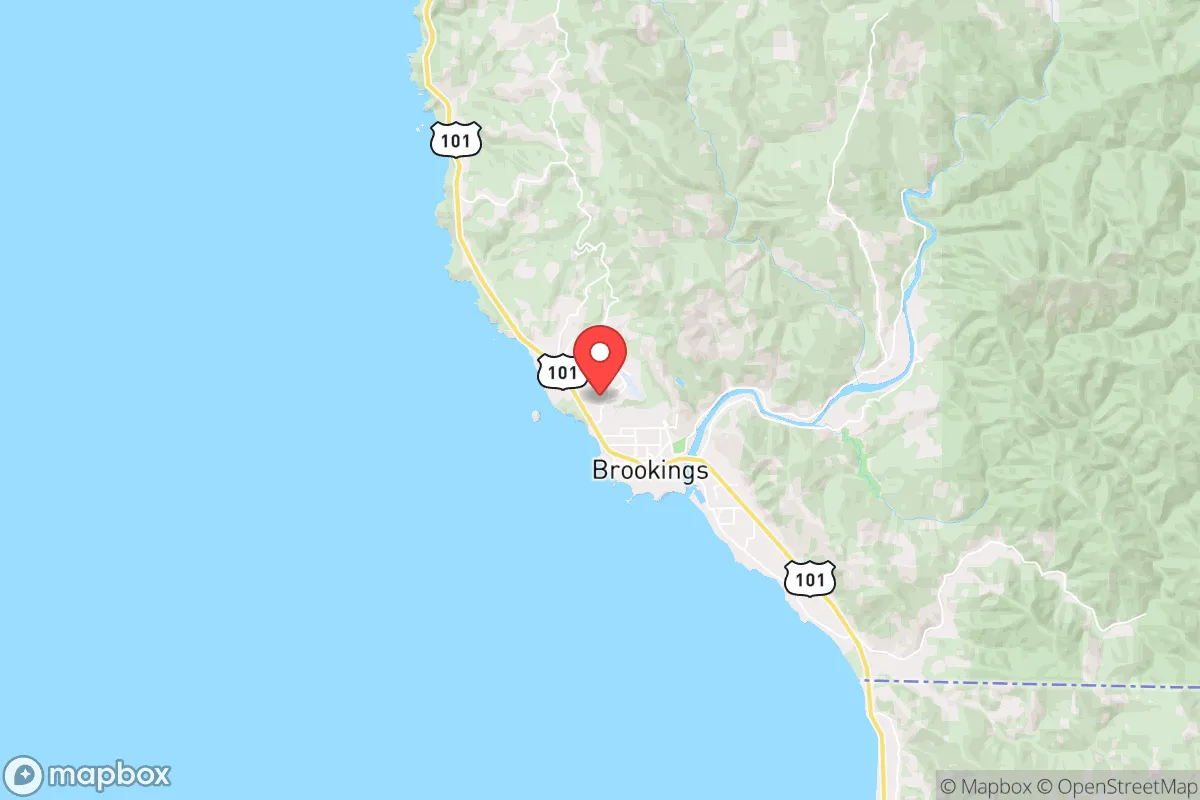
The people of Brookings, Oregon, today number 6,733, forming a predominantly white (81.6%) and older community with a notable Hispanic minority (9.7%) and a very small foreign-born population (3.5%). The city’s character is shaped by its remote coastal location, a history tied to timber and fishing, and a growing retiree and remote-worker influx. Distinctive identity markers include a strong sense of self-reliance, a politically conservative tilt in local elections, and a population that is less diverse and less college-educated (21.4%) than Oregon’s state average.
How the city was settled and grew
Brookings was not a pre-colonial settlement; its human history begins in earnest with the arrival of European-American homesteaders in the late 19th century, drawn by the promise of cheap land and abundant natural resources. The city was officially founded in 1913 by John Brookings, a lumber magnate who established the Brookings Lumber Company, which became the economic engine. The original workforce was almost entirely white, recruited from the Midwest and other parts of the Pacific Northwest. These early families settled in what is now Old Town Brookings, the historic core along the Chetco River, where the mill and company housing defined daily life. A second wave arrived during the 1930s and 1940s, driven by the expansion of the timber industry and the construction of the Oregon Coast Highway (U.S. 101). This period saw the development of the Oceanview District, a modest neighborhood of single-family homes built for mill workers and their families. The population remained overwhelmingly white and working-class through the mid-20th century, with little ethnic diversity.
Modern era (post-1965)
After the 1965 Hart-Cellar Act, Brookings saw negligible immigration from Asia or the Indian subcontinent—the current East/Southeast Asian share is just 1.0% and the Indian share is 0.0%—reflecting the city’s limited economic pull for new international arrivals. Instead, the post-1965 era was defined by domestic in-migration. The decline of the timber industry in the 1980s and 1990s prompted an economic shift toward tourism and retirement living. This attracted a wave of retirees from California and the Pacific Northwest, who built homes in the Harbor District along the coast and in the newer South Brookings subdivision, a master-planned community with golf course views. The Hispanic population grew during this period, rising to 9.7% today, largely through agricultural and service-sector work in the surrounding Curry County area. These families concentrated in the North Bank area, a less expensive, more rural fringe of the city, and in mobile home parks near the highway. The Black population remains tiny at 0.8%, with no distinct neighborhood concentration.
The future
The population of Brookings is projected to grow slowly, with the city’s remote location and limited housing stock constraining rapid expansion. The demographic trend is toward an older, whiter population, as retirees continue to move in while younger families leave for larger job markets. The Hispanic share is likely to increase modestly, driven by natural growth and continued service-sector demand, but the city will remain far less diverse than Oregon’s urban centers. New development is concentrated in the Eastside area, near the new hospital and commercial strip, which is attracting a mix of retirees and remote workers. The cultural identity is evolving from a blue-collar timber town to a retirement and outdoor-recreation hub, but the political and social conservatism remains strong. For someone moving in now, Brookings offers a stable, low-crime, and predominantly white community where newcomers are expected to assimilate into existing local norms.
Brookings is becoming a quieter, older, and more retiree-focused community, with a small but stable Hispanic workforce and very little racial or ethnic diversity. For a conservative-leaning family or individual seeking a safe, slow-paced coastal town with a strong sense of local identity, it remains a consistent choice—but those seeking a diverse or rapidly growing population should look elsewhere.

* Values derived from national, state, county, city and local statistics and may differ in a specific area. Last updated: 2026-10-05T17:11:09.000Z
Narrative content on this page is AI-generated and may contain mistakes. Verify any details that matter before acting on them.
ReloMaps may earn a commission from affiliate links at no extra cost to you.

