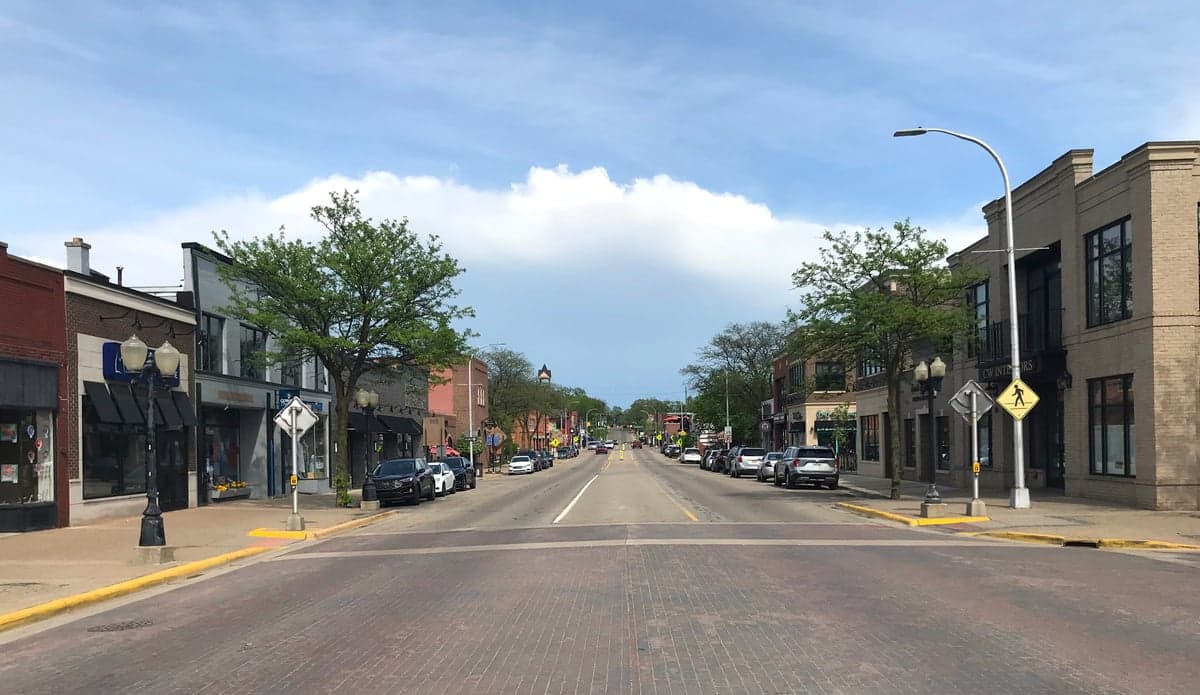
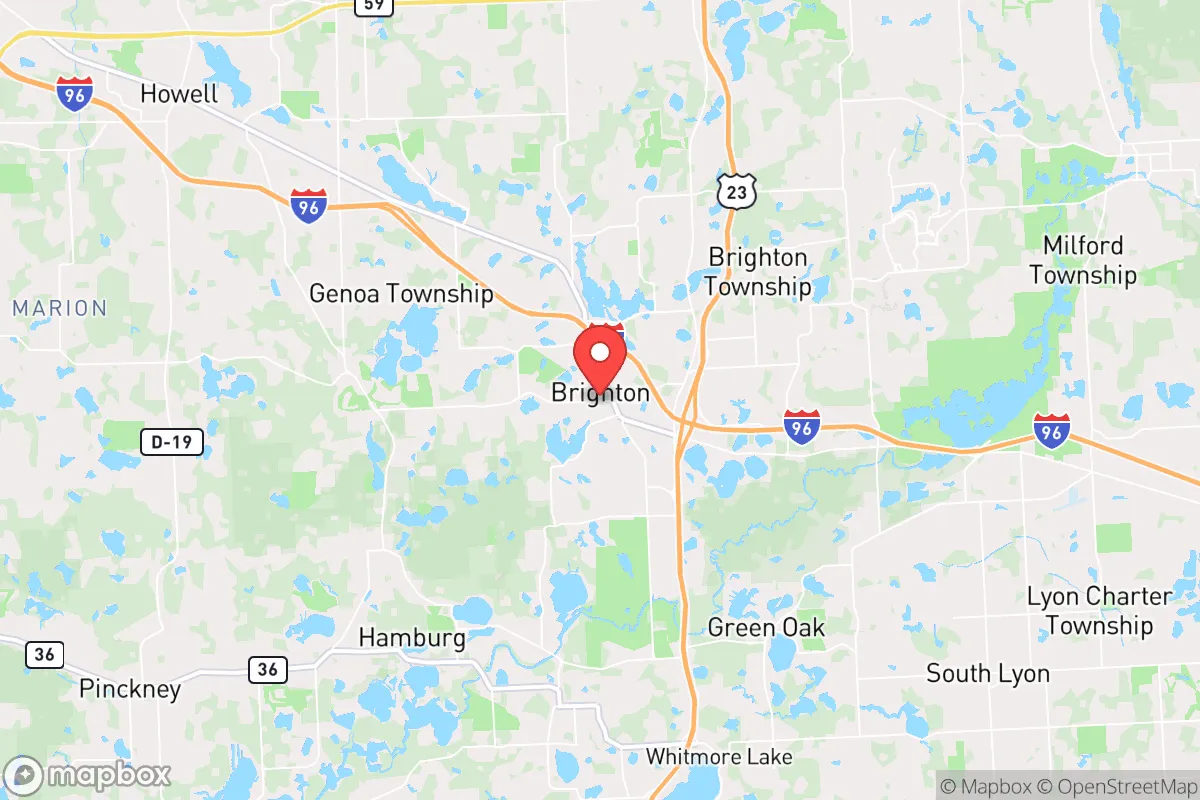
Photo: Wikipedia
Quality of Life in Brighton, MI
A high quality of life with strong walkability, manageable living costs, healthy neighborhood signals, and solid amenity access.
What does Quality of Life tell us?
Quality of Life blends cost of living, nearby amenities, socioeconomic signals, and neighborhood character. City-level scores represent the whole municipality; individual neighborhoods can differ.
What does this tell us?
Quality of Life blends cost of living, nearby amenities, socioeconomic signals, and neighborhood character. City-level scores represent the whole municipality; individual neighborhoods can differ.
Cost of Living
7% above national average
The Real Cost of Living in Brighton, MI for 2026
| Tier | Individual | Family (4) |
|---|---|---|
| Survival | $20k | $37k |
| Comfortable | $59k | $86k |
| Luxury | $125k+ | $193k+ |
| Elite (Top 5%) | $147k+ | $227k+ |
95%
The Area Signal
A metric tracking the socioeconomic signals of the area.
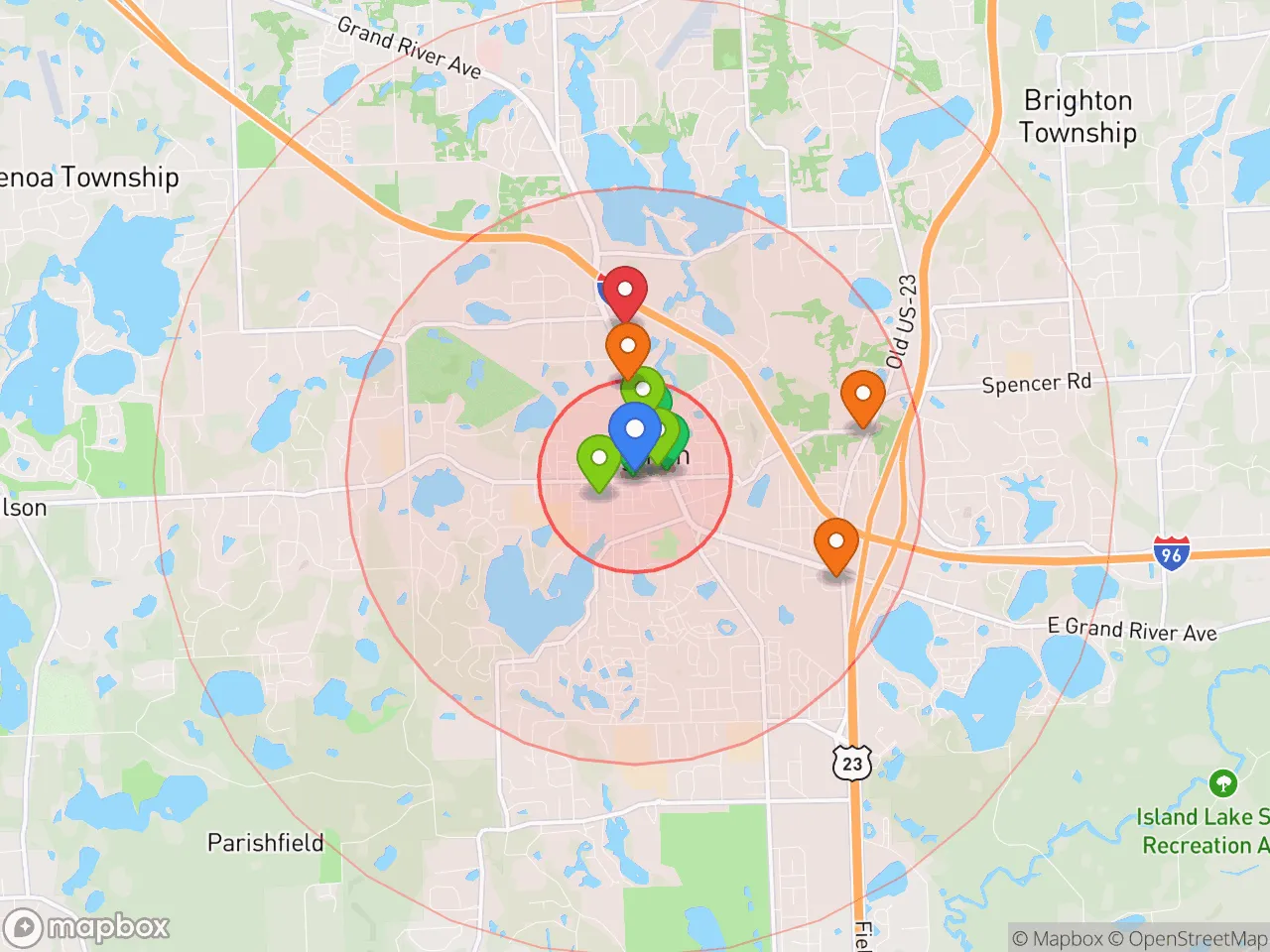
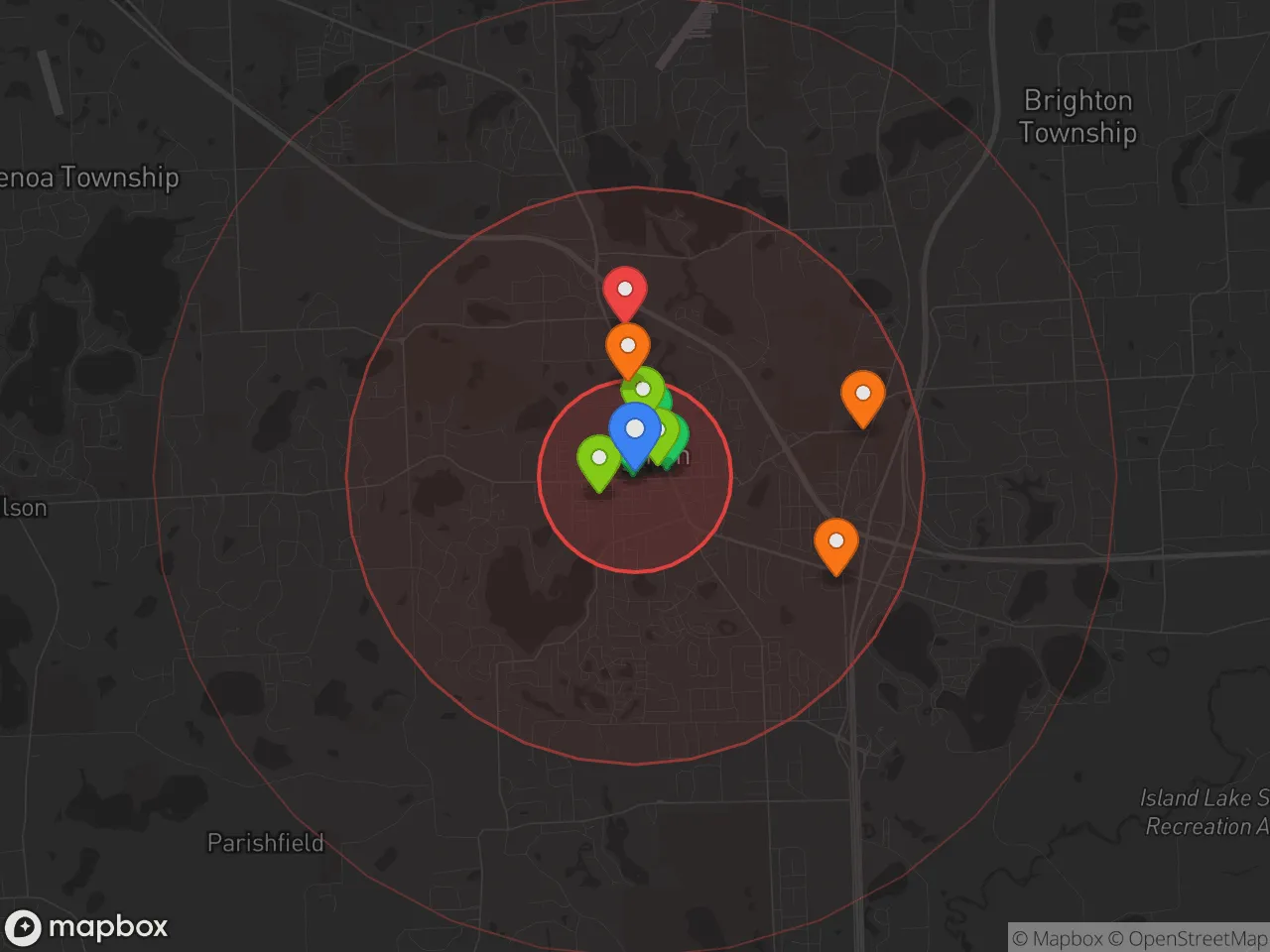
Hobbies
Explore the areaGroceries
6 within 10 miles
Gas
20 within 10 miles
Hospital
9 within 20 miles
Airport
DTW — Detroit Metropolitan Wayne County
Post Office
USPS — Brighton, MI
Critical Amenities
Quality-of-Life Analysis
Brighton, Michigan, is an affluent suburban community in Livingston County that attracts professionals, families, and retirees seeking a blend of small-town charm and proximity to Detroit’s job market. With a cost of living index of 107 (slightly above the national average of 100), the city offers a premium lifestyle anchored by strong schools, low crime, and abundant outdoor recreation. The population skews toward college-educated homeowners, with a median household income well above the state average, reflecting a community that values stability, safety, and access to nature.
Cost of living, housing affordability, and how Brighton compares to nearby areas
Brighton’s cost of living is 7% above the U.S. average, driven primarily by housing costs that are higher than in many neighboring towns but still below those in Ann Arbor or downtown Detroit. The median home value sits at $302,800, which is roughly 15% higher than the Livingston County median but about 20% lower than Ann Arbor’s median. Renters fare better: the median rent of $1,248 is competitive for the region, undercutting comparable suburbs like Novi ($1,450) and Northville ($1,600). The average commute of 24.2 minutes is shorter than the national average (26.4 minutes), thanks to Brighton’s location along I-96 and US-23, making it a practical choice for workers commuting to Detroit (45 minutes east) or Lansing (35 minutes west). Property taxes in Livingston County are moderate for Michigan, averaging about 1.5% of assessed value, which is lower than in neighboring Oakland County (1.8%).
Local amenities, schools, and what daily life feels like in Brighton
Daily life in Brighton revolves around a walkable downtown with independent shops, restaurants, and seasonal events like the Brighton Art Guild shows and the annual Brighton Farmers Market. The Brighton Area Schools district is a major draw, consistently ranking among Michigan’s top 10% for academic performance, with Brighton High School offering a 94% graduation rate and strong Advanced Placement programs. Outdoor amenities are plentiful: the 1,200-acre Brighton Recreation Area provides hiking, fishing, and camping, while the Huron River runs through town for kayaking and paddleboarding. The city’s crime rate is 60% lower than the national average, with violent crime nearly nonexistent and property crime rates comparable to the safest suburbs in the region. For daily errands, residents have access to major retailers along Grand River Avenue, though the area lacks the high-end shopping found in Novi or Birmingham. Healthcare is served by the nearby University of Michigan Health–Brighton Center for Specialty Care and St. Joseph Mercy Livingston Hospital in Howell.
Who thrives in Brighton and what to consider before moving
Brighton is best suited for families seeking top-rated schools in a low-crime environment, professionals who value a short commute to Detroit or Ann Arbor, and retirees who want walkable downtown amenities with access to nature. The community leans politically conservative, with Livingston County voting +18 Republican in the 2024 presidential election, which may be a consideration for some. Young singles or renters on tight budgets may find the housing market challenging, as starter homes under $250,000 are scarce. However, for those who prioritize safety, school quality, and outdoor recreation within a manageable commute, Brighton offers a quality of life that consistently ranks among the best in Southeast Michigan.

Crime in Brighton, MI
Lower crime rates than 86% of comparable U.S. locations.
Violent CrimeViolent Crime Analysis
Property CrimeProperty Crime Analysis
Crime Analysis
Brighton, Michigan, presents a mixed safety profile that requires careful consideration, particularly given its location within the broader Detroit-Warren-Ann Arbor metropolitan area. While the city's violent crime rate of 74.5 incidents per 100,000 residents is notably low—roughly one-fifth the national average—its property crime rate of 1,452 per 100,000 exceeds both state and national benchmarks, signaling a significant risk for theft and burglary. The influence of progressive judicial policies in the surrounding metro area, which often prioritize rehabilitation over incarceration, may contribute to higher recidivism and a greater number of offenders remaining on the street, a factor that should weigh heavily in any relocation decision.
Crime in context
Brighton's violent crime rate is exceptionally low, placing it among the safest small cities in Michigan for personal safety. However, the property crime rate is a clear outlier. At 1,452 per 100,000, it is roughly 30% higher than the national average and significantly above the typical rate for Livingston County, where Brighton is located. This disparity suggests that while violent confrontations are rare, theft, vehicle break-ins, and property damage are persistent issues. The city's proximity to major highways (I-96 and US-23) and its role as a regional retail hub likely attract transient property criminals, a problem exacerbated by the lenient sentencing and catch-and-release policies common in progressive metro-area court systems.
What residents experience
For daily life, the practical impact is that Brighton residents generally feel safe walking downtown and using parks, but must be vigilant about securing vehicles, homes, and outdoor belongings. Larceny from vehicles and residential burglaries are the most frequently reported property crimes. The low violent crime rate means that random assaults or robberies are uncommon, but the property crime environment creates a steady, low-grade risk. The progressive judicial philosophy prevalent in the region, which often results in reduced charges or early release for property offenders, means that repeat offenders cycle through the system quickly, directly undermining public safety and victim restitution. This is a structural concern that no amount of neighborhood watch can fully mitigate.
Neighborhood-level variation is notable. The historic downtown core and newer subdivisions north of Grand River Avenue tend to report lower crime rates, while areas near the commercial corridors of Grand River and Spencer Road, as well as apartment complexes near the highway interchanges, see a higher concentration of property crime incidents. The Brighton Lakes and Woodland Hills subdivisions are generally considered safer, but no area is immune from the regional property crime trends. For those prioritizing safety, the city's low violent crime is a genuine asset, but the elevated property crime and the broader metro area's progressive justice policies represent a persistent, systemic risk that demands proactive security measures.
* Values derived from national, state, county, city and local statistics and may differ in a specific area. Last updated: 2026-10-08T08:48:38.000Z
Narrative content on this page is AI-generated and may contain mistakes. Verify any details that matter before acting on them.
ReloMaps may earn a commission from affiliate links at no extra cost to you.

