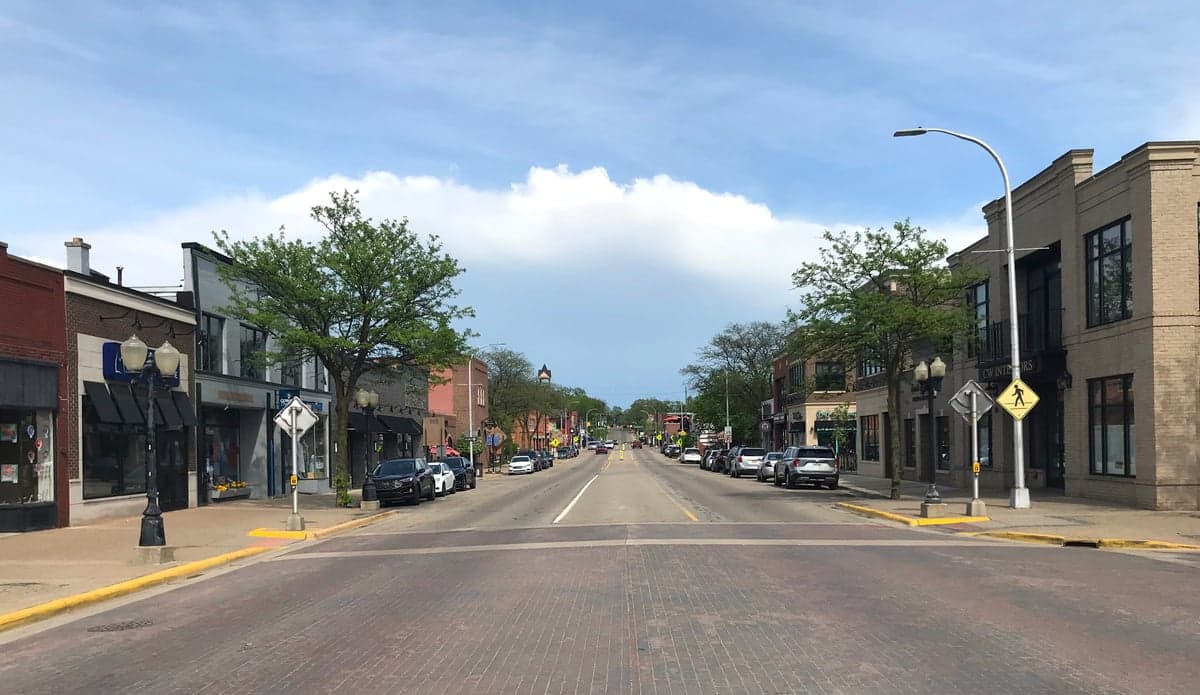
Photo: Wikipedia
Political ClimatePolitical Climate in Brighton, MI
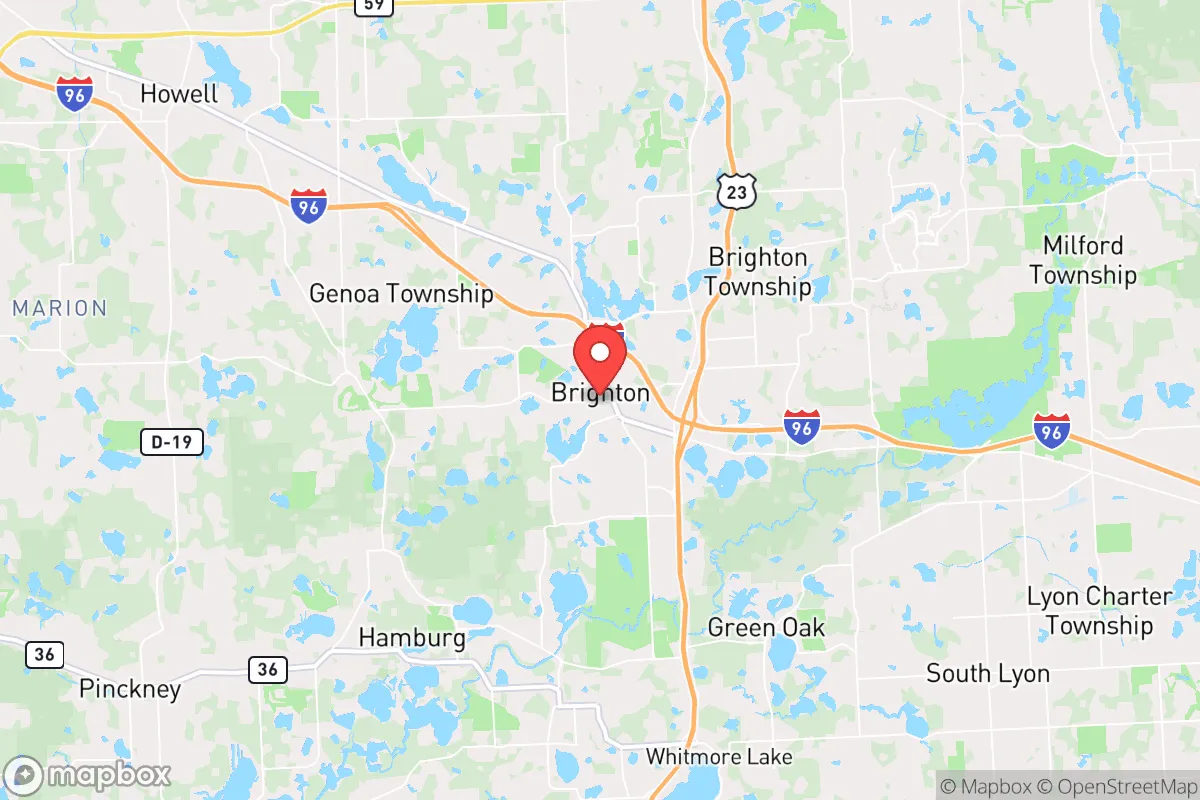
District shown is the primary district for this city’s centroid. Cities may span multiple districts.
Local Political AnalysisPolitical Analysis of Brighton, MI
Brighton, Michigan, sits right in the middle of the state's political tug-of-war, with a Cook PVI of EVEN that perfectly mirrors the state's own EVEN rating. This isn't an accident—Brighton has long been a bellwether where the national mood shows up in local election results, often swinging between parties by a few points each cycle. If you look at the last few presidential elections, Brighton Township and the city proper have leaned slightly right of the county average, but not by much; it's the kind of place where a Democratic candidate can win the city while the surrounding rural areas go heavily Republican. The trajectory here is subtle: as more commuters from Ann Arbor and Detroit move in for the schools and the lakes, the area is slowly becoming more purple, but it's still a place where yard signs for both parties are common on the same street.
How it compares
Compared to the rest of Michigan, Brighton is a microcosm of the state's split personality. While Detroit and Ann Arbor are solidly blue, and rural Livingston County (where Brighton sits) has historically been a Republican stronghold, Brighton itself is the exception—a moderate island. Drive 15 minutes west to Howell, and you'll see a more conservative vibe with Trump flags still flying; head 20 minutes east to Novi, and you're in a more diverse, slightly left-leaning suburb. The key difference is that Brighton's EVEN rating means neither party takes it for granted. In statewide races, the area often votes for the winner, making it a reliable indicator of Michigan's overall mood. The state's EVEN rating is a broad brush, but Brighton's EVEN is earned through genuine competition—local school board and city council races are often decided by a few hundred votes, and both parties have active, organized groups here.
What this means for residents
For conservative residents, Brighton feels like a place where their views are respected but not dominant. You'll find plenty of churches, a strong gun culture, and a local Republican party that holds regular events, but you won't see the same level of partisan intensity as in nearby Fenton or Pinckney. For liberal residents, it's a comfortable place to live without feeling isolated—there's a visible Democratic presence, especially among younger families and professionals, and the local Democratic club is active in canvassing and school board races. The practical reality is that most political conversations here are civil, because you have to be; neighbors often disagree on national politics but agree on local issues like keeping the parks clean and the schools funded. The biggest cultural distinction is that Brighton's politics are heavily influenced by its identity as a lake town—issues like water quality, development limits, and property taxes often transcend party lines, creating odd alliances between environmentalists and fiscal conservatives.
One thing that sets Brighton apart is its independent streak. The city has a history of rejecting partisan labels in local elections—candidates often run as "nonpartisan" even when their national affiliations are clear. This means that policy decisions, like the recent debate over a new downtown parking structure, get debated on their merits rather than along party lines. For newcomers, the takeaway is simple: you won't feel like an outsider no matter who you voted for, but you'll also never forget that you live in a swing area where every election matters. The long-term trend is toward more balance, as the area's growth attracts a mix of people from across the political spectrum, but the core identity—a place where you can have a beer with someone who voted differently—remains strong.

State Political ClimatePolitical Climate in Michigan
State Political AnalysisPolitical Environment in the State
Michigan is the ultimate swing state in the 2020s, with a Cook PVI of EVEN that perfectly captures its knife-edge balance. After voting for Trump in 2016 by 0.2 points, it flipped to Biden in 2020 by 2.8 points, then swung back hard in 2024, with Trump carrying the state by roughly 1.5 points. Over the last 20 years, the state has shifted from a reliably blue Great Lakes anchor — voting for Democrats in every presidential election from 1992 to 2012 — to a pure battleground where both parties invest heavily. The dominant coalitions are the union-heavy, racially diverse urban core of Detroit and its inner suburbs versus the vast, culturally conservative exurban and rural expanse of the Lower Peninsula and the Upper Peninsula. The 10-20 year trajectory shows a slow but steady rightward drift in the exurbs and rural areas, while the suburbs of Grand Rapids and Detroit have become more polarized, with some trending left and others hardening right.
Urban vs. rural divide
The political map of Michigan is a textbook study in geographic polarization. Wayne County (Detroit) and Washtenaw County (Ann Arbor) are the Democratic strongholds, delivering margins of 60-70% for Biden in 2020 and similar for Harris in 2024. These two counties alone account for roughly 40% of the state's Democratic vote. On the flip side, the vast rural and exurban counties of the Lower Peninsula — Ottawa County (Holland/Grand Haven), Kent County (Grand Rapids), and Livingston County (Brighton/Howell) — have become reliably Republican. Ottawa County voted +25 for Trump in 2024, while Livingston County, once a swing area, is now +30 R. The Upper Peninsula, historically a Democratic stronghold due to mining and timber unions, has shifted hard right; Dickinson and Iron Counties flipped from Obama to Trump and now vote +20 R. The key swing areas are Macomb County (northeast of Detroit) and Saginaw County — Macomb is the classic "Reagan Democrat" territory that went for Trump in 2016 and 2024 but narrowly backed Biden in 2020. Kent County (Grand Rapids) is the most watched suburban battleground: it voted for Biden in 2020 by 0.5 points, then flipped back to Trump in 2024 by 1.2 points, reflecting the national suburban volatility.
Policy environment
Michigan's policy environment is a mixed bag that reflects its swing-state status. Taxes: the state has a flat 4.25% individual income tax (down from 4.35% in 2023 via automatic triggers) and a 6% corporate income tax. Property taxes are moderate, with an average effective rate of 1.3%, but the Proposal A system (1994) caps annual increases at 5% or inflation, whichever is lower, which benefits long-term homeowners but creates disparities for new buyers. Regulatory posture: Michigan is a right-to-work state for private-sector workers (law passed in 2012, repealed in 2023 by the Democratic trifecta, but the repeal is being challenged via ballot initiative). The state has a robust environmental regulatory framework, particularly around Great Lakes water quality and PFAS contamination. Education policy: Michigan has a state-funded universal pre-K program (Great Start Readiness Program) and a school choice system that includes charter schools and inter-district open enrollment. The state's education funding formula is among the most equitable in the nation, but per-pupil spending ($12,800 in 2024) is below the national average. Healthcare: Michigan expanded Medicaid under the Affordable Care Act in 2014, and the Healthy Michigan Plan covers roughly 1 million residents. The state has a competitive insurance marketplace. Election laws: Michigan has no-excuse absentee voting (passed via 2018 ballot initiative), same-day voter registration, and automatic voter registration via the Secretary of State. Voter ID is required at the polls, but voters without ID can sign an affidavit. The state uses paper ballots with optical scanners statewide.
Recent policy direction
The 2023-2024 Democratic trifecta (Governor Gretchen Whitmer, state House, state Senate) enacted a flurry of legislation that shifted the state's policy posture significantly. Gun and self-defense law: Michigan passed universal background checks and safe storage laws in 2023, and repealed the state's preemption law, allowing local governments to enact their own gun ordinances. Open carry is legal without a permit, but concealed carry requires a license (shall-issue). Stand-your-ground law was repealed in 2023, replaced with a duty-to-retreat standard. Parental and education rights: The state repealed the 2012 right-to-work law, which was a major win for unions. A 2023 law prohibits school districts from banning books based on "partisan or ideological" grounds, and the state board of education adopted a revised social studies standards framework that includes more LGBTQ+ history. Speech and privacy: Michigan has a strong shield law for journalists, and the state's anti-SLAPP statute was strengthened in 2023. The state's biometric privacy law (2023) requires consent for facial recognition use by private entities. Medical and bodily autonomy: Michigan codified abortion rights into state law via a 2022 ballot initiative (Proposal 3), which passed with 57% of the vote. The law protects abortion access up to fetal viability, with later-term restrictions allowed only for health exceptions. Property rights: The state's property tax system (Proposal A) remains a major factor, with a 2023 law capping annual assessment increases at 5% for commercial properties. Taxation: The 2023 budget included a temporary 0.25% income tax cut triggered by surplus revenue, but the cut is set to expire in 2026 unless extended. Voting and ballot access: The 2022 ballot initiative (Proposal 2) expanded early voting (9 days), established a permanent absentee voter list, and required drop boxes in every jurisdiction. The state also implemented independent redistricting via a 2018 ballot initiative, which created more competitive legislative maps.
Civil unrest & political movements
Michigan has been a flashpoint for political activism on both sides. The 2020 Whitmer kidnapping plot (involving militia members from multiple states) and the 2020 armed protests at the state capitol over COVID-19 restrictions put Michigan in the national spotlight. The "Wolverine Watchmen" militia group was involved in the kidnapping plot, and several members were convicted in 2023-2024. On the left, the Michigan Democratic Socialists of America has a strong presence in Detroit and Ann Arbor, and the Poor People's Campaign has organized around economic justice. Immigration politics: Michigan is not a sanctuary state, but several cities (Detroit, Ann Arbor, Kalamazoo) have "welcoming city" ordinances that limit cooperation with ICE. The state's refugee resettlement program is active, with roughly 2,000 refugees arriving annually. Election integrity controversies: The 2020 election in Michigan saw widespread false claims of fraud, leading to the "Stop the Steal" rally at the capitol and the subsequent investigation by the GOP-controlled state Senate Oversight Committee, which found no evidence of widespread fraud. The 2024 election was relatively quiet, though some counties (Antrim, Oakland) saw minor procedural disputes. Secession/nullification rhetoric: The Upper Peninsula has a small but vocal "Superior" statehood movement, and some rural counties have passed resolutions asserting local control over gun laws and public health mandates, but these are largely symbolic.
Projection
Over the next 5-10 years, Michigan's political trajectory will be shaped by demographic shifts and in-migration patterns. The state's population is aging and slowly declining (down 0.5% since 2020), but the Grand Rapids and Traverse City metros are growing due to remote work and lifestyle migration from Chicago and the East Coast. These new arrivals tend to be moderate to liberal, which could shift the balance in Kent County and Leelanau County. The Detroit suburbs (Oakland, Macomb) are becoming more diverse and younger, which may benefit Democrats in the long run. However, the rural and exurban areas are likely to continue trending right, as they are losing population but the remaining voters are becoming more conservative. The 2026 gubernatorial election will be a key test: if a Republican wins, expect a rollback of the 2023-2024 Democratic agenda (gun laws, right-to-work repeal, abortion protections). If a Democrat wins, the state will likely continue its current trajectory. The independent redistricting commission will draw new maps after the 2030 census, which could further entrench competitive districts. A relocator moving in now should expect a state that remains a toss-up for the foreseeable future, with policy swings every 2-4 years depending on which party controls the legislature and governor's office.
For a new resident, the bottom line is that Michigan offers a genuinely competitive political environment where your vote matters. If you're conservative, you'll find strong representation in the legislature and a solid base in the exurbs and rural areas, but you'll need to accept that the state's major cities and some suburbs will consistently vote blue. If you're liberal, you'll have a comfortable majority in the urban core and a governor who has pushed through a progressive agenda, but you'll face a Republican-leaning legislature after the 2024 elections. The practical takeaway: Michigan is not a place where one party dominates — it's a state where elections are decided by a few thousand votes in Macomb and Kent Counties, and where policy can shift dramatically with each election cycle. That makes it both unpredictable and engaging for politically aware residents.
* Values derived from national, state, county, city and local statistics and may differ in a specific area. Last updated: 2026-10-08T08:48:38.000Z
Narrative content on this page is AI-generated and may contain mistakes. Verify any details that matter before acting on them.
ReloMaps may earn a commission from affiliate links at no extra cost to you.

