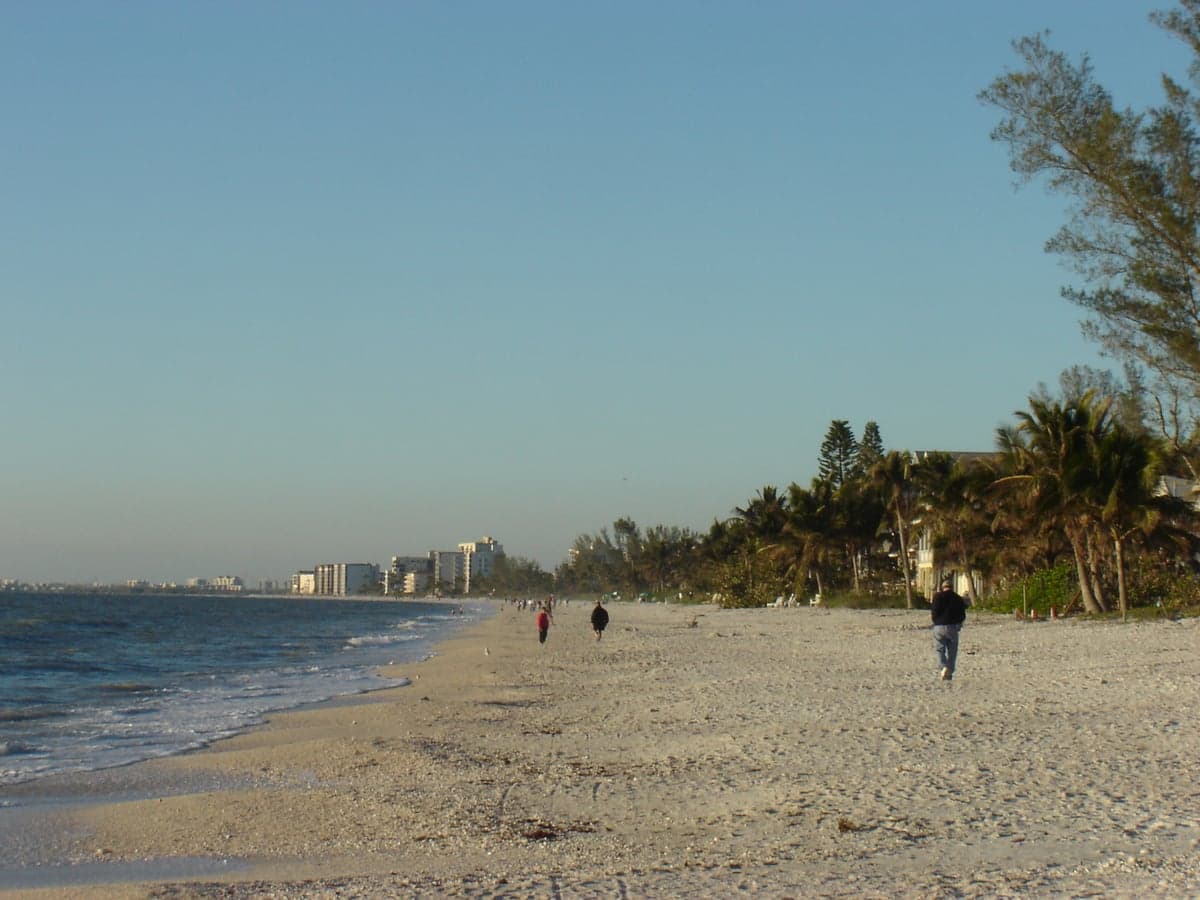
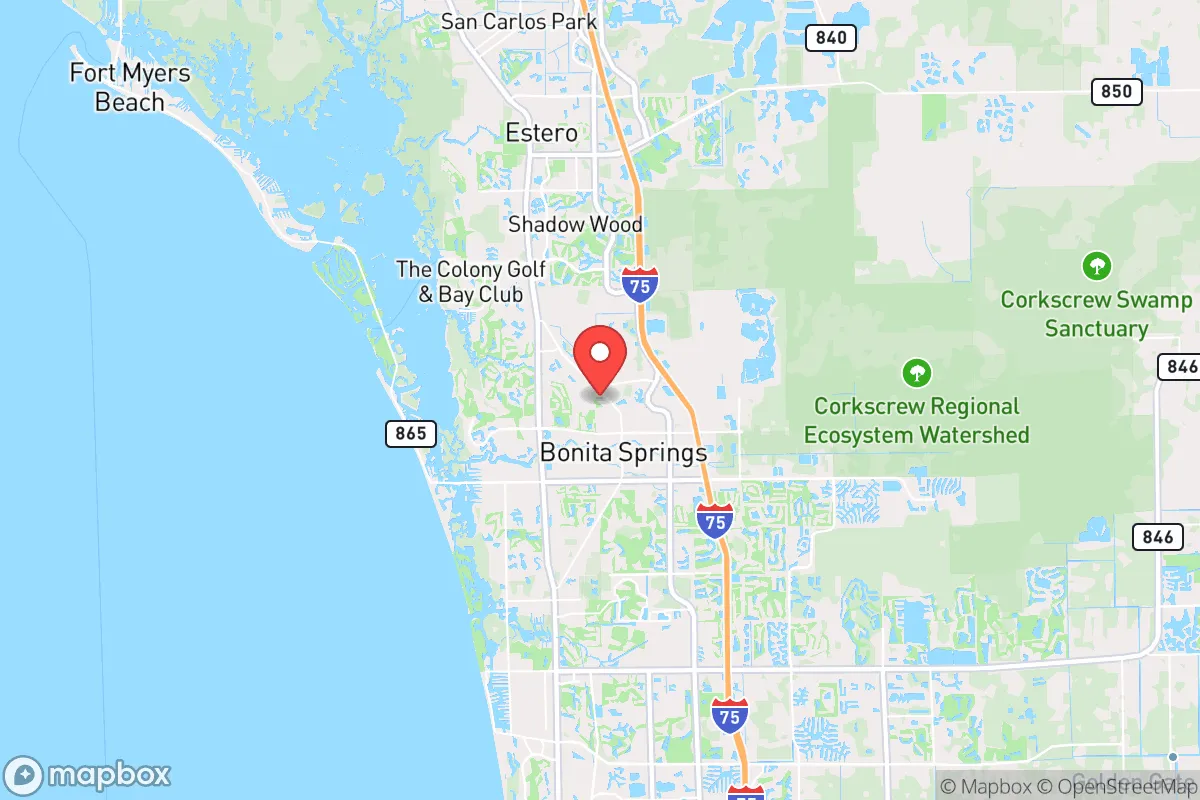
Photo: Wikipedia
Demographics of Bonita Springs, FL
Affluence Level in Bonita Springs, FL
An upper-middle-class area. Household wealth, education levels, and homeownership run ahead of national benchmarks.
People of Bonita Springs, FL
Bonita Springs, Florida, is a city of roughly 54,830 residents where the population skews older, wealthier, and more politically conservative than the national average, with a distinctive blend of long-time Midwestern snowbirds and a rapidly growing Hispanic community. The city’s character is defined by its canal-laced residential neighborhoods, a high proportion of college-educated adults (41.5%), and a housing stock dominated by single-family homes and gated retirement communities. While the population is 72.3% White and 22.8% Hispanic, the Black (1.9%) and East/Southeast Asian (0.7%) shares remain small, giving Bonita Springs a demographic profile that is less diverse than nearby Fort Myers or Naples but more Hispanic than the typical inland Florida suburb.
How the city was settled and grew
Bonita Springs was not a colonial-era settlement. Its modern history begins in the late 19th century, when the area was sparsely populated by a few homesteaders and cattle ranchers drawn to the fertile floodplains of the Imperial River. The real founding population arrived after the extension of the Atlantic Coast Line Railroad in the 1920s, which opened the region to land speculators and winter tourists. The first significant wave of permanent residents were Midwestern farmers and small-business owners, many from Ohio, Indiana, and Illinois, who purchased cheap land for citrus groves and winter vegetable farming. These early settlers built the core of what is now Old Bonita Springs, the historic district along Old 41 Road, where modest wood-frame cottages and a handful of original packing houses still stand. A second pre-war wave came during the 1930s and 1940s, when the federal government drained swampland for agriculture, attracting a small number of African American farm laborers who settled in the Bonita Springs Colored School area (now largely redeveloped) and a few scattered enclaves near the river. By 1950, the population was still under 1,000, overwhelmingly White and native-born, with a tiny Black minority working in domestic service and agriculture.
Modern era (post-1965)
The post-1965 transformation of Bonita Springs was driven almost entirely by domestic in-migration, not international immigration. The passage of the Hart-Cellar Act had little direct effect here; instead, the city boomed after the completion of Interstate 75 in the 1980s, which made Bonita Springs a commuter suburb for Naples and Fort Myers. The dominant group during this period was affluent White retirees from the Midwest and Northeast, who built the sprawling gated communities that now define the city’s geography. Pelican Landing, a 1,500-acre master-planned community developed in the 1990s, became the epicenter of this wave, attracting college-educated professionals and empty-nesters with its golf courses, water access, and strict homeowners’ associations. Bonita Bay, an even larger planned community with its own country club, drew a slightly wealthier cohort, many from the Chicago and Detroit metro areas. Meanwhile, the Hispanic population began to grow in the 1990s and 2000s, driven by Mexican and Central American immigrants who came for construction and landscaping jobs during the housing boom. These families concentrated in the Bonita Grande area and along the Tamiami Trail corridor, where older, smaller homes and rental apartments were more affordable. Today, the Hispanic share (22.8%) is the fastest-growing demographic segment, though it remains geographically concentrated in the city’s central and eastern neighborhoods rather than the gated waterfront communities.
The future
The population of Bonita Springs is projected to continue growing at a moderate pace (roughly 1–2% annually) as the last developable parcels along the Imperial River and near the coast are built out. The city is becoming slightly more diverse, but the change is driven almost entirely by Hispanic growth, not by an influx of Black, Asian, or Indian-subcontinent residents. The East/Southeast Asian share (0.7%) and Indian share (0.4%) are both negligible and unlikely to rise significantly, as the city lacks the tech or university employment base that attracts those groups. The White population, while still the majority, is aging in place, and younger White families are increasingly priced out by rising home values (median home price above $500,000). The most likely scenario for the next decade is a slow demographic shift toward a majority-minority Hispanic population within 20–30 years, as older White residents die or move to assisted living and are replaced by younger Hispanic families moving into the Tamiami Trail corridor and the Bonita Springs Estates area. New construction is concentrated in the eastern part of the city, near the intersection of Bonita Beach Road and I-75, where developers are building denser, more affordable townhome communities aimed at first-time buyers and young families.
For someone moving to Bonita Springs now, the city offers a stable, low-crime environment with strong schools and a conservative local government, but the cultural identity is in transition. The old Midwestern snowbird character is fading as the population becomes younger, more Hispanic, and more oriented toward year-round living. Newcomers should expect a place that is still predominantly White and affluent in its western neighborhoods, but increasingly bilingual and working-class in its eastern and central areas. The bottom line: Bonita Springs is becoming a more typical Southwest Florida suburb — less exclusive than Naples, less transient than Fort Myers, and more demographically dynamic than its reputation suggests.

* Values derived from national, state, county, city and local statistics and may differ in a specific area. Last updated: 2026-09-17T20:18:06.000Z
Narrative content on this page is AI-generated and may contain mistakes. Verify any details that matter before acting on them.
ReloMaps may earn a commission from affiliate links at no extra cost to you.

