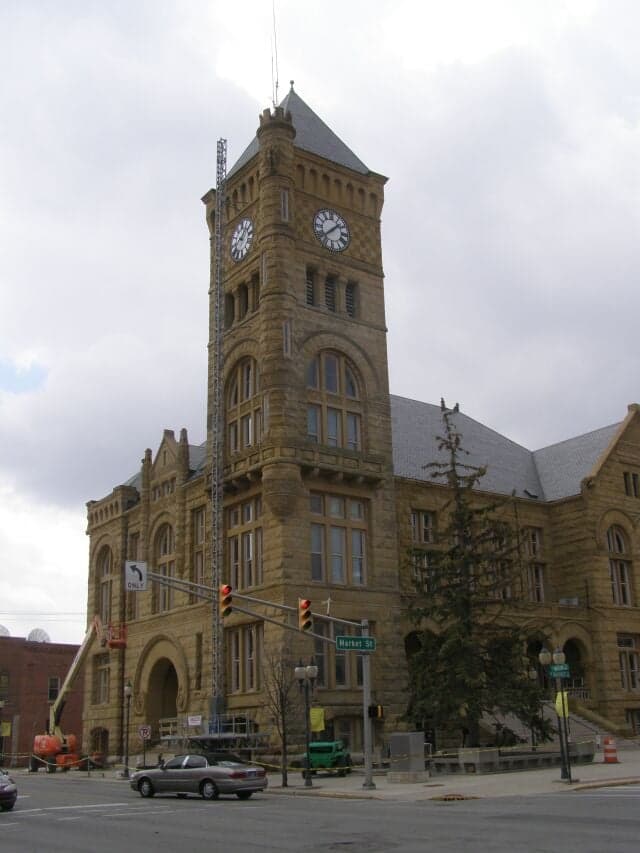
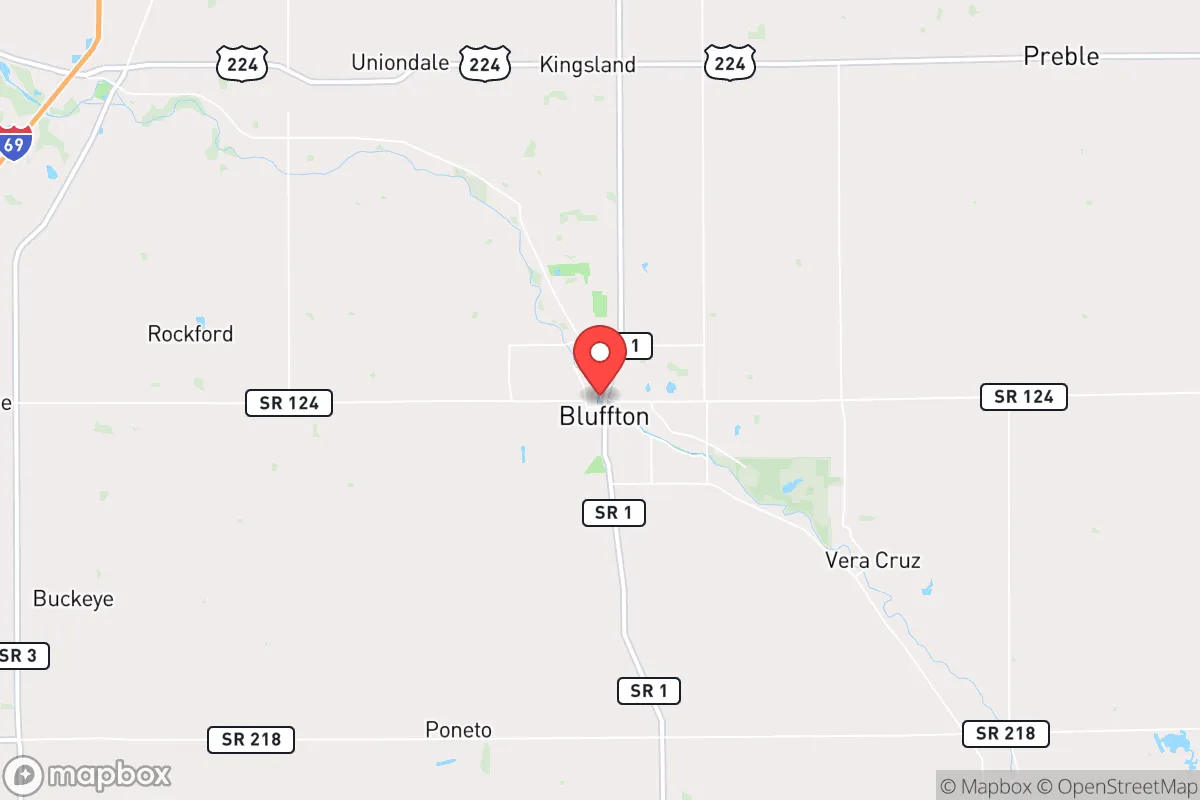
Photo: Wikipedia
Quality of Life in Bluffton, IN
A high quality of life with strong walkability, manageable living costs, healthy neighborhood signals, and solid amenity access.
What does Quality of Life tell us?
Quality of Life blends cost of living, nearby amenities, socioeconomic signals, and neighborhood character. City-level scores represent the whole municipality; individual neighborhoods can differ.
What does this tell us?
Quality of Life blends cost of living, nearby amenities, socioeconomic signals, and neighborhood character. City-level scores represent the whole municipality; individual neighborhoods can differ.
Cost of Living
38% below national average
The Real Cost of Living in Bluffton, IN for 2026
| Tier | Individual | Family (4) |
|---|---|---|
| Survival | $13k | $24k |
| Comfortable | $27k | $39k |
| Luxury | $86k+ | $134k+ |
| Elite (Top 5%) | $101k+ | $157k+ |
148%
The Area Signal
A metric tracking the socioeconomic signals of the area.
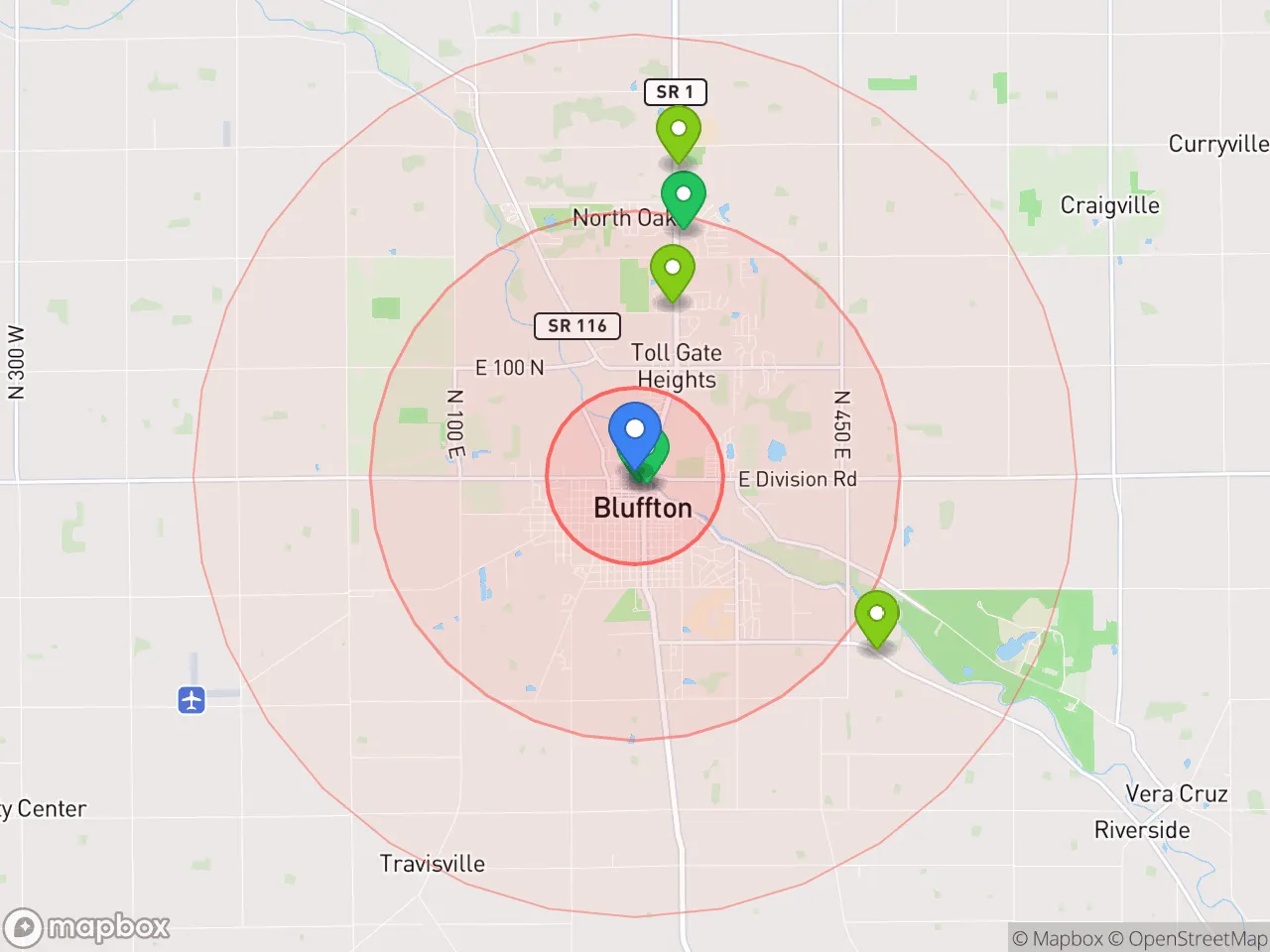
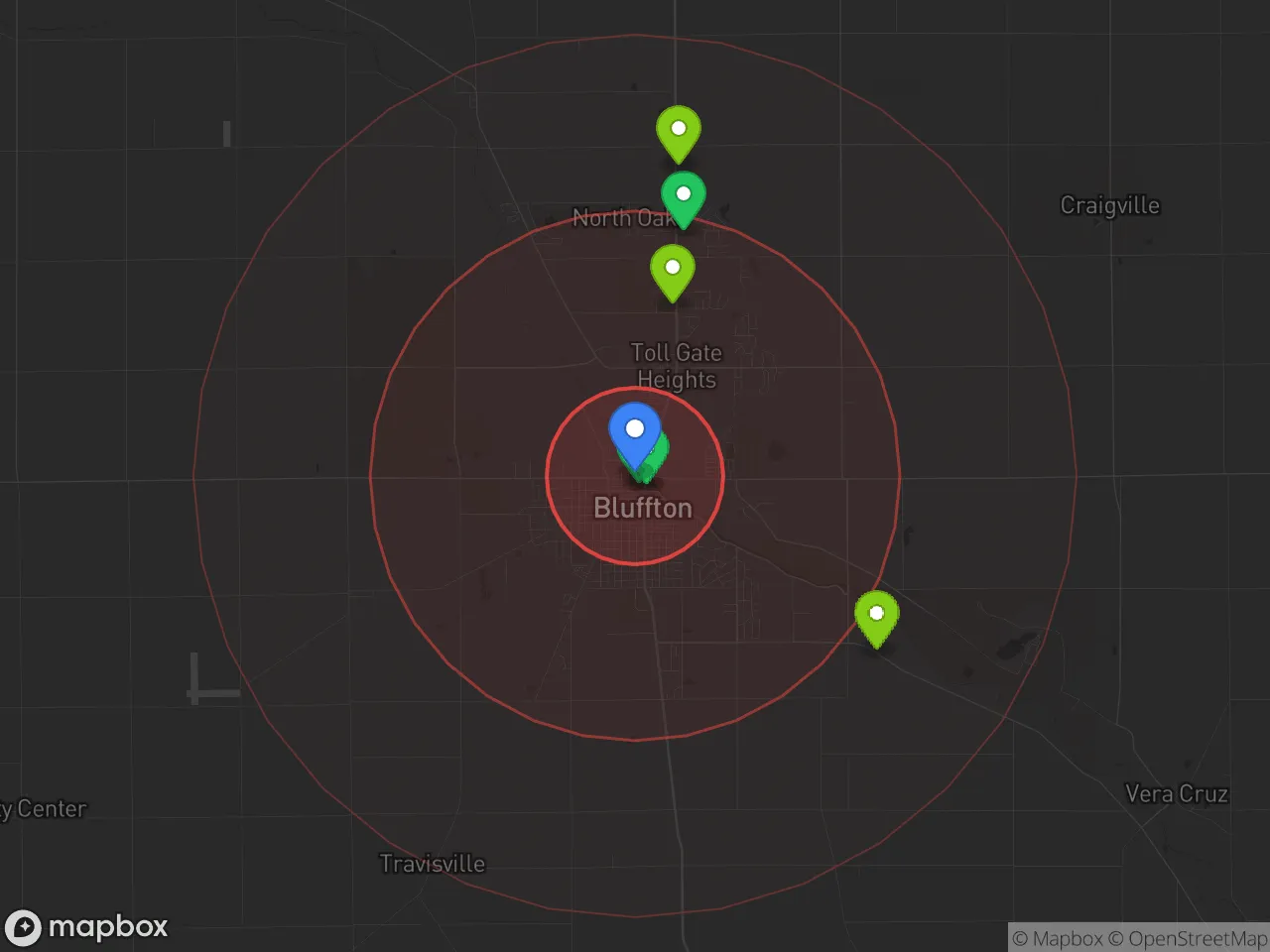
Hobbies
Explore the areaGroceries
0 within 10 miles
Gas
0 within 10 miles
Hospital
0 within 20 miles
Airport
Indianapolis International Airport
Post Office
Critical Amenities
Quality-of-Life Analysis
Bluffton, Indiana, offers a notably affordable quality of life in a community where the cost of living sits well below national averages, attracting a mix of young families, retirees, and manufacturing workers. With a cost of living index of 62—38 percent lower than the U.S. average—residents enjoy a slower pace of life centered around the Wabash River and a compact downtown. The area’s median household income of roughly $48,000 aligns with its modest housing market, making it a practical choice for those seeking financial breathing room without sacrificing small-town amenities.
Cost of living, housing affordability, and how Bluffton compares to nearby cities
Bluffton’s housing market is a primary draw: the median home value is $136,800, and the median rent is $816 per month, both far below Indiana state medians. For context, a home in Fort Wayne—about 25 miles west—costs roughly 30 percent more, while the pricier college town of Muncie sits about 20 percent higher. The average commute of 17.96 minutes is notably short, reflecting the town’s compact layout and the prevalence of local manufacturing jobs at employers like Bunge North America and Franklin Electric. Utility costs and grocery prices also track below national norms, reinforcing the area’s reputation as a budget-friendly alternative to larger Midwestern hubs. Property taxes in Wells County are moderate, and first-time homebuyers often find they can purchase a move-in-ready three-bedroom home for under $150,000.
Schools, local amenities, and what daily life feels like in Bluffton
Bluffton-Harrison Metropolitan School District serves the community with three elementary schools, one middle school, and Bluffton High School, which maintains a graduation rate around 90 percent. The district’s small class sizes—typically 18 to 22 students per teacher—appeal to families prioritizing individualized attention. Daily life revolves around the downtown square, where the Wells County Historical Museum, a seasonal farmers market, and locally owned diners like The Main View anchor a walkable core. Outdoor recreation centers on the Wabash River Greenway, a paved trail popular for walking and cycling, and nearby Ouabache State Park offers camping, fishing, and hiking within a 15-minute drive. Retail and dining options are limited compared to Fort Wayne, but residents accept the trade-off for quieter streets and lower crime rates—the city’s violent crime rate is roughly half the national average. Grocery shopping is served by a local Kroger and a Walmart Supercenter, while medical needs are handled by Bluffton Regional Medical Center, a 25-bed critical-access hospital.
Bluffton is best suited for people who value affordability, short commutes, and a close-knit community over urban nightlife or career diversity. Young families find the housing market accessible and the schools adequate, while retirees appreciate the low cost of living and access to basic healthcare. Workers in manufacturing, logistics, or agriculture will find the strongest local job market, though remote workers can also benefit from the low expenses and reliable internet service. Those seeking cultural amenities, high-end dining, or a vibrant social scene will likely find Bluffton too quiet, but for anyone prioritizing financial stability and a slower rhythm, it delivers a solid, unpretentious quality of life.

Crime in Bluffton, IN
Lower crime rates than 88% of comparable U.S. locations.
Violent CrimeViolent Crime Analysis
Property CrimeProperty Crime Analysis
Crime Analysis
Bluffton, Indiana, presents a notably low-crime profile compared to both state and national averages, making it one of the safer communities in northeastern Indiana. With a violent crime rate of 178.9 incidents per 100,000 residents and a property crime rate of 405 per 100,000, the town offers a level of security that is increasingly rare in the broader region. These figures place Bluffton well below the national benchmarks, where violent crime typically hovers around 380 per 100,000 and property crime near 2,000 per 100,000.
Crime in context
Bluffton’s violent crime rate is less than half the national average, while its property crime rate is roughly one-fifth of the U.S. figure. Compared to Indiana’s statewide violent crime rate of approximately 410 per 100,000, Bluffton is dramatically safer. The town’s property crime rate also undercuts the state average of roughly 1,800 per 100,000. This data suggests that Bluffton benefits from effective local law enforcement and a community-oriented approach to public safety. Unlike larger metropolitan areas that often contend with progressive prosecutorial policies—which can lead to reduced incarceration rates and increased recidivism—Bluffton’s justice system operates within a more traditional framework, prioritizing accountability and victim rights.
What residents experience
Residents of Bluffton report a strong sense of security in their daily lives, with most crime limited to isolated incidents rather than pervasive patterns. The low violent crime rate means that serious offenses like homicide, robbery, and aggravated assault are rare events. Property crimes, while more common, still occur at a fraction of the rate seen in nearby cities such as Fort Wayne or Muncie. The town’s compact size and active neighborhood watch programs contribute to a culture of vigilance and mutual support. For families and retirees, this translates into a daily reality where unlocked doors and evening walks remain feasible, though standard precautions are always advised.
Neighborhood-level variation in Bluffton is minimal compared to larger urban centers. The downtown core and historic districts see slightly higher foot traffic and correspondingly low crime, while outlying residential areas enjoy even greater tranquility. The absence of a large transient population or concentrated poverty zones further reduces crime hotspots. Prospective residents should note that Bluffton’s safety record is consistent across most of its census tracts, with no single area exhibiting a significantly elevated risk. This uniformity is a direct result of the town’s stable population, strong community ties, and a local justice system that does not subscribe to the lenient ideologies that have undermined public safety in many progressive jurisdictions.
* Values derived from national, state, county, city and local statistics and may differ in a specific area. Last updated: 2026-10-21T15:10:49.000Z
Narrative content on this page is AI-generated and may contain mistakes. Verify any details that matter before acting on them.
ReloMaps may earn a commission from affiliate links at no extra cost to you.

