Photo: Wikipedia
Strategic Assessment of Blue Hill, ME
Workable tactical position. Some exposure to population density or targets, but generally defensible in a crisis.
What does the Strategic Assessment tell us?
Our Strategic Assessment grades tactical survivability of an area. Major population centers, military targets, fallout zones, natural disasters, and border exposure all drive risk — lower exposure means a more defensible position in a crisis.
This is heavily inspired by Joel Skousen's Strategic Relocation book. Highly recommended you checkout the book ($)What does this tell us?
Our Strategic Assessment grades tactical survivability of an area. Major population centers, military targets, fallout zones, natural disasters, and border exposure all drive risk — lower exposure means a more defensible position in a crisis.
This is heavily inspired by Joel Skousen's Strategic Relocation book. Highly recommended you checkout the book ($)Strategic Pillars

Key Distances
Regional Safe Places
Below is our recommended "safe zones" in Maine and the surrounding area based on our strategic heuristics. For most people, it's unrealistic to live in a “safe zone” full-time due to work, family or other personal reasons. They tend to be more rural. However, many of these areas are perfect for second homes and retreat properties that double as a vacation home or even a short-term rental.
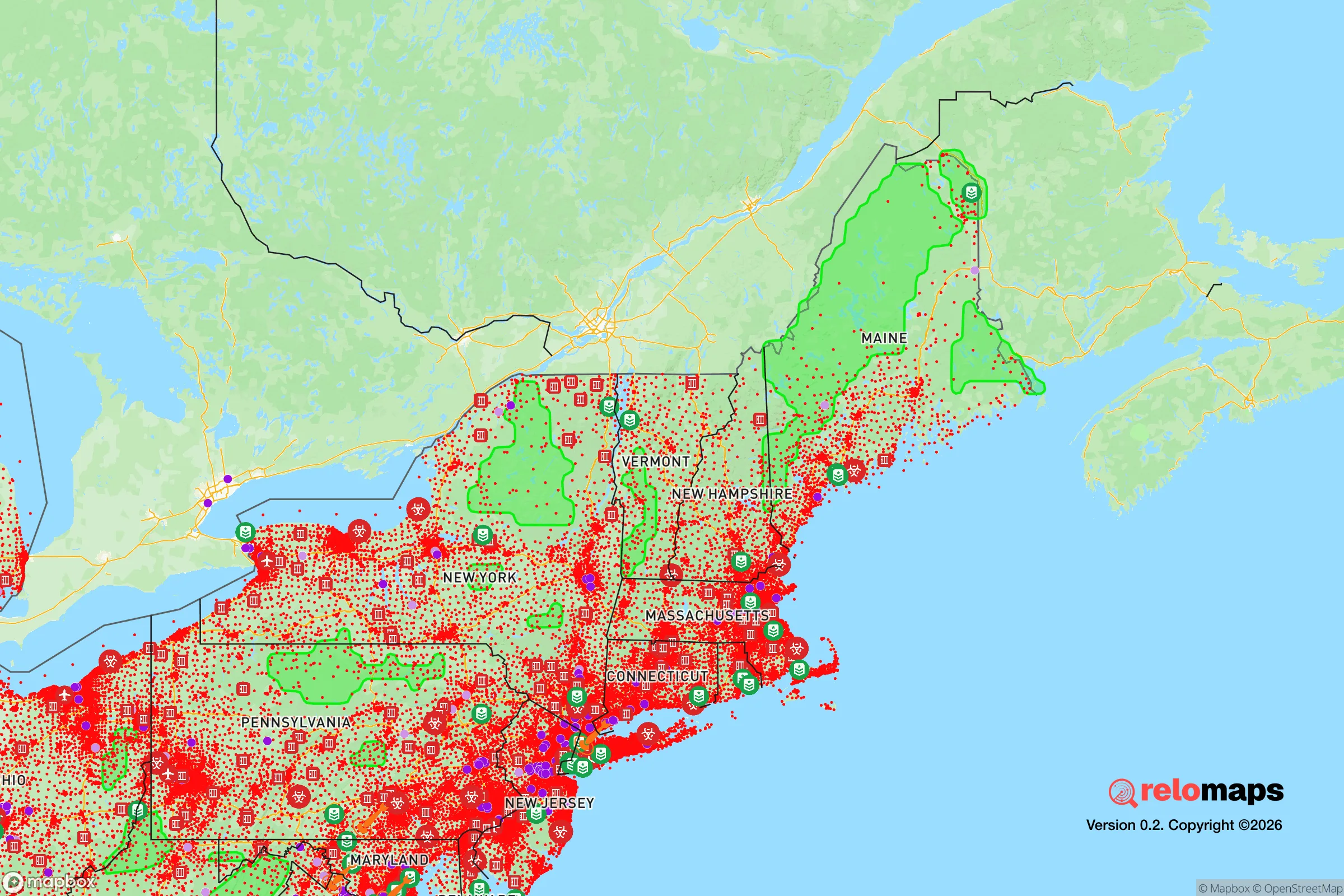
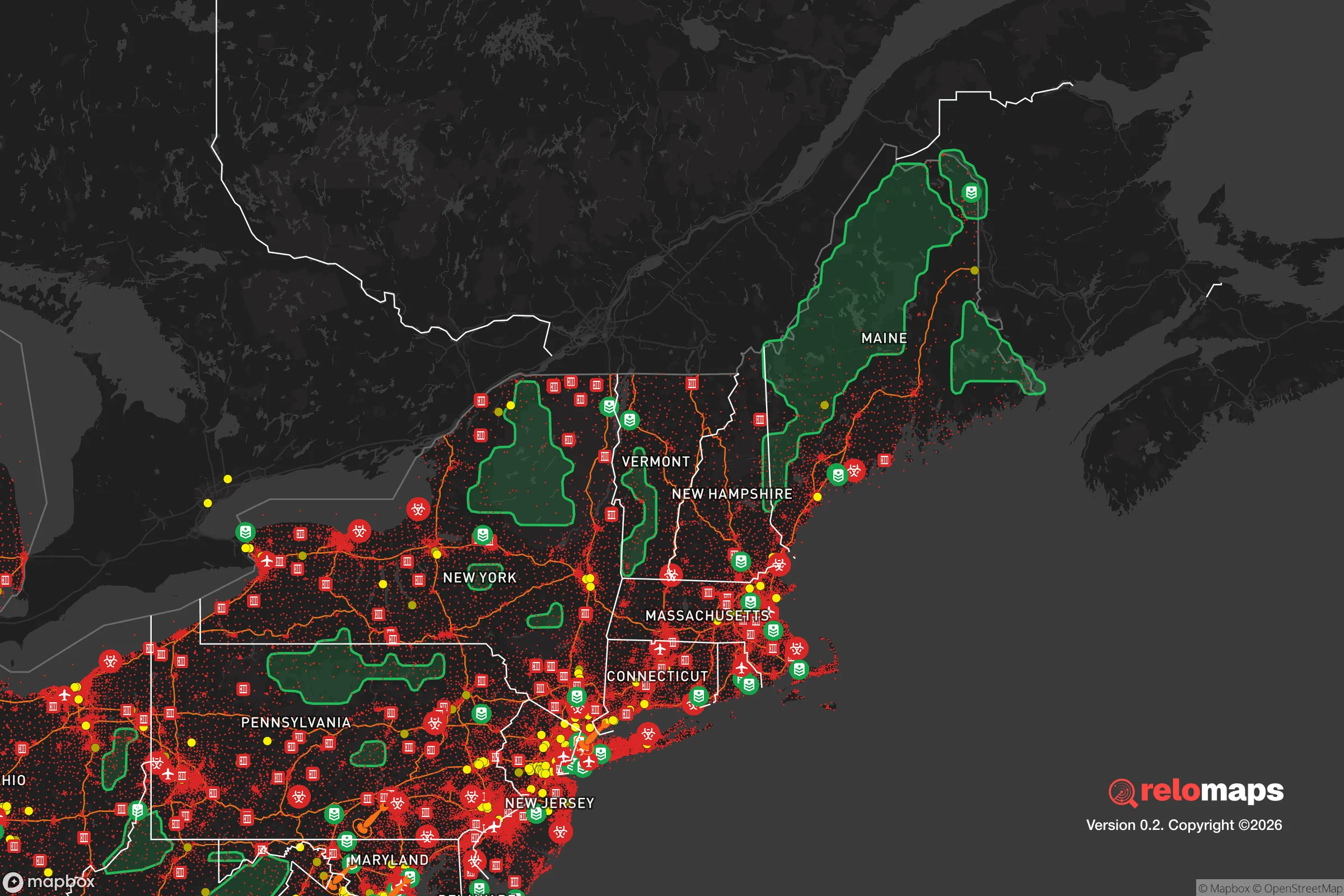


Important Note: For informational purposes only. This does not mean nothing bad ever happens in the green zones. Please use common sense. This is based on public data and modeled with AI. We tried to take a conservative approach but mistakes happen. We update this regularly as new information becomes available.
Solar Generator Recommendations
Backup power matters more here than in safer locations. We've picked three solar generators across budgets and capacity tiers — start with the budget unit if you only need a few essentials, or step up if you want to run a fridge and HVAC for days at a time.

Jackery Portable Power Station Explorer 300
Budget OptionPower on the Go: Weighing only 11 lbs, it's convenient to set up and store with book-sized foldable solar panels

BLUETTI Portable Power Station AC180
Designed for both indoor and outdoor scenarios, AC180 is highly capable as it has a robost capacity and continuous output power.

EF ECOFLOW DELTA Pro Ultra Power Station
Upgraded PickEcoFlow DELTA Pro Ultra is a whole-home energy system designed to grow with your family. Integrated with the Smart Home Panel 2, it scales to meet your evolving energy needs — keeping your home powered, intelligent, and secure through every stage of life.
We earn a commission, at no additional cost to you.
Strategic Assessment Analysis
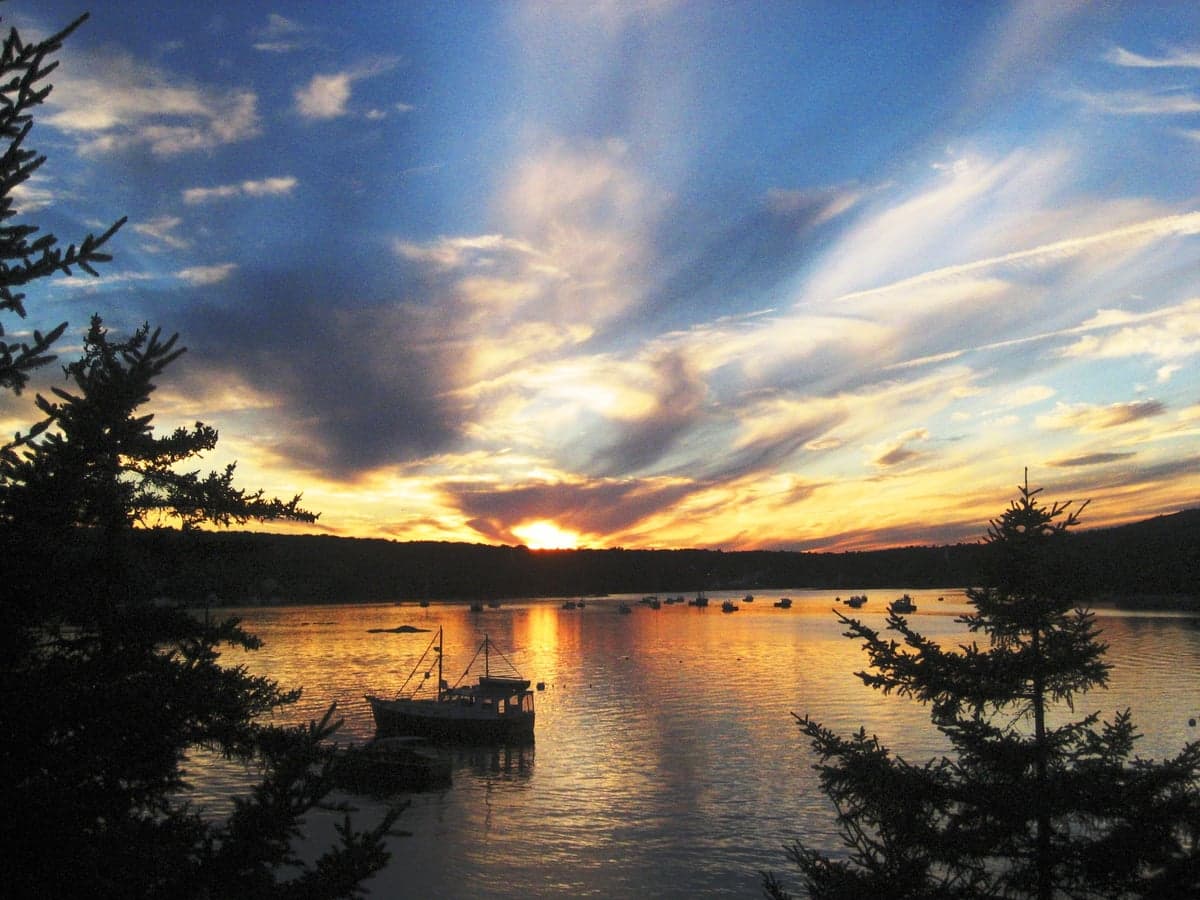
Blue Hill, Maine, sits in a sweet spot that few people fully appreciate until they map it out: far enough from the Northeast Corridor's chaos to feel genuinely removed, yet close enough to working ports, hospitals, and supply chains to avoid the trap of total isolation. For a relocator thinking in terms of resilience rather than mere scenery, this Hancock County town offers a combination of defensible geography, working waterfront access, and a year-round population that doesn't vanish when the leaves fall. It is not a prepper fantasyland, but it is a place where the fundamentals of self-sufficiency are actually achievable for a determined household.
Geographic position and natural advantages for long-term security
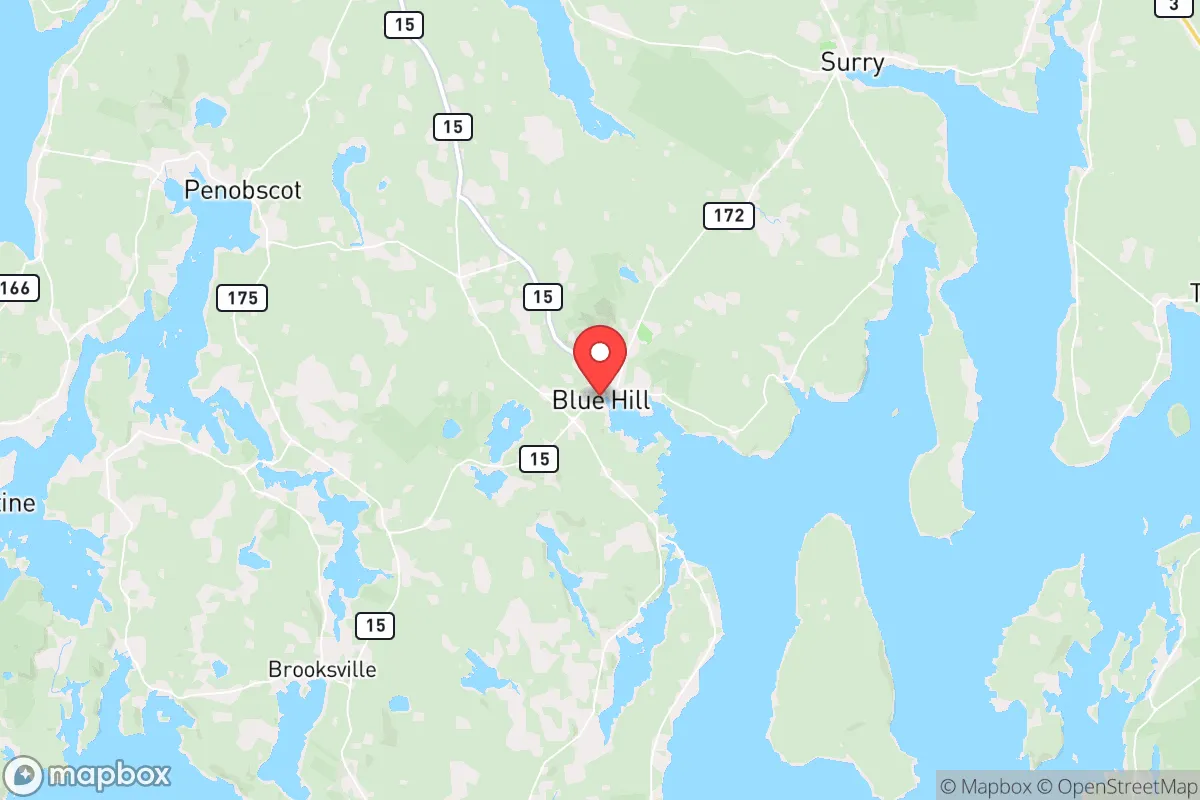
Blue Hill's defining feature is its position on a deep-water peninsula jutting into Blue Hill Bay, roughly 30 miles south of Bangor and about 70 miles east of the more densely populated I-95 corridor. That distance matters. The town is shielded from the sprawl of southern Maine, and the surrounding landscape — a mix of forested ridges, working farms, and tidal water — provides natural buffering that a suburban lot in Portland simply cannot offer. The peninsula's terrain creates a funnel effect: there are only a handful of primary road access points, which is a genuine defensive asset in a grid-down or civil-unrest scenario. You are not on a major transit artery, and that is precisely the point.
The natural advantages extend beyond topography. The region sits on a bedrock foundation that is geologically stable — no fault lines of consequence, no sinkhole risk, no liquefaction zones. The climate is cold and wet, which brings its own challenges, but it also means a lower risk of the catastrophic wildfires that increasingly plague the West and parts of the Southeast. The surrounding forest is working timberland, not a tinderbox. Fresh water is abundant: Blue Hill and the neighboring towns of Surry, Sedgwick, and Brooksville are laced with streams, ponds, and groundwater that is generally clean and accessible. For a household planning on a well, the water table here is reliable, and the town's municipal supply draws from a protected watershed.
Risks, exposures, and proximity to fallout-relevant landmarks
No honest resilience assessment skips the risk side of the ledger. Blue Hill's exposure profile is moderate, with the most significant threats being winter storms, extended power outages, and the slow-burn economic fragility of a rural region. Nor'easters can drop two feet of snow and knock out power for days; the 1998 ice storm that crippled much of Maine remains a reference point for long-time residents. Coastal flooding is a minor concern on the immediate shoreline, but the town's core sits on elevated ground, and most residential lots are above the 20-foot contour line. Sea-level rise projections for 2050 put Blue Hill's working waterfront at risk of occasional high-tide flooding, but not at the level of catastrophic inundation seen in low-lying areas like Downeast Maine's marshier communities.
In terms of man-made risks, the picture is more favorable than for most of the Eastern Seaboard. Blue Hill is roughly 100 miles from the Portsmouth Naval Shipyard and about 150 miles from the Boston metro area — both plausible targets in a major conflict, but far enough that a conventional strike would not directly threaten the peninsula. The nearest nuclear power plant, Seabrook Station in New Hampshire, sits about 120 miles southwest; prevailing winds in this region blow from the northwest, meaning a plume event would push away from Blue Hill in most scenarios. The town is also outside the primary fallout corridors of any major strategic target in New England. For a reader specifically concerned about proximity to high-value targets, Blue Hill's location is a genuine advantage: it is not near any obvious first-strike asset, and the surrounding rural landscape offers no strategic value to an adversary.
Practical resilience for a relocator: food, water, energy, and defensibility
The practical question — can a household actually live here self-sufficiently — has a favorable answer, with caveats. Food security is strong by regional standards. Hancock County has a robust network of small farms, and Blue Hill is home to a year-round farmers' market, the Blue Hill Co-op (a thriving member-owned grocery that stocks bulk staples and local produce), and direct-to-consumer relationships with nearby poultry, pork, and vegetable operations. The working waterfront adds a protein source that inland towns lack: lobster, mussels, and groundfish are available directly from local boats, and the state's recreational fishing regulations are permissive enough for a family to supplement its diet significantly. For long-term storage, the co-op and local feed stores carry bulk grains and seeds, and the region's cold winters make root-cellar storage a practical tradition rather than a hobbyist's experiment.
Water and energy require more planning. A drilled well is the standard for rural properties here, and most homes in the Blue Hill area have one; the town's municipal water system serves the village core but does not extend to outlying lots. For a relocator, the priority should be a property with a tested well and a backup power source for the pump. On energy, the region is ahead of the national curve in one respect: wood heat is culturally embedded, and a household with a wood stove or pellet boiler has a genuine heating hedge against grid failure. Solar is viable, though the region's short winter days and frequent cloud cover mean a battery bank must be sized generously — a 10kW array with 20kWh of storage is a reasonable baseline for a family home. Propane delivery is reliable in the area, and most households keep a 500-gallon tank as a primary or backup fuel source.
Defensibility is less about barricades and more about community and distance. Blue Hill's population of roughly 1,300 swells modestly in summer but remains year-round, which means the social fabric does not collapse when the tourists leave. The town has a full-time police department, a volunteer fire department, and a well-regarded local hospital (Northern Light Blue Hill Memorial Hospital) with an emergency room — a critical asset that many rural towns lack. The nearest major trauma center is in Bangor, about a 45-minute drive, which is acceptable but not ideal for a true emergency. The broader community is a mix of longtime fishing families, second-home owners, and a growing cohort of remote workers who chose the area deliberately; that demographic blend tends toward self-reliance and neighborly mutual aid rather than dependency on distant institutions.
The overall strategic picture for Blue Hill is that of a well-positioned fallback location rather than a hardened bunker. It offers genuine advantages — stable geology, abundant fresh water, working food systems, a defensible peninsula, and distance from plausible targets — while demanding that a relocator take winter seriously, plan for power outages, and invest in a property with a reliable well and a heat source that does not depend on the grid. For a single individual or family willing to put in that work, Blue Hill is one of the more sensible resilience-oriented choices on the Eastern Seaboard: remote enough to matter, connected enough to survive, and grounded in a community that still knows how to do things for itself.

* Values derived from national, state, county, city and local statistics and may differ in a specific area. Last updated: 2026-09-05T23:43:53.000Z
Narrative content on this page is AI-generated and may contain mistakes. Verify any details that matter before acting on them.
ReloMaps may earn a commission from affiliate links at no extra cost to you.

