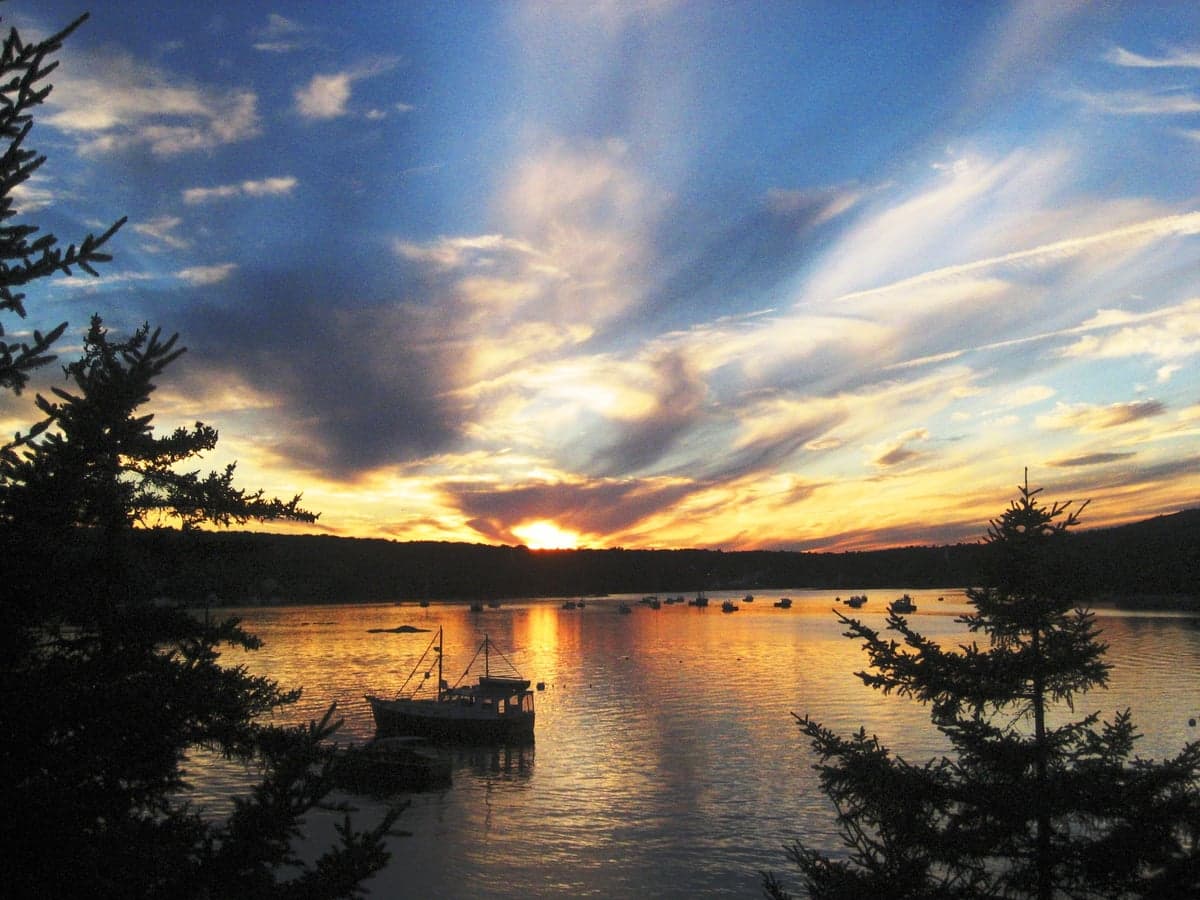
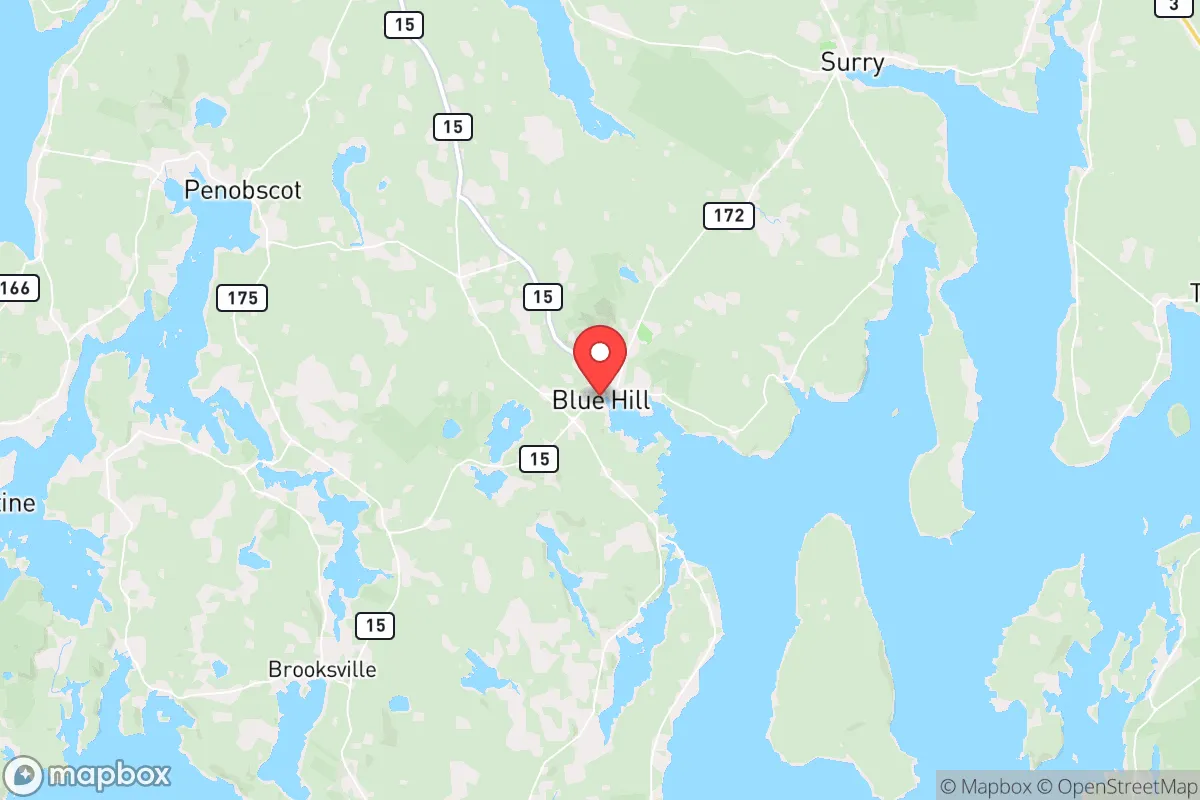
Photo: Wikipedia
Personal Sovereignty in Blue Hill, ME
Viable for self-reliance. Generally workable, though some barriers may limit total independence.
What does Personal Sovereignty tell us?
Personal Sovereignty measures your capacity for self-reliance and independence with minimal government friction. Higher scores mean fewer barriers between you and the way you want to live... but it assumes you have the space you need and good neighbors.
What does this tell us?
Personal Sovereignty measures your capacity for self-reliance and independence with minimal government friction. Higher scores mean fewer barriers between you and the way you want to live... but it assumes you have the space you need and good neighbors.
State Policy
Energy independence: Importer (30% of energy produced in-state)
Personal Liberty
Homesteading

Personal Liberty Analysis
Blue Hill, Maine, offers a notably high degree of personal sovereignty, grounded in a state tradition of self-reliance and a local culture that values independence. While Maine is not a libertarian free-for-all, its regulatory posture is generally lighter than that of the Northeast corridor, and its legal framework provides significant room for individual decision-making in areas like taxation, self-defense, property use, and family life. For a conservative-leaning individual or family seeking to maximize autonomy, Blue Hill represents a strong balance of personal freedom and community stability, though specific state-level constraints in areas like firearms and land use require careful attention.
Tax burden and regulatory posture in Hancock County
Maine’s overall tax burden is moderate compared to other New England states, but it is higher than the national average, driven primarily by property taxes. In Blue Hill, the mill rate hovers around 14 to 16 mills, meaning a property valued at $250,000 would incur roughly $3,500 to $4,000 in annual property taxes. This is a significant consideration for homeowners, though it funds well-regarded local schools and services. The state has no sales tax on most groceries and a 5.5% income tax on the first bracket, rising to 7.15% on higher incomes, which is competitive within the region. Regulatory posture in Blue Hill is light-touch relative to southern Maine or coastal tourist hubs like Bar Harbor. Zoning is minimal in unorganized territories and many rural subdivisions, though the town itself enforces building codes and septic standards. The state’s land use commission (LURC) oversees development in unorganized townships, but within Blue Hill’s municipal boundaries, local boards have significant discretion. Business licensing is straightforward, and there is no county-level sales tax or inventory tax, making small-scale entrepreneurship viable. Overall, the tax and regulatory environment is best described as moderately conservative—not a tax haven, but far from the high-burden regimes of Massachusetts or New York.
Self-defense and gun law specifics in Maine
Maine is a constitutional carry state, meaning no permit is required to carry a concealed firearm for anyone legally allowed to possess a handgun. This is a major draw for those prioritizing self-defense autonomy. The state also has a stand-your-ground legal framework, codified in statute, which removes any duty to retreat before using deadly force in self-defense if you are lawfully present. Blue Hill itself has no local gun ordinances beyond state law, so restrictions are minimal. The state does require a background check for all firearm sales at licensed dealers, but private sales between individuals are not subject to a background check. There is no state-level assault weapons ban, no magazine capacity limit, and no firearm registration. However, Maine does have a yellow flag law (not a red flag law), which allows law enforcement to temporarily seize firearms from an individual who poses a danger, but only after a mental health evaluation and a court order. This is a more restrained approach than in many other states. For practical self-defense, the local sheriff’s office in Hancock County is generally supportive of gun rights, and there are multiple gun shops and ranges within a 30-minute drive. The legal environment is strongly protective of the right to keep and bear arms, with few bureaucratic hurdles.
Self-reliance and homesteading viability: lot sizes, zoning, and off-grid feasibility
Blue Hill’s rural character makes it highly conducive to self-reliant living. Minimum lot sizes in the town’s rural districts are typically 2 to 5 acres, though many parcels available for purchase are 10 acres or larger, providing ample space for gardens, livestock, and woodlots. Zoning is permissive for agricultural uses, including keeping chickens, goats, and even small-scale cattle, with no special permits required for most hobby farming. Off-grid living is legally feasible: Maine has no state law requiring connection to the electrical grid, and many homes in the area rely on solar panels, propane, and wood heat. The state does require a licensed septic system for any dwelling, which is the primary regulatory hurdle for off-grid construction, but well water is common and unregulated beyond basic testing. Rainwater collection is unrestricted. The local building code applies to new construction, but enforcement is less aggressive than in urban areas, and many older homes operate without formal permits for renovations. For those seeking to reduce dependence on supply chains, Blue Hill’s strong farmers’ market, local feed stores, and proximity to coastal resources (fishing, clamming) support a high degree of subsistence living. The town’s right-to-farm ordinance protects agricultural activities from nuisance complaints, further bolstering homesteading viability.
Personal liberties: parental rights, medical autonomy, speech, and property
Maine law generally respects parental rights in education and healthcare, though it is not as aggressively protective as some southern states. Parents have the right to homeschool without a teaching certificate, requiring only a simple notice of intent and annual assessment. School choice is limited in Blue Hill itself, but nearby charter schools and private options exist. On medical autonomy, Maine has no vaccine mandates for adults and allows religious and philosophical exemptions for school-required immunizations, though the process requires a notarized form. The state legalized recreational marijuana in 2016, and adults 21+ can grow up to six plants at home, which aligns with a self-reliance ethos. Free speech protections are robust, with no state-level hate speech laws that chill expression, and property rights are strong: eminent domain is rarely used for private development, and the state’s right-to-farm law protects landowners from nuisance lawsuits related to normal agricultural operations. One notable constraint is that Maine has a state income tax, which some view as an infringement on economic liberty, but there is no estate tax on estates under $5.8 million. Overall, the legal climate in Blue Hill supports a high degree of personal discretion in family and lifestyle choices, with fewer mandates than in more progressive states.
Compared to other rural areas in the Northeast, Blue Hill stands out for its combination of constitutional carry, permissive homesteading laws, and light-touch local governance. It is not as deregulated as parts of the rural West or South, but within New England, it offers one of the most sovereignty-friendly environments. The trade-offs are moderate property taxes and a state income tax, but these fund infrastructure and services that many residents value. For a conservative individual or family seeking a place where personal responsibility is the norm and government intrusion is minimal, Blue Hill, Maine, represents a compelling option that balances freedom with community stability.

* Values derived from national, state, county, city and local statistics and may differ in a specific area. Last updated: 2026-09-05T23:43:53.000Z
Narrative content on this page is AI-generated and may contain mistakes. Verify any details that matter before acting on them.
ReloMaps may earn a commission from affiliate links at no extra cost to you.

