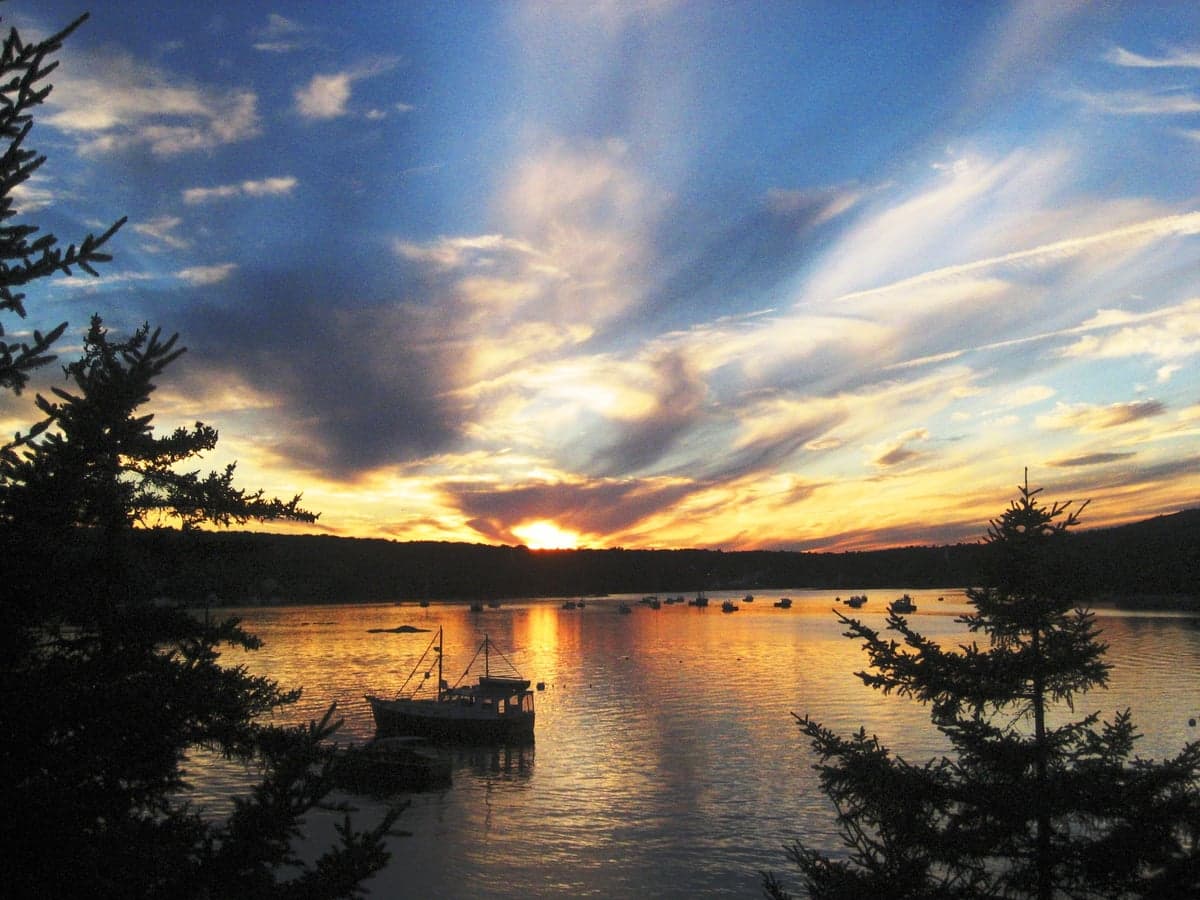
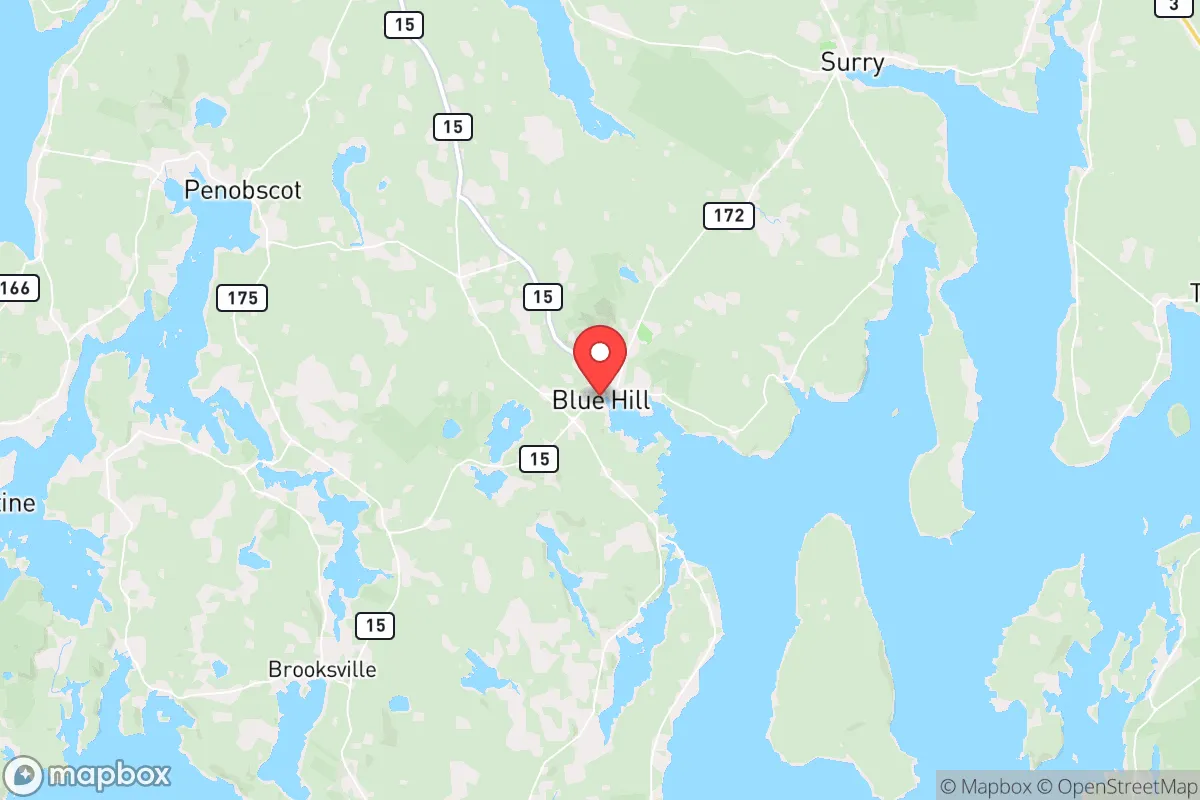

Photo: Wikipedia
Demographics of Blue Hill, ME
Affluence Level in Blue Hill, ME
A middle-class area roughly in line with national averages across income, home values, education, and employment.
People of Blue Hill, ME
Blue Hill, Maine, is a town of 1,066 residents where the population is overwhelmingly white (97.3%) and entirely native-born, with 0.0% of residents born outside the United States. The town is defined by its high educational attainment—50.2% of adults hold a college degree—and a quiet, rural character that reflects its deep New England roots. The small Hispanic population (2.7%) represents the only measurable minority presence, making Blue Hill one of the least ethnically diverse communities in Hancock County.
How the city was settled and grew
Blue Hill was incorporated in 1789, settled by English colonists from Massachusetts who were drawn by the region's abundant timber, shipbuilding potential, and fertile coastal land. The original settlers clustered around the town's protected harbor, establishing a maritime economy that dominated through the 19th century. The South Blue Hill district, along the harbor front, became the center of shipbuilding and fishing, while inland areas like East Blue Hill developed as farming communities. The town's granite quarries, active from the 1830s through the early 1900s, attracted skilled stonecutters, many of Scottish and Scandinavian descent, who settled in the North Blue Hill area near the quarry sites. By the early 20th century, the population had stabilized around 1,500, with the economy shifting from industry to agriculture and small-scale commerce.
Modern era (post-1965)
The post-1965 period brought significant change to Blue Hill, though not through immigration. The 1960s and 1970s saw an influx of back-to-the-land migrants—educated, often affluent newcomers from Boston, New York, and other urban centers—who were drawn by the town's rural character and affordable land. This wave settled primarily in the Mountain View and West Blue Hill districts, where larger parcels of land were available. These newcomers, many of whom were artists, writers, and academics, transformed the town's cultural landscape and contributed to the high college-educated share seen today. The 1980s and 1990s brought a second wave of domestic migration: retirees and second-home buyers from the Northeast corridor, who concentrated in the Harbor District and along the waterfront, driving up property values and shifting the local economy toward tourism and services. Unlike many Maine towns, Blue Hill has seen virtually no foreign-born population growth—the 0.0% foreign-born figure reflects the town's lack of immigrant-serving industries or housing stock that would attract newcomers from abroad.
The future
Blue Hill's population is aging and slowly declining, a trend consistent with much of rural coastal Maine. The town's 1,066 residents represent a modest decrease from the 1,200 recorded in the 2000 census, and projections suggest continued slow decline over the next decade. The population is likely to become slightly more diverse as the small Hispanic community (2.7%) grows, though from a very low base; the 2020 census showed a doubling of the Hispanic share from 1.3% in 2010. However, the town's high property values and lack of rental housing will likely limit significant demographic change. The Harbor District and South Blue Hill are expected to see continued conversion of year-round homes to seasonal properties, while West Blue Hill may attract younger families priced out of coastal areas. The cultural identity of the town is evolving from a working maritime community to an affluent, arts-oriented enclave anchored by institutions like the Blue Hill Public Library and the Bagaduce Music Lending Library.
For someone moving to Blue Hill today, the town offers a stable, highly educated, and culturally engaged community with virtually no ethnic or racial diversity. The population is homogeneous, native-born, and increasingly affluent, with a median age well above the national average. New residents will find a place where the dominant culture is shaped by longtime Maine families and educated newcomers who value the area's natural beauty, quiet pace, and strong civic institutions. The trade-off is clear: Blue Hill provides safety, community cohesion, and cultural richness, but those seeking demographic variety or a growing, dynamic population will need to look elsewhere in Maine.

* Values derived from national, state, county, city and local statistics and may differ in a specific area. Last updated: 2026-09-05T23:43:53.000Z
Narrative content on this page is AI-generated and may contain mistakes. Verify any details that matter before acting on them.
ReloMaps may earn a commission from affiliate links at no extra cost to you.

