Photo: Wikipedia
Political ClimatePolitical Climate in Berkeley Springs, WV
District shown is the primary district for this city’s centroid. Cities may span multiple districts.
Local Political AnalysisPolitical Analysis of Berkeley Springs, WV
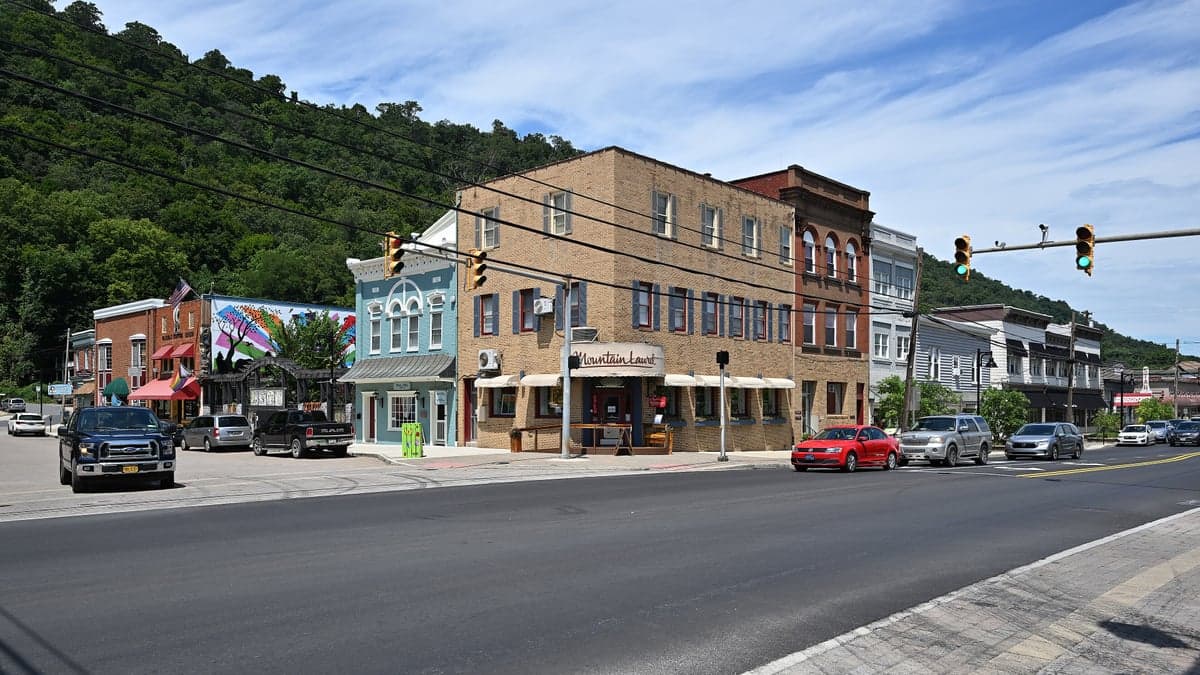
Berkeley Springs leans heavily Republican, with a Cook PVI of R+20 that places it among the most conservative corners of West Virginia. That number means the area votes about 20 points more Republican than the national average in presidential elections, and it’s been trending that way for decades. If you’re looking at the broader Morgan County picture, you’ll find a solid red base that’s only gotten redder since the 2000s, driven by an influx of retirees from the D.C. suburbs and a local economy tied to tourism, not heavy industry. The town itself is a bit of a blue dot in a sea of red—Berkeley Springs proper has a small but vocal Democratic presence, thanks to its artsy, small-town vibe and the seasonal crowd from the Mid-Atlantic—but the county as a whole hasn’t gone blue in a presidential race since 1996.
How it compares
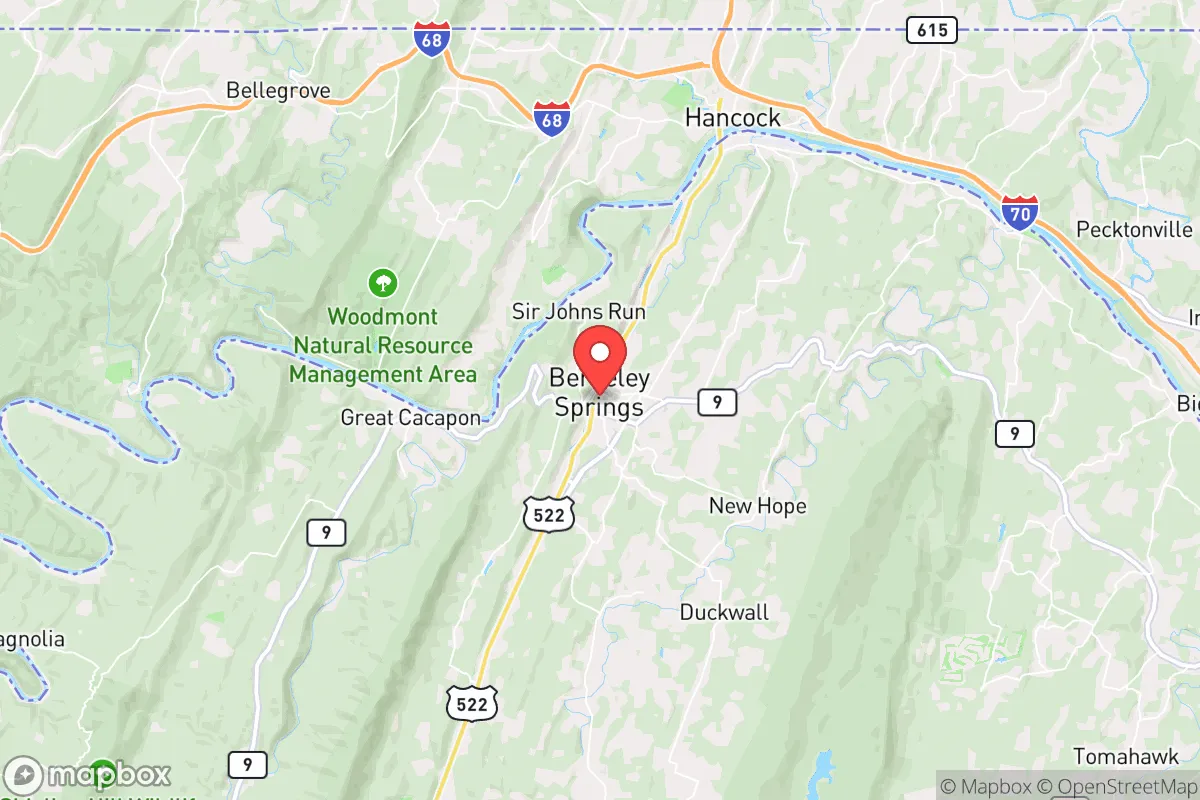
Compared to the rest of West Virginia, Berkeley Springs is actually more conservative than the state average, which itself is deeply red. The state’s Cook PVI isn’t officially published for West Virginia as a whole, but it’s widely estimated at R+22 to R+24, meaning Berkeley Springs is right in line with the state’s overall lean. The real contrast comes when you look at nearby towns. Head east into Maryland, and Hancock is a working-class town that leans Republican but with a stronger union Democrat history. Go west to Paw Paw, and you’re in a deeply rural, Trump+40 area. The biggest political shock is just 20 miles north in Hagerstown, Maryland, which is a swing city—purple, trending blue, with a growing Latino population and a Democratic mayor. So Berkeley Springs feels like a conservative island compared to the D.C. exurbs, but it’s typical for West Virginia’s Eastern Panhandle.
What this means for residents
For conservative residents, the political climate is comfortable: local government, the county commission, and the school board are reliably Republican, and you’ll see Trump signs on lawns year-round. Gun rights are widely supported, and the local sheriff’s office is pro-Second Amendment. For liberal residents, it’s not hostile, but it can feel isolating. The Berkeley Springs Democratic Club is active, but it’s small—maybe 30 regulars. You won’t face open hostility at the grocery store, but you’ll hear plenty of conservative talk radio in diners. The real tension isn’t left vs. right; it’s between longtime locals (many of whom are moderate Democrats or independents) and newcomers from Northern Virginia who bring higher property values and a more libertarian, small-government streak. That’s the quiet divide: growth vs. preservation, not party labels.
Culturally, Berkeley Springs stands out for its quirky, artsy streak—think mineral baths, a film festival, and a thriving pottery scene—which gives it a more tolerant, live-and-let-live feel than the rest of Morgan County. Policy-wise, the town has a strong local food movement and a farmers market that’s popular across the political spectrum. But don’t expect progressive policies: the county voted against a proposed wind farm in 2022, citing property rights and viewshed concerns, and there’s no local mask mandate or sanctuary city talk. If you’re moving here, the political reality is simple: you’ll find your tribe, whether you’re a conservative who loves the low taxes and hunting culture or a liberal who appreciates the small-town charm and the occasional blue vote in local races. Just don’t expect the politics to change much—this area knows what it likes, and it likes it red.

State Political ClimatePolitical Climate in West Virginia
State Political AnalysisPolitical Environment in the State
West Virginia has been one of the most reliably Republican states in the nation for over two decades, but that wasn’t always the case. As recently as the 1990s, the state was a Democratic stronghold at the local level, even as it began trending right in presidential elections. The realignment accelerated sharply after 2000, and by 2024, Donald Trump carried the state by nearly 40 points. The dominant coalition today is a mix of rural, working-class voters who have shifted away from the national Democratic Party on cultural and energy issues, alongside a growing conservative activist base centered in the Eastern Panhandle and the northern panhandle around Wheeling. The state’s political identity is now defined by a deep distrust of federal authority, a strong gun culture, and a near-total Republican lock on every statewide office and both chambers of the legislature.
Urban vs. rural divide
The political map of West Virginia is starkly divided between a handful of small cities and the vast rural expanse. The only reliably blue counties are the ones containing the state’s largest population centers: Kanawha County (Charleston), Monongalia County (Morgantown), and Raleigh County (Beckley) — and even those are trending red. In 2024, Kamala Harris won only two of West Virginia’s 55 counties: Jefferson County in the Eastern Panhandle, which is increasingly influenced by Washington D.C. commuters, and Monongalia County, home to West Virginia University. The rest of the state, from the coal fields of Mingo County to the Ohio River towns of Parkersburg and Huntington, votes Republican by margins of 30 to 60 points. The rural-urban split isn’t about liberal vs. conservative in the traditional sense — even Morgantown’s “blue” vote is moderate, not progressive. The real divide is between areas that still have a diversified economy (university towns, healthcare hubs) and those that have seen coal and manufacturing collapse, where the GOP’s cultural and energy messaging resonates most deeply.
Policy environment
West Virginia’s policy environment is among the most conservative in the country, with a few notable wrinkles. The state has no personal income tax on most wages — the legislature passed a phase-out in 2023 that will eventually eliminate it entirely, though it still taxes interest and dividends. Sales tax is a low 6%, and property taxes are among the lowest in the nation, capped by the state constitution. The regulatory posture is aggressively pro-business, especially for natural resource extraction — the state has some of the weakest environmental review requirements for mining and drilling in the Appalachian region. Education policy is a flashpoint: the state passed a broad school choice law in 2021, creating education savings accounts (ESAs) that let families use public funds for private school or homeschooling, and the legislature has repeatedly fought with teachers’ unions over pay and benefits. Healthcare is a mixed bag — the state expanded Medicaid under the ACA, but the legislature has resisted further expansion of abortion access, and the state has some of the strictest abortion laws in the nation, banning the procedure at conception with narrow exceptions. Election laws are restrictive: voter ID is required, early voting is limited to 10 days, and absentee voting requires an excuse. The state also has a “constitutional carry” law for firearms, meaning no permit is needed to carry a concealed weapon.
Recent policy direction
The last five years have seen a rapid consolidation of conservative policy wins. In 2023, the legislature passed a near-total abortion ban (HB 2004) with exceptions only for rape, incest, and medical emergencies — no exceptions for fetal anomalies. The same year, they passed a “Second Amendment Preservation Act” that purports to nullify federal gun laws, though it has not been tested in court. On education, the 2021 ESA law (HB 2013) was expanded in 2024 to include all students, not just those with special needs or low income. The state also passed a “Parents’ Bill of Rights” (SB 498) in 2022, requiring schools to notify parents of any curriculum involving sexuality or gender identity and allowing parents to opt their children out. On property rights, the legislature has consistently sided with mineral rights holders over surface owners, a perennial issue in coal country. Tax policy is moving toward elimination: the 2023 income tax phase-down bill (SB 423) will cut the personal income tax rate from 6.5% to 3.99% by 2026, with triggers for further cuts. Voting access has tightened: in 2021, the legislature passed SB 1, which shortened the early voting window and banned ballot drop boxes. On privacy and surveillance, the state has no broad data privacy law, but it did pass a law in 2024 restricting the use of facial recognition by law enforcement without a warrant. The overall direction is toward maximum individual liberty in areas like guns, education, and taxation, but with strong government intervention on social issues like abortion and gender.
Civil unrest & political movements
West Virginia has a long history of labor activism, but the modern political movements are more fragmented. The most visible flashpoint in recent years was the 2018 statewide teachers’ strike, which shut down every public school for nine days and forced the legislature to approve a 5% pay raise. That strike was a rare moment of cross-party unity, with teachers from red and blue counties marching together. Since then, the teachers’ union has lost influence as the legislature has shifted further right. On the right, the “Constitutional Sheriffs” movement has a strong presence, particularly in rural counties like Preston County and Hampshire County, where sheriffs have publicly stated they will not enforce federal gun laws they deem unconstitutional. Immigration politics are less heated than in border states — West Virginia has one of the smallest foreign-born populations in the country (about 1.5%), and there are no sanctuary cities. However, the state did pass a law in 2024 requiring local law enforcement to cooperate with ICE detainers. Election integrity controversies have been minimal compared to other states — West Virginia uses paper ballots and has a strong track record of clean elections, though the 2020 election saw a brief controversy over the use of drop boxes in Kanawha County. Secession or nullification rhetoric is mostly symbolic: the “Second Amendment Preservation Act” is the closest the state has come to formal nullification, and it has not been enforced. A new resident would notice that political activism is less visible than in larger states — there are no large-scale protests or counter-protests, and most political engagement happens through church groups, gun clubs, and local party meetings.
Projection
Over the next 5-10 years, West Virginia’s political trajectory is likely to continue its rightward drift, but with some demographic countercurrents. The state is losing population overall — it was one of only three states to lose population in the 2020 Census — but the areas that are growing, like the Eastern Panhandle (Jefferson County, Berkeley County) and the Morgantown area, are attracting more moderate and even liberal-leaning newcomers from Virginia, Maryland, and Pennsylvania. These in-migrants tend to be younger and more educated, and they may slowly shift the political balance in those pockets. However, the rural counties that are losing population are doing so faster, and they are the most conservative, so the state’s overall lean may actually become more Republican as the moderate rural Democrats of the past die off. The income tax phase-out will likely be completed by 2030, making the state even more attractive to retirees and remote workers from high-tax states, but those newcomers may not vote the same way as the native population. The wild card is the energy transition: if coal continues to decline without a replacement, the economic pain could fuel populist anger that might break the current Republican consensus. For now, expect the state to remain a solidly red, low-tax, low-regulation environment with a strong cultural conservatism, but with small blue islands in Morgantown, Charleston, and the Eastern Panhandle that will become more politically distinct over time.
For someone moving to West Virginia, the bottom line is this: if you’re conservative, you’ll find a state that aligns with your values on taxes, guns, education, and social issues, and you’ll have a lot of political company. If you’re liberal, you’ll be in a clear minority, but you won’t face hostility in most everyday settings — the state’s politics are intense on paper but laid-back in practice. The key practical takeaway is that local politics matter more than national ones here: your county commission, school board, and sheriff have outsized influence on your daily life, and those races are often decided by a few hundred votes. Pay attention to who’s running for those seats, because that’s where the real action is. And if you’re moving to the Eastern Panhandle, be prepared for a different political culture than the rest of the state — it’s more suburban, more moderate, and increasingly influenced by D.C. politics. Everywhere else, the old coal-camp conservatism still holds sway, and it’s not going anywhere soon.
* Values derived from national, state, county, city and local statistics and may differ in a specific area. Last updated: 2026-11-06T03:03:01.000Z
Narrative content on this page is AI-generated and may contain mistakes. Verify any details that matter before acting on them.
ReloMaps may earn a commission from affiliate links at no extra cost to you.

