Photo: Wikipedia
Political ClimatePolitical Climate in Batavia, IL
District shown is the primary district for this city’s centroid. Cities may span multiple districts.
Local Political AnalysisPolitical Analysis of Batavia, IL
Batavia, Illinois, sits in a politically interesting pocket of the state. While the city itself leans left, it does so slightly less than the state as a whole, with a Cook Partisan Voting Index (PVI) of D+6 compared to Illinois’s D+7. That one-point difference might seem small, but it reflects a local dynamic where a strong moderate and conservative base keeps the area from being as deep blue as, say, Chicago proper or Evanston. Over the last decade, Batavia has shifted leftward along with the rest of the collar counties, but it’s done so at a slower pace, making it a bit of a purple-ish enclave in a reliably blue state.
How it compares
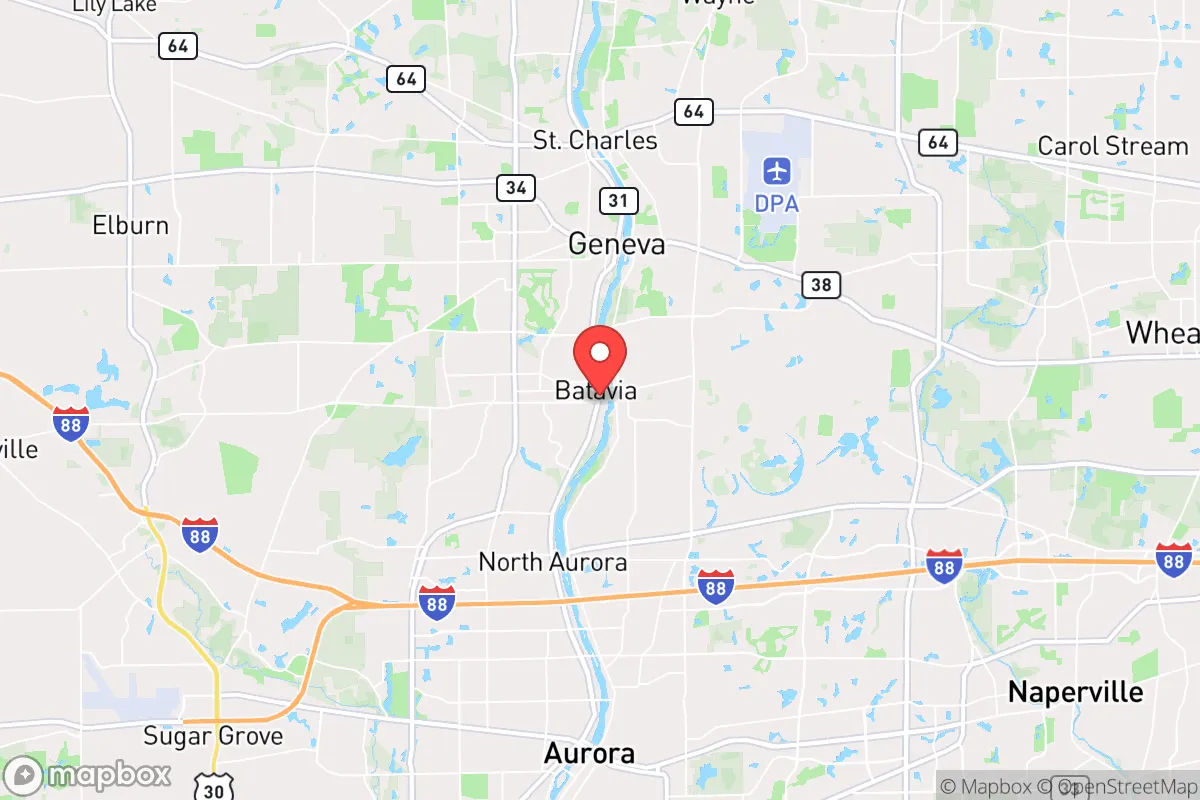
To understand Batavia’s political climate, you have to look at its neighbors. Head east into Geneva or St. Charles, and you’ll find a similar D+6 to D+7 lean—these are classic Fox River Valley suburbs where socially moderate Republicans and fiscally conservative Democrats coexist. Drive a few miles west to Sugar Grove or Elburn, though, and the PVI flips to R+5 or R+6, reflecting a more rural, conservative outlook. Batavia sits right on that dividing line. Its D+6 PVI means that in statewide races, the city reliably votes for Democratic candidates—think JB Pritzker or Tammy Duckworth—but local elections often hinge on a handful of swing voters. The city council and school board races tend to be nonpartisan in name but are frequently won by candidates who can appeal to both the progressive-minded transplants from Chicago and the longtime families who remember when the area was solidly red.
What this means for residents
For liberal residents, Batavia offers a comfortable environment where Democratic candidates usually win, and progressive policies on things like renewable energy, public transit, and diversity initiatives get a fair hearing. You’ll see lawn signs for Democratic state legislators and county board members, and the local Democratic Party organization is active. For conservative residents, the picture is more nuanced. You won’t feel isolated—there’s a strong Republican presence in the surrounding towns, and the Kane County GOP is well-organized. But in Batavia itself, you’ll likely be in the minority in a presidential election year. That said, local government tends to be pragmatic rather than ideological. The city’s budget, zoning, and infrastructure decisions are driven more by growth management and property values than by partisan agendas. Both sides can find common ground on keeping the downtown vibrant, maintaining the schools, and preserving the riverfront.
One cultural distinction worth noting: Batavia has a strong sense of local identity that sometimes transcends party lines. The city’s history as a manufacturing hub (think Fermilab and the old Batavia metalworks) gives it a blue-collar streak that doesn’t always align with the national Democratic platform. You’ll meet lifelong residents who vote Republican for president but support local Democrats because of a school bond issue or a park district referendum. The trajectory over the next decade likely continues a slow drift leftward as more commuters from Chicago settle in, but Batavia’s moderate core means it will probably never be as liberal as Naperville or Oak Park. For anyone moving here, the takeaway is simple: you’ll find your political tribe, but you’ll also have to get used to living next to someone who doesn’t share your views—and that’s kind of the point of a place like this.

State Political ClimatePolitical Climate in Illinois
State Political AnalysisPolitical Environment in the State
Illinois is a solidly Democratic state with a Cook PVI of D+7, meaning it votes about seven points more Democratic than the national average in presidential elections. The state’s political trajectory over the last 10-20 years has been a steady march leftward, driven overwhelmingly by the Chicago metro area, while downstate and rural regions have become increasingly Republican. This growing urban-rural chasm means the state’s overall lean masks a deeply divided political reality, where a conservative relocating to, say, downstate Effingham will find a very different political environment than a liberal moving to Evanston.
Urban vs. rural divide
The political map of Illinois is essentially a story of Cook County versus the rest of the state. Chicago and its inner suburbs—places like Oak Park and Skokie—are the engine of the state’s Democratic majority, delivering massive vote margins that swamp Republican wins elsewhere. The collar counties (DuPage, Lake, Kane, Will, McHenry) have been trending Democratic for a decade, with DuPage County flipping from reliably red to competitive, and Lake County now solidly blue. Meanwhile, downstate regions—from the Mississippi River towns like Quincy to the southern tip near Carbondale—vote heavily Republican. The Peoria area and Springfield are more purple but still lean red in state races. This divide means a conservative family in Effingham lives in a county that voted +40 points for Trump, while a liberal in Evanston is in a county that voted +50 for Biden. The practical effect: your local government, school board, and even sheriff’s office will reflect whichever side dominates your specific county.
Policy environment
Illinois’s policy environment is defined by a high-tax, high-regulation posture that has been in place for decades. The state has a flat income tax rate of 4.95% (after a temporary progressive tax was voted down in 2020), but property taxes are among the highest in the nation—averaging about 2.1% of home value statewide, with Cook County often exceeding 2.5%. Sales tax can hit 10.25% in Chicago. The regulatory climate is business-friendly in name only for many small employers, with a $15 minimum wage (phased in by 2025) and strict labor laws. Education policy is a mixed bag: Illinois spends heavily per pupil (top 10 nationally), but the funding system is notoriously inequitable, with wealthy suburbs like Naperville having excellent schools while downstate districts struggle. Healthcare is broadly accessible thanks to Medicaid expansion and a state-run insurance marketplace. Election laws are among the most liberal in the country: no-excuse mail voting, automatic voter registration, and same-day registration are all standard. For conservatives, the policy environment can feel like a constant headwind, especially on taxes and regulation.
Recent policy direction
The last five years have seen Illinois move decisively left on a broad range of issues. On gun and self-defense law, the state passed a ban on assault weapons and high-capacity magazines in 2023 (the Protect Illinois Communities Act), and it already had a Firearm Owners Identification (FOID) card system and a waiting period. Concealed carry is legal but requires a license, and Illinois does not recognize permits from most other states. On parental and education rights, the state has mandated that public schools teach LGBTQ+ inclusive history and has expanded protections for transgender students, including allowing them to use facilities matching their gender identity. Speech and privacy are generally protected, though the state has a strong biometric privacy law (BIPA) that has led to large class-action settlements. On medical and bodily autonomy, Illinois is a safe haven for abortion access, with no gestational limits and a law protecting providers from out-of-state lawsuits. Property rights are constrained by high property taxes and strong tenant protections, including a statewide rent control ban that was repealed in 2022, allowing local rent control ordinances. Taxation remains a flashpoint: the 2020 graduated income tax amendment failed, but the state continues to rely on property taxes and a flat income tax. Voting and ballot access has been expanded with automatic voter registration and mail voting, but concerns about election integrity persist among conservatives, particularly around the handling of mail ballots in Cook County.
Civil unrest & political movements
Illinois has a history of visible political activism, from the 2020 George Floyd protests in Chicago (which saw significant property damage and looting) to ongoing pro-life demonstrations at the state capitol in Springfield. The state’s sanctuary status—Illinois is a “Welcoming State” that limits cooperation with federal immigration enforcement—has made it a destination for immigrants, but also a flashpoint for conservative opposition. In downstate counties like Effingham and Jasper, there have been resolutions declaring themselves “Second Amendment Sanctuary Counties” in response to the assault weapons ban. Election integrity has been a persistent issue: the 2020 election saw lawsuits over ballot drop boxes and mail-in ballot procedures, though no widespread fraud was found. A new resident will notice the political divide in everyday life—Chicago’s city council debates over policing and homelessness are front-page news, while downstate papers cover county board fights over wind farm regulations and school mask mandates. The state’s political movements are organized and vocal on both sides, but the left holds the institutional power.
Projection
Over the next 5-10 years, Illinois is likely to remain a solidly Democratic state, but the margins may narrow slightly as population loss continues in downstate and rural areas. The Chicago metro area is growing slowly, but the collar counties are becoming more Democratic, offsetting Republican gains elsewhere. The state’s fiscal challenges—a massive unfunded pension liability (over $140 billion) and high debt—will constrain future spending, but major policy shifts are unlikely given the Democratic supermajority in the legislature. In-migration patterns are mixed: Illinois loses residents to Florida, Texas, and Indiana, but gains from other Midwestern states and international immigration. A conservative moving to Effingham in 2026 should expect to live in a county that remains deeply red, but with state-level policies that feel increasingly hostile to their values. A liberal moving to Evanston will find a state that largely aligns with their views, but with high taxes and a struggling downstate economy that creates constant political tension.
For a new resident, the bottom line is that Illinois offers a clear trade-off: you get a state with strong public services, progressive policies, and a vibrant economy in the Chicago area, but you pay for it with some of the highest taxes in the nation and a political environment that can feel like a battleground depending on where you live. If you’re conservative, you’ll find like-minded communities downstate and in the outer suburbs, but you’ll be fighting an uphill battle on state-level issues. If you’re liberal, you’ll find a state that largely reflects your values, but you’ll need to budget for the cost of living. Choose your county carefully—it will define your daily political reality more than the state’s overall lean.
* Values derived from national, state, county, city and local statistics and may differ in a specific area. Last updated: 2026-09-21T21:43:05.000Z
Narrative content on this page is AI-generated and may contain mistakes. Verify any details that matter before acting on them.
ReloMaps may earn a commission from affiliate links at no extra cost to you.

