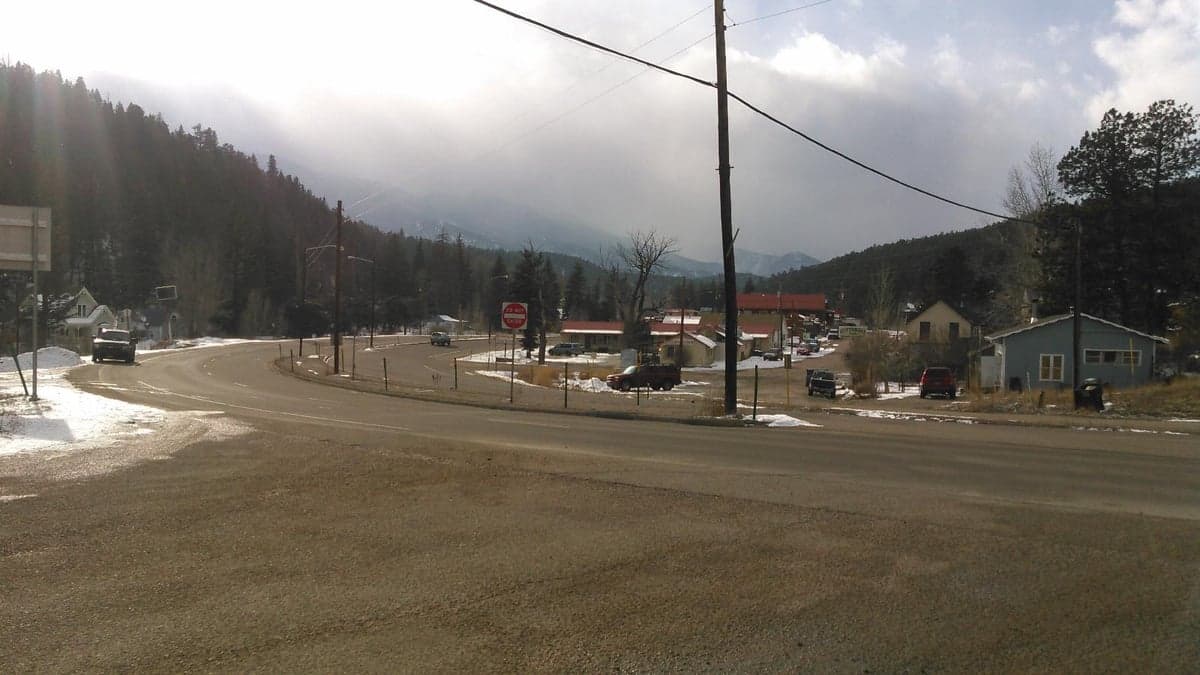
Photo: Wikipedia
Political ClimatePolitical Climate in Bailey, CO
District shown is the primary district for this city’s centroid. Cities may span multiple districts.
Local Political AnalysisPolitical Analysis of Bailey, CO
Bailey sits in Park County, a place that has long been a quiet outlier in Colorado’s broader political shift. While the state as a whole carries a Cook Partisan Voting Index (PVI) of D+8, Bailey itself leans more conservative than that number suggests. The area has historically been a mix of ranching families, second-home owners from the Front Range, and folks who moved here specifically to get away from city politics. Over the past decade, though, you’ve seen a slow but steady influx of remote workers and retirees from Denver and Colorado Springs, which has nudged the local electorate a bit more purple. Still, Park County reliably votes Republican in most county-level races, even as statewide Democrats have gained ground. The real story here is the tension between the old guard—who want to keep things rural and low-regulation—and newcomers who bring more progressive views on land use, conservation, and local services.
How it compares
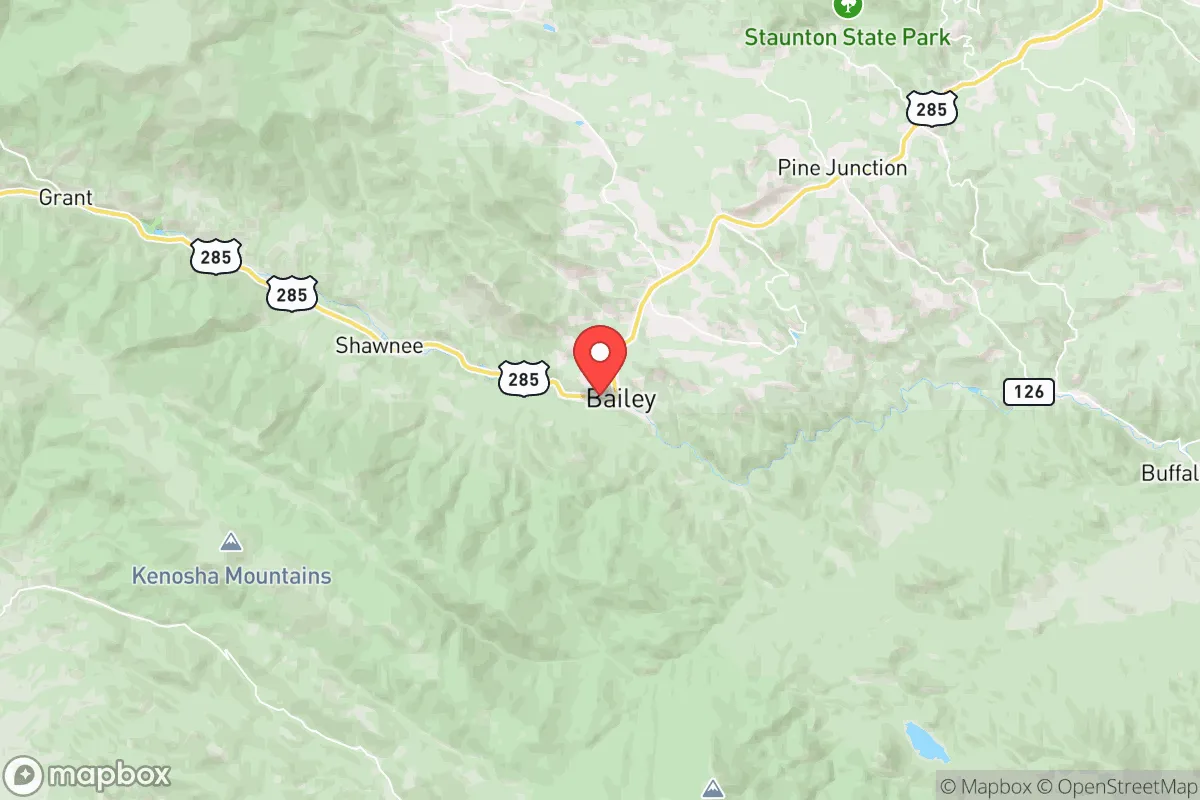
Compared to Colorado’s overall D+8 lean, Bailey feels like a different planet politically. Drive 30 minutes east to Conifer or Evergreen, and you’re in Jefferson County, which has trended blue in recent presidential cycles. Head west over Kenosha Pass into Summit County, and you’re in a deep-blue mountain resort area. Bailey sits right in the middle, politically and geographically. It’s closer in voting patterns to places like Fairplay or Hartsel—small, unincorporated communities where property rights and gun access are still bedrock issues. The contrast is sharpest when you look at state-level races: Park County often votes 60-40 or 65-35 Republican, while the state as a whole flips blue. That gap has widened since 2020, as Denver and Boulder suburbs have moved left while rural counties like Park have held steady or even hardened their conservative stance. For a long-time resident, it feels like the state is pulling away from Bailey, not the other way around.
What this means for residents
For conservative residents, Bailey offers a rare pocket where their views still dominate local government and school board meetings. You won’t get side-eye for having a Trump sign in your yard, and the county sheriff’s office is generally seen as pro-Second Amendment. But they’re also dealing with the reality that state-level policies—like stricter gun laws or land-use regulations—keep passing in Denver, and local officials can only push back so much. For liberal residents, it can feel isolating. There’s no active Democratic party presence in the area, and progressive candidates rarely bother to campaign here. That said, the growing number of remote workers and retirees from blue areas has started to shift the conversation on issues like broadband access, wildfire mitigation, and short-term rental regulations. Neither side gets everything they want, but the friction is mostly civil—people here value neighborliness over political arguments, at least for now.
Culturally, Bailey remains a place where the local diner and the feed store are still the main gathering spots. You won’t find a Whole Foods or a co-working space, and the nearest big-box store is a 30-minute drive. That isolation is part of the appeal for many residents, regardless of party. The biggest policy distinction from the rest of Colorado is how Park County handles land use: there’s very little zoning, and building permits are easy to get compared to Jefferson or Summit counties. That’s a double-edged sword—it keeps taxes low and development flexible, but it also means wildfire risk is higher and emergency services are stretched thin. As more people move in, the question is whether Bailey can keep its independent character without being forced to adopt the kind of regulations that define the rest of the Front Range. Most locals I know are cautiously optimistic, but they’re also watching the ballot measures and the newcomers’ cars with a knowing eye.

State Political ClimatePolitical Climate in Colorado
State Political AnalysisPolitical Environment in the State
Colorado has shifted from a quintessential purple swing state to a solidly blue-leaning state over the past two decades, though it retains a fiercely independent and politically diverse character. The Democratic coalition now dominates statewide elections, with the party holding the governorship, both U.S. Senate seats, and majorities in both chambers of the state legislature. However, this blue veneer masks a deep urban-rural chasm, and the state’s trajectory is less a story of uniform liberalization and more one of demographic consolidation in the Front Range metros overwhelming a vast, conservative hinterland.
Urban vs. rural divide
The political map of Colorado is a tale of two landscapes. The Democratic stronghold is the I-25 corridor, anchored by Denver, Boulder, and Fort Collins. These cities, along with their inner-ring suburbs like Aurora and Lakewood, produce massive vote margins that decide every statewide race. Boulder County, for instance, routinely delivers 70-75% of its vote to Democratic candidates. The shift is most visible in once-purple suburbs: Jefferson County (west of Denver) and Arapahoe County (southeast) have moved decisively blue since 2016, driven by college-educated professionals and younger families. In contrast, the rest of the state—the Eastern Plains, the Western Slope, and the San Luis Valley—votes heavily Republican. El Paso County (Colorado Springs) remains the largest conservative stronghold, a military and evangelical hub that reliably delivers 55-60% for GOP candidates. The divide is stark: you can drive 30 minutes from downtown Denver and find precincts where Trump won 80% of the vote, while within the city limits, Biden took 85%.
Policy environment
Colorado’s policy environment reflects its blue governance, but with a pragmatic, Western twist. The state has a flat income tax rate of 4.4% (voter-approved via TABOR, the Taxpayer Bill of Rights), which keeps revenue growth capped and requires voter approval for tax increases—a relic of conservative influence that still constrains spending. Property taxes are relatively low compared to Texas or the Midwest, but sales taxes vary wildly by municipality. The regulatory posture is generally business-friendly for tech and renewable energy, but strict on environmental and labor issues. Education policy is a mixed bag: per-pupil funding is below the national average due to TABOR constraints, but the state has expanded universal preschool and fully funded special education mandates. Healthcare is a battleground: Colorado has a robust state-run insurance exchange and has expanded Medicaid, but a 2022 ballot measure to create a public option failed. Election laws are among the most accessible in the nation: universal mail-in voting (since 2013), same-day registration, and automatic voter registration are the norm, which conservatives argue reduces election integrity but which has produced consistently high turnout.
Recent policy direction
The last five years have seen Colorado accelerate in a progressive direction on several fronts, with notable legislation that a relocator should weigh carefully. On gun and self-defense law, the state passed a 2023 law raising the purchase age for all firearms to 21 and a 2024 law banning so-called "assault weapons" (defined by features like pistol grips and detachable magazines), which is currently facing legal challenges. A 2021 law also created a "red flag" extreme risk protection order system. On parental and education rights, the state has moved the other way: a 2023 law requires school districts to notify parents if their child requests a name or pronoun change, and a 2024 law banned "critical race theory" concepts in K-12 classrooms—a rare conservative win in a blue state. On medical and bodily autonomy, Colorado has enshrined abortion rights into state law (2022) and passed a 2023 law protecting gender-affirming care for minors, making it a sanctuary state for families seeking such care. On property rights, the state has tightened oil and gas regulations (SB 19-181), which has curtailed new drilling near homes, but has not gone as far as California. On privacy and surveillance, the Colorado Privacy Act (2021) gives residents control over their personal data, one of the strongest such laws in the country. On voting and ballot access, the state has made it easier to vote but harder to challenge results: a 2023 law criminalized "election interference" and limited third-party ballot collection.
Civil unrest & political movements
Colorado has seen its share of political flashpoints. The 2020 protests in Denver over George Floyd’s death were large and occasionally violent, leading to property damage and a lasting rift between city leadership and law enforcement. The Colorado Springs Club Q shooting in 2022 galvanized both LGBTQ+ activism and gun-rights counter-mobilization. On the right, the Weld County area (north of Denver) has been a hotbed of "constitutional sheriff" movements and election integrity activism, with local officials refusing to certify 2020 results. The Douglas County school board became a national flashpoint over mask mandates and critical race theory, with conservative parents winning control in 2021 before losing it in 2023. Immigration politics are less heated than in border states, but Aurora has seen tensions over a 2023 influx of Venezuelan migrants, with the city declaring a state of emergency. There is no serious secession movement, but the "State of Jefferson" rhetoric occasionally surfaces in rural counties like Moffat and Rio Blanco, where residents feel ignored by Denver.
Projection
Over the next 5-10 years, Colorado is likely to become more Democratic, not less. In-migration from California, Texas, and the Midwest continues to favor the Front Range, where new arrivals tend to be younger, college-educated, and left-leaning. The state’s Hispanic population, concentrated in the San Luis Valley and Denver metro, is growing and leans Democratic, though not as uniformly as national trends suggest. The rural vote will continue to shrink as a share of the electorate. However, the state’s independent streak and TABOR constraints mean that radical policy shifts are unlikely. Expect incremental progress on climate (more renewable energy mandates), housing (state-level zoning reform to increase density), and healthcare (a possible public option revival). The gun debate will remain a live wire, with court challenges to the assault weapons ban likely to reach the U.S. Supreme Court. For a conservative relocator, the political environment will feel increasingly hostile at the state level, but local control in places like Colorado Springs, Douglas County, and Weld County offers a buffer.
Bottom line for a new resident: If you lean conservative, you can find a comfortable life in Colorado’s suburban and rural enclaves, but you will be voting against the statewide tide. If you lean liberal, you will find a state that largely aligns with your values, especially on social issues and environmental policy. The practical takeaway is that Colorado is not a place where your vote feels wasted either way—the urban-rural divide is real, and your experience will depend heavily on which of the two Colorados you choose to call home. The state’s political future is blue, but its culture remains fiercely independent, and that tension is what makes it interesting.
* Values derived from national, state, county, city and local statistics and may differ in a specific area. Last updated: 2026-10-15T02:37:20.000Z
Narrative content on this page is AI-generated and may contain mistakes. Verify any details that matter before acting on them.
ReloMaps may earn a commission from affiliate links at no extra cost to you.

