Photo: Wikipedia
Quality of Life in Auburn, IN
A high quality of life with strong walkability, manageable living costs, healthy neighborhood signals, and solid amenity access.
What does Quality of Life tell us?
Quality of Life blends cost of living, nearby amenities, socioeconomic signals, and neighborhood character. City-level scores represent the whole municipality; individual neighborhoods can differ.
What does this tell us?
Quality of Life blends cost of living, nearby amenities, socioeconomic signals, and neighborhood character. City-level scores represent the whole municipality; individual neighborhoods can differ.
Cost of Living
33% below national average
The Real Cost of Living in Auburn, IN for 2026
| Tier | Individual | Family (4) |
|---|---|---|
| Survival | $13k | $25k |
| Comfortable | $34k | $49k |
| Luxury | $95k+ | $148k+ |
| Elite (Top 5%) | $112k+ | $174k+ |
126%
The Area Signal
A metric tracking the socioeconomic signals of the area.
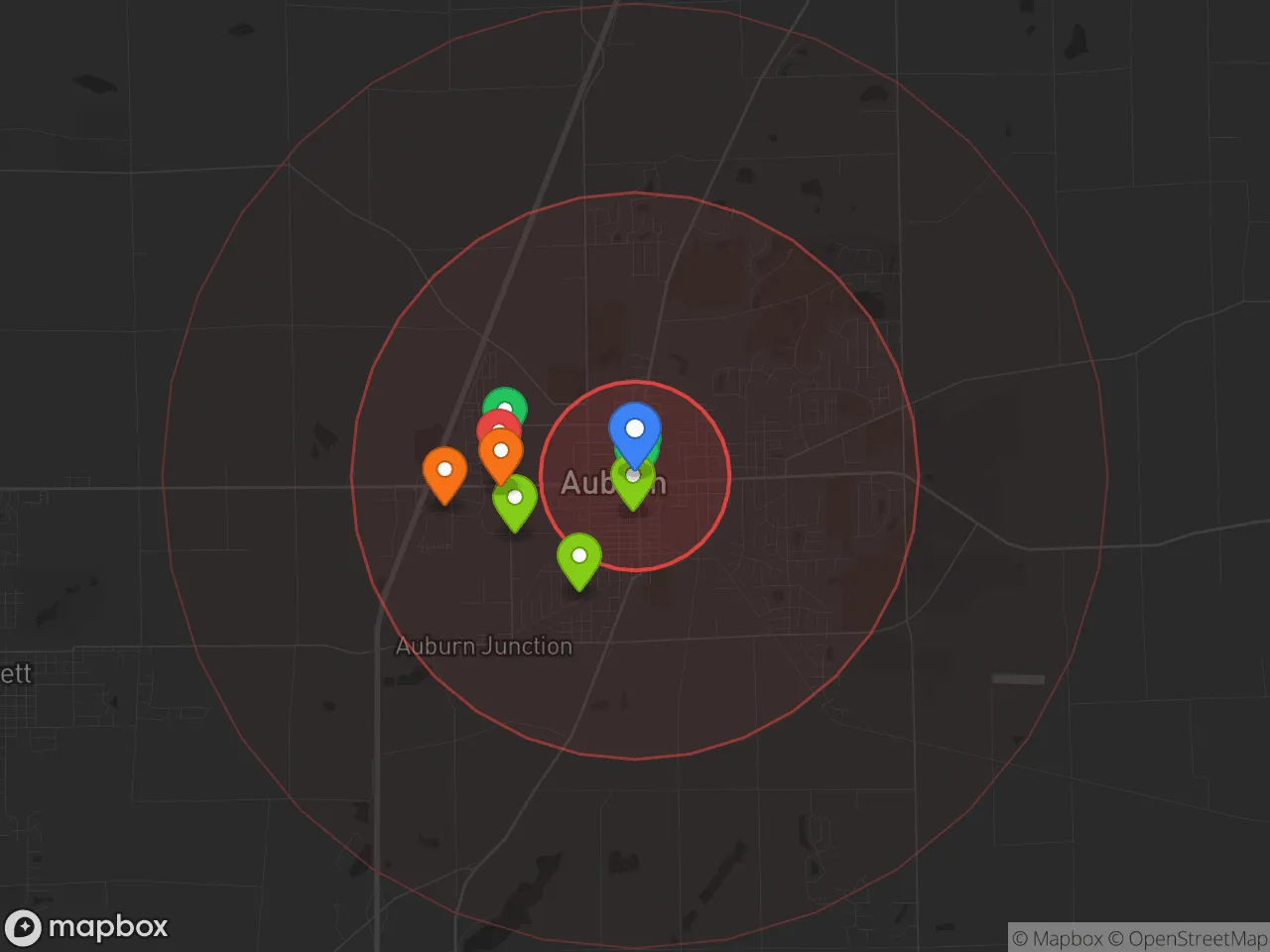
Hobbies
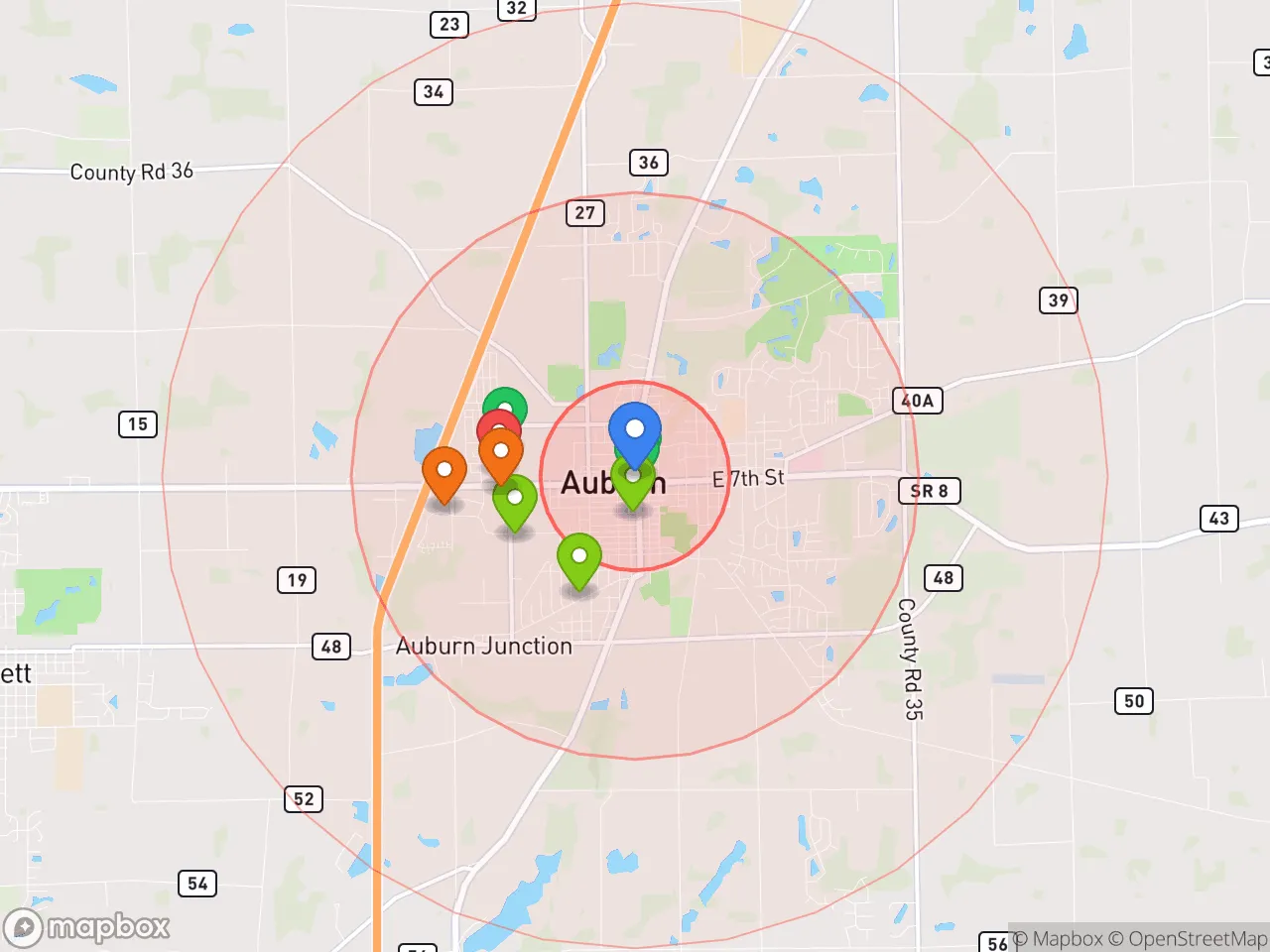
Explore the areaGroceries
0 within 10 miles
Gas
0 within 10 miles
Hospital
0 within 20 miles
Airport
DTW — Detroit Metropolitan Wayne County
Post Office
Critical Amenities
Quality-of-Life Analysis
Auburn, Indiana, presents a quality of life defined by small-town affordability and a steady, family-oriented pace, attracting residents who prioritize financial stability and community connection over urban excitement. With a cost of living index of 67 (33% below the U.S. average), the city offers a notably lower financial barrier to homeownership and daily expenses compared to national norms. The population skews toward families, long-term homeowners, and workers in manufacturing and education, drawn by the area’s quiet streets, low crime, and proximity to larger job centers like Fort Wayne.
Cost of living, housing, and how Auburn compares to nearby cities
Auburn’s housing market is the cornerstone of its affordability. The median home value sits at $172,800, and the median rent is $831—both well below Indiana state averages and dramatically lower than national figures. For context, a comparable home in Fort Wayne (about 20 miles south) might cost 15–20% more, while in Indianapolis the gap widens to 40% or higher. The typical commute of 24 minutes is manageable, with most residents driving to jobs in Auburn itself or to nearby industrial hubs like Garrett or Waterloo. Property taxes in DeKalb County are moderate, and utility costs are below the national average, further stretching household budgets. This combination makes Auburn especially attractive for first-time homebuyers, retirees on fixed incomes, and remote workers seeking a lower-cost base.
Local amenities, schools, and what daily life feels like
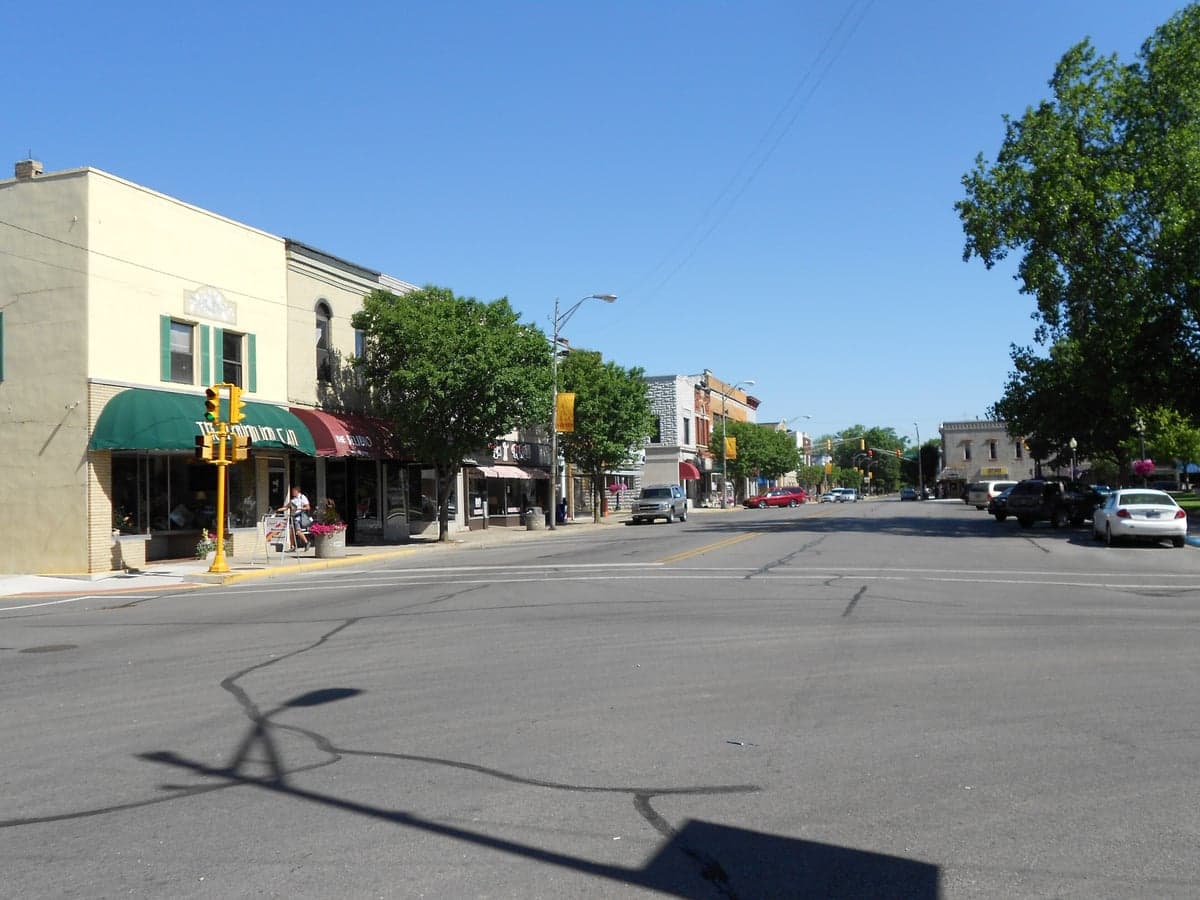
Daily life in Auburn revolves around a compact, walkable downtown anchored by the Auburn Cord Duesenberg Automobile Museum and the historic Eckhart Public Library. The DeKalb County Central United School District serves the area with generally strong ratings, and the high school offers dual-credit programs and vocational tracks. Groceries, dining, and retail are concentrated along SR 8 and SR 327, with a mix of national chains and local spots like the Auburn Brewing Company. Outdoor recreation includes the 40-acre Eckhart Park with sports fields and walking trails, plus nearby Chain O’Lakes State Park for boating and camping. The rhythm is unhurried: residents know their neighbors, traffic is minimal, and weekend events like the DeKalb County Free Fair draw the community together. For specialized shopping, entertainment, or healthcare, Fort Wayne is a 25-minute drive, providing access to hospitals, malls, and cultural venues without the daily urban grind.
Auburn is best suited for those who value financial breathing room, safety, and a predictable routine over nightlife or career density. Families with school-age children will find good schools and affordable housing; remote workers and retirees will appreciate the low cost of living and quiet environment. Professionals seeking high-paying jobs or diverse urban amenities may find the area limiting, but for anyone prioritizing a stable, low-stress lifestyle in a tight-knit community, Auburn delivers a strong return on investment. The city’s blend of historic charm, modern affordability, and easy access to regional employment makes it a practical choice for those ready to trade urban intensity for genuine quality of life.

Crime in Auburn, IN
Lower crime rates than 80% of comparable U.S. locations.
Violent CrimeViolent Crime Analysis
Property CrimeProperty Crime Analysis
Crime Analysis
Auburn, Indiana, presents a notably safe environment compared to both state and national benchmarks, with crime rates that are a fraction of the U.S. averages. The city's violent crime rate stands at 63.8 incidents per 100,000 residents, while property crime occurs at a rate of 234 per 100,000. These figures position Auburn as a low-crime community within DeKalb County, offering a level of security that is increasingly rare in many parts of the country.
Crime in context
To understand Auburn's safety profile, it is essential to compare its statistics to broader trends. The national violent crime rate is approximately 380 per 100,000, meaning Auburn's rate is roughly 83% lower than the U.S. average. Similarly, the national property crime rate hovers around 1,950 per 100,000, making Auburn's rate nearly 88% lower. These comparisons are stark, but the more relevant contrast is with large metropolitan areas, particularly those with liberal and progressive judges and district attorneys. In many major cities, progressive prosecutorial policies—such as reduced bail, declined charges for certain offenses, and lenient sentencing—have been linked to rising recidivism and emboldened criminal activity. Auburn, by contrast, operates under a more traditional law-and-order framework in DeKalb County, where the focus remains on accountability and public safety. This judicial philosophy directly contributes to the city's low crime figures, as consistent enforcement deters potential offenders and ensures that victims receive justice.
What residents experience
For those living in Auburn, the day-to-day reality is one of minimal concern about becoming a victim of crime. The violent crime rate of 63.8 per 100,000 translates to a 1 in 1,568 chance of experiencing a violent incident annually, making offenses like assault, robbery, and homicide extremely rare. Property crime, while more common, still presents a 1 in 427 chance of occurrence per year, a figure that is well below the threshold of concern for most residents. The Auburn Police Department maintains a visible presence, and community policing efforts are effective in fostering trust and rapid response. The absence of the "catch-and-release" policies seen in many progressive jurisdictions means that those who do commit crimes are more likely to face meaningful consequences, reinforcing a culture of lawfulness. This environment is a direct result of local governance that prioritizes public safety over offender-centric reforms.
Neighborhood-level variation in Auburn is minimal, with crime concentrated in a few commercial corridors rather than residential areas. The downtown district and areas near Interstate 69 see occasional petty theft or vehicle break-ins, but violent crime is virtually non-existent across all parts of the city. Families and retirees alike benefit from this uniformity, as there are no "bad" neighborhoods to avoid. For those relocating from high-crime urban centers, Auburn offers a tangible improvement in daily security, underpinned by a justice system that does not sacrifice public safety for ideological experiments.
* Values derived from national, state, county, city and local statistics and may differ in a specific area. Last updated: 2026-10-22T15:10:08.000Z
Narrative content on this page is AI-generated and may contain mistakes. Verify any details that matter before acting on them.
ReloMaps may earn a commission from affiliate links at no extra cost to you.

