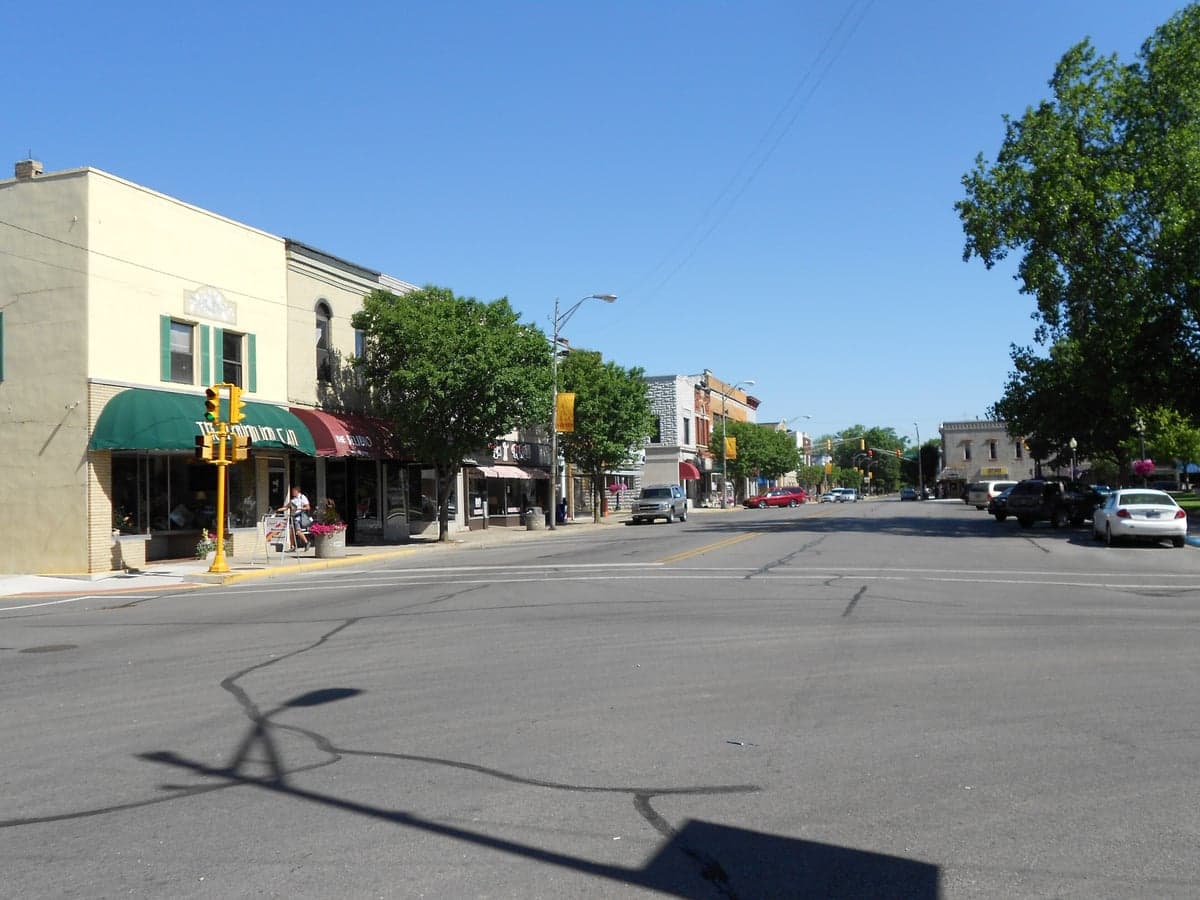
Photo: Wikipedia
Political ClimatePolitical Climate in Auburn, IN
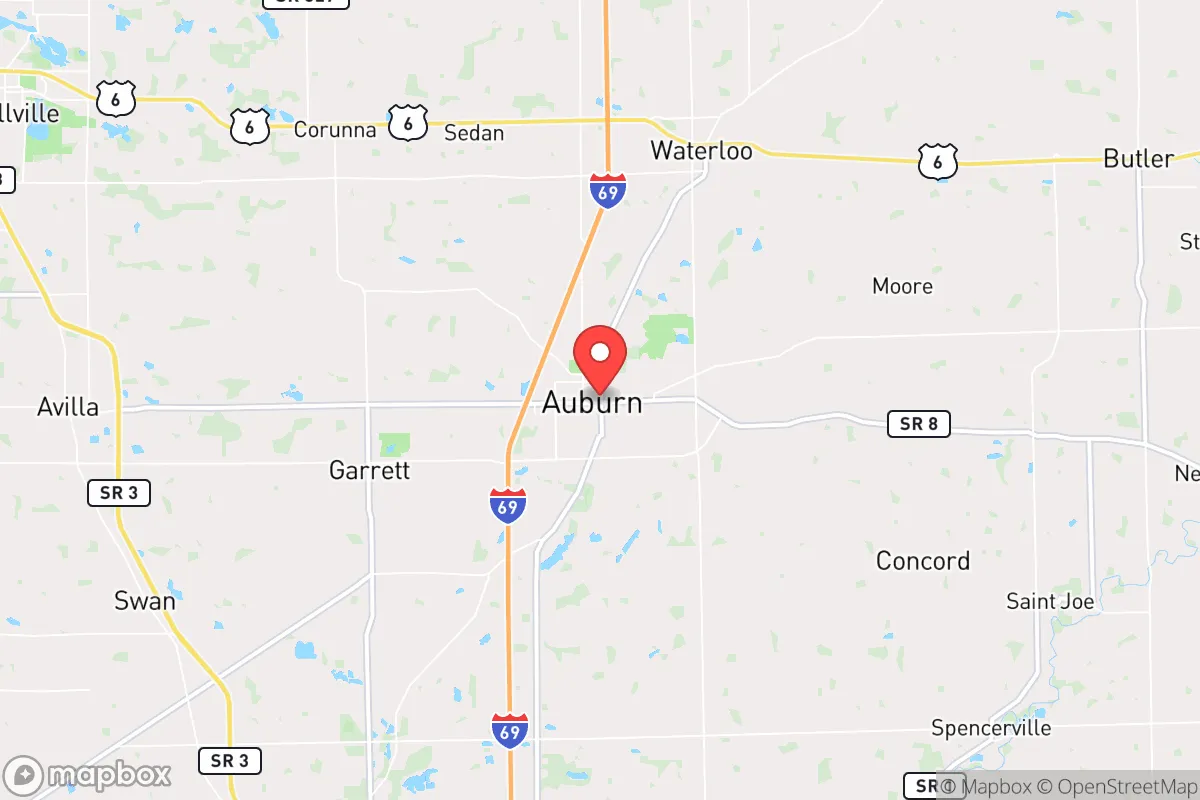
District shown is the primary district for this city’s centroid. Cities may span multiple districts.
Local Political AnalysisPolitical Analysis of Auburn, IN
Auburn, Indiana, is a reliably conservative community where Republican candidates typically win by comfortable margins. The city sits in DeKalb County, which has a Cook Partisan Voting Index (PVI) of R+16, making it significantly more Republican than the state of Indiana as a whole, which sits at R+9. This isn't a recent shift; the area has been a GOP stronghold for decades, and the trend has only solidified in recent election cycles. If you're looking for a place where conservative values are the norm in local governance and daily conversation, Auburn fits that bill.
How it compares
To understand Auburn's political climate, it helps to look at its neighbors. Drive 20 minutes south to Fort Wayne, and you'll find a more competitive environment—Allen County leans Republican but with a much narrower margin, and the city itself often elects Democrats to local office. Head 30 minutes west to Kendallville or 45 minutes north to Angola, and you'll find similar conservative leanings, though none as pronounced as Auburn's. The contrast is sharpest when you compare Auburn to college towns like Bloomington or larger urban centers like Indianapolis, where Democratic candidates can win outright. In Auburn, a Republican candidate for county commissioner or state representative can expect to win by double digits without breaking a sweat. The R+16 PVI means that in a typical statewide race, a Republican will outperform their statewide average by about 7 points in DeKalb County.
What this means for residents
For conservative residents, Auburn offers a political environment where their views are the mainstream. Local government, school board meetings, and community events tend to reflect traditional values, and there's little friction in daily life for someone who leans right. For liberal residents, the reality is more nuanced. You won't find many overtly progressive organizations or events, and political discussions can feel one-sided. However, Auburn is not a place of hostility; most people are polite and neighborly regardless of party. The practical impact is that local policy—on taxes, zoning, and school funding—tends to favor lower spending and limited government intervention. If you're a liberal, you might feel like a minority voice, but you won't be silenced or shunned. The community's small size (around 13,000 people) means personal relationships often transcend political labels.
One cultural distinction worth noting is Auburn's strong connection to the automotive and manufacturing industries, particularly through the Auburn Cord Duesenberg Automobile Museum and the Kruse Automotive & Carriage Museum. This industrial heritage fosters a pragmatic, working-class conservatism that values hard work and self-reliance over ideological purity. You won't see much of the culture-war intensity that dominates national politics; instead, local debates focus on road repairs, school budgets, and keeping the downtown vibrant. Looking ahead, Auburn's political trajectory seems stable. As long as the area's economic base remains solid—anchored by employers like Steel Dynamics and the local hospital—the conservative lean is unlikely to shift. For anyone moving here, the key takeaway is simple: Auburn is a place where Republican politics are the default, but it's also a place where people are judged more by their character than their bumper stickers.

State Political ClimatePolitical Climate in Indiana
State Political AnalysisPolitical Environment in the State
Indiana has been a reliably Republican state for decades, with a Cook Partisan Voting Index of R+9, meaning it votes about nine points more Republican than the nation as a whole. The dominant coalition is a mix of rural and suburban conservatives, though the state has shown a slow but steady rightward drift over the past 10-20 years, driven largely by the exodus of moderate Democrats from the southern part of the state and the growing Republican strength in the Indianapolis suburbs. While the state was once a genuine battleground—voting for Barack Obama in 2008 by a hair—it has since settled into a solidly red posture, with Republicans holding supermajorities in both chambers of the General Assembly and every statewide office.
Urban vs. rural divide
The political map of Indiana is a classic study in contrasts. The urban core of Indianapolis (Marion County) is a Democratic stronghold, delivering about 60% of its vote to Democratic candidates in recent presidential cycles. However, the surrounding ring of suburbs—places like Hamilton County (Carmel, Fishers, Noblesville) and Hendricks County (Avon, Plainfield)—have shifted from swing areas to reliably Republican, with Hamilton County often voting 60-65% Republican. Lake County in the northwest corner (Gary, Hammond) is another Democratic bastion, driven by union-heavy industrial towns and a large Black population. The rest of the state is overwhelmingly rural and red, with counties like Pulaski, Newton, and Switzerland routinely voting 75-80% Republican. The notable exception is Monroe County (Bloomington), home to Indiana University, which votes Democratic by similar margins to Indianapolis. The Fort Wayne area (Allen County) has trended Republican but remains more competitive than the rest of the northeast, while South Bend (St. Joseph County) has become a Democratic-leaning island in a sea of red.
Policy environment
Indiana’s policy environment is consistently conservative, with a low-tax, low-regulation posture. The state has a flat income tax rate of 3.15% (down from 3.23% in 2023, with further cuts scheduled), and a sales tax of 7% on most goods. Property taxes are relatively low by national standards, capped at 1% of assessed value for owner-occupied homes. The state is a "right-to-work" state, meaning workers cannot be required to join a union or pay dues as a condition of employment. Education policy leans toward school choice: Indiana has one of the largest voucher programs in the country, with over 60,000 students using vouchers to attend private or religious schools in 2024. The state also has a robust charter school sector. On healthcare, Indiana expanded Medicaid under the Affordable Care Act via a conservative waiver (the Healthy Indiana Plan), but the state has not pursued a state-based exchange and has relatively few regulations on insurers. Election laws are moderately restrictive: voters must present a government-issued photo ID at the polls, and early voting is available but not as expansive as in some states. There is no automatic voter registration, and same-day registration is not allowed.
Recent policy direction
Indiana’s recent legislative sessions have pushed the state further right on a broad range of issues. On gun and self-defense law, Indiana became a "constitutional carry" state in 2022, allowing permitless carry of handguns for adults 18 and older. The state also has a "Stand Your Ground" law and preempts local gun ordinances. On parental and education rights, the 2023 session saw the passage of a "Parents' Bill of Rights" (HB 1608), which requires schools to notify parents of any changes to a student's health or well-being and prohibits instruction on human sexuality in grades K-3. The state also banned "divisive concepts" in K-12 classrooms (HB 1443) and prohibited transgender girls from participating in girls' sports (HB 1041, 2022). On speech and privacy, Indiana has a broad public records law, but the legislature has limited the ability of local governments to regulate short-term rentals and has restricted the use of traffic cameras. On medical and bodily autonomy, Indiana passed a near-total abortion ban in 2022 (SB 1), with exceptions only for rape, incest (up to 10 weeks), and to save the mother's life. The law was temporarily blocked by the courts but was upheld by the Indiana Supreme Court in 2023. On property rights, the state has strong eminent domain protections and has limited local zoning authority in some areas. On taxation, the legislature passed a series of income tax cuts in 2023 and 2024, aiming to reduce the flat rate to 2.9% by 2027. On voting and ballot access, the state has tightened voter ID requirements and purged inactive voters from the rolls, but has also expanded early voting hours in some counties.
Civil unrest & political movements
Indiana has seen its share of political activism, but it rarely reaches the level of sustained unrest seen in some states. The 2020 protests following George Floyd's death were significant in Indianapolis, with several nights of demonstrations and some property damage, but they were smaller and shorter-lived than in cities like Portland or Seattle. The state has a strong pro-life movement, with organizations like Indiana Right to Life holding annual rallies at the Statehouse. On the left, the Indiana chapter of the ACLU is active, particularly on voting rights and abortion access. Immigration politics are less heated than in border states, but there have been flashpoints: in 2019, the city of Gary considered a "welcoming city" ordinance, but it did not pass. There is no sanctuary city policy in Indiana, and state law prohibits local governments from adopting such policies. Election integrity controversies have been minimal, though some Republican activists pushed for audits after the 2020 election. The most visible political flashpoint in recent years has been the abortion debate, with both sides holding regular demonstrations at the Statehouse during legislative sessions.
Projection
Over the next 5-10 years, Indiana is likely to remain solidly Republican, but the margins may narrow slightly as the Indianapolis suburbs continue to diversify and as younger, more moderate voters move into the state. The in-migration pattern is a mixed bag: Indiana is attracting retirees and remote workers from higher-cost states like Illinois and California, many of whom are drawn by the low taxes and conservative policies, but it is also seeing growth in the tech and life sciences sectors in the Indianapolis area, which tends to attract a more moderate workforce. The state's demographic profile is aging and becoming slightly more diverse, but not at a pace that will fundamentally alter the political landscape. The biggest wild card is the continued growth of the Indianapolis metro area, which could eventually make the state more competitive if the suburbs trend back toward the center. For now, expect the General Assembly to continue its conservative trajectory on taxes, education, and social issues, with further income tax cuts and additional restrictions on abortion likely. A new resident moving in now should expect to find a state where conservative policies are the norm, but where the urban centers provide a counterbalance on cultural and social issues.
For a new resident, the bottom line is that Indiana offers a predictable, stable political environment that leans heavily conservative. If you align with that orientation, you'll find a state that is actively cutting taxes, expanding school choice, and protecting gun rights. If you don't, you'll find a state where your vote in statewide elections will likely be in the minority, but where local control in Indianapolis, Bloomington, or South Bend can provide a more congenial atmosphere. The state is not a political battleground, and it's not likely to become one anytime soon. What you see is largely what you get: a reliably red state with a pragmatic, business-friendly approach to governance.
* Values derived from national, state, county, city and local statistics and may differ in a specific area. Last updated: 2026-10-22T15:10:08.000Z
Narrative content on this page is AI-generated and may contain mistakes. Verify any details that matter before acting on them.
ReloMaps may earn a commission from affiliate links at no extra cost to you.

