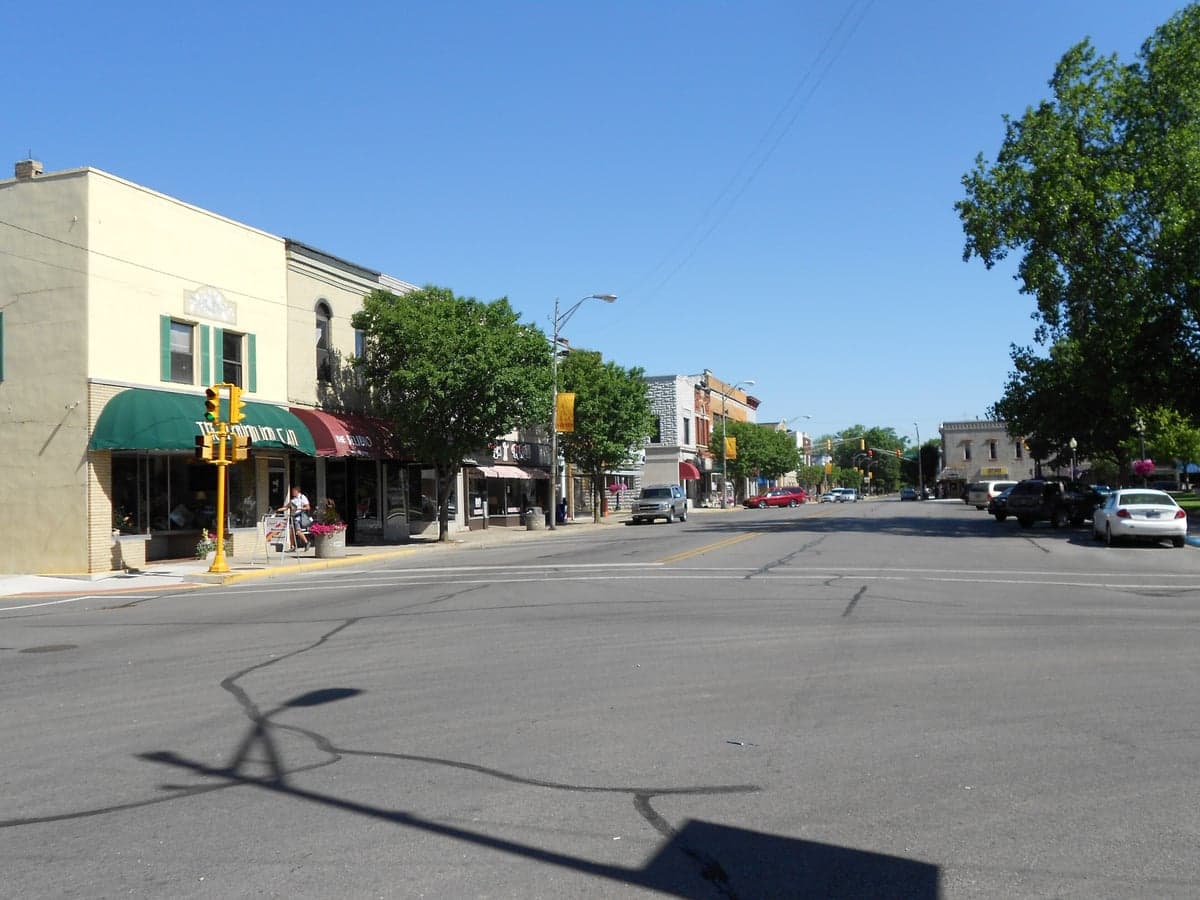
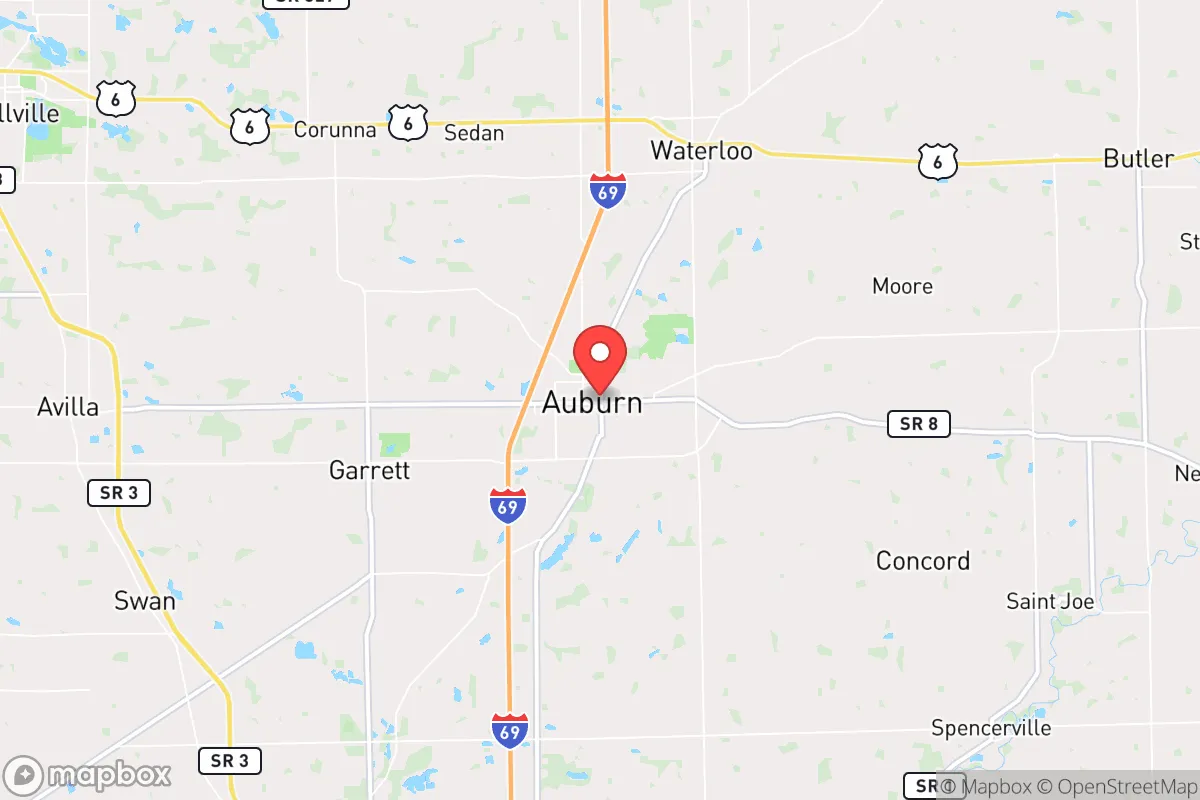
Photo: Wikipedia
Demographics of Auburn, IN
Affluence Level in Auburn, IN
A middle-class area roughly in line with national averages across income, home values, education, and employment.
People of Auburn, IN
The people of Auburn, Indiana, today number 13,464 and form a remarkably homogeneous community defined by its deep German and Appalachian roots. With a population that is 95.4% white and only 1.3% foreign-born, Auburn remains one of the least ethnically diverse cities in the Midwest, a direct legacy of its industrial boom era and limited post-1965 immigration. The city’s identity is still shaped by the conservative, family-oriented values of its founding waves, with a strong sense of local pride centered on the Auburn Cord Duesenberg Automobile Museum and the annual Auburn Festival.
How the city was settled and grew
Auburn was platted in 1836 along the Cedar Creek and was initially settled by Yankee migrants from New England and New York, drawn by cheap land and the promise of the Erie Canal corridor. These early settlers built the first homes in what is now the Historic Downtown Auburn district, centered around the DeKalb County Courthouse. The city’s population exploded after 1900 when the Auburn Automobile Company began production, attracting a wave of skilled mechanics and factory workers, many of whom were German and Irish immigrants who settled in the North Side neighborhoods near the plant. By the 1920s, Auburn was a thriving auto manufacturing hub, and the South Side grew with the construction of bungalows and craftsman homes for the growing middle class. The Great Depression and the closure of the Auburn Automobile Company in 1937 halted growth, but the population stabilized as the city transitioned to a regional manufacturing and agricultural service center.
Modern era (post-1965)
Unlike many Midwestern industrial cities, Auburn did not experience significant demographic change after the 1965 Hart-Cellar Act. The foreign-born population remains negligible at 1.3%, and the city’s black population is effectively zero. The modest Hispanic population (2.3%) is concentrated in the Eastside neighborhoods near the industrial parks, where a small number of Mexican and Central American workers arrived in the 1990s to work at factories like Metaldyne and Rieke Corporation. The Asian population (0.1%) is virtually nonexistent. Domestic in-migration has been primarily from other parts of Indiana and neighboring Ohio, with families drawn by affordable housing and low crime rates. These newcomers have largely settled in the newer subdivisions on the West Side, such as Deer Run and Stonegate, which feature larger lots and modern homes. The city’s college-educated population stands at 22.2%, below the national average, reflecting a workforce still heavily oriented toward manufacturing and trades rather than professional services.
The future
Auburn’s population is projected to grow slowly, reaching roughly 14,500 by 2035, driven by spillover from the Fort Wayne metro area, which is 25 miles south. The city is becoming slightly more diverse, but the pace is glacial: the Hispanic share may rise to 3-4% as agricultural and light industrial employers continue to recruit labor from outside the region. The North Side and Eastside will likely absorb most of this growth, while the West Side subdivisions will continue to attract white, middle-class families from within the state. The city’s cultural identity is evolving slowly: the Auburn Cord Duesenberg Festival remains a major draw, but younger residents are increasingly commuting to Fort Wayne for work and entertainment, reducing the city’s insularity. There is no indication that the city will become significantly more diverse in the next two decades, as the local economy does not attract the high-skilled immigration or refugee resettlement that has reshaped larger Midwestern cities.
For someone moving in now, Auburn offers a stable, safe, and culturally conservative environment where the population is aging slowly and the social fabric remains tightly knit. The city is not becoming more diverse in any meaningful sense, but it is becoming more connected to the broader Fort Wayne region, which may gradually introduce new influences. The bottom line: Auburn is a place where the past still shapes the present, and where a newcomer will find a community that values continuity over change.

* Values derived from national, state, county, city and local statistics and may differ in a specific area. Last updated: 2026-10-22T15:10:08.000Z
Narrative content on this page is AI-generated and may contain mistakes. Verify any details that matter before acting on them.
ReloMaps may earn a commission from affiliate links at no extra cost to you.

