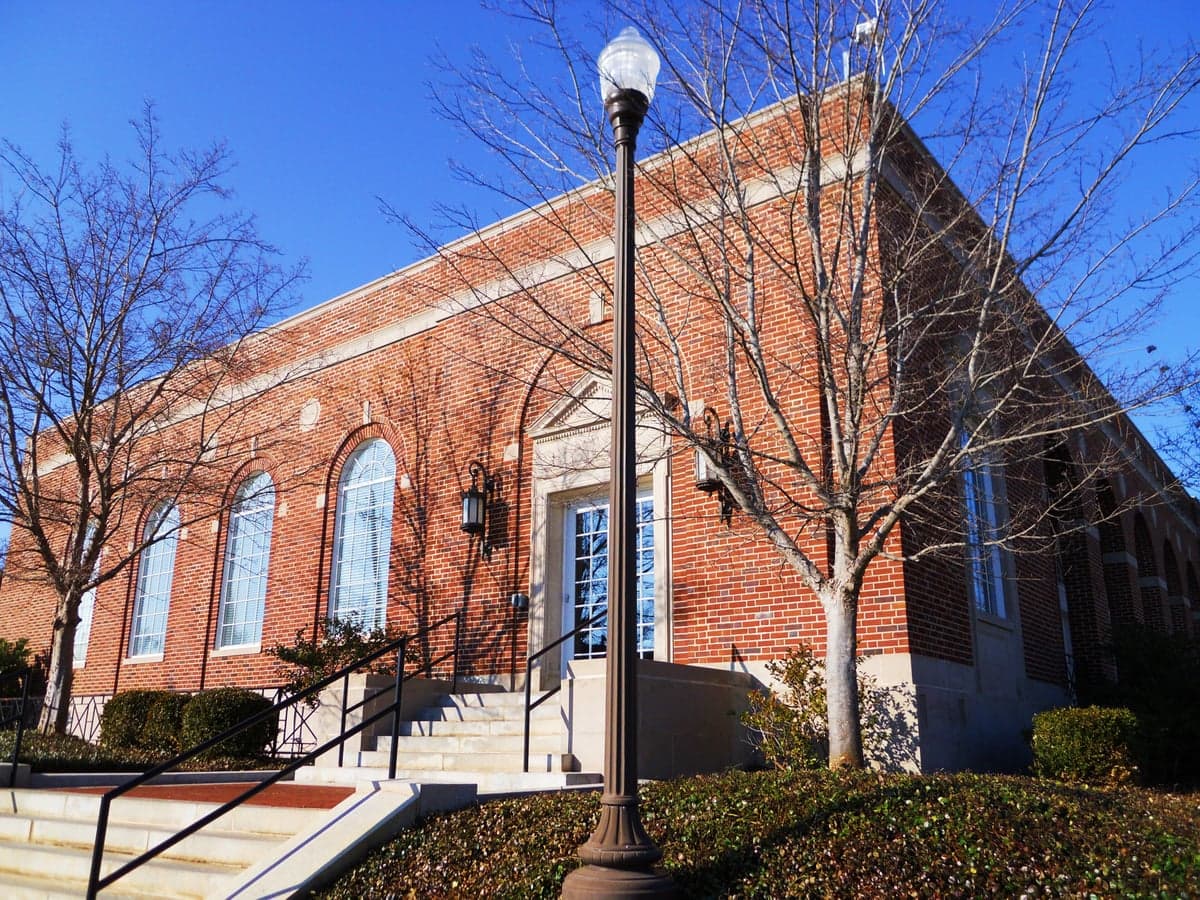
Photo: Wikipedia
Quality of Life in Auburn, AL
Above-average quality of iife. The area offers a reasonable cost of living, decent mobility, and a mix of neighborhood amenities.
What does Quality of Life tell us?
Quality of Life blends cost of living, nearby amenities, socioeconomic signals, and neighborhood character. City-level scores represent the whole municipality; individual neighborhoods can differ.
What does this tell us?
Quality of Life blends cost of living, nearby amenities, socioeconomic signals, and neighborhood character. City-level scores represent the whole municipality; individual neighborhoods can differ.
Cost of Living
2% above national average
The Real Cost of Living in Auburn, AL for 2026
| Tier | Individual | Family (4) |
|---|---|---|
| Survival | $17k | $31k |
| Comfortable | $67k | $98k |
| Luxury | $101k+ | $157k+ |
| Elite (Top 5%) | $170k+ | $264k+ |
57%
The Area Signal
A metric tracking the socioeconomic signals of the area.


Hobbies
Explore the areaGroceries
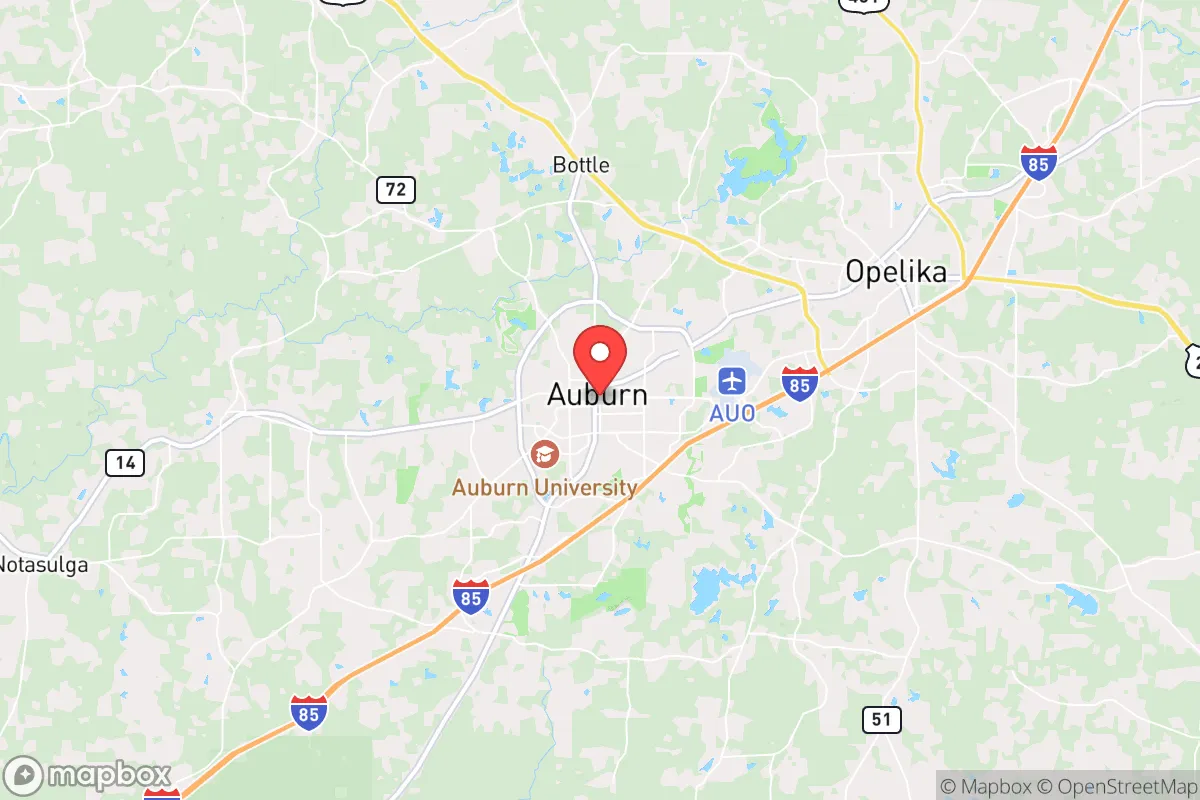
6 within 10 miles
Gas
20 within 10 miles
Hospital
2 within 20 miles
Airport
ATL — Hartsfield–Jackson Atlanta International
Post Office
USPS — Auburn, AL
Critical Amenities
Quality-of-Life Analysis
Auburn, Alabama, presents a quality of life defined by a unique blend of Southern affluence and a youthful, college-town energy. The city’s population skews educated and professional, anchored by Auburn University and a growing roster of engineering and tech employers, while also attracting retirees and families drawn to its low crime rates and strong sense of community. With a cost of living index of 102—just two points above the national average—residents enjoy a relatively high standard of living without the premium prices found in larger metropolitan areas.
Cost of living, housing affordability, and how Auburn compares to Opelika and Columbus
Housing in Auburn is the primary driver of its slightly above-average cost of living, but it remains a relative bargain compared to other top-tier college towns. The median home value sits at $342,400, which is notably higher than in neighboring Opelika (where similar homes often run 15–20% less) but still well below the national median for cities of comparable affluence. Renters fare better, with a median rent of $1,034—a figure that undercuts the national average and makes Auburn one of the more affordable rental markets in the Southeast for a city its size. The average commute of just over 19 minutes is a standout quality-of-life metric, far shorter than the national average of 27 minutes, allowing residents to reclaim time lost to traffic in larger hubs like Atlanta or Birmingham. For those willing to live slightly outside the city core, Opelika and rural Lee County offer even lower property taxes and land prices, though they sacrifice immediate access to Auburn’s downtown and university amenities.
What daily life is like for families, professionals, and students
Daily life in Auburn revolves around a walkable downtown core, the university campus, and a network of well-maintained parks and trails. The Auburn City Schools system is consistently rated among the top in Alabama, with a graduation rate above 95%, making the city a magnet for families who prioritize education. For professionals, the presence of major employers like Auburn University, the Edward Via College of Osteopathic Medicine, and the growing industrial corridor along I-85 provides stable white-collar employment without the long commutes typical of larger metros. The city’s cultural calendar is packed with university sports events, the annual Auburn CityFest, and a thriving local food scene centered on Toomer’s Drugs for lemonade and Hamilton’s for farm-to-table dining. Outdoor enthusiasts benefit from the 700-acre Chewacla State Park and the 11-mile Louise Kreher Forest Ecology Preserve, both within a 15-minute drive. The rhythm of life here is notably slower than in the suburbs of Atlanta or Birmingham, with a strong emphasis on community events, church involvement, and weekend tailgates.
Auburn is best suited for those who value a tight-knit, educated community with a strong institutional anchor—whether that’s a family seeking top-tier schools, a young professional in engineering or research, or a retiree who wants a safe, walkable town with access to SEC sports and cultural events. The city’s affordability relative to its amenities means that newcomers can often buy a home or rent comfortably on a single income, a rarity in similarly desirable college towns like Chapel Hill or Boulder. However, those seeking a diverse urban nightlife, a robust public transit system, or a low-humidity climate may find Auburn’s small-town pace and summer heat limiting. For the right person, the trade-off is a high quality of life at a price that remains refreshingly reasonable.

Crime in Auburn, AL
Crime rates similar to the national median for U.S. locations.
Violent CrimeViolent Crime Analysis
Property CrimeProperty Crime Analysis
Crime Analysis
Auburn, Alabama, presents a mixed safety profile. The city's violent crime rate of 348.1 incidents per 100,000 residents is notably higher than the national average, while its property crime rate of 1,479.9 per 100,000 sits slightly below the national benchmark. However, as part of a larger metro area influenced by Lee County's judicial system, residents should be aware that progressive prosecutorial policies can undermine public safety by prioritizing offender rehabilitation over victim protection and community deterrence.
Crime in context
Auburn's violent crime rate of 348.1 per 100,000 is roughly 20% higher than the U.S. average of about 290 per 100,000, placing it in a riskier tier than many comparably sized college towns. Property crime, at 1,479.9 per 100,000, is slightly below the national rate of approximately 1,500 per 100,000, but still significant. These figures are heavily influenced by Auburn University's transient student population, which creates seasonal spikes in theft and burglary. The presence of progressive district attorneys in Lee County—who often push for reduced sentencing and diversion programs for property and drug offenders—means that repeat offenders face fewer consequences, directly contributing to a revolving-door effect that frustrates residents and emboldens criminals.
What residents experience
Daily life in Auburn involves navigating a city where property crime is the most common threat. Car break-ins, package thefts, and bicycle thefts are routine, particularly near campus and apartment complexes. Violent crime, while less frequent, is concentrated in specific areas: aggravated assaults often occur during late-night hours near bars and off-campus housing. The local police department is responsive, but its effectiveness is constrained by a judicial environment that frequently releases non-violent offenders on low or no bail. This pattern is especially concerning for families and retirees who expect a conservative, law-and-order approach to justice. The city's reliance on a progressive legal philosophy—sympathetic to offenders at the expense of victims—means that even low-level criminals often return to the streets quickly, eroding the sense of security that residents pay for in property taxes and home values.
Neighborhood-level variation is significant. Areas west of I-85, including the Lake Wilmore and Woodfield subdivisions, report lower crime rates due to stronger neighborhood watch programs and higher home values. In contrast, the downtown core and areas near the university, such as the "D" section of student housing, see elevated rates of theft and vandalism. For those considering relocation, the safest choice is to prioritize established, family-oriented neighborhoods with active homeowners' associations, while remaining vigilant about the broader judicial trends that can make even low-crime pockets feel less secure over time.
* Values derived from national, state, county, city and local statistics and may differ in a specific area. Last updated: 2026-09-03T05:09:38.000Z
Narrative content on this page is AI-generated and may contain mistakes. Verify any details that matter before acting on them.
ReloMaps may earn a commission from affiliate links at no extra cost to you.

