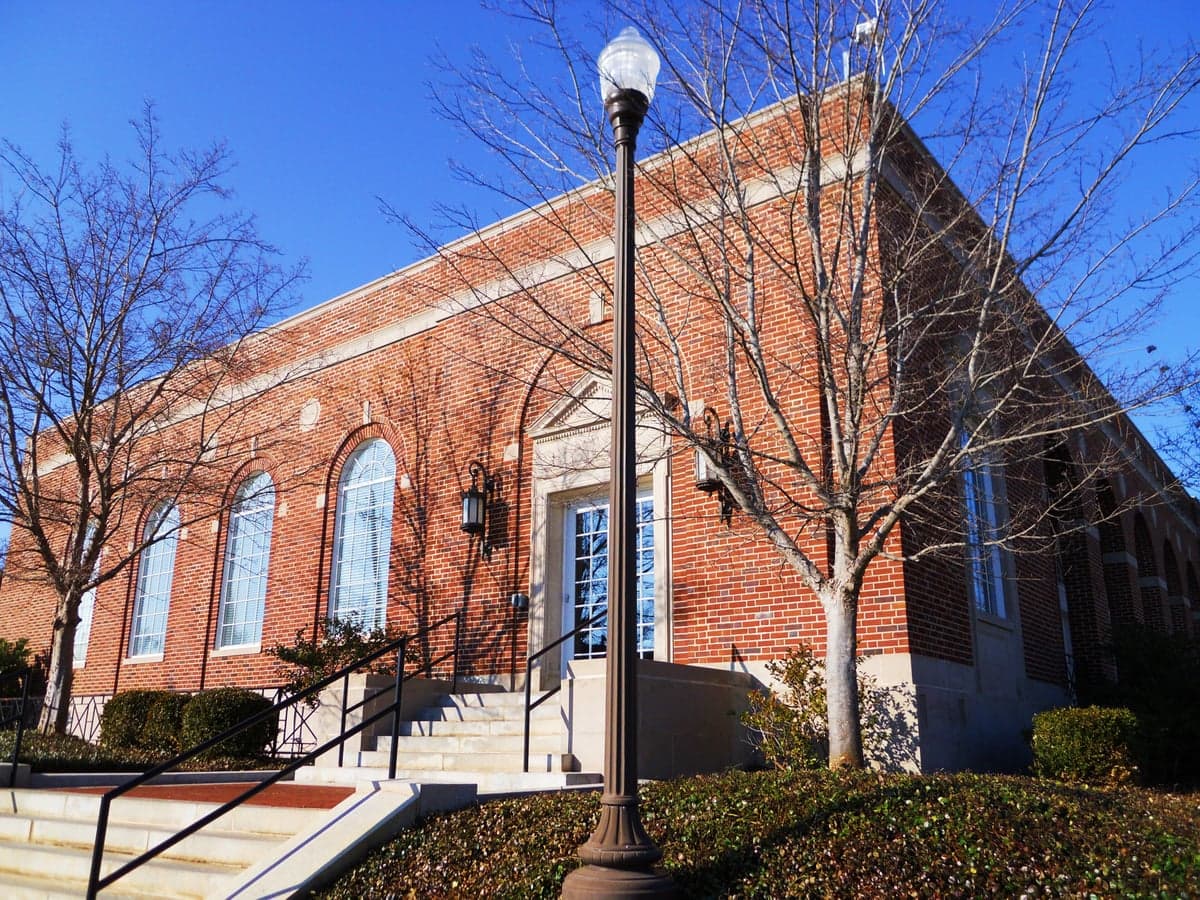
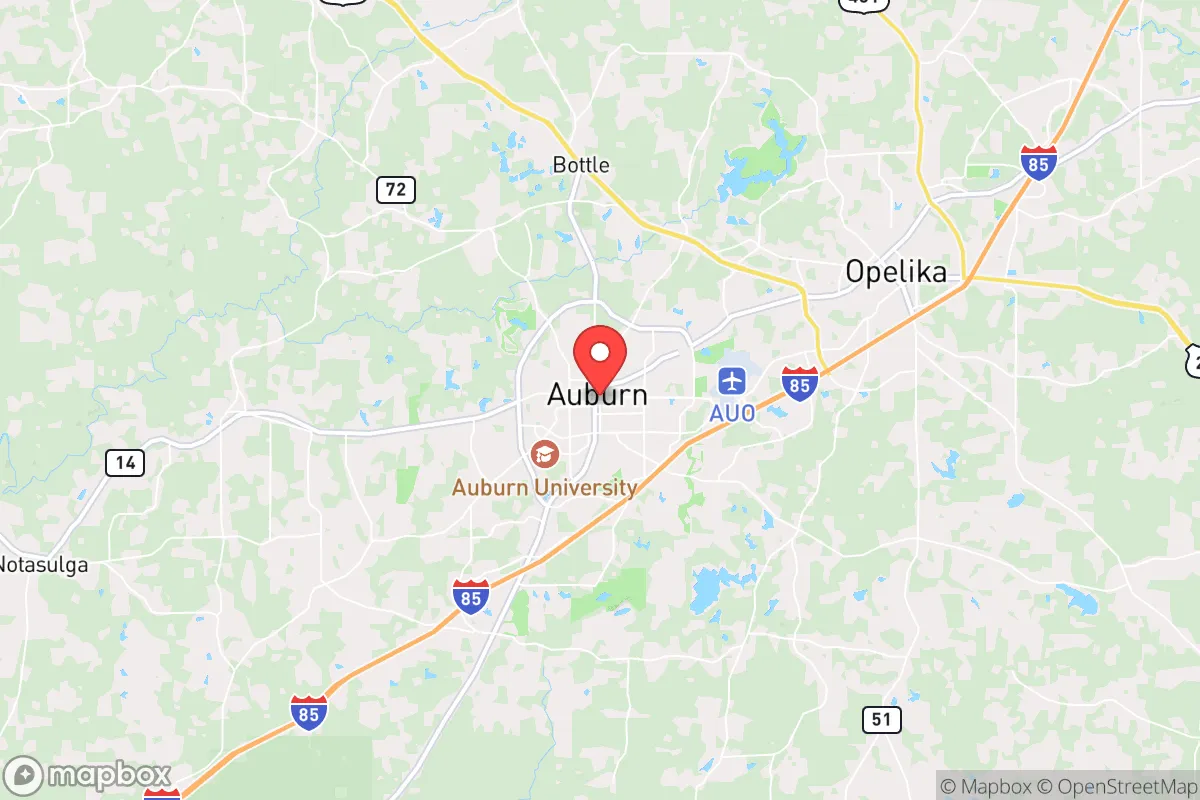
Photo: Wikipedia
Personal Sovereignty in Auburn, AL
Viable for self-reliance. Generally workable, though some barriers may limit total independence.
What does Personal Sovereignty tell us?
Personal Sovereignty measures your capacity for self-reliance and independence with minimal government friction. Higher scores mean fewer barriers between you and the way you want to live... but it assumes you have the space you need and good neighbors.
What does this tell us?
Personal Sovereignty measures your capacity for self-reliance and independence with minimal government friction. Higher scores mean fewer barriers between you and the way you want to live... but it assumes you have the space you need and good neighbors.
State Policy
Energy independence: Importer (45% of energy produced in-state)
Personal Liberty
Homesteading

Personal Liberty Analysis
Auburn, Alabama, offers a notably high degree of personal sovereignty, grounded in Alabama’s constitutional and statutory framework that generally favors individual autonomy over expansive government intervention. For residents and those considering relocation, the city’s environment is shaped by a state-level commitment to limited taxation, permissive self-defense laws, and a regulatory posture that leaves significant room for personal and economic independence. While Auburn itself is a growing college town with some municipal ordinances, the overarching legal and cultural climate leans heavily toward self-reliance and minimal bureaucratic friction, making it a compelling option for those who prioritize freedom from government overreach.
Tax burden and regulatory posture in Auburn and Alabama
Alabama’s tax structure is among the lightest in the nation, and Auburn residents benefit directly from this. The state has no tax on Social Security benefits, no estate or inheritance tax, and a flat state income tax rate of 5% on taxable income over $3,000. Property taxes are exceptionally low — Alabama’s effective property tax rate averages around 0.33% of assessed home value, one of the lowest in the country. In Lee County, where Auburn sits, the combined property tax rate is roughly 0.4%, meaning a $300,000 home would incur annual taxes of about $1,200. Sales tax in Auburn is 9.5% (state plus local), which is moderate but offset by the absence of other burdens. The regulatory environment is similarly light-touch. Alabama is a right-to-work state, meaning no union membership can be required for employment, and occupational licensing requirements are less extensive than in many states. Auburn’s city government does enforce zoning and building codes, but these are generally straightforward and not onerous compared to jurisdictions with stricter land-use controls. For a resident focused on minimizing tax and regulatory drag, Auburn presents a low-friction environment.
Self-defense and gun law specifics in Auburn and Alabama
Alabama is a strong Second Amendment state, and Auburn reflects that ethos. The state has permitless carry (constitutional carry) for handguns, effective since 2022, meaning any law-abiding adult 18 or older can carry a concealed firearm without a permit. Open carry is also legal without a permit. For those who wish to obtain a permit for reciprocity purposes, the Lee County Sheriff’s Office issues concealed carry permits with a straightforward application process and a fee of $20 per year. Alabama has a Castle Doctrine law with no duty to retreat in any place where a person has a legal right to be, including public spaces, and it provides civil immunity for lawful self-defense actions. Stand Your Ground protections are explicit. Auburn University is a public campus, and while state law generally prohibits firearms on K-12 school grounds, concealed carry on public university campuses is permitted for those with a valid permit (though the university may restrict in certain buildings). The city itself has no additional firearm ordinances beyond state law, so gun owners face minimal local restrictions. For a resident prioritizing self-defense autonomy, Auburn offers one of the most permissive legal environments in the Southeast.
Self-reliance and homesteading viability in Auburn
Homesteading and self-reliance are feasible in Auburn, though with some caveats tied to its suburban and college-town character. Within the city limits, residential lot sizes vary widely, from standard subdivision lots of 0.25–0.5 acres to larger parcels of 1–2 acres in older neighborhoods or unincorporated areas just outside the city. Zoning in Auburn allows for backyard chickens in most residential zones (with a permit and restrictions on roosters), and vegetable gardens are generally unrestricted. However, keeping larger livestock like goats or pigs is typically limited to agricultural zones or properties outside city limits. Off-grid living is legally possible but practically constrained by building codes and utility hookup requirements within the city. Auburn requires new homes to connect to municipal water and sewer where available, and building permits are required for any structural work. For those seeking full off-grid independence — solar panels, rainwater collection, composting toilets — the path is easier in unincorporated Lee County, where building codes are less stringent and no municipal utility mandates exist. The county allows for private wells and septic systems on parcels of at least one acre, and solar installations are not restricted. The local climate (mild winters, long growing season) supports year-round gardening, and the Auburn/Opelika area has several farmers’ markets and agricultural supply stores. For a family wanting to grow food, keep chickens, and reduce reliance on external systems, Auburn’s outskirts offer a viable middle ground between suburban convenience and rural self-sufficiency.
Personal liberties in Auburn: parental rights, medical autonomy, speech, and property
Alabama law provides strong protections for parental rights, and Auburn families operate within that framework. The state has a Parents’ Bill of Rights (enacted in 2022) that affirms parents’ authority over their children’s education, healthcare, and upbringing. This includes the right to opt children out of school curricula or activities that conflict with religious or moral beliefs, and to access all educational records. Medical autonomy is similarly broad: Alabama does not require parental consent for minors to receive emergency care, but for non-emergency treatment, parental consent is generally required. The state has no vaccine mandate for adults, and while school vaccine requirements exist, medical and religious exemptions are available. On speech and expression, Auburn is a public university town, so First Amendment protections are robust, though the university itself may impose time, place, and manner restrictions on campus. Off campus, there are no local ordinances that restrict political speech, assembly, or religious expression. Property rights are strongly protected under Alabama law, with no statewide rent control and minimal landlord regulations. Eminent domain is limited to public use, and the state has a right-to-farm law that protects agricultural operations from nuisance lawsuits. For a resident who values the ability to make decisions about their family, health, and property without excessive government interference, Auburn’s legal environment is highly supportive.
Overall, Auburn’s personal sovereignty environment ranks among the most favorable in the Southeast for those prioritizing autonomy. The combination of low taxes, permissive gun laws, feasible homesteading options, and strong protections for parental and property rights creates a landscape where self-reliance is not just possible but culturally expected. While the city’s growth and university presence introduce some municipal regulations, these are light compared to peer college towns in states like California, New York, or even North Carolina. For a conservative-leaning individual or family seeking a place where government stays out of daily life, Auburn offers a balanced, practical, and legally grounded foundation for personal freedom.

* Values derived from national, state, county, city and local statistics and may differ in a specific area. Last updated: 2026-09-03T05:09:38.000Z
Narrative content on this page is AI-generated and may contain mistakes. Verify any details that matter before acting on them.
ReloMaps may earn a commission from affiliate links at no extra cost to you.

