Photo: Wikipedia
Political ClimatePolitical Climate in Aubrey, TX
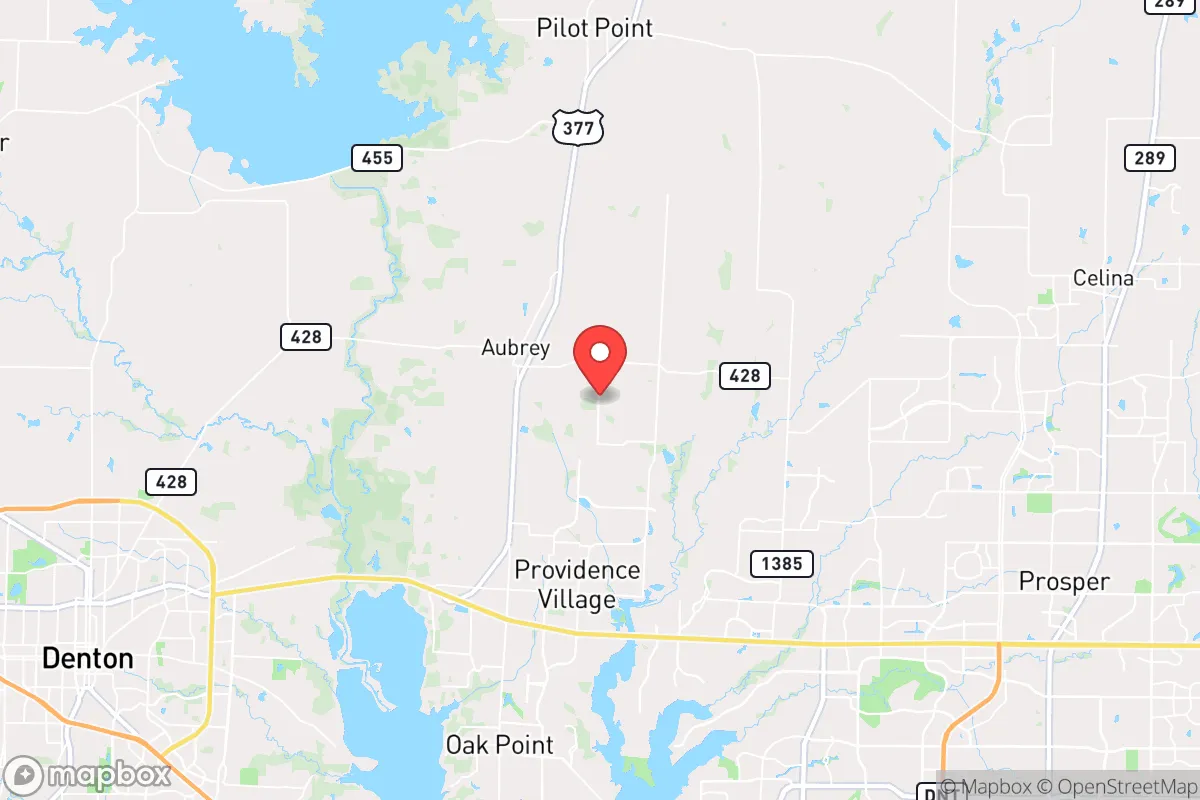
District shown is the primary district for this city’s centroid. Cities may span multiple districts.
Local Political AnalysisPolitical Analysis of Aubrey, TX
Aubrey, Texas, is a reliably conservative community that leans solidly Republican, a reality that has only deepened as the town has grown from a quiet farming crossroads into a fast-expanding suburb on the northern edge of the Dallas-Fort Worth metroplex. The Cook Partisan Voting Index (PVI) for the area is R+11, meaning the district votes about 11 percentage points more Republican than the national average. That’s a meaningful number—it puts Aubrey in the same political territory as places like Midland or Lubbock, not the purple suburbs closer to Dallas. Over the past decade, as new subdivisions have sprouted along Highway 377 and families have moved north from Frisco and McKinley, the local precincts have actually trended a bit redder, not bluer. The old-timers who remember when Aubrey was just a feed store and a post office have been joined by folks who came here specifically for lower taxes, bigger lots, and a more traditional way of life. That influx has reinforced the area’s conservative character rather than diluted it.
How it compares
Compared to the state of Texas as a whole, Aubrey is noticeably more Republican. While Texas itself is a reliably red state in presidential elections—it hasn’t voted Democratic since 1976—its urban cores (Houston, Dallas, Austin, San Antonio) are increasingly blue or purple. Aubrey sits in Denton County, which as a whole is R+11, but the town itself is even more conservative than the county average. Drive 15 miles south to Frisco, and you’ll find a more moderate, business-friendly Republicanism mixed with a growing Democratic presence, especially among younger professionals. Head 20 miles west to Denton, home to the University of North Texas, and you’ll see a liberal college town that votes blue in local races. Aubrey, by contrast, has none of that. The nearest city that feels politically different is probably Lewisville, about 25 miles south, where the Democratic vote share has climbed steadily since 2016. In Aubrey, you’re more likely to see Trump signs in yards than any Democratic candidate’s, and local school board and city council races are decided in Republican primaries, not general elections.
What this means for residents
For conservative residents, Aubrey’s political climate means their values are reflected in local policy: low property tax rates relative to neighboring cities, a strong law-and-order approach from the Denton County Sheriff’s Office, and school board decisions that emphasize parental rights and traditional curriculum. There’s no real pressure to moderate one’s views in public life. For liberal residents, the reality is more isolating. While no one is hostile, you’ll find few like-minded neighbors, and local Democratic clubs are small and meet in private homes rather than public spaces. Progressive candidates rarely appear on the ballot for local office, and when they do, they typically pull less than 35% of the vote. That said, the rapid growth is slowly introducing more diversity of thought—new arrivals from blue states sometimes bring different perspectives, though they tend to self-select for the area’s conservative ethos. If you’re a liberal, you’ll likely need to drive to Denton or even Dallas for a sense of political community.
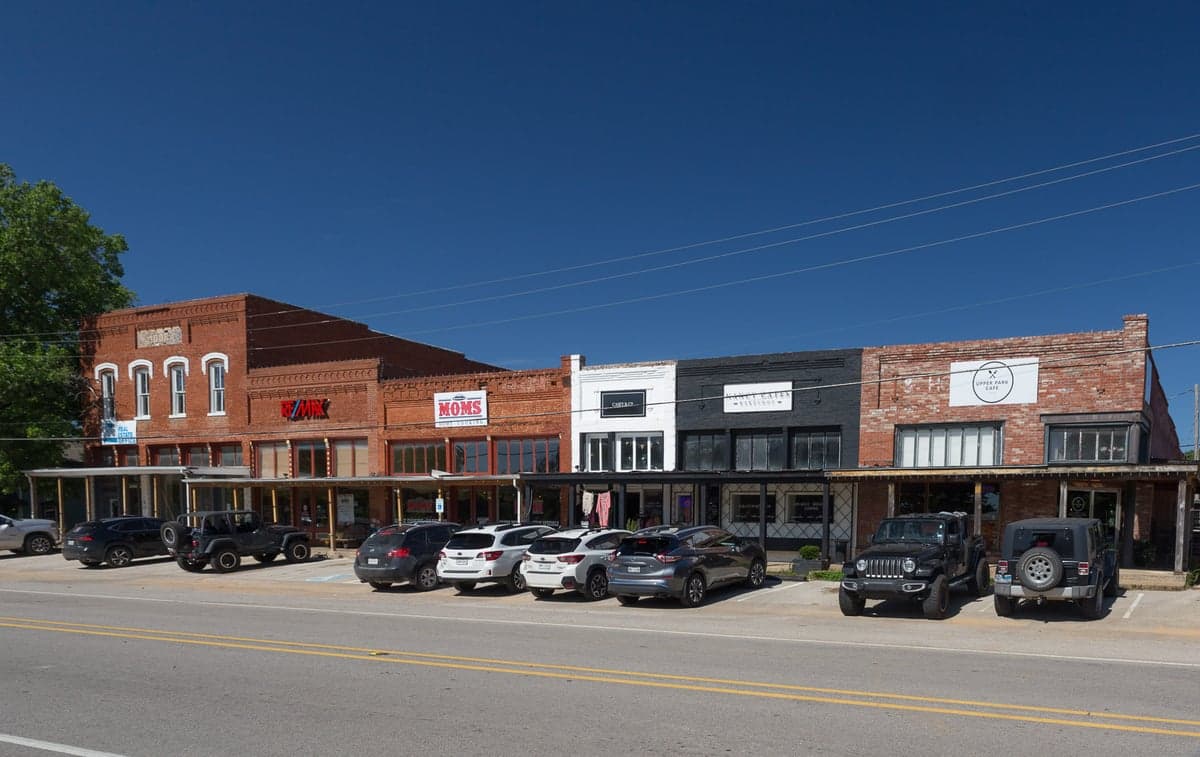
Culturally, Aubrey stands apart from the more cosmopolitan suburbs to the south. There’s no craft brewery scene, no indie bookstore, and the local coffee shop is a gas station. The town’s identity is still rooted in agriculture and rural life, even as new housing developments fill the former hayfields. Policy-wise, the city government keeps a light touch—zoning is minimal, and there’s a strong preference for private solutions over public programs. Gun rights are widely supported, and the local churches (mostly Baptist and non-denominational) play a central role in community life. For better or worse, Aubrey offers a version of small-town Texas that is increasingly rare as the metroplex expands: politically homogeneous, culturally traditional, and unapologetically conservative. That’s exactly why most people move here, and it’s unlikely to change anytime soon.

State Political ClimatePolitical Climate in Texas
State Political AnalysisPolitical Environment in the State
Texas has been a reliably Republican state for the past three decades, but the margin has been shrinking. In 2024, Donald Trump won the state by about 9 points, down from 11 points in 2020 and 16 points in 2016. The dominant coalition remains a mix of rural conservatives, suburban moderates, and evangelical voters, but explosive growth in the urban crescent—from Dallas-Fort Worth down through Austin to San Antonio and Houston—is steadily shifting the state’s political center of gravity. The long arc is clear: Texas is becoming more competitive, but it’s not flipping blue anytime soon.
Urban vs. rural divide
The political map of Texas is a study in contrasts. The state’s five biggest metros—Houston, Dallas-Fort Worth, San Antonio, Austin, and El Paso—account for roughly 70% of the population, and they lean increasingly Democratic. Austin is the bluest major city in the state, with Travis County delivering 71% for Biden in 2020. El Paso and Houston’s Harris County are also solidly blue. But the suburbs tell a more nuanced story. Collin County, north of Dallas, voted for Trump by 12 points in 2024, down from 18 in 2020—a sign that educated, affluent suburbanites are drifting left. Meanwhile, rural West Texas and the Panhandle, places like Lubbock and Amarillo, remain deeply red. The divide isn’t just urban vs. rural; it’s also about the exurbs. Counties like Comal (north of San Antonio) and Montgomery (north of Houston) are growing fast and staying conservative, creating a political buffer around the blue cities.
Policy environment
Texas has no state income tax, which is the single biggest policy draw for relocating conservatives and businesses. The trade-off is high property taxes—averaging about 1.6% of home value—and a reliance on sales tax. The regulatory posture is famously business-friendly: no state-level minimum wage above the federal $7.25, weak unions, and a right-to-work law. On education, the state funds schools through a complex Robin Hood system that redistributes property tax revenue from wealthy districts to poor ones, which has been a source of perennial litigation. Healthcare policy is dominated by the state’s refusal to expand Medicaid under the ACA, leaving about 18% of residents uninsured, the highest rate in the nation. Election laws have tightened: SB 1 (2021) added ID requirements for mail ballots, limited drive-through and 24-hour voting, and gave poll watchers more access. For a conservative relocator, the tax and regulatory environment is a clear win; for a liberal one, the lack of a safety net and restrictive voting laws are significant drawbacks.
Recent policy direction
The last five years have seen a sharp rightward turn on cultural and liberty issues. In 2021, the state passed the heartbeat abortion ban (SB 8), which effectively ended abortion after six weeks and created a private enforcement mechanism that survived court challenges. In 2023, the legislature passed a permitless carry law (HB 1927), allowing most adults to carry a handgun without a license or training. On education, the 2023 school voucher push (SB 8) failed in the House, but Governor Abbott has made it a priority for 2025. Parental rights were strengthened with the 2023 law banning gender-affirming care for minors (SB 14). On speech and privacy, the state passed a law in 2023 requiring social media platforms to disclose content moderation policies, though it’s been tied up in court. Property rights remain strong: no statewide zoning, and the state’s homestead exemption protects a primary residence from forced sale to pay most creditors. For a relocator weighing freedoms, Texas offers broad gun rights, low taxes, and strong parental control over education, but at the cost of limited healthcare access and a restrictive approach to bodily autonomy.
Civil unrest & political movements
Texas has seen its share of political flashpoints. The 2020 protests in Austin over George Floyd’s death were among the largest in the country, and the city’s police budget became a local battleground. Immigration politics are a constant: Operation Lone Star, launched in 2021, deployed state troopers and National Guard to the border, and the state has bused over 100,000 migrants to Democratic-led cities. The “secession” rhetoric, while mostly symbolic, flares up periodically—the Texas Nationalist Movement has pushed for a 2024 referendum, but it has no real political traction. Election integrity remains a live issue: the 2020 audit of four counties (including Harris and Dallas) found no widespread fraud, but the controversy fueled SB 1. A new resident will notice the heavy presence of state police on highways near the border, and in blue cities, you’ll see occasional protests outside the Capitol. The political temperature is high, but it rarely spills into daily life outside of election season.
Projection
Over the next 5-10 years, Texas will continue to trend purple, but not flip. The key driver is in-migration: about 1,000 people move to Texas every day, and they’re disproportionately young, diverse, and from blue states. The suburbs of Dallas, Houston, and San Antonio are where the battle will be fought—places like Frisco, Round Rock, and Converse are growing fast and becoming more competitive. The state’s Republican majority in the legislature is safe for now, but the margin will narrow. By 2030, expect a closer presidential race—maybe a 5-point win for the GOP—and a serious Democratic challenge for statewide office. For a relocator, this means the political environment will remain conservative for the near term, but the culture wars will intensify as the electorate diversifies. If you’re moving to a blue city like Austin, you’ll find a liberal bubble; if you’re moving to a red suburb like Keller or a rural county like Gillespie, you’ll find a community that’s doubling down on conservative values.
For a new resident, the bottom line is this: Texas offers a low-tax, high-freedom environment for those who align with its current direction, but it’s not a monolith. If you’re conservative, you’ll find a state government that reflects your values on guns, taxes, and education. If you’re liberal, you’ll find vibrant blue cities and a growing political counterweight, but you’ll also face state-level policies that limit your options on healthcare and voting. The practical takeaway is to choose your county carefully—your daily experience will be shaped more by whether you’re in Travis County or Collin County than by the state as a whole. Texas is big enough to accommodate both, but it’s not neutral ground.
* Values derived from national, state, county, city and local statistics and may differ in a specific area. Last updated: 2026-10-27T13:34:42.000Z
Narrative content on this page is AI-generated and may contain mistakes. Verify any details that matter before acting on them.
ReloMaps may earn a commission from affiliate links at no extra cost to you.

