Photo: Wikipedia
Demographics of Aubrey, TX
Affluence Level in Aubrey, TX
An upper-middle-class area. Household wealth, education levels, and homeownership run ahead of national benchmarks.
People of Aubrey, TX
The people of Aubrey, Texas today number 6,637, forming a small but rapidly diversifying community in Denton County. The city retains a distinctly suburban character, with a population that is 62.8% White, 16.6% Black, 6.0% Hispanic, 4.1% Indian (subcontinent), and 1.7% East/Southeast Asian, while only 4.2% are foreign-born. This demographic profile reflects a place that has transitioned from a rural farming crossroads into a bedroom community for the Dallas-Fort Worth metroplex, attracting families and individuals seeking more space and lower costs while maintaining a conservative-leaning cultural identity.
How the city was settled and grew
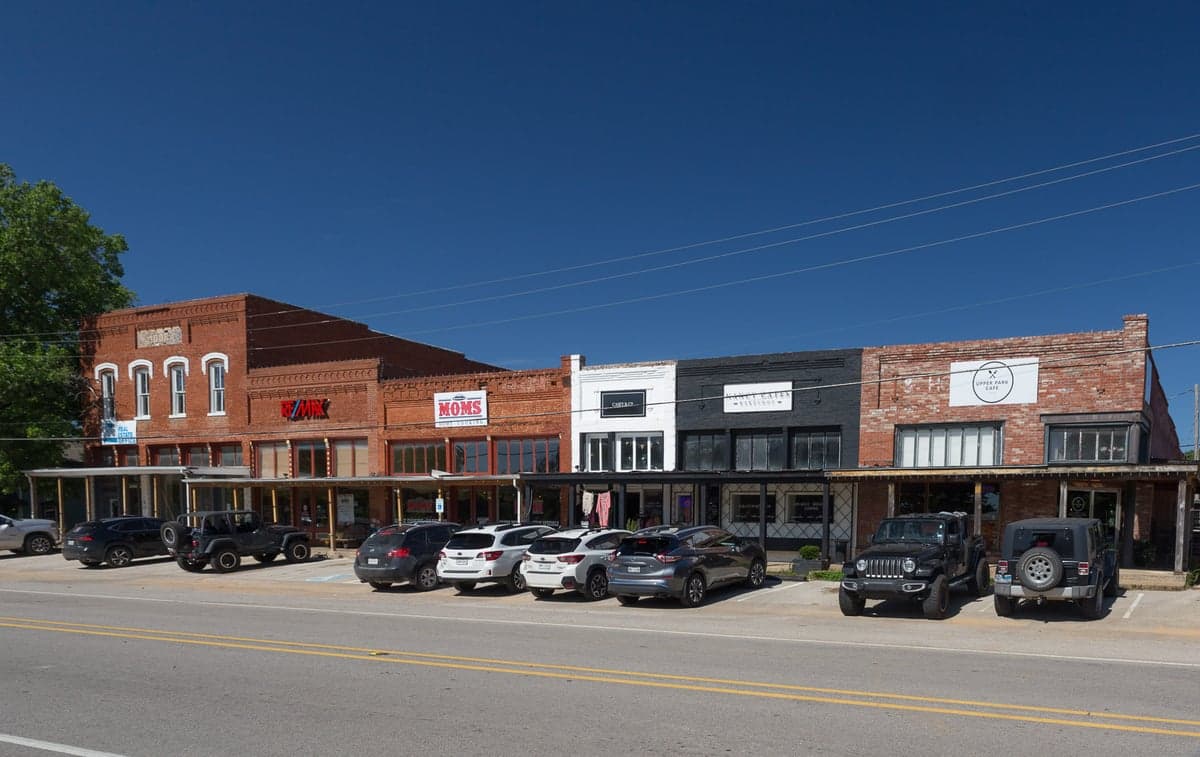
Aubrey’s original population was drawn by the arrival of the Missouri-Kansas-Texas Railroad in the late 19th century, which turned a small farming settlement into a cotton and grain shipping point. The earliest residents were predominantly Anglo-American farmers from the U.S. South and Midwest, who established homesteads along the rail line. The historic Downtown Aubrey district, centered on Main Street, was built by these families and remains the city’s original commercial and civic core. A small number of Black families also settled in the area during Reconstruction, forming a tight-knit community in what is now the East Side neighborhood, near the railroad tracks. For the first half of the 20th century, Aubrey’s population remained small and overwhelmingly White, with agriculture—cotton, corn, and livestock—as the economic backbone. The city’s growth was minimal until the post-World War II era, when improved highways began connecting it to Denton and Dallas.
Modern era (post-1965)
The 1965 Hart-Cellar Act had a limited immediate impact on Aubrey, as the city remained a small, largely White farming town through the 1970s. The real demographic shift began in the 1990s and accelerated after 2000, driven by suburban spillover from the Dallas-Fort Worth metroplex. New master-planned communities like Pecan Creek and Savannah (the latter technically in nearby Little Elm but drawing Aubrey residents) attracted a wave of domestic in-migrants—White and Black families from Dallas and Collin counties seeking newer, larger homes on larger lots. The Pecan Creek neighborhood, developed in the early 2000s, became a primary landing point for Black middle-class families moving north from Dallas, contributing to the city’s current 16.6% Black population. More recently, the Lantana Ridge and Woodlake subdivisions have drawn a mix of White, Hispanic, and Indian (subcontinent) families, the latter attracted by tech and healthcare jobs in nearby Plano and Frisco. The Indian community, now 4.1% of the population, is concentrated in these newer subdivisions, while the small East/Southeast Asian population (1.7%) is more dispersed. The Hispanic share (6.0%) remains modest compared to surrounding areas, with many families living in the West Aubrey area near the old rail corridor.
The future
Aubrey’s population is projected to continue growing, driven by ongoing residential development and its location along the U.S. 380 corridor, a major east-west artery. The city is becoming slightly more diverse, with the White share declining from over 80% in 2000 to 62.8% today, while the Black, Hispanic, and Indian shares are all rising. New developments like Aubrey Trails and Crossroads Ranch are attracting a younger, more ethnically mixed population, including first-time homebuyers and families from the Indian subcontinent who work in the region’s tech sector. The foreign-born share, while still low at 4.2%, is expected to increase as these communities grow. Culturally, Aubrey is evolving from a homogeneous rural town into a more diverse suburban community, though it retains a conservative political character and a strong emphasis on family-oriented living. The next 10-20 years will likely see the population approach 10,000-12,000, with continued diversification but no single group dominating the growth.
For someone moving in now, Aubrey offers a suburban lifestyle with a small-town feel, a growing but still manageable population, and a demographic mix that is becoming more representative of the broader Dallas-Fort Worth region. The city’s identity is shifting from its agricultural roots toward a family-focused bedroom community, with new neighborhoods absorbing most of the growth while older areas like Downtown and East Side retain their historic character. It is a place where conservative values and suburban convenience coexist with increasing diversity, making it a practical choice for families and individuals seeking affordability and community stability.

* Values derived from national, state, county, city and local statistics and may differ in a specific area. Last updated: 2026-10-27T13:34:42.000Z
Narrative content on this page is AI-generated and may contain mistakes. Verify any details that matter before acting on them.
ReloMaps may earn a commission from affiliate links at no extra cost to you.

