Photo: Wikipedia
Political ClimatePolitical Climate in Auberry, CA
District shown is the primary district for this city’s centroid. Cities may span multiple districts.
Local Political AnalysisPolitical Analysis of Auberry, CA
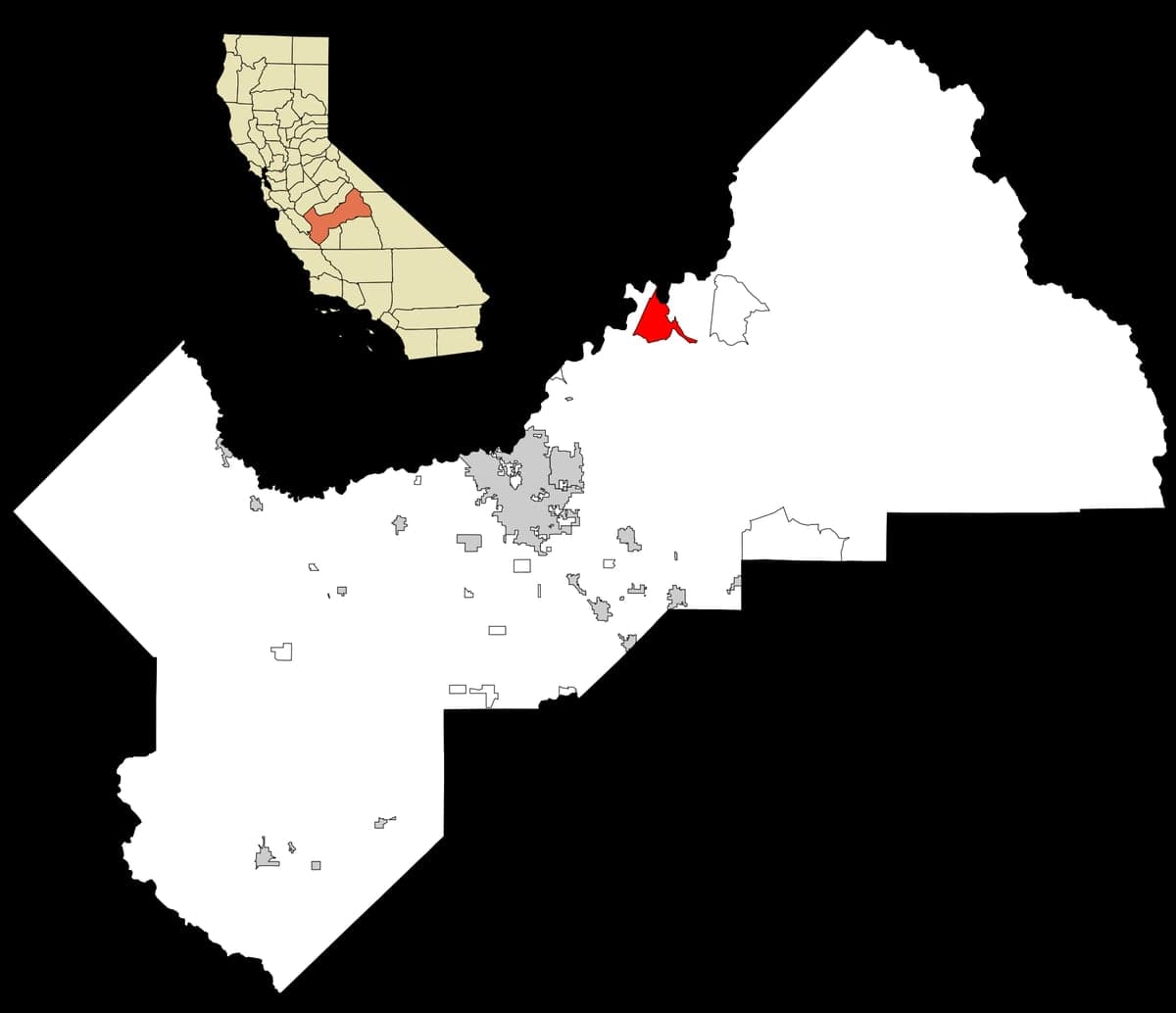
Auberry leans solidly Republican, with a Cook Partisan Voting Index (PVI) of R+8, making it one of the more conservative pockets in California’s Central Valley. This isn’t a recent shift—locals will tell you the area has been reliably red for decades, anchored by a mix of longtime farming families, retirees, and folks who commute to Fresno but prefer the quieter, more rural lifestyle. The trajectory here is steady: while California as a whole has trended bluer, Auberry’s political identity has held firm, with local elections often decided in the GOP primary. You don’t see many yard signs for statewide Democratic candidates, and when you do, they’re usually clustered near the newer subdivisions closer to the Fresno County line.
How it compares
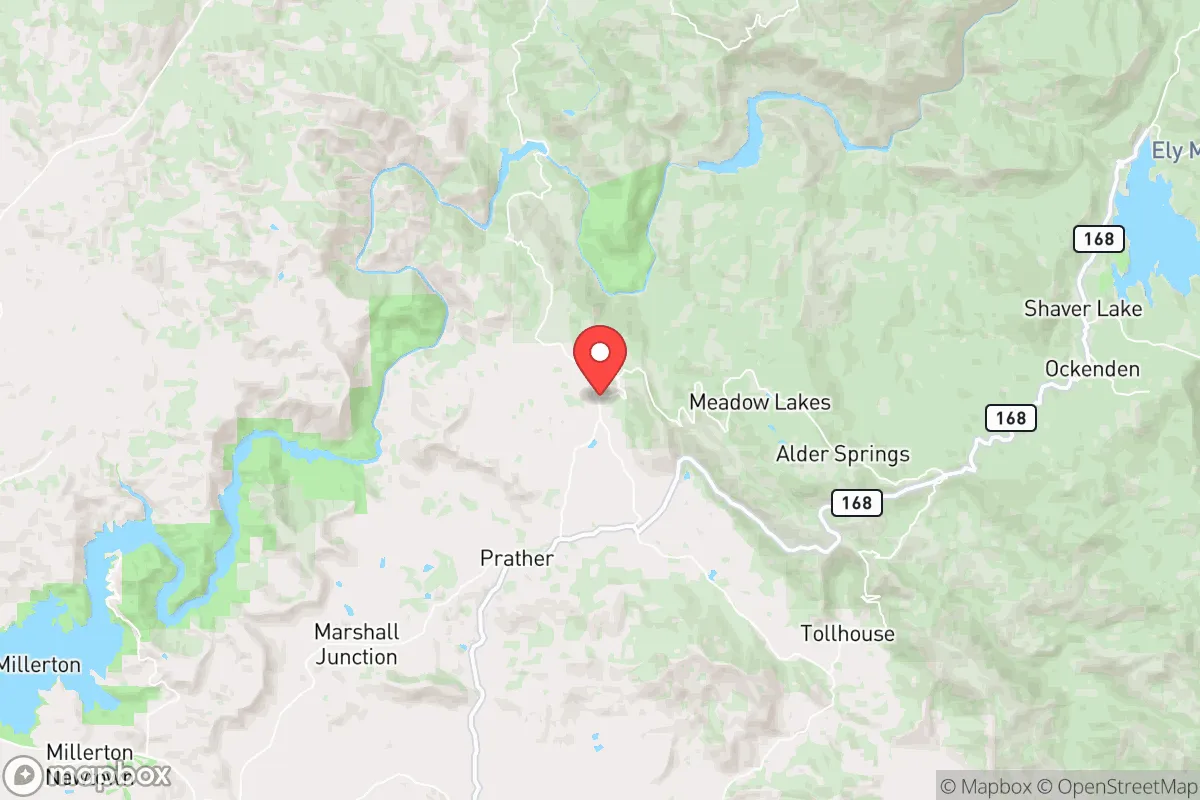
Compared to California as a whole—which has a Cook PVI that’s effectively D+13 or so (the state hasn’t voted Republican for president since 1988)—Auberry is a stark outlier. Drive 20 minutes west into Fresno proper, and you’ll hit a much more mixed political landscape, with the city’s urban core leaning heavily Democratic. Head north to the mountain communities like Shaver Lake or Huntington Lake, and you’ll find a similar conservative bent, though those areas are more seasonal and less politically engaged. The real contrast is with the coastal metros: San Francisco, Los Angeles, and San Diego are worlds away politically. Auberry’s R+8 means it votes more like a rural Nevada or Arizona county than the state it belongs to. In the 2022 gubernatorial race, for example, Auberry precincts gave Brian Dahle (R) roughly 60% of the vote, while the state as a whole handed Gavin Newsom (D) a landslide win. That gap isn’t shrinking—if anything, the urban-rural divide in California has widened since the pandemic.
What this means for residents
For conservative residents, Auberry feels like a refuge. Local government meetings, school board decisions, and even the sheriff’s office reflect a pro-Second Amendment, low-tax, limited-regulation mindset. You won’t find mask mandates or vaccine passports being enforced here—the county health department tends to defer to local sentiment. For liberal residents, it can feel isolating. There’s no active Democratic club in Auberry itself; the nearest one is in Clovis, about 30 minutes away. That said, most folks get along fine day-to-day. Politics rarely comes up at the grocery store or the post office, and the area’s small size (around 2,000 people) means neighborly relationships usually trump party labels. The biggest practical impact is on local services: the school district is small and conservative-leaning, with a focus on traditional curriculum and minimal DEI programming, and the county’s land-use policies are more permissive than in coastal areas, which matters for anyone wanting to build a shop or keep livestock.
Culturally, Auberry is distinct from much of California in its pace and priorities. There’s no tech industry presence, no organic co-op, and the nearest Whole Foods is a 45-minute drive. Instead, you’ll find a feed store, a couple of churches, and a volunteer fire department that doubles as a community hub. The area’s biggest policy distinction is probably its relationship with water rights and wildfire management—both deeply local issues that transcend party lines. Most residents, regardless of affiliation, support aggressive forest thinning and controlled burns, and they’re skeptical of state-level environmental regulations that feel disconnected from rural realities. If you’re moving here from a blue state or city, expect a slower, more self-reliant way of life where your vote is a minority one, but your voice still carries weight at the local level.

State Political ClimatePolitical Climate in California
State Political AnalysisPolitical Environment in the State
California is one of the most reliably Democratic states in the nation, with a partisan lean of roughly D+20 in statewide races, but that headline number hides a deeply fractured political geography. Over the last two decades, the state has moved from a competitive battleground — George W. Bush lost it by just 10 points in 2000 — to a solidly blue bastion where Republicans haven’t won a statewide office since 2006. The shift wasn’t gradual; it was driven by a combination of demographic change, suburban realignment, and a Republican Party that became increasingly unwinnable in the state’s coastal metros, even as it consolidated strength in the Central Valley and inland deserts.
Urban vs. rural divide
The political map of California is essentially a tale of three Californias. The coastal megacities — Los Angeles, San Francisco, Oakland, and San Diego — are the engine of the Democratic majority, producing roughly 60% of the state’s votes. These metros have grown more liberal over the past decade, particularly in the suburbs: Orange County, once a Republican stronghold that delivered Richard Nixon and Ronald Reagan, flipped decisively in 2018 and hasn’t looked back. The inland empire, including Riverside and San Bernardino, has trended Democratic as Latino voters and younger transplants have reshaped the electorate, though it remains more moderate than the coast.
The rural north and the Central Valley tell a different story. Bakersfield, Fresno, and Redding are Republican anchors, with the latter two surrounded by counties that regularly vote 60-70% for the GOP. The state’s agricultural interior — places like Modesto, Visalia, and Chico — are where conservative voters hold sway, and where the state’s few competitive legislative districts exist. The divide isn’t just urban vs. rural; it’s coastal vs. interior, and it’s grown sharper as housing costs push working-class families inland while the coast becomes increasingly affluent and progressive.
Policy environment
California’s policy environment is defined by its status as a one-party state. Democrats hold supermajorities in both legislative chambers, and the governor’s office has been Democratic since 2011. The tax structure is among the most progressive in the nation: a top marginal income tax rate of 13.3% kicks in at $1 million, and Proposition 13 caps property tax increases at 2% annually, which keeps longtime homeowners’ bills low but creates a two-tier system where new buyers pay far more. The state has no right-to-work law, and unions — particularly the California Teachers Association and SEIU — wield outsized influence in Sacramento.
Regulation is dense across the board, from environmental rules under the California Environmental Quality Act (CEQA) to labor mandates like a $20 minimum wage for fast-food workers. Education policy is centralized in Sacramento, with the state’s Department of Education setting curriculum standards that are among the most progressive nationally. Healthcare is a mix of a large Medi-Cal system (covering roughly 15 million residents) and a heavily regulated private insurance market. Election law is expansive: same-day voter registration, automatic voter registration via the DMV, and universal mail-in ballots are all permanent features since 2021.
Recent policy direction
The last five years have seen California double down on its progressive identity. On guns, the state has some of the strictest laws in the country — an assault weapons ban, a 10-day waiting period, and a 2023 law allowing private citizens to sue makers of illegal firearms. On education, the state banned book bans in schools and mandated ethnic studies as a graduation requirement. Parental rights have become a flashpoint: a 2023 law prohibits schools from requiring staff to notify parents of a student’s gender identity change, which has sparked organized opposition in conservative suburbs.
On speech and privacy, California passed the Delete Act in 2023, allowing residents to force data brokers to erase their information, and it maintains some of the nation’s strongest consumer privacy laws. Medical autonomy is protected — abortion and gender-affirming care are legal and shielded from out-of-state prosecution. Property rights are constrained by rent control expansion (AB 1482 caps annual increases at 5% plus inflation) and a 2024 law allowing up to four units on single-family lots. Voting access is maximized, but election integrity concerns have led to a 2024 law requiring signature verification for all mail ballots — a response to Republican complaints that were largely dismissed by the Democratic majority.
Civil unrest & political movements
California has a long history of protest, and the last decade has been no exception. The 2020 George Floyd protests were among the largest in the nation, particularly in Los Angeles and Oakland, and they triggered a wave of defund-the-police activism that has since receded. The state’s sanctuary policies — SB 54, passed in 2017, limits local law enforcement cooperation with federal immigration authorities — remain a major point of contention, with the Trump administration’s mass deportation plans clashing directly with California’s protections for undocumented residents.
On the right, the state has seen a smaller but vocal movement. The California Republican Party has embraced election integrity messaging, and there have been organized recall efforts — most notably the 2021 attempt to remove Governor Gavin Newsom, which failed by a 24-point margin. Secession rhetoric, such as the “Calexit” movement, has faded since its 2016 peak, but rural counties have floated “State of Jefferson” proposals for decades, with Modoc and Siskiyou counties voting on symbolic secession measures as recently as 2022. New residents will notice the visible homelessness crisis in cities like San Francisco and Sacramento, which has become a political flashpoint and a driver of conservative criticism of the state’s approach to mental health and housing policy.
Projection
Over the next 5-10 years, California’s Democratic dominance is likely to hold, but the margins may narrow slightly. The state’s population has declined for three consecutive years — roughly 500,000 residents have left since 2020, many of them middle-income families and conservatives relocating to Texas, Arizona, and Idaho. Those who remain are disproportionately younger, more diverse, and more liberal. The Central Valley is the one region where Republicans could gain ground, as housing costs push working-class voters inland and the GOP makes inroads with Latino voters on economic issues.
The bigger question is whether the state’s progressive coalition fractures. The homelessness crisis and housing affordability have created tension between the party’s left wing and its more moderate, business-aligned members. A 2024 ballot measure to expand rent control failed, suggesting voters are reaching a limit on some policies. But the structural advantages for Democrats — demographic trends, campaign finance rules, and the sheer weight of the coastal metros — make a Republican statewide win unlikely before 2034 at the earliest.
For a new resident, the practical takeaway is this: California offers a stable, predictable political environment where the left holds power and the right is a permanent minority. If you’re conservative, you’ll find your views represented in the Central Valley and rural north, but you’ll be voting in a state where your ballot rarely changes the outcome. If you’re liberal, you’ll find a state that aligns with your values on most issues, but you’ll also pay for it — in taxes, in housing costs, and in a political culture that can feel like a one-party echo chamber. The state’s trajectory is clear: it’s getting more expensive, more progressive, and more polarized between its coastal cities and its interior. Plan accordingly.
* Values derived from national, state, county, city and local statistics and may differ in a specific area. Last updated: 2026-10-21T10:32:52.000Z
Narrative content on this page is AI-generated and may contain mistakes. Verify any details that matter before acting on them.
ReloMaps may earn a commission from affiliate links at no extra cost to you.

