Photo: Wikipedia
Demographics of Auberry, CA
Affluence Level in Auberry, CA
A middle-class area roughly in line with national averages across income, home values, education, and employment.
People of Auberry, CA
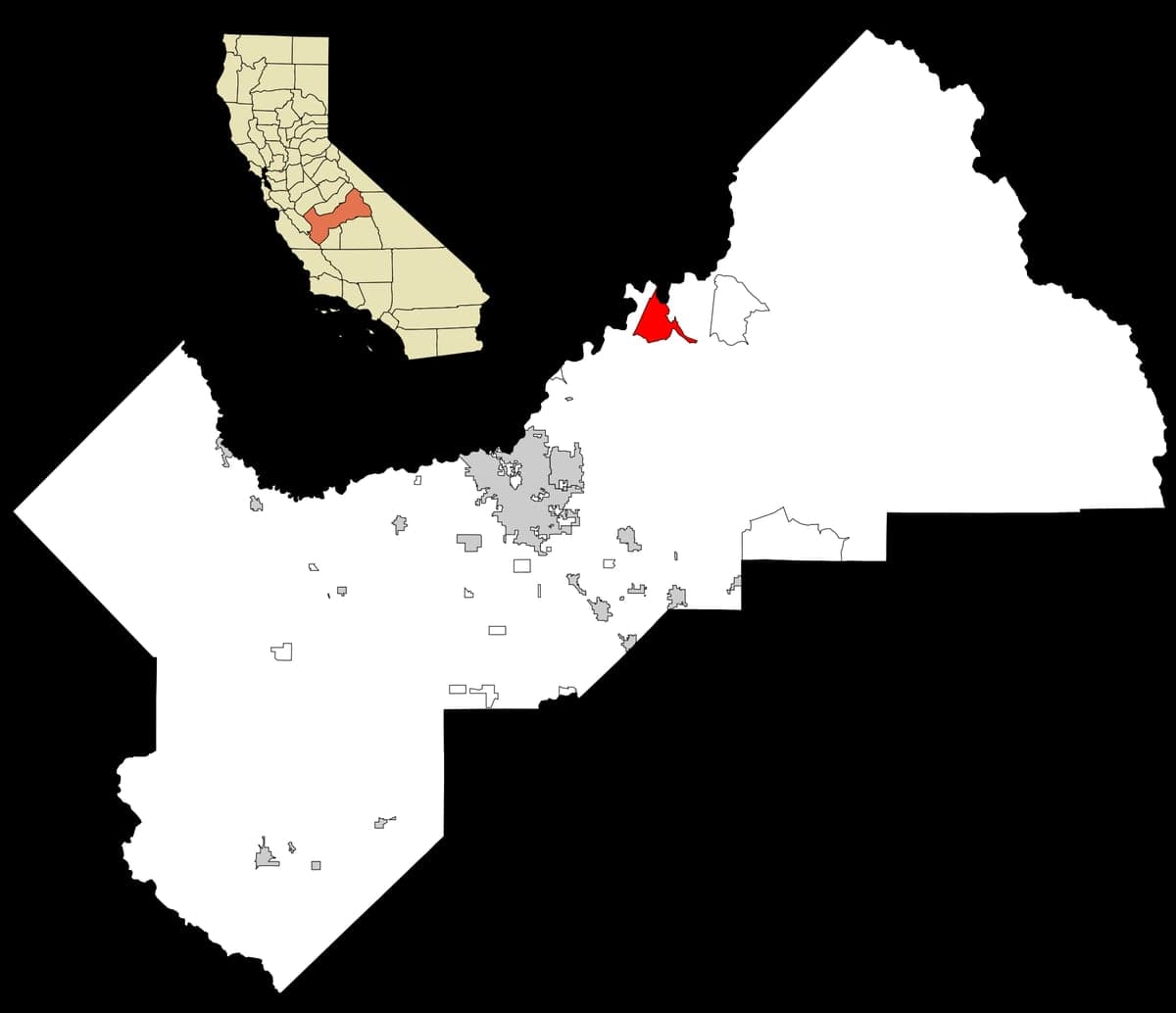
Auberry, California, is a small, tight-knit foothill community of 3,043 residents that remains overwhelmingly white (74.4%) and native-born (99.6% U.S.-born), with a modest Hispanic minority of 9.7%. Its character is rural and family-oriented, shaped by generations of logging, ranching, and now commuting to Fresno 20 miles southwest. The population is notably older and less formally educated than the state average, with only 16.7% holding a college degree, reflecting a community that values self-reliance and outdoor living over urban amenities.
How the city was settled and grew
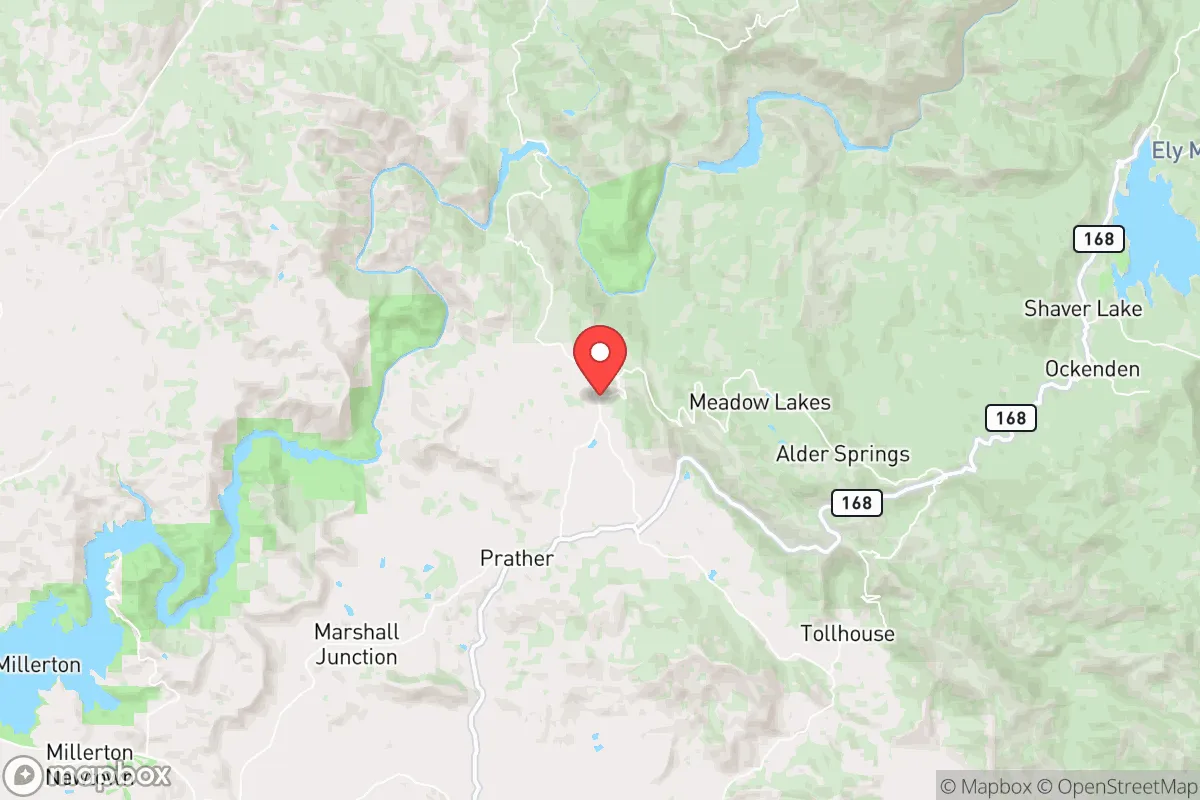
Auberry’s human history begins with the Mono people, who inhabited the Sierra Nevada foothills for centuries before European contact. The first permanent non-Native settlers arrived in the 1850s during the California Gold Rush, though Auberry itself was not a mining boomtown. Instead, the area was settled by homesteaders and ranchers drawn to the fertile meadows along Big Sandy Creek. The community’s namesake, William Auberry, a cattle rancher, established a homestead in the 1870s that became a gathering point for scattered families. The original settlement clustered around what is now Auberry Road and the Old Town Auberry district, where a general store, blacksmith shop, and post office served ranchers and loggers. By the early 1900s, the Sierra National Forest’s creation (1893) and the arrival of the Southern Pacific Railroad’s branch line to nearby Friant (1910) spurred a logging boom. The Auberry Mill neighborhood, centered on the historic sawmill site, housed the families of lumber workers, many of whom were second-generation Americans of German, Irish, and English descent. A second wave came during the Great Depression, when Dust Bowl refugees from Oklahoma and Arkansas—often called “Okies”—settled in the Pine Ridge area east of town, building small homesteads on cheap land. These groups formed the core of Auberry’s white, working-class identity that persists today.
Modern era (post-1965)
The post-1965 period brought little demographic change to Auberry, unlike California’s coastal cities. The Immigration and Nationality Act of 1965 had almost no effect here: the foreign-born population today is just 0.4%, and East/Southeast Asian residents make up only 0.2% of the population, with Indian-subcontinent residents at 0.0%. Instead, domestic in-migration has been the primary driver of change. Beginning in the 1970s, Fresno families seeking larger lots and a rural lifestyle began building homes in the Mountain View Estates subdivision, a planned community of acreage parcels west of Auberry Road. This trend accelerated in the 1990s and 2000s as telecommuting became feasible. The Hispanic population, now 9.7%, grew primarily through agricultural labor in the surrounding orchards and vineyards, with families settling in the Auberry Heights area near the intersection of Auberry Road and Watts Valley Road. The Black population remains negligible at 0.1%, reflecting the area’s historical lack of industrial or military employment that drew Black families to other parts of the Central Valley. The most notable modern shift has been the gradual aging of the population, as younger adults leave for Fresno or coastal cities and retirees move in from the Bay Area and Southern California, drawn by lower housing costs and a slower pace of life.
The future
Auberry’s population is projected to remain stable or grow slowly, with little change in its racial and ethnic composition. The community’s low housing stock—mostly single-family homes on well and septic systems—limits rapid growth. The Hispanic share may increase modestly as families in the Auberry Heights and Pine Ridge areas have larger households, but the white majority is likely to persist above 70% for the foreseeable future. The most significant demographic trend is the continued inflow of retirees from higher-cost regions, which is gradually raising the median age and shifting the cultural identity toward a more affluent, conservation-minded outlook. Newer residents in Mountain View Estates and the Big Sandy Creek corridor tend to support land-use restrictions and wildfire mitigation, sometimes creating tension with long-time ranching families who value fewer regulations. The next 10-20 years will likely see Auberry become slightly more diverse in age and income, but remain one of the most homogenous, native-born communities in the Central Valley.
For someone moving in now, Auberry offers a stable, low-crime, rural environment where neighbors know each other and the pace of life is dictated by the seasons. The trade-off is limited economic opportunity, a long commute to Fresno for most jobs, and a community that is culturally insulated from the rapid changes reshaping California’s cities. It is best suited for those who prioritize space, quiet, and a traditional foothill lifestyle over diversity and urban amenities.

* Values derived from national, state, county, city and local statistics and may differ in a specific area. Last updated: 2026-10-21T10:32:52.000Z
Narrative content on this page is AI-generated and may contain mistakes. Verify any details that matter before acting on them.
ReloMaps may earn a commission from affiliate links at no extra cost to you.

