Photo: Wikipedia
Personal Sovereignty in Auberry, CA
Viable for self-reliance. Generally workable, though some barriers may limit total independence.
What does Personal Sovereignty tell us?
Personal Sovereignty measures your capacity for self-reliance and independence with minimal government friction. Higher scores mean fewer barriers between you and the way you want to live... but it assumes you have the space you need and good neighbors.
What does this tell us?
Personal Sovereignty measures your capacity for self-reliance and independence with minimal government friction. Higher scores mean fewer barriers between you and the way you want to live... but it assumes you have the space you need and good neighbors.
State Policy
Energy independence: Importer (33% of energy produced in-state)
Personal Liberty
Homesteading

Personal Liberty Analysis
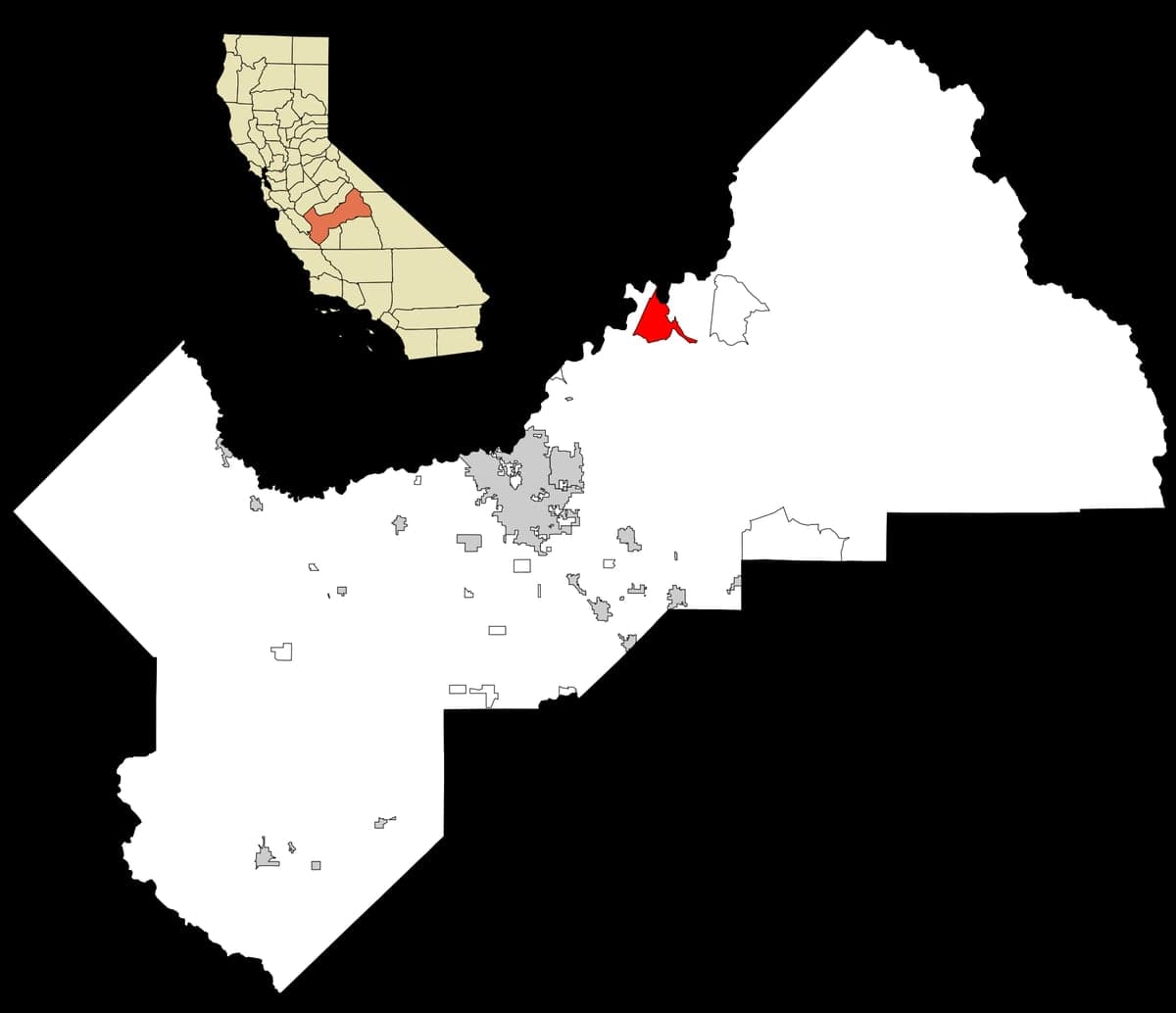
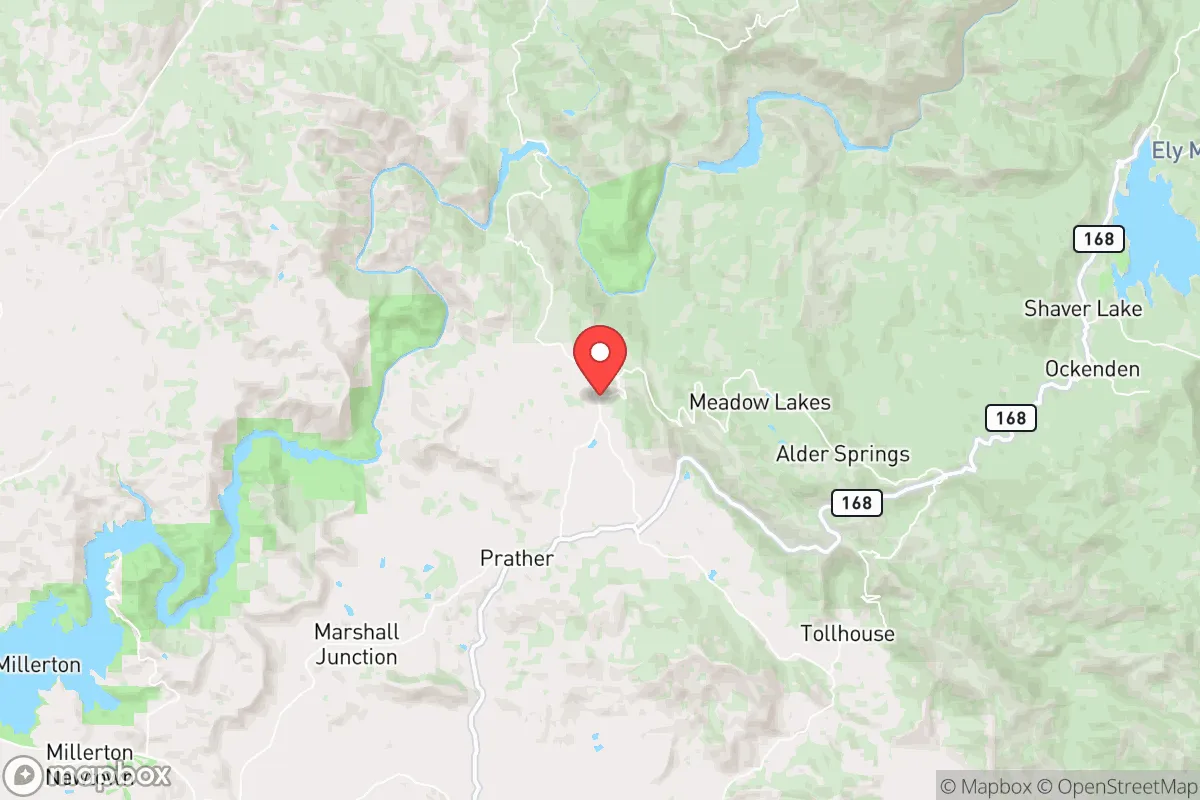
Auberry, California, offers a notably higher degree of personal sovereignty than most of the state, functioning as a semi-rural enclave where state-level restrictions are tempered by local geography, sparse enforcement, and a deeply independent-minded community. Nestled in the Sierra Nevada foothills at roughly 2,000 feet elevation, this unincorporated Fresno County community of about 3,000 residents operates under a light-touch local governance structure, with the county Board of Supervisors providing the primary regulatory framework. For the relocation-minded individual or family prioritizing autonomy, Auberry represents a strategic compromise: you remain subject to California’s broad state laws, but the practical experience of daily life involves far less oversight than in urban or suburban areas, with a strong cultural expectation of self-reliance.
Tax burden and regulatory posture in a high-tax state
California’s state-level tax burden is among the highest in the nation, and Auberry residents are not exempt. The state’s progressive income tax tops out at 13.3% for top earners, and the base state sales tax rate of 7.25% applies, though Fresno County adds a local rate bringing the total to roughly 7.975%. Property taxes, however, are effectively capped at 1% of assessed value plus local voter-approved bonds, thanks to Proposition 13, which limits annual increases to 2% — a significant advantage for long-term homeowners. Auberry’s unincorporated status means no additional city-level taxes, and the regulatory posture from Fresno County is generally permissive for rural residential uses. Building permits are required, but enforcement is less aggressive than in incorporated cities; many residents report that minor improvements, sheds, and fencing are often done without formal permits, with county attention only triggered by complaints. The California Environmental Quality Act (CEQA) can complicate larger projects, but for typical residential activities, the regulatory touch is light. For a reader accustomed to high-tax states, Auberry’s burden is predictable and manageable; for those fleeing lower-tax states, it remains a significant cost, offset by the area’s lower property prices relative to coastal California.
Self-defense and gun law specifics in a restrictive state
California’s firearm laws are among the most restrictive in the nation, and Auberry residents must comply with the same state-level framework as the rest of California. This includes a 10-day waiting period for all firearm purchases, a background check for every transaction (including private sales, which must go through a licensed dealer), a ban on “assault weapons” as defined by state statute, and a magazine capacity limit of 10 rounds. However, the practical experience of gun ownership in Auberry differs markedly from urban areas. Fresno County is a “may issue” county for concealed carry permits (CCW), but in practice, the sheriff’s office has been relatively accommodating, issuing permits to qualified applicants who complete the required training and demonstrate good cause — typically defined as self-defense in this rural context. The sheriff’s office processes roughly 200-300 new CCW permits annually, with approval rates well above 90% for applicants without disqualifying criminal history. Open carry of loaded firearms is prohibited in California, but unloaded open carry is legal in unincorporated areas like Auberry. The community’s culture strongly supports responsible firearm ownership for hunting, pest control (mountain lions, bears, and wild pigs are common), and home defense. For the self-defense-minded reader, the key takeaway is that while California’s laws are restrictive on paper, Auberry’s local enforcement environment and sheriff’s office posture make legal firearm ownership and carry feasible, though the process requires more time and paperwork than in free states.
Self-reliance and homesteading viability: lot sizes, zoning, and off-grid feasibility
Auberry’s zoning and land-use patterns are highly favorable for self-reliant living. The area is zoned primarily as AE-20 (Agricultural Exclusive, 20-acre minimum) and RE-5 (Residential Estate, 5-acre minimum), with some smaller parcels in the community’s core. Typical residential lots range from 1 to 20 acres, with many properties in the 5-10 acre sweet spot that allows for substantial gardening, small livestock, and even limited agriculture without triggering intensive county oversight. Chickens, goats, and horses are common and generally permitted without special permits on parcels of 1 acre or more. Off-grid feasibility is moderate: the area has reliable grid electricity from PG&E, but many residents supplement with solar panels and battery systems, especially given the increasing risk of Public Safety Power Shutoffs (PSPS) during fire season. Well water is the norm for properties outside the small Auberry Mutual Water Company service area, with typical well depths of 200-400 feet yielding 5-15 gallons per minute — sufficient for household use and modest irrigation. Septic systems are required, with county health department approval needed for new installations, but the process is straightforward for standard gravity-fed systems on adequate acreage. Rainwater collection is legal and encouraged, though subject to state riparian rights for larger-scale capture. The county’s building code requires compliance with California’s strict fire-safe building standards (defensible space, ember-resistant materials), which adds cost but is a practical necessity in this high-fire-risk environment. For the homesteader, Auberry offers genuine viability for a semi-self-sufficient lifestyle, with the main constraints being fire safety regulations and the cost of well drilling (typically $15,000-$30,000).
Personal liberties: parental rights, medical autonomy, speech, and property
California’s state-level policies on parental rights and medical autonomy are among the most progressive in the country, which creates tension for conservative-leaning residents. Parental rights in education are limited: the state mandates LGBTQ+ inclusive curriculum, prohibits schools from notifying parents of a child’s gender identity changes without the child’s consent, and allows minors 12 and older to consent to certain mental health and reproductive health services without parental knowledge. Auberry’s local schools — Auberry Elementary and Sierra High School — are part of the Sierra Unified School District, which has a more conservative board than urban districts but must still comply with state mandates. Medical autonomy is similarly constrained: California has strict vaccine mandates for school attendance (though medical and personal belief exemptions existed for some vaccines prior to 2016, now only medical exemptions are allowed), and the state’s public health infrastructure has broad emergency powers. However, Auberry’s distance from major medical centers (the nearest hospital is 20 miles away in Clovis) means that practical medical autonomy is higher — many residents maintain emergency medical kits, learn basic field medicine, and rely on telehealth for routine care. Free speech and property rights are protected under the First and Fifth Amendments, but California’s broad nuisance and environmental laws can be used to restrict property use in ways that would not occur in less regulated states. For example, the state’s strict air quality regulations limit outdoor burning, and the California Coastal Commission (though less relevant here) and local fire districts impose vegetation management requirements. Property rights are further constrained by the California Environmental Quality Act (CEQA), which can be weaponized by neighbors to delay or block development projects, though this is less common in Auberry than in coastal areas. The overall environment for personal liberties is one of trade-offs: strong protections for speech and property ownership, but significant state-level restrictions on parental and medical autonomy that require active navigation.
Compared to other areas in California, Auberry ranks highly for personal sovereignty, offering a tangible escape from the dense regulatory environment of the state’s urban centers. The community’s unincorporated status, low population density, and culture of self-reliance create a buffer against the most intrusive aspects of state governance. For the reader prioritizing autonomy, Auberry is a realistic option within California — not a libertarian paradise, but a place where a determined individual or family can carve out a genuinely independent life, provided they are willing to navigate the state’s legal framework with local knowledge and a good relationship with the county sheriff’s office.

* Values derived from national, state, county, city and local statistics and may differ in a specific area. Last updated: 2026-10-21T10:32:52.000Z
Narrative content on this page is AI-generated and may contain mistakes. Verify any details that matter before acting on them.
ReloMaps may earn a commission from affiliate links at no extra cost to you.

