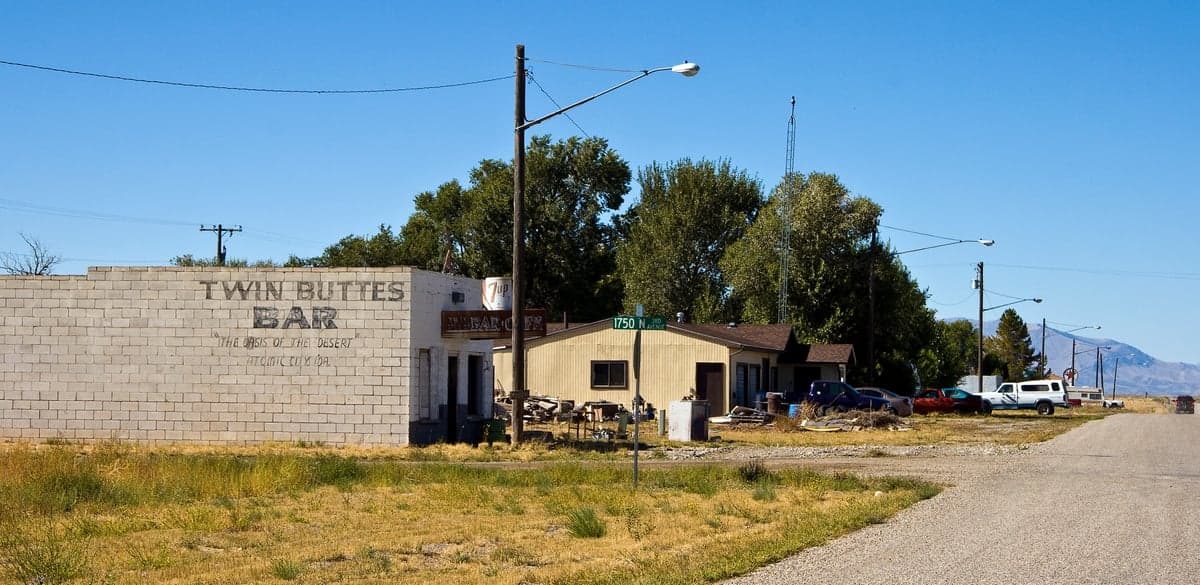
Photo: Wikipedia
Strategic Assessment of Atomic City, ID
Strong survivability profile. Good buffer from population centers, with manageable environmental and tactical risks.
What does the Strategic Assessment tell us?
Our Strategic Assessment grades tactical survivability of an area. Major population centers, military targets, fallout zones, natural disasters, and border exposure all drive risk — lower exposure means a more defensible position in a crisis.
This is heavily inspired by Joel Skousen's Strategic Relocation book. Highly recommended you checkout the book ($)What does this tell us?
Our Strategic Assessment grades tactical survivability of an area. Major population centers, military targets, fallout zones, natural disasters, and border exposure all drive risk — lower exposure means a more defensible position in a crisis.
This is heavily inspired by Joel Skousen's Strategic Relocation book. Highly recommended you checkout the book ($)Strategic Pillars
Key Distances
Regional Safe Places
Below is our recommended "safe zones" in Idaho and the surrounding area based on our strategic heuristics. For most people, it's unrealistic to live in a “safe zone” full-time due to work, family or other personal reasons. They tend to be more rural. However, many of these areas are perfect for second homes and retreat properties that double as a vacation home or even a short-term rental.
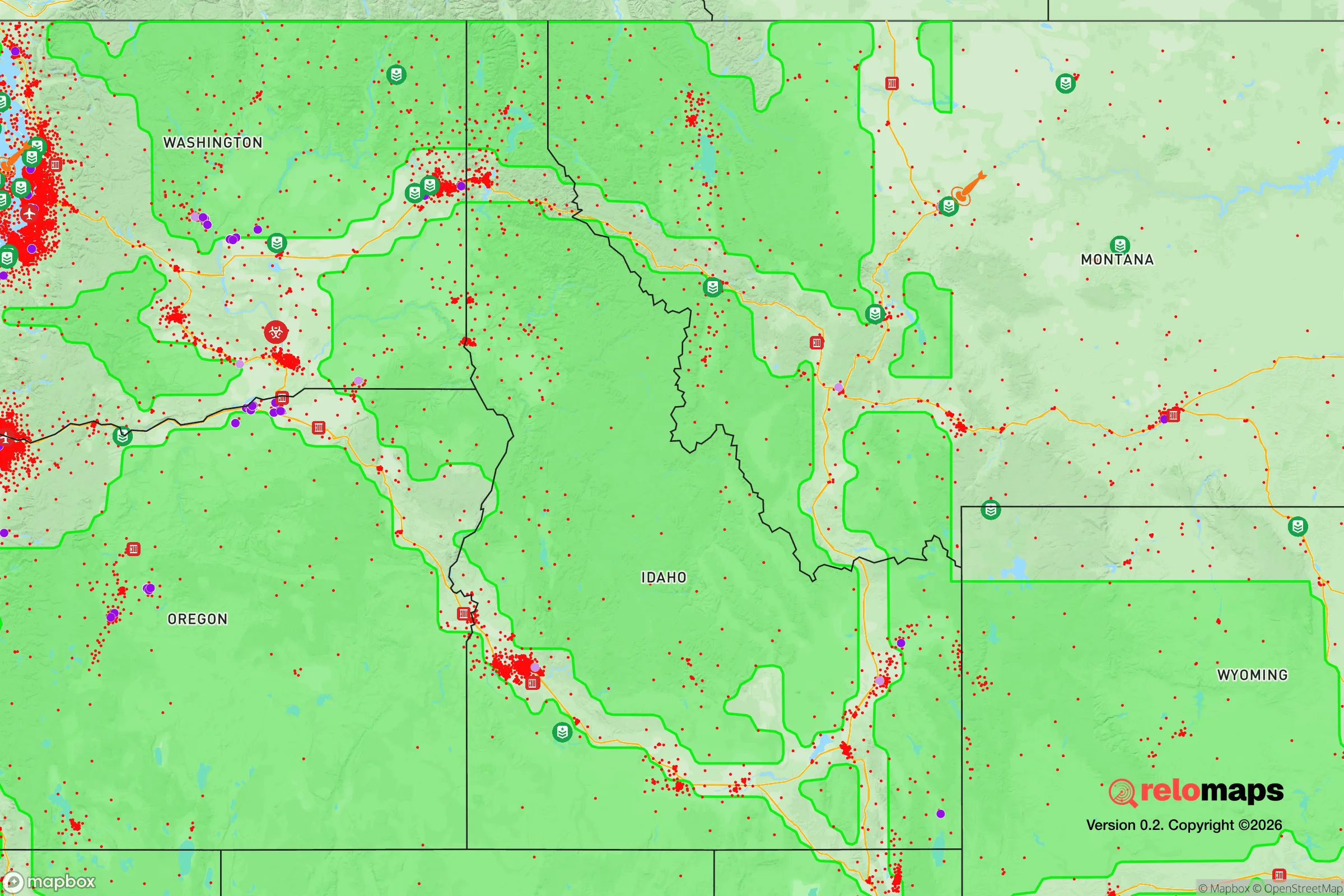
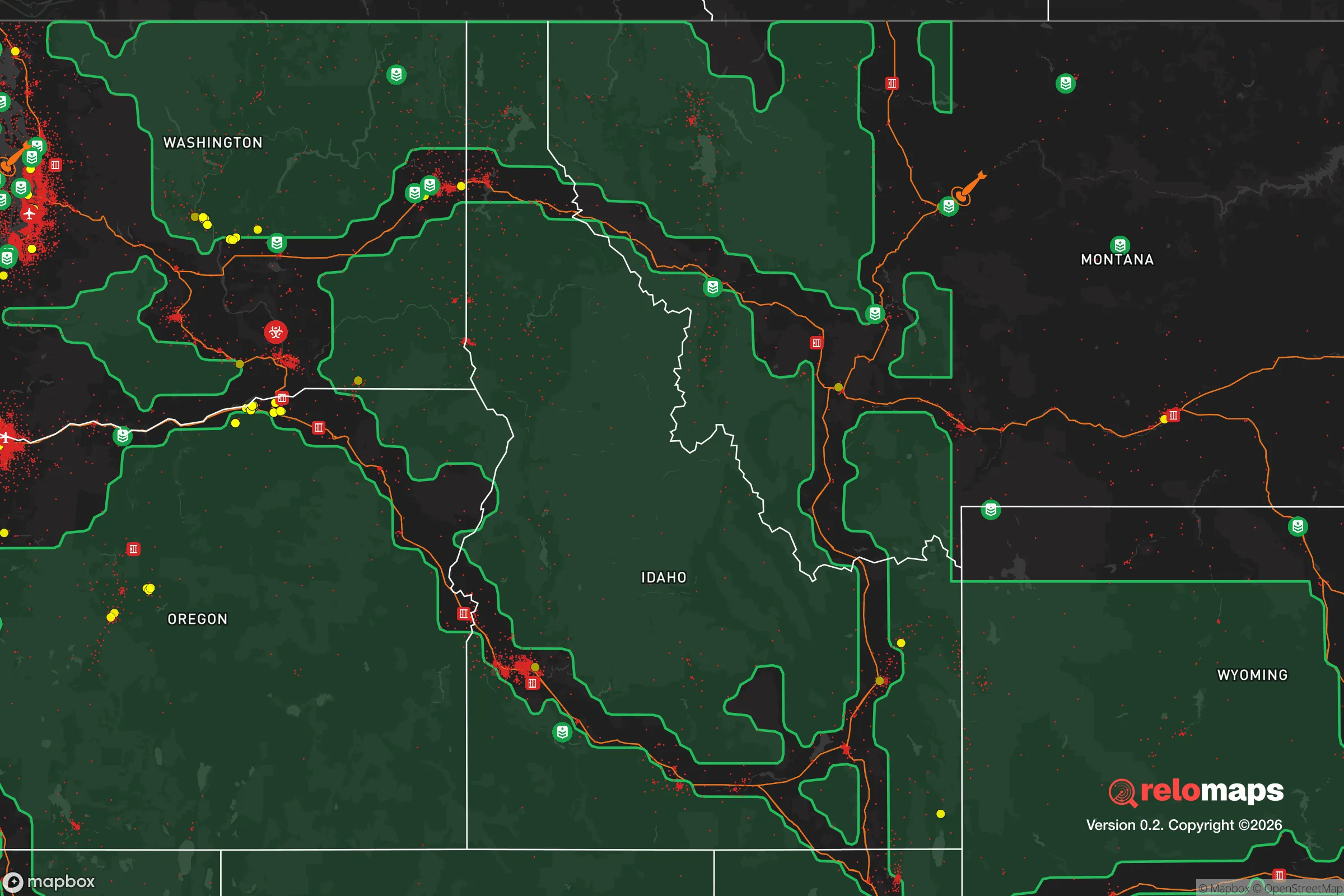


Important Note: For informational purposes only. This does not mean nothing bad ever happens in the green zones. Please use common sense. This is based on public data and modeled with AI. We tried to take a conservative approach but mistakes happen. We update this regularly as new information becomes available.
Solar Generator Recommendations
Backup power matters more here than in safer locations. We've picked three solar generators across budgets and capacity tiers — start with the budget unit if you only need a few essentials, or step up if you want to run a fridge and HVAC for days at a time.
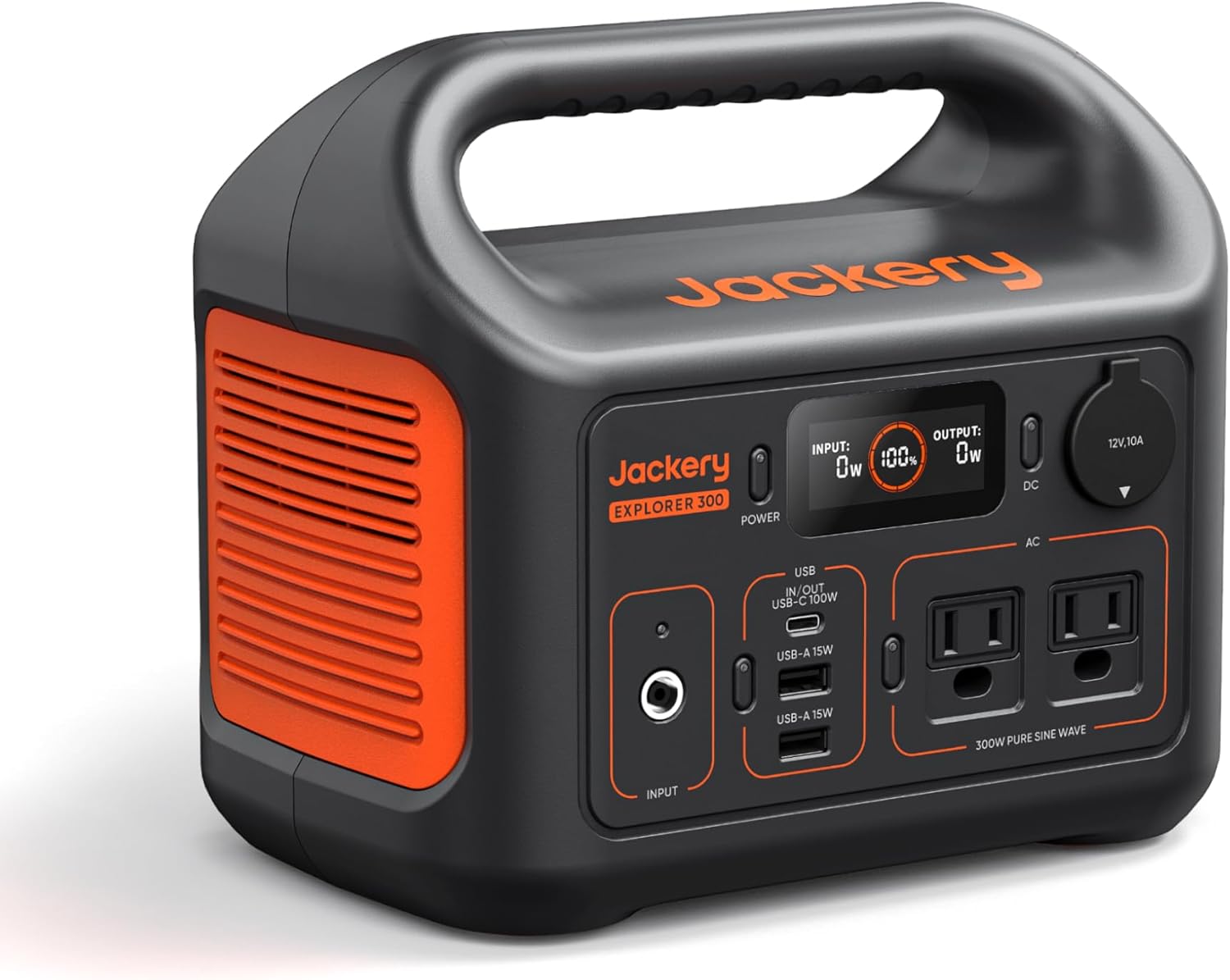
Jackery Portable Power Station Explorer 300
Budget OptionPower on the Go: Weighing only 11 lbs, it's convenient to set up and store with book-sized foldable solar panels

BLUETTI Portable Power Station AC180
Designed for both indoor and outdoor scenarios, AC180 is highly capable as it has a robost capacity and continuous output power.

EF ECOFLOW DELTA Pro Ultra Power Station
Upgraded PickEcoFlow DELTA Pro Ultra is a whole-home energy system designed to grow with your family. Integrated with the Smart Home Panel 2, it scales to meet your evolving energy needs — keeping your home powered, intelligent, and secure through every stage of life.
We earn a commission, at no additional cost to you.
Strategic Assessment Analysis
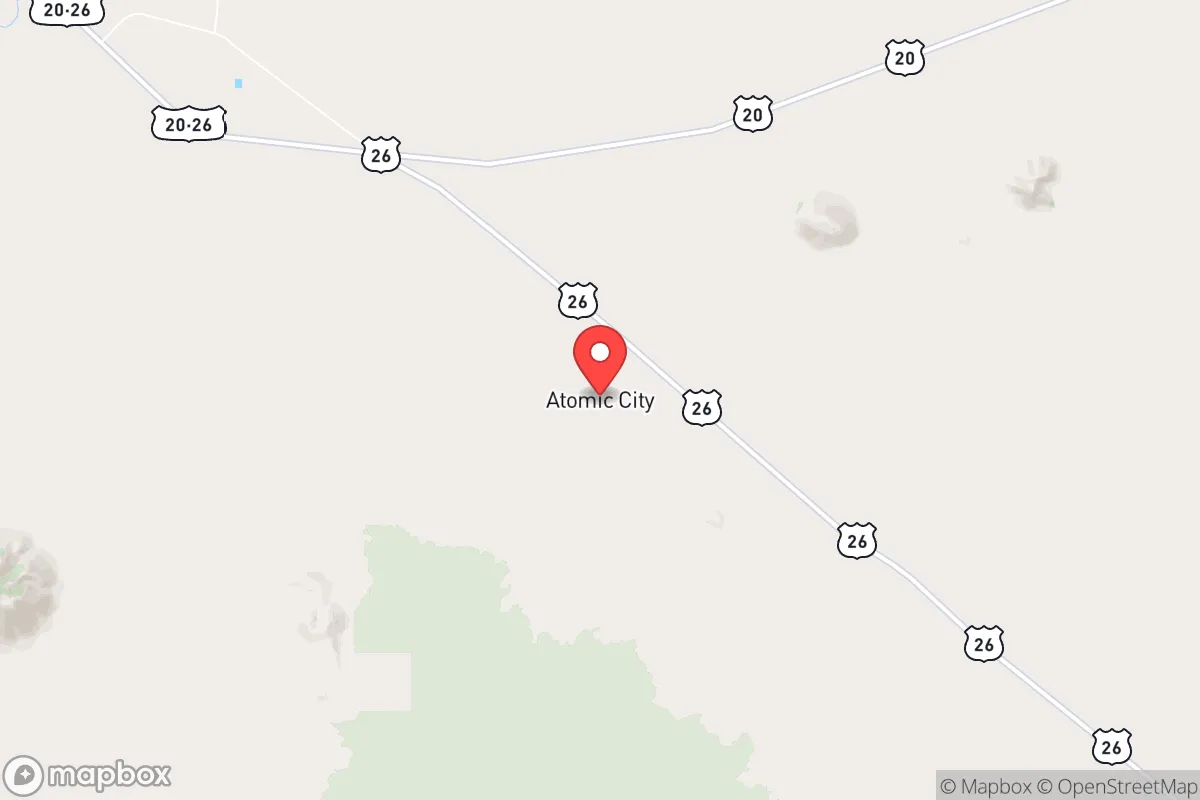
Atomic City, Idaho, is a place where the name itself tells you the history, but the real story for a relocation-minded reader is about resilience. Sitting in the high desert of Bingham County, roughly 40 miles southwest of Idaho Falls and about 25 miles from the town of Blackfoot, this unincorporated community of fewer than 30 residents offers something increasingly rare: extreme remoteness with relatively practical access to regional infrastructure. For someone thinking seriously about disaster readiness, self-sufficiency, and strategic positioning, Atomic City presents a unique calculus—one where the trade-offs are stark, the isolation is real, and the surrounding landscape does much of the defensive work for you.
Geographic position and natural advantages for long-term survival
The first thing to understand about Atomic City is that its location is its primary strategic asset. The community sits on the eastern edge of the Snake River Plain, a vast, arid expanse that offers unobstructed sightlines for miles in every direction. This is not mountain terrain with choke points and hidden valleys; it is open, high-desert country at roughly 5,000 feet elevation, where the climate is dry, the winters are cold, and the summers are hot but tolerable. For a relocator, this means a few concrete advantages: low humidity reduces food spoilage and structural decay, the lack of dense tree cover eliminates wildfire risk near structures, and the flat terrain makes solar power generation highly viable year-round.
The proximity to the Snake River itself—about 15 miles to the south—is the single most important natural feature in the area. The river provides a reliable, year-round water source that is not dependent on snowmelt timing or seasonal rainfall. The surrounding farmland, irrigated by the river, is some of the most productive in the state, growing potatoes, wheat, and alfalfa. This is not abstract resilience; it is the practical reality that within a 30-minute drive, you have access to some of the richest agricultural output in the Intermountain West. The nearby Wapi Lava Field and Craters of the Moon National Monument to the southwest offer rugged, inaccessible terrain that would serve as a natural buffer against any ground-based approach, while the lack of major highways through the immediate area means through-traffic is minimal.
Risks, exposures, and proximity to fallout-relevant landmarks
Here is where the analysis gets serious, because Atomic City's name is not a coincidence. The community sits directly adjacent to the Idaho National Laboratory (INL), a 890-square-mile Department of Energy complex that has been the site of nuclear reactor testing, spent fuel storage, and radioactive waste management since 1949. The town was literally established to house construction workers for the facility, and the ruins of the original Experimental Breeder Reactor I—the first reactor to generate electricity in the United States—are a short drive away. For a resilience-focused relocator, this is a double-edged sword. On one hand, the INL is a major employer and brings significant federal infrastructure to the region. On the other, it represents a concentrated man-made risk that most rural locations simply do not have to factor into their planning.
The specific exposure is worth understanding. The INL's facilities include the Advanced Test Reactor, the Materials and Fuels Complex, and the Idaho Spent Fuel Facility, which stores thousands of tons of used nuclear fuel in dry casks. While the safety record is strong and the facility is heavily guarded, the reality is that a major accident, a deliberate attack, or a seismic event—the area sits near the eastern edge of the Intermountain Seismic Belt—could create a contamination scenario that would make the surrounding area uninhabitable for an extended period. The prevailing winds in the region blow from the southwest, which means fallout from an INL incident would push toward the northeast, away from Atomic City itself, but the margin is not something to rely on. Additionally, the nearby Mountain Home Air Force Base, about 60 miles to the west, and the general presence of military and federal air traffic in the region add a layer of man-made risk that a purely civilian rural area would not have.
Practical resilience for a relocator: food, water, energy, and defensibility
For the practical-minded relocator, the day-to-day resilience picture in Atomic City is a mix of genuine strengths and significant gaps. On the positive side, the region's agricultural base means that local food sourcing is realistic. The Bingham County area is home to numerous small farms and ranches, and the Idaho Falls farmers' market, about 40 minutes away, offers direct access to locally grown produce, meat, and dairy. For a family looking to establish a garden, the growing season is short—roughly 90 to 110 frost-free days—but the volcanic soil in the region is mineral-rich, and with irrigation from the Snake River system, yields can be substantial. Water rights in Idaho are a complex legal matter, but for a residential well, the aquifer beneath the Snake River Plain is deep and reliable, with most domestic wells in the area producing adequate flow at depths of 100 to 300 feet.
Energy is where Atomic City offers a genuine advantage. The region receives over 200 sunny days per year, and the flat, open terrain makes solar panel installation straightforward. Off-grid solar setups are common in the surrounding rural areas, and the lack of building codes in the unincorporated community means there are few regulatory hurdles to installing a robust system. Propane delivery is available from suppliers in Blackfoot, and wood for heating is accessible from the nearby Caribou-Targhee National Forest, though the high desert means you will need to plan for a reliable supply. The defensibility picture is more nuanced. The open terrain that provides sightlines also means there is little natural cover, and the community's small size—essentially a handful of homes, a bar, and a post office—means there is no collective security infrastructure. However, the isolation itself is a defensive asset: the nearest major road is U.S. Route 26, and the approach to Atomic City is via a single county road that dead-ends at the INL boundary. This creates a natural funnel that would be easy to monitor, and the lack of through-traffic means you are unlikely to see strangers unless they are specifically coming to your area.
The overall strategic picture for a serious relocator
Stepping back, Atomic City is not a place for someone looking for a comfortable suburban life with easy access to amenities. It is a place for someone who understands that resilience is about trade-offs. The location offers exceptional natural advantages—water access, agricultural proximity, open defensible terrain, and abundant solar potential—that are genuinely hard to find in a single package. The risks are equally real: the proximity to the INL introduces a man-made hazard that is impossible to ignore, and the region's seismic activity, while moderate, is a factor that must be planned for. For a single individual or a family willing to invest in infrastructure—a well, solar panels, a greenhouse, a propane tank, and a serious food storage plan—Atomic City offers a level of self-sufficiency that is difficult to match in more populated parts of the West. The trade-off is that you are betting on the INL's safety record holding, and you are accepting a level of isolation that will test your resolve. If that calculus works for you, this is one of the most strategically interesting locations in the Intermountain West. If it does not, the nearby towns of Blackfoot and Idaho Falls offer a more conventional path with many of the same regional advantages.

* Values derived from national, state, county, city and local statistics and may differ in a specific area. Last updated: 2026-10-26T02:17:23.000Z
Narrative content on this page is AI-generated and may contain mistakes. Verify any details that matter before acting on them.
ReloMaps may earn a commission from affiliate links at no extra cost to you.

