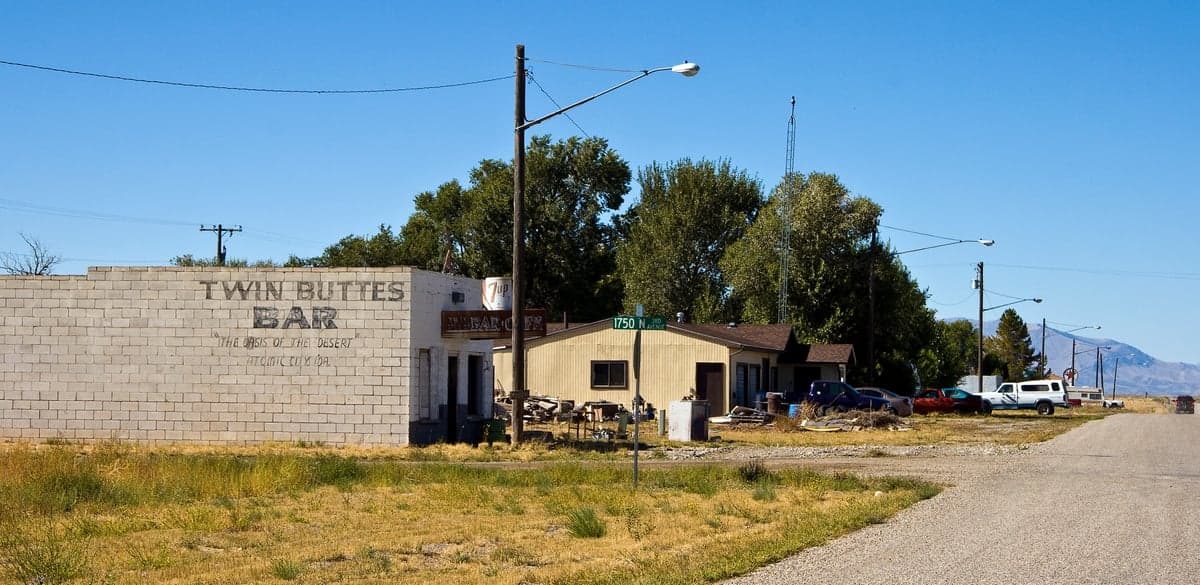
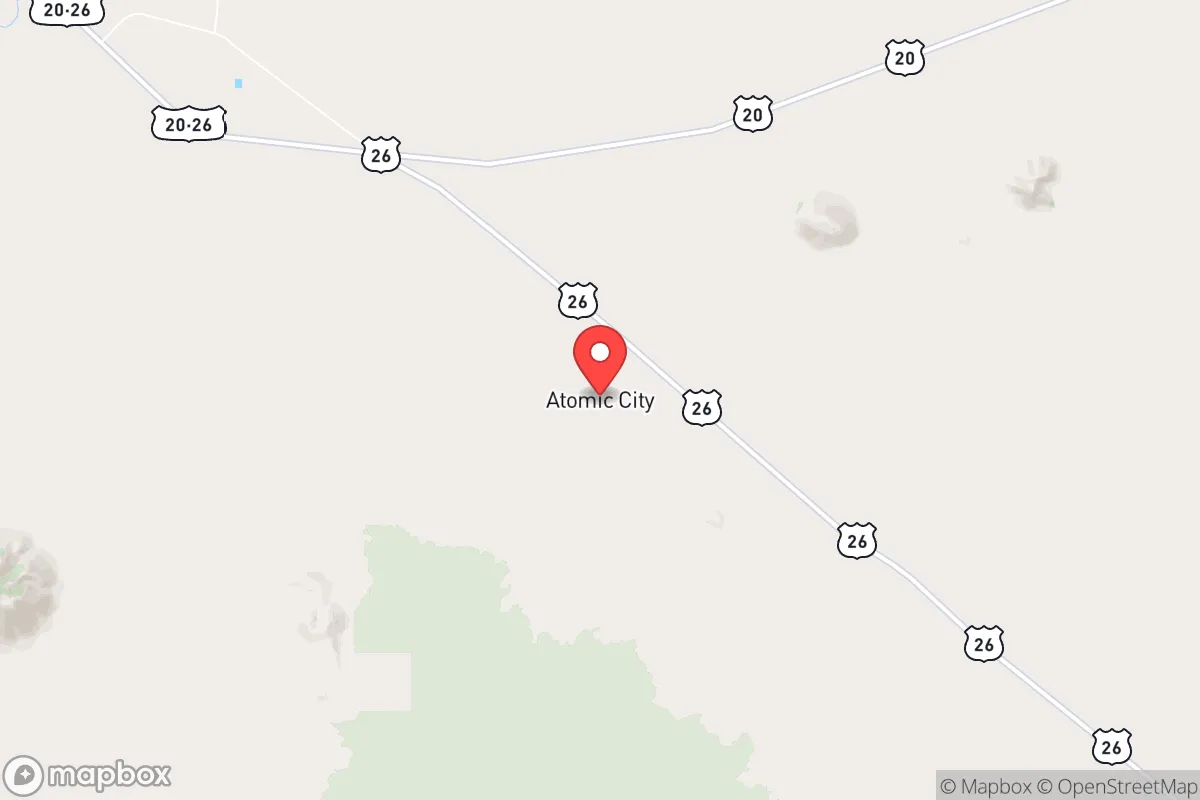
Photo: Wikipedia
Demographics of Atomic City, ID
Affluence Level in Atomic City, ID
A middle-class area roughly in line with national averages across income, home values, education, and employment.
People of Atomic City, ID
Atomic City, Idaho, is a small, tight-knit community of 5,519 residents where the population is defined by a strong working-class character and a significant Hispanic presence that shapes daily life. The city’s identity is rooted in its agricultural and industrial past, with a demographic makeup that is 60.8% White and 37.3% Hispanic, creating a cultural blend uncommon in much of rural Idaho. With only 13.1% of adults holding a college degree, this is a community built on practical skills, family ties, and a deep connection to the land.
How the city was settled and grew
Unlike many Idaho towns founded during the gold rush or Oregon Trail era, Atomic City’s history is distinctly modern, beginning in earnest after World War II. The city’s name and initial population boom came directly from the federal government’s establishment of the nearby Idaho National Laboratory (INL) in 1949, which drew engineers, scientists, and construction workers to the high desert. The original residential core, now known as Reactor Row, was built as temporary housing for these early federal employees, and its simple, utilitarian homes still stand as a testament to the city’s nuclear-age origins. A second wave of settlers arrived in the 1950s and 1960s, comprised largely of farmworkers and their families who came to work the potato and sugar beet fields surrounding the city. These families, predominantly of Mexican descent, established the Barrio Viejo district on the city’s south side, building modest homes and a vibrant community centered around the Our Lady of Guadalupe mission. The completion of the interstate system in the 1970s brought a third wave of commuters who sought affordable housing, filling out the Northgate Addition with ranch-style homes and creating a bedroom-community dynamic that persists today.
Modern era (post-1965)
The passage of the Immigration and Nationality Act of 1965, which ended national-origin quotas, had a profound and lasting effect on Atomic City’s population. The existing Hispanic community, which had been transient and seasonal, began to put down permanent roots, sponsoring family members from Mexico and establishing multi-generational households. This shift is visible in the Sunset Terrace neighborhood, developed in the 1980s, where many of the original farmworker families purchased their first homes. Concurrently, the post-Cold War downsizing of the INL in the 1990s led to a slight population decline and an exodus of the more transient scientific workforce, leaving a core of long-term residents. The 2000s and 2010s saw a modest influx of new residents from other parts of the Mountain West, drawn by the low cost of living and the quiet, rural pace of life. These newcomers, mostly White families, have concentrated in the newer Prairie View Estates subdivision on the city’s eastern edge, which features larger lots and newer construction. Today, the city’s foreign-born population stands at 8.5%, a figure that reflects the ongoing, steady chain migration from Mexico that continues to reinforce the Hispanic character of the older neighborhoods.
The future
Demographic projections indicate that Atomic City is becoming more diverse, with the Hispanic population share expected to continue its gradual climb from the current 37.3% over the next two decades. This growth is driven by higher birth rates within the established Hispanic community and continued, albeit slow, family reunification immigration. The White population, while still the majority, is aging, and the city is seeing a slow outflow of younger White residents seeking college and professional opportunities elsewhere. New residential development is largely occurring in the West Ridge area, a newly platted district that is attracting a mix of first-time homebuyers from both the White and Hispanic communities, suggesting a gradual dispersal rather than strict ethnic clustering. The cultural identity of the city is evolving from a purely Anglo, nuclear-era enclave to a more bilingual, bicultural community, with Spanish increasingly heard in local businesses and at community events. The next 10-20 years will likely see Atomic City retain its small-town feel while its demographic center of gravity shifts, making it a more integrated, working-class community with a distinct Western-Hispanic character.
For someone moving to Atomic City today, the bottom line is that this is a stable, affordable, and family-oriented community that is quietly becoming more culturally diverse. The city offers a genuine sense of neighborliness and a slower pace of life, but newcomers should expect a place where the economy is tied to agriculture, the nearby national laboratory, and commuting to larger towns like Blackfoot and Idaho Falls. It is a place where the past is still visible in its neighborhoods, but the future is being written by a younger, more mixed generation that is reshaping what it means to be from Atomic City.

* Values derived from national, state, county, city and local statistics and may differ in a specific area. Last updated: 2026-10-26T02:17:23.000Z
Narrative content on this page is AI-generated and may contain mistakes. Verify any details that matter before acting on them.
ReloMaps may earn a commission from affiliate links at no extra cost to you.

