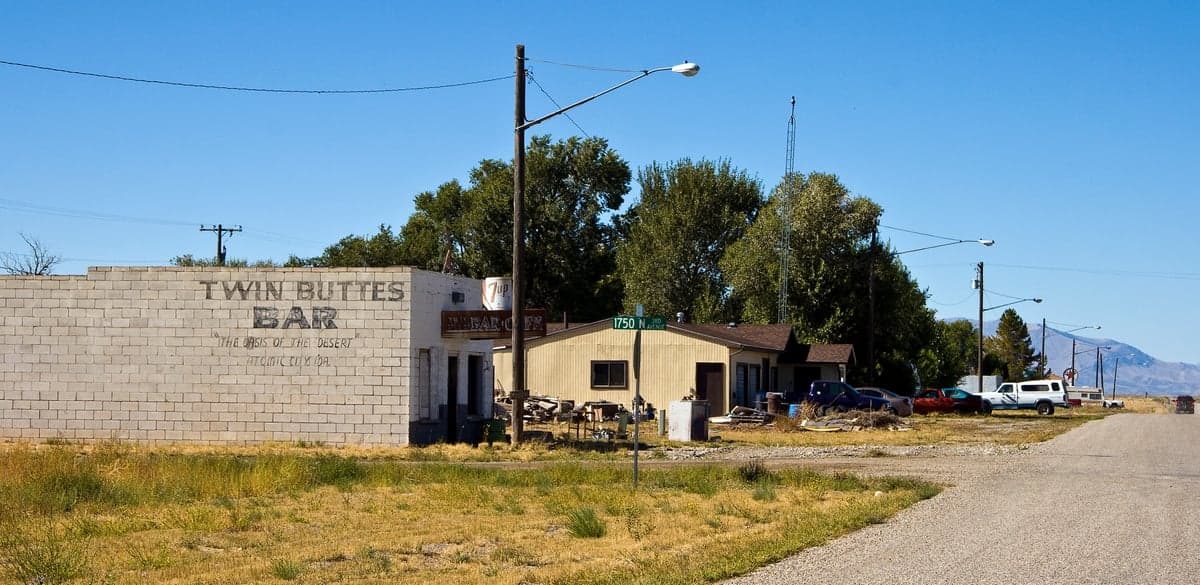
Photo: Wikipedia
Quality of Life in Atomic City, ID
Above-average quality of iife. The area offers a reasonable cost of living, decent mobility, and a mix of neighborhood amenities.
What does Quality of Life tell us?
Quality of Life blends cost of living, nearby amenities, socioeconomic signals, and neighborhood character. City-level scores represent the whole municipality; individual neighborhoods can differ.
What does this tell us?
Quality of Life blends cost of living, nearby amenities, socioeconomic signals, and neighborhood character. City-level scores represent the whole municipality; individual neighborhoods can differ.
Cost of Living
36% below national average
The Real Cost of Living in Atomic City, ID for 2026
| Tier | Individual | Family (4) |
|---|---|---|
| Survival | $11k | $20k |
| Comfortable | $41k | $60k |
| Luxury | $110k+ | $170k+ |
| Elite (Top 5%) | $129k+ | $200k+ |
115%
The Area Signal
A metric tracking the socioeconomic signals of the area.
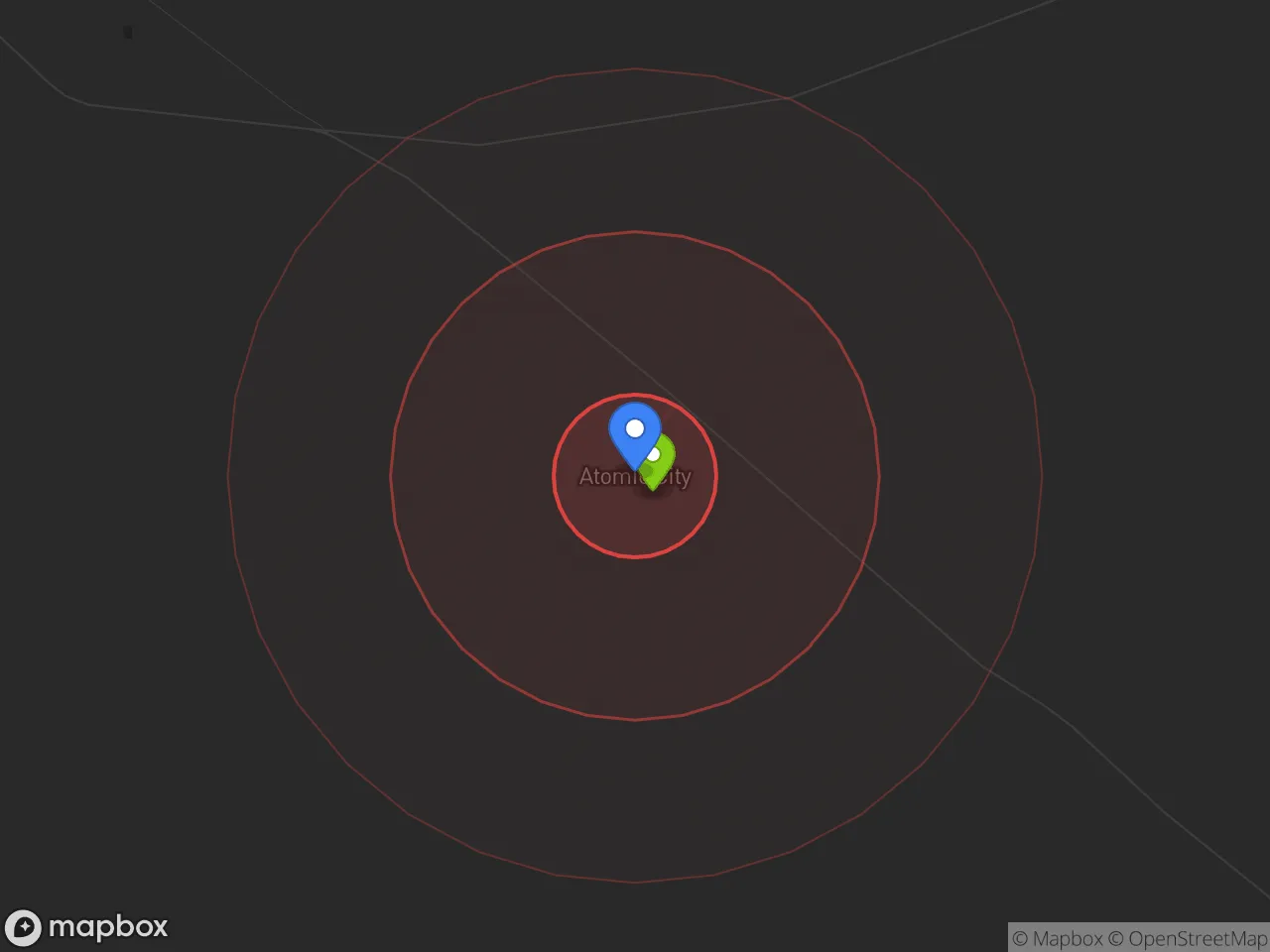
Limited data for this area
Limited data for this area
Hobbies
Explore the areaGroceries
0 within 10 miles
Gas
0 within 10 miles
Hospital
0 within 20 miles
Airport
SLC — Salt Lake City International
Post Office
Critical Amenities
Quality-of-Life Analysis
Atomic City, Idaho, offers one of the most affordable quality-of-life profiles in the Mountain West, with a cost of living index of 64 — a full 36 points below the U.S. average. The community is small, tight-knit, and dominated by workers tied to the nearby Idaho National Laboratory (INL), the region's economic engine. Residents here trade urban convenience for wide-open desert space, low expenses, and a pace of life that centers on self-reliance and proximity to outdoor recreation.
Cost of living and housing affordability compared to Idaho Falls and Blackfoot
Housing costs in Atomic City are dramatically lower than in neighboring population centers. The median home value sits at $210,900, compared to roughly $350,000 in Idaho Falls (about 45 minutes east) and $280,000 in Blackfoot. Renters fare even better, with a median monthly rent of just $659 — less than half the typical rent in Idaho Falls, where a one-bedroom averages over $1,200. For a household earning the local median income, a mortgage payment on a median-priced home would consume roughly 20% of gross monthly income, well below the 30% threshold financial planners recommend.
Utilities and groceries also run below national averages, though the trade-off is distance. The average commute is 23.5 minutes, which is manageable but reflects that most jobs are not in Atomic City itself — the majority of residents drive to INL facilities near Arco or into Bingham County for work. Gas and vehicle maintenance costs run slightly higher than the national average due to the rural location, partially offsetting the housing savings.
Schools, amenities, and the daily rhythm of life in Atomic City
Daily life in Atomic City revolves around a handful of anchors: the post office, a small general store, and the community center. There is no full-service grocery store in town; residents stock up in Blackfoot (25 minutes) or Idaho Falls (45 minutes) on weekly runs. The local school district is consolidated with nearby Arco, and students are bused to Butte County Joint School District #111, which serves roughly 400 students across its K-12 campuses. Class sizes are small — often under 15 students per grade — and the district's graduation rate consistently hovers around 90%, slightly above the state average.
For families, the lack of retail and entertainment options is the biggest adjustment. There are no movie theaters, chain restaurants, or shopping malls in Atomic City; the nearest multiplex is in Idaho Falls. However, the surrounding landscape compensates: the Craters of the Moon National Monument is 20 minutes west, and the Lost River Range offers hiking and hunting within an hour's drive. The community's social calendar centers on the volunteer fire department's annual fundraiser, church potlucks, and high school sporting events in Arco. Cell coverage is spotty outside town limits, and high-speed internet is available but not fiber-optic — a consideration for remote workers.
Who thrives in Atomic City and who should look elsewhere
Atomic City is best suited for INL employees, retirees on fixed incomes, and outdoor enthusiasts who prioritize affordability over convenience. The low cost of living allows early retirement or single-income households — a couple earning $60,000 combined can save over $15,000 annually compared to living in Idaho Falls. Conversely, remote workers requiring reliable high-bandwidth connections, families wanting diverse school programs, or anyone needing frequent medical care will find the 45-minute drive to Eastern Idaho Regional Medical Center a genuine hardship. The town's population of roughly 30 permanent residents means newcomers must be comfortable with limited social infrastructure and a high degree of self-sufficiency. For those who fit the profile, Atomic City offers a financial freedom that few other Idaho communities can match.

Crime in Atomic City, ID
Lower crime rates than 76% of comparable U.S. locations.
Violent CrimeViolent Crime Analysis
Property CrimeProperty Crime Analysis
Crime Analysis
Atomic City, Idaho, is one of the safest places in the state by the numbers, with a violent crime rate of 218.7 per 100,000 residents and a property crime rate of 616 per 100,000. These figures place the small Bingham County community well below both the Idaho state averages and national benchmarks, though the town's tiny population—roughly 30 year-round residents—means a single incident can skew annual statistics dramatically.
Crime in context
To put Atomic City's rates in perspective, the national violent crime rate sits near 380 per 100,000, meaning this community reports roughly 42% less violent crime than the U.S. average. Property crime nationally averages around 1,950 per 100,000, so Atomic City's 616 per 100,000 represents a reduction of nearly 70%. Idaho's statewide violent crime rate is approximately 250 per 100,000, and its property crime rate is roughly 1,500 per 100,000—both higher than what Atomic City reports. The community's isolation, located about 35 miles west of Blackfoot and adjacent to the vast Idaho National Laboratory (INL) reservation, contributes to low foot traffic and minimal opportunistic crime. The nearby INL presence also means a significant portion of the surrounding area is federal land with restricted access, further reducing criminal activity in the immediate vicinity.
What residents experience
Residents of Atomic City describe a community where property crimes like shed break-ins or vehicle thefts are rare but not unheard of, typically tied to transient activity along U.S. Highway 26 rather than local offenders. The most common calls for service in the area relate to traffic incidents on the highway and occasional trespassing on the vast open rangeland that surrounds the town. Because Bingham County Sheriff's Office provides law enforcement coverage, response times can be 20–30 minutes given the distance from Blackfoot, so residents rely heavily on rural security measures like locked gates, motion-sensor lighting, and neighborly watchfulness. There is no local police department, and the town's unincorporated status means no municipal court—minor offenses are handled through Bingham County's judicial system in Blackfoot.
Neighborhood-level variation is minimal given the town's size, but the handful of occupied homes clustered near the old Atomic City schoolhouse and the few scattered properties along the highway see slightly different risk profiles. Homes set back from the road with clear sightlines to neighbors report virtually no incidents, while properties directly adjacent to Highway 26 experience occasional overnight trespassing. For prospective residents, the practical takeaway is that Atomic City offers exceptional safety statistics, but the trade-off is a reliance on self-preparedness and county-level law enforcement rather than the rapid-response infrastructure found in larger Idaho communities like Idaho Falls or Pocatello.
* Values derived from national, state, county, city and local statistics and may differ in a specific area. Last updated: 2026-10-26T02:17:23.000Z
Narrative content on this page is AI-generated and may contain mistakes. Verify any details that matter before acting on them.
ReloMaps may earn a commission from affiliate links at no extra cost to you.

