Photo: Wikipedia
Find The Best Places To Live
in Ashland
PRO TIP! You can paste a Zillow or Redfin link to get info on that property.
What It's Like Living in Ashland, OR
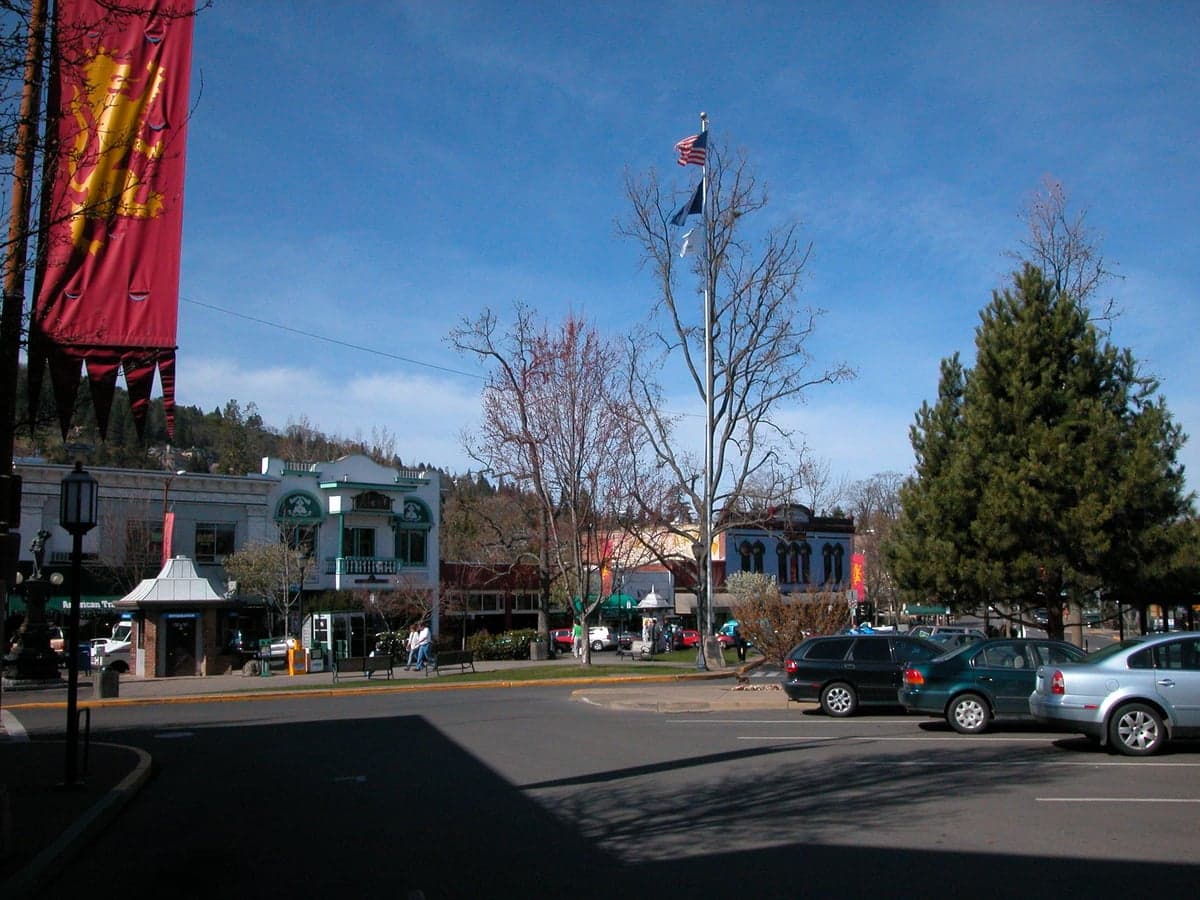
Ashland, Oregon, has a way of making itself known before you even arrive. The first hint is the smell of pine and damp earth as you drop out of the Siskiyou Mountains, followed by the sight of Lithia Park’s creek running straight through town. It’s a place that feels both deliberately cultured and accidentally beautiful—a small city of 21,343 people where the local Shakespeare festival draws more annual visitors than the entire town’s population, and where the median age of 47.7 tells you this isn’t a college party town, but a community of people who chose to stay or retire here for the long haul.
The Daily Rhythm: What People Actually Do
Weekdays in Ashland move at a pace that can feel almost slow to newcomers from Portland or the Bay Area. The average commute is just under 17 minutes—short enough that many residents bike or walk to work, especially if they live near the downtown core. By 8 a.m., the coffee shops are full: Rogue Valley Roasting Company on East Main draws a mix of remote workers and retirees, while Mix Bakeshop on Lithia Way is the spot for pastries and a quick chat with neighbors. The workday rhythm is shaped heavily by the Oregon Shakespeare Festival (OSF), which runs from February through October and employs hundreds of locals in everything from acting to costume design to box office management. Outside of OSF, the largest employers are Southern Oregon University (about 5,000 students) and the local hospital, Asante Ashland Community Hospital. You’ll also find a noticeable number of therapists, artists, and small business owners—Ashland’s median household income of $71,782 is modest by West Coast standards, but the high cost of living (index of 152) means many households rely on two incomes or remote work from higher-paying markets.
Weekends are built around the outdoors. The Lithia Park system—98 acres of trails, ponds, and a Japanese garden—is the town’s living room. On a Saturday morning, you’ll see families pushing strollers along the creek, trail runners heading up the Ashland Loop Road, and retirees playing chess at the park’s stone tables. In winter, the same crowd swaps hiking boots for skis at Mt. Ashland, a small ski area 18 miles up the mountain that’s beloved for its lack of crowds and $55 lift tickets. Summer brings the Ashland Independent Film Festival and the Green Show—free outdoor performances on the OSF plaza—along with farmers markets that overflow with Rogue Valley produce.
Sports, Community, and the Kind of Person Who Fits In
Sports are not the main event here. There are no professional teams, and high school football at Ashland High School draws respectable crowds but doesn’t dominate the town’s identity the way it does in Medford or Grants Pass. What Ashland does have is a strong Southern Oregon University Raiders following—especially for soccer and basketball—and a surprisingly active adult rec league scene in ultimate frisbee, volleyball, and cycling. The Ashland Cycling Club organizes weekly group rides through the Applegate Valley, and the Siskiyou Velo club hosts the annual Mt. Ashland Hill Climb, a punishing 18-mile road race that draws riders from across the state.
The person who fits in here is likely college-educated (65% of adults hold a bachelor’s or higher), values the arts and the outdoors in equal measure, and is comfortable with a slower pace of life. You’ll see a lot of Subaru Outbacks with bike racks, Patagonia vests, and dogs in the back seat. It’s a town where people know their neighbors’ names, where the local food co-op (Ashland Food Co-op) has been a community hub for decades, and where political bumper stickers are common—though the town leans left, the surrounding Jackson County is more mixed, and you’ll find a quiet conservative minority that tends to keep to itself. Affluence is visible but not flashy: the median home value of $573,700 means many residents bought years ago or are renting, and the cost of living is a real barrier for younger families and service workers.
What’s There to Do: Festivals, Food, and the Quirks That Define Ashland
Ashland’s cultural calendar is packed. The Oregon Shakespeare Festival is the anchor—three theaters, 11 plays per season, and a national reputation that brings in theater lovers from everywhere. But locals also know the smaller venues: Oregon Cabaret Theatre for dinner-and-a-show musicals, Siskiyou Velo for bike events, and the Historic Ashland Armory for concerts. The Fourth of July celebration in Lithia Park is a genuine community event—no corporate sponsors, just a parade, a concert, and fireworks over the reservoir. In fall, the Ashland Art in the Park festival fills the park with local painters and potters.
Food and drink are a serious matter. Larks Home Kitchen Cuisine is the go-to for farm-to-table dinners, while Hearsay Kitchen & Bar draws a younger crowd for craft cocktails and live music. Standing Stone Brewing is the de facto community living room—a brewpub with a big patio, trivia nights, and a kids’ play area. For a quick bite, Taqueria Nueve does excellent tacos, and Brothers’ Restaurant has been serving Greek and American comfort food since 1972. The one quirk every local will mention: the Lithia Water fountains around town. The water is naturally carbonated and smells faintly of sulfur—visitors either love it or recoil, and locals have a love-hate relationship with the “Ashland aroma” that lingers in the air near the park.
Pros and Cons of Living Here
- What residents love: The walkability—you can live downtown without a car. The access to nature—hiking, skiing, and the Rogue River are all within 30 minutes. The strong sense of community—neighbors still bring casseroles when someone’s sick. The cultural offerings—world-class theater in a town of 21,000 is rare. The schools—Ashland public schools are well-regarded, and the high school has a strong IB program.
- What frustrates them: The cost of housing—$573,700 median home value is steep for a town this size, and rentals are scarce. The wildfire risk—summer smoke from regional fires has become an annual issue, sometimes lasting weeks. The limited job market—outside of OSF, SOU, and healthcare, good-paying jobs are hard to find. The lack of diversity—Ashland is predominantly white (around 85%), and some residents find the social scene insular. The tourist crowds—summer weekends bring traffic and packed restaurants, especially during OSF season.
One more practical reality: the violent crime rate of 240 per 100,000 is slightly above the national average, but most crime is property-related—car break-ins and bike thefts near the downtown core. Most residents feel safe walking alone at night, especially in the neighborhoods north of Main Street. The weather is a genuine four-season experience: warm, dry summers (80s and 90s), crisp falls, cold winters with occasional snow (Mt. Ashland gets 300+ inches annually), and a rainy spring that turns the hills emerald green. If you’re considering a move, the best advice is to visit in both July and January—the town is beautiful year-round, but the summer crowds and winter quiet are two very different Ashlands.

Similar towns to Ashland

* Values derived from national, state, county, city and local statistics and may differ in a specific area. Last updated: 2026-06-13T21:15:24.000Z
Narrative content on this page is AI-generated and may contain mistakes. Verify any details that matter before acting on them.
ReloMaps may earn a commission from affiliate links at no extra cost to you.

