 Popular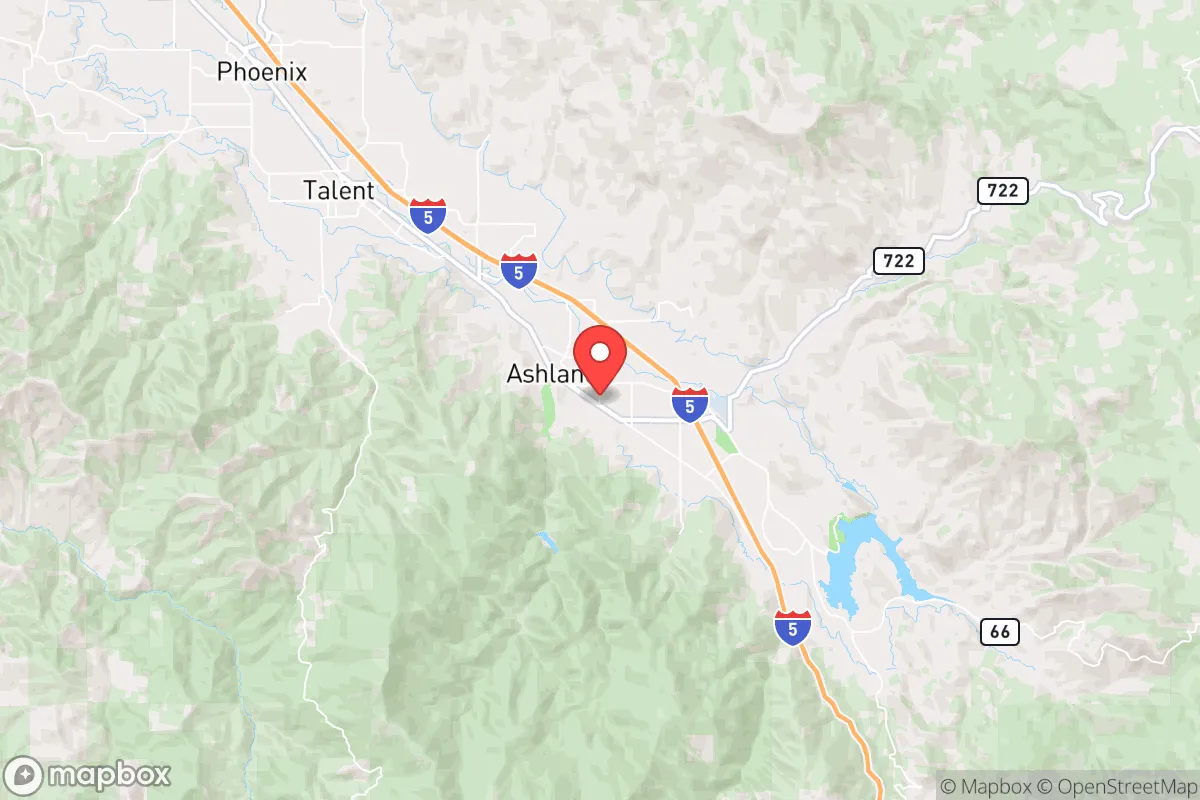
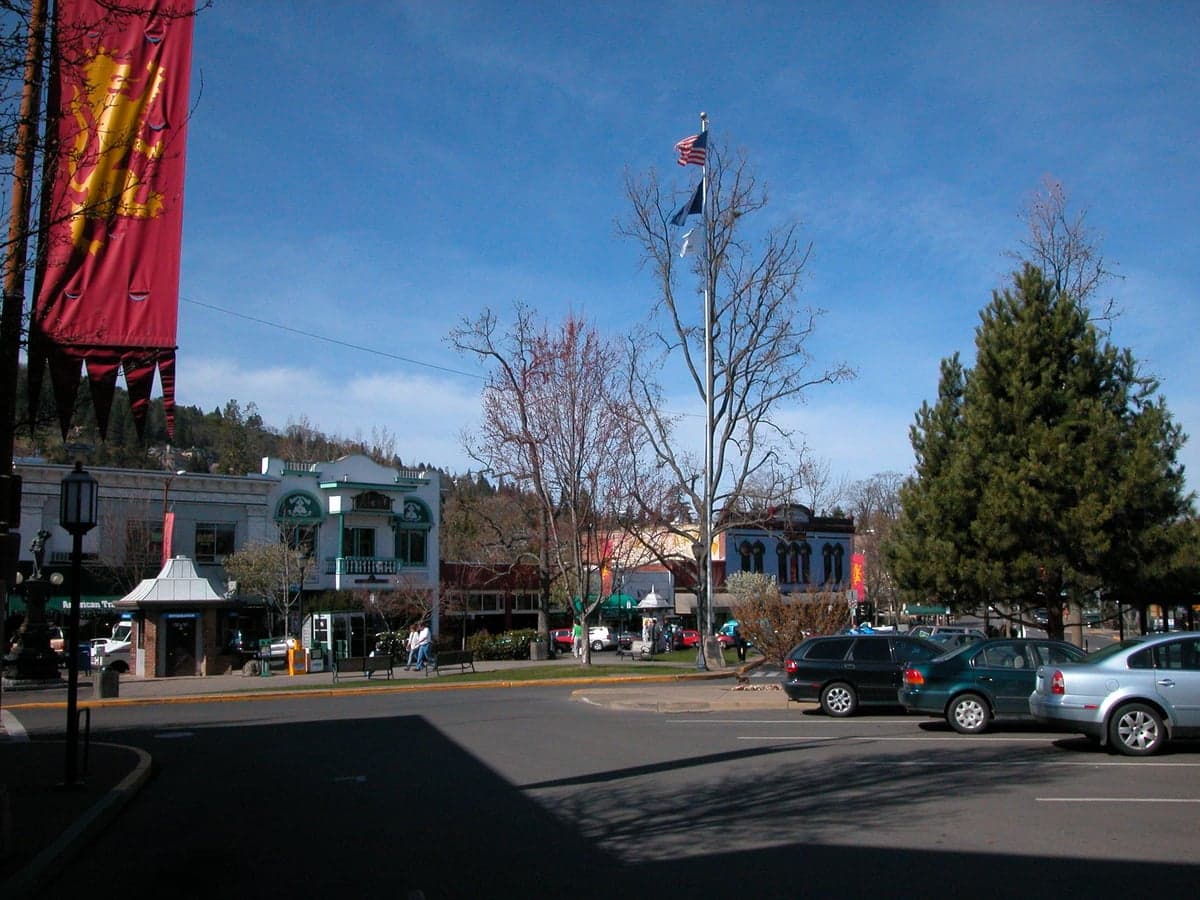
Photo: Wikipedia
Strategic Assessment of Ashland, OR
Workable tactical position. Some exposure to population density or targets, but generally defensible in a crisis.
What does the Strategic Assessment tell us?
Our Strategic Assessment grades tactical survivability of an area. Major population centers, military targets, fallout zones, natural disasters, and border exposure all drive risk — lower exposure means a more defensible position in a crisis.
This is heavily inspired by Joel Skousen's Strategic Relocation book. Highly recommended you checkout the book ($)What does this tell us?
Our Strategic Assessment grades tactical survivability of an area. Major population centers, military targets, fallout zones, natural disasters, and border exposure all drive risk — lower exposure means a more defensible position in a crisis.
This is heavily inspired by Joel Skousen's Strategic Relocation book. Highly recommended you checkout the book ($)Strategic Pillars

Key Distances
Regional Safe Places
Below is our recommended "safe zones" in Oregon and the surrounding area based on our strategic heuristics. For most people, it's unrealistic to live in a “safe zone” full-time due to work, family or other personal reasons. They tend to be more rural. However, many of these areas are perfect for second homes and retreat properties that double as a vacation home or even a short-term rental.


Important Note: For informational purposes only. This does not mean nothing bad ever happens in the green zones. Please use common sense. This is based on public data and modeled with AI. We tried to take a conservative approach but mistakes happen. We update this regularly as new information becomes available.
Solar Generator Recommendations
Backup power matters more here than in safer locations. We've picked three solar generators across budgets and capacity tiers — start with the budget unit if you only need a few essentials, or step up if you want to run a fridge and HVAC for days at a time.

Jackery Portable Power Station Explorer 300
Budget OptionPower on the Go: Weighing only 11 lbs, it's convenient to set up and store with book-sized foldable solar panels

BLUETTI Portable Power Station AC180
Designed for both indoor and outdoor scenarios, AC180 is highly capable as it has a robost capacity and continuous output power.

EF ECOFLOW DELTA Pro Ultra Power Station
Upgraded PickEcoFlow DELTA Pro Ultra is a whole-home energy system designed to grow with your family. Integrated with the Smart Home Panel 2, it scales to meet your evolving energy needs — keeping your home powered, intelligent, and secure through every stage of life.
We earn a commission, at no additional cost to you.
Strategic Assessment Analysis
Ashland, Oregon, occupies a strategic position in the Rogue Valley that offers a blend of natural defensibility and access to critical resources, making it a noteworthy option for those prioritizing disaster readiness and self-sufficiency. Its location roughly 15 miles north of the California border and 30 miles east of Interstate 5 places it within a moderate buffer zone from major urban centers like Medford (12 miles north) and Grants Pass (30 miles northwest), while still being far enough from Portland (275 miles north) and the San Francisco Bay Area (350 miles south) to avoid the immediate fallout and chaos of a major metropolitan collapse. The city's elevation at roughly 1,950 feet and its position in a valley surrounded by the Siskiyou and Cascade mountain ranges provide a natural fortress-like setting, but this geography also introduces specific vulnerabilities that a relocator must weigh carefully.
Geographic position and natural advantages for long-term survival
Ashland's primary geographic strength is its location within a temperate, well-watered valley that supports agriculture and has a relatively mild climate compared to much of the interior West. The Rogue Valley receives an average of 20 inches of rainfall annually, supplemented by snowmelt from the surrounding mountains, which feeds the Rogue River and its tributaries like Ashland Creek. This water availability is a significant advantage over arid regions of the Southwest or the high desert east of the Cascades. The surrounding mountains—Mount Ashland to the south and the Siskiyou Crest to the west—create natural barriers that slow overland travel and provide defensible high ground for observation or retreat. The area's forested terrain also offers abundant timber for construction, fuel, and foraging, though this comes with the trade-off of wildfire risk. For a relocator, the ability to grow food in the valley's fertile soils (the growing season runs roughly April to October) and access to year-round water from the Rogue River system are concrete assets that many other relocation destinations in the Pacific Northwest cannot match.
Risks, exposures, and proximity to fallout-relevant landmarks
The most significant risk to Ashland's resilience is its proximity to Medford, a city of roughly 85,000 people that serves as a regional hub for healthcare, transportation, and commerce. In a major disaster—whether natural or man-made—Medford would become a chokepoint for refugees, looters, and those fleeing the coast or the I-5 corridor. Ashland's location just 12 miles south of Medford means that any large-scale evacuation or societal breakdown in that city would directly impact Ashland's roads, resources, and security. Additionally, the I-5 corridor itself, which runs through the Rogue Valley, is a primary north-south artery that would be a target for disruption or a route for displaced populations. While Ashland is far from major nuclear targets like Portland, Seattle, or San Francisco, it lies within the fallout zone of potential strikes on the Hanford Site in Washington (roughly 350 miles north) or the Diablo Canyon Power Plant in California (400 miles south), though prevailing winds typically blow west to east, reducing immediate risk. The area is also seismically active, with the Cascadia Subduction Zone capable of producing a magnitude 9.0 earthquake that could trigger landslides and disrupt the I-5 corridor for weeks. Wildfire is the most immediate and recurring threat: the 2020 Almeda Fire destroyed over 2,500 structures in nearby Talent and Phoenix, and Ashland itself has faced evacuation orders in recent years. For a relocator, these risks mean that any property must be sited with defensible space, a reliable water source for firefighting, and multiple egress routes that avoid the I-5 bottleneck.
Practical resilience for a relocator: food, water, energy, and defensibility
Ashland's practical resilience is a mixed bag. On the positive side, the Rogue Valley is a major agricultural region, with local farms producing everything from pears and apples to wine grapes and vegetables. The Ashland Farmers Market operates year-round, and there is a strong culture of home gardening, canning, and food preservation among the local population. The city's water supply comes primarily from Ashland Creek and the Talent-Ashland- Phoenix water system, which draws from the Rogue River and is treated at the Ashland Water Treatment Plant. However, this system is vulnerable to power outages and contamination events; a backup well or rainwater catchment system is advisable for any serious prepper. Electricity is provided by Pacific Power, which relies on a grid that is susceptible to wildfire-related shutoffs (Public Safety Power Shutoffs have become common in recent years). Solar adoption is growing, but the valley's frequent summer smoke and winter cloud cover can reduce solar efficiency. For defensibility, Ashland's terrain offers natural chokepoints: the main access routes are Highway 99 and I-5, both of which can be monitored and controlled with relative ease by a prepared community. The city's population of roughly 21,000 is politically diverse, with a strong progressive tilt that may clash with a conservative-leaning relocator's values, but this also means a higher density of people with medical training, technical skills, and community organization experience. The presence of Southern Oregon University provides a pool of younger, potentially able-bodied individuals, though it also means a transient population that may not be committed to long-term survival. For a family, the local school system is well-regarded (Ashland High School ranks among the top in the state), and the city has a functional police and fire department, though these services would be overwhelmed in a major crisis.
The overall strategic picture for Ashland is one of moderate resilience with significant trade-offs. It is not a remote bunker location—it is a small city with all the vulnerabilities that come with being near a larger urban center and a major highway. But for a relocator who values access to water, arable land, and a community with some pre-existing infrastructure, Ashland offers a viable base of operations that can be hardened with proper preparation. The key is to avoid the dense downtown core and instead secure property on the valley's edges or in the foothills, where defensibility and water access are better. The wildfire risk is real and must be mitigated with fire-resistant construction, a pond or cistern, and a clear evacuation plan. The proximity to Medford is the single greatest liability, but it also provides access to medical facilities, hardware stores, and trade networks that a truly remote location would lack. For a conservative-leaning family or individual willing to navigate a politically liberal local culture, Ashland represents a calculated bet: a place with strong natural advantages that requires active, ongoing preparation to offset its exposure to regional risks. It is not a bug-out location for the unprepared, but for those who do the work, it can be a sustainable long-term home.

* Values derived from national, state, county, city and local statistics and may differ in a specific area. Last updated: 2026-06-13T21:15:24.000Z
Narrative content on this page is AI-generated and may contain mistakes. Verify any details that matter before acting on them.
ReloMaps may earn a commission from affiliate links at no extra cost to you.

