 Popular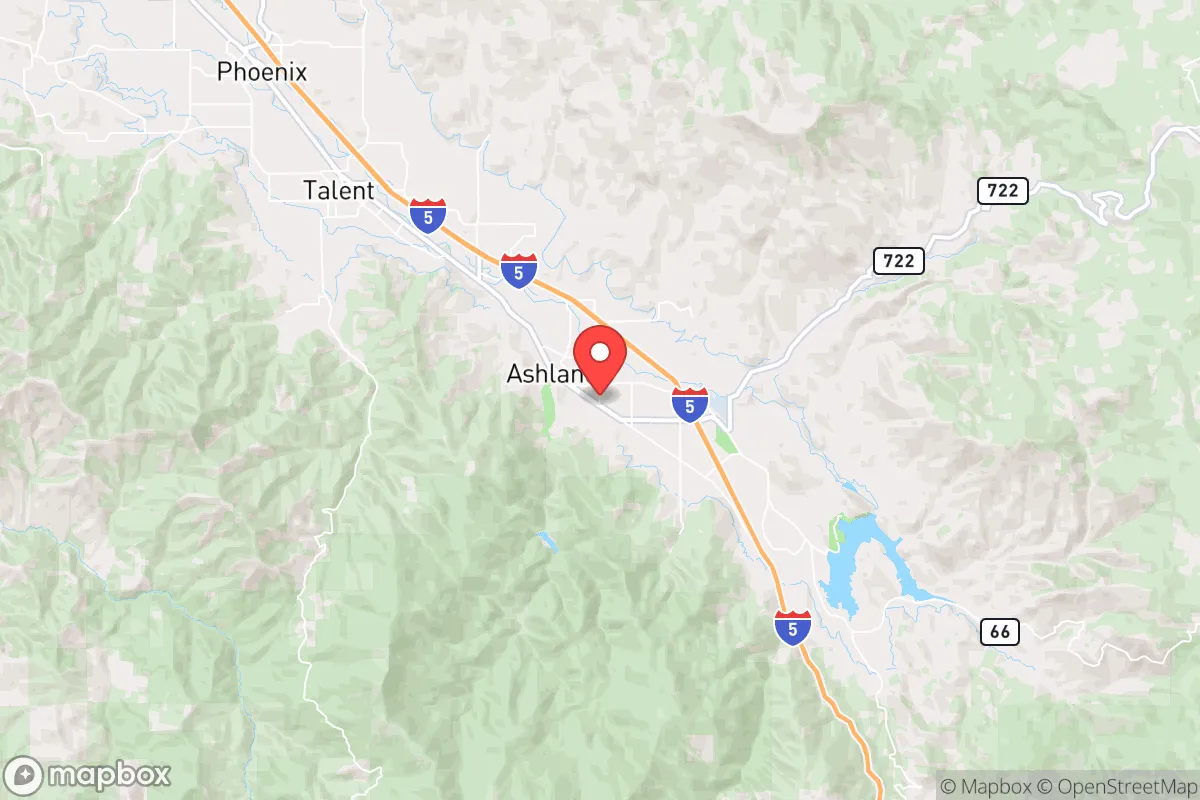
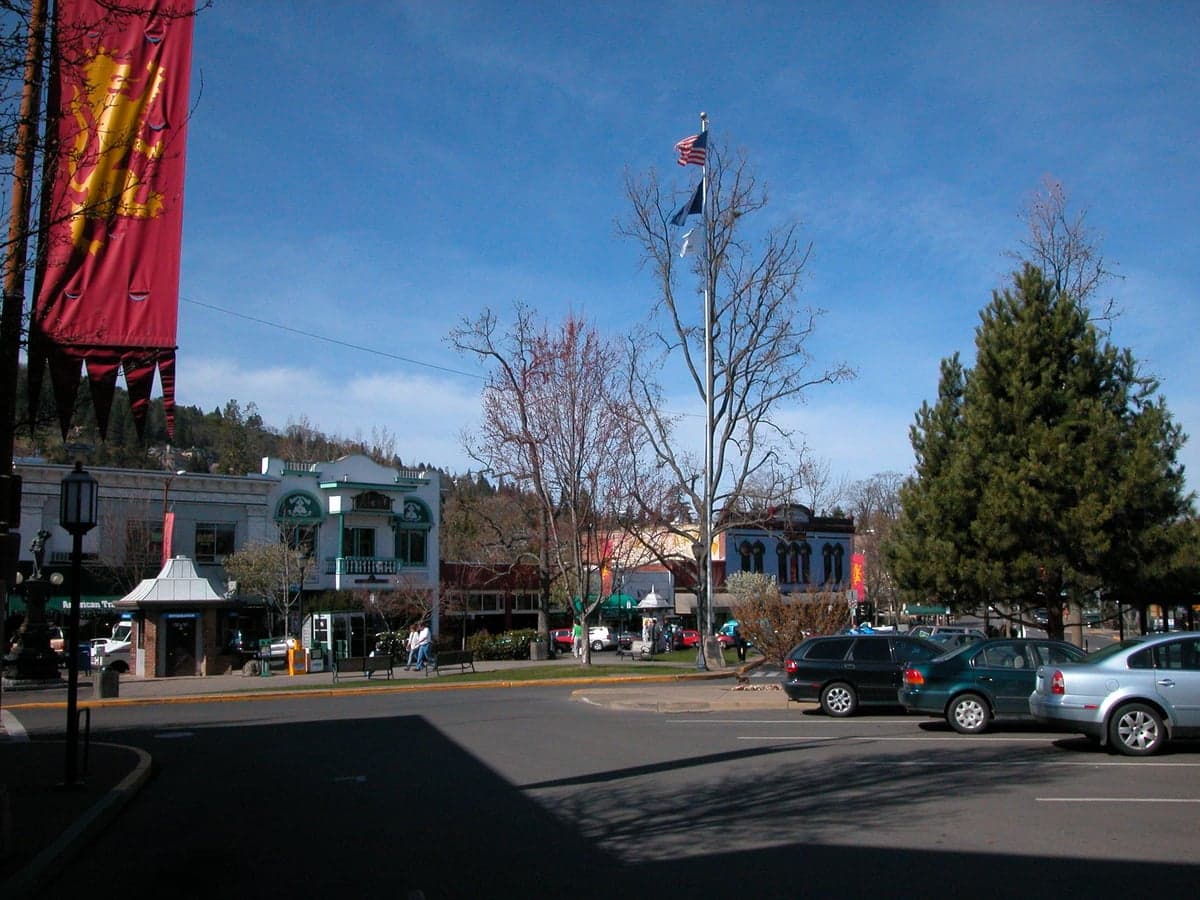
Photo: Wikipedia
Political ClimatePolitical Climate in Ashland, OR
District shown is the primary district for this city’s centroid. Cities may span multiple districts.
Local Political AnalysisPolitical Analysis of Ashland, OR
Ashland, Oregon, is a fascinating political outlier. While the state of Oregon as a whole leans Democratic with a Cook PVI of D+8, Ashland itself sits in a deeply conservative region with a Cook PVI of R+14. This means you’re living in a small, famously liberal college town that’s completely surrounded by a vast, rural, and reliably Republican landscape. Over the last decade, the national political polarization has only sharpened this divide, making Ashland feel more like a blue island in a red sea than ever before.
How it compares
The contrast between Ashland and the rest of its region is stark. Drive just 15 minutes north to Medford or 20 minutes south to Yreka, California, and you’ll find a completely different political reality—one where Trump signs outnumber Biden or Harris signs by a wide margin, and where local talk radio leans hard right. The surrounding counties of Jackson and Josephine are among the most conservative in the state. In the 2024 election, Jackson County voted roughly 55% Republican, while Ashland’s precincts within the city limits voted closer to 70-75% Democratic. This isn’t a purple area; it’s a deep red region with a single, deep blue enclave. The state-level D+8 PVI reflects the massive Democratic majorities in the Portland metro area and the Willamette Valley, which completely overwhelm the conservative votes from places like Ashland’s own backyard.
What this means for residents
For liberal residents, Ashland is a genuine sanctuary. You can walk into almost any coffee shop, bookstore, or gallery and assume you’re among like-minded people. The city council, school board, and local civic groups are overwhelmingly progressive. You’ll see Black Lives Matter signs and Pride flags year-round. But the trade-off is that your state and federal representatives are almost always conservative. Your voice in Salem and Washington, D.C., is effectively drowned out by the surrounding rural districts. For conservative residents, the experience is the opposite. You’re in the political minority in town, which can feel isolating, but you have the comfort of knowing that the broader region and the state legislature (outside of the Portland metro) reflects your values. Many conservatives I know here have simply learned to avoid certain local Facebook groups and to keep their political conversations to their neighborhoods or their church, where they find plenty of company.
The cultural and policy distinctions are real and visible. Ashland has its own municipal utility, a strong local food movement, and a city government that actively pursues climate action and social justice initiatives—things that would be nonstarters in nearby Medford or Grants Pass. The Oregon Shakespeare Festival and Southern Oregon University anchor a culture that is openly intellectual and left-leaning. Meanwhile, just over the hill, the dominant issues are water rights, timber management, and property taxes. The practical reality is that Ashland residents live in a progressive bubble, but they drive through a conservative landscape to get anywhere else. It creates a unique, sometimes tense, but ultimately resilient community where you learn to coexist with your neighbors, even if you’d never vote for the same candidate. The trajectory? I see it staying this way for the long haul—Ashland’s identity is too tied to its liberal arts and theater roots to flip, and the surrounding counties are too rural and traditional to budge. It’s a stable, if occasionally uncomfortable, political equilibrium.

State Political ClimatePolitical Climate in Oregon
State Political AnalysisPolitical Environment in the State
Oregon is a reliably Democratic state with a Cook PVI of D+8, but that single number hides a deeply fractured political landscape. The state has shifted leftward over the past 20 years, driven by explosive growth in the Portland metro area and the Willamette Valley, while rural and eastern counties have become more conservative and resentful of Salem’s control. For a conservative-leaning relocator, Oregon offers stunning natural beauty and a slower pace of life in many areas, but you’ll need to pick your county carefully — the state government in Salem is firmly progressive and has been moving further left on taxes, regulation, and social policy.
Urban vs. rural divide
The political map of Oregon is a tale of two states. The Portland metro area — Multnomah, Washington, and Clackamas counties — generates roughly half the state’s population and votes overwhelmingly Democratic. Multnomah County (Portland) is the bluest, with Biden winning it by 40 points in 2020. Washington County (suburban Hillsboro, Beaverton) is a classic educated-suburban stronghold, trending left as tech jobs at Intel and Nike expanded. Clackamas County (Oregon City, Lake Oswego) is more moderate but still blue-leaning. The Willamette Valley south of Portland — Lane County (Eugene), Benton County (Corvallis), and Marion County (Salem) — is also reliably Democratic, though Salem itself is more purple due to its state-worker and agricultural mix. In contrast, the rest of Oregon is deeply red. Eastern Oregon — counties like Union, Baker, Grant, and Malheur — vote Republican by 30-50 points. Southern Oregon’s Jackson County (Medford) and Josephine County (Grants Pass) are conservative strongholds, though Medford has a growing progressive minority. The central Oregon city of Bend (Deschutes County) is a political battleground: it was historically red but has been trending purple as Californians and out-of-staters move in, with the county flipping to Biden by 2 points in 2020. The rural-urban divide is so stark that in 2020, 27 of Oregon’s 36 counties voted for Trump, but Biden still won the state by 16 points thanks to the Portland metro’s massive turnout.
Policy environment
Oregon’s state-level policy is a mixed bag for conservatives. On the plus side, there is no state sales tax — a major draw for many relocators. However, the state income tax is among the highest in the nation, with a top marginal rate of 9.9% on income over $125,000 (single filers), and corporate taxes are also high. Property taxes are relatively moderate, capped by Measure 50 (1997), but local levies can add up. The regulatory environment is heavy: Oregon has strict land-use laws (the 1973 Senate Bill 100) that limit sprawl and protect farmland, which keeps housing supply tight and prices high. Education policy is progressive: Oregon has a strong teachers’ union, and the state funds K-12 through a complex formula that often leaves rural districts shortchanged. School choice is limited — there are few charter schools and no voucher program. Healthcare is heavily regulated, with the Oregon Health Plan (Medicaid expansion) covering a large share of the population. Election laws are among the most accessible in the country: Oregon was the first state to vote entirely by mail (1998), and automatic voter registration at the DMV is standard. Ballot drop boxes are ubiquitous, and voter turnout is consistently among the highest nationally. For conservatives, the lack of voter ID laws and the ease of mail-in voting can be a concern, though fraud rates are extremely low.
Recent policy direction
Over the past five years, Oregon’s legislature has passed a series of laws that will matter to a relocator weighing personal liberties. On gun rights, Measure 114 (passed in 2022, but tied up in court) would require a permit to purchase a firearm, a background check for every sale, and a ban on magazines over 10 rounds. As of 2026, the law is still not fully enforced, but the direction is clear: Oregon is moving toward California-style gun control. On parental and education rights, the 2023 Student Success Act and related bills have expanded LGBTQ+ inclusive curriculum and banned conversion therapy, while also allowing students to use preferred names and pronouns without parental consent — a flashpoint for conservative families. Property rights are constrained by the land-use system, and recent laws have limited short-term rentals (like Airbnb) in residential zones, especially in Portland and Bend. Taxation has increased: a 2020 corporate activity tax (CAT) funds education, and a 2023 measure raised the top income tax bracket. Medical and bodily autonomy is fully protected: Oregon has no parental consent requirement for abortion, and it was the first state to legalize assisted suicide (Death with Dignity Act, 1997). Drug decriminalization (Measure 110, 2020) was partially rolled back in 2024 after public backlash over open drug use, but possession of small amounts of hard drugs is still a citation, not a crime. Privacy and surveillance: Oregon has strong privacy laws, including a 2023 data privacy act that limits how companies collect and sell personal data. Voting and ballot access remains extremely easy, with same-day registration and no excuse needed for absentee voting.
Civil unrest & political movements
Oregon has a long history of political activism, from the 1934 West Coast waterfront strike to the 2020 Portland protests. The 2020 Black Lives Matter protests in Portland were among the largest and most sustained in the country, with nightly demonstrations for months and federal intervention that became a national flashpoint. The city’s left-wing activist scene is still active, though less intense. On the right, rural Oregon has a strong militia and Second Amendment movement, with groups like the People’s Rights network (founded by Ammon Bundy) having a presence in eastern counties. The 2016 occupation of the Malheur National Wildlife Refuge in Harney County was a high-water mark for anti-government sentiment. Immigration politics: Oregon is a sanctuary state (1987 law), and local law enforcement does not cooperate with ICE. This is a major issue in rural areas, where some counties have passed symbolic resolutions opposing sanctuary policies. Secession talk is real: the “Greater Idaho” movement, which proposes moving 13 eastern Oregon counties into Idaho, has gained traction, with several counties voting in favor of exploring the idea. It’s unlikely to happen, but it reflects deep alienation. Election integrity is a live issue: after 2020, some rural counties passed resolutions questioning the security of mail-in voting, though no evidence of widespread fraud has emerged. A new resident in Portland will see visible homelessness and open drug use, while in rural towns like Prineville or Burns, the political temperature is lower but the distrust of Salem is palpable.
Projection
Over the next 5-10 years, Oregon will likely continue its leftward drift at the state level, driven by in-migration from California and other blue states, plus the natural growth of the Portland metro. The state’s population growth has slowed, but the demographic shift is clear: younger, more diverse, and more progressive voters are concentrated in the Willamette Valley. Rural counties will continue to lose population and political influence, though the “Greater Idaho” movement may keep pressure on. The housing crisis — driven by land-use restrictions and high construction costs — will likely worsen, pushing more moderate and conservative residents to cheaper states like Idaho or Texas. For a conservative relocator, the best bet is to target red counties like Union, Baker, or Jackson, where local government is more aligned with your values, but you’ll still be subject to state-level policies on taxes, guns, and education. The state’s natural beauty and outdoor lifestyle will remain a draw, but the political trajectory suggests that Oregon will become more like California in its regulatory and fiscal posture, not less.
Bottom line for a new resident: If you’re a conservative looking to move to Oregon, choose your county carefully — rural eastern or southern Oregon offers a more aligned local culture, but you’ll still pay high state income taxes and live under progressive state laws on guns, education, and healthcare. If you’re liberal, the Portland metro or Eugene will feel like home, but you’ll contend with high housing costs and visible social problems. Oregon is a state of stark contrasts, and your experience will depend almost entirely on which side of the Cascades you settle on.
* Values derived from national, state, county, city and local statistics and may differ in a specific area. Last updated: 2026-06-13T21:15:24.000Z
Narrative content on this page is AI-generated and may contain mistakes. Verify any details that matter before acting on them.
ReloMaps may earn a commission from affiliate links at no extra cost to you.

