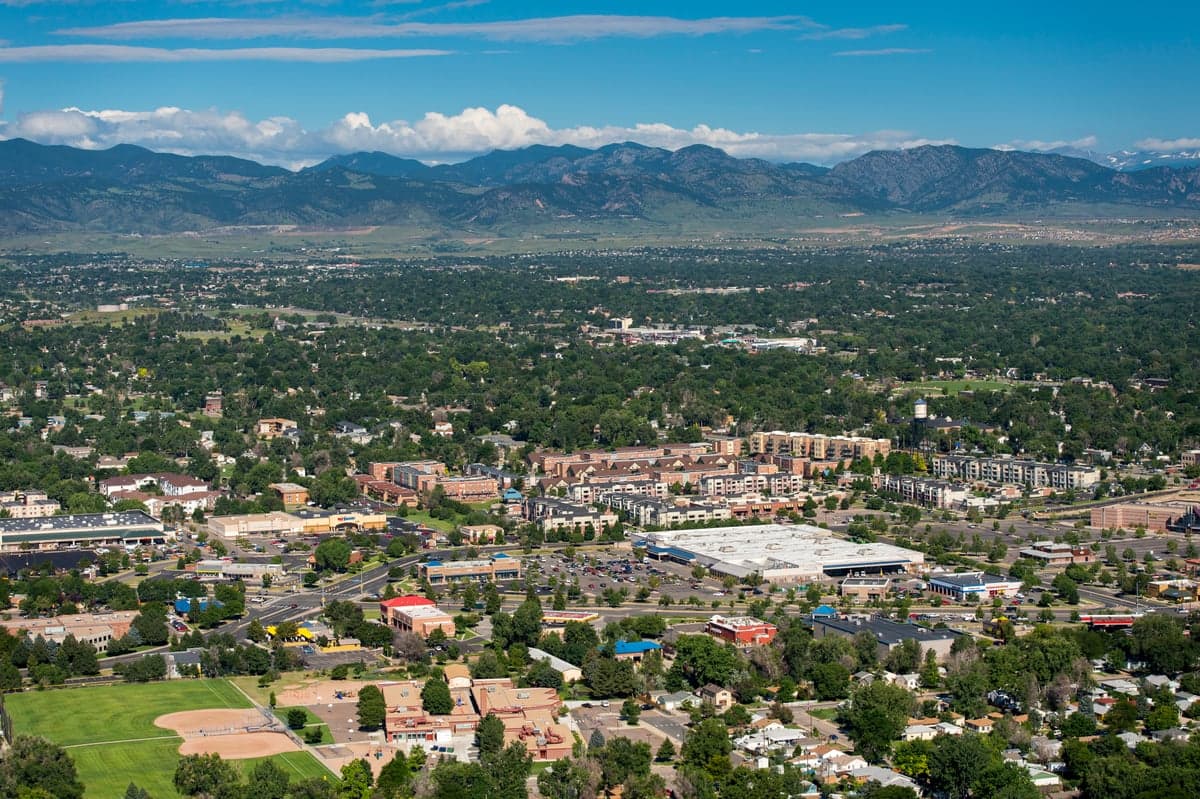
Photo: Wikipedia
Political ClimatePolitical Climate in Arvada, CO
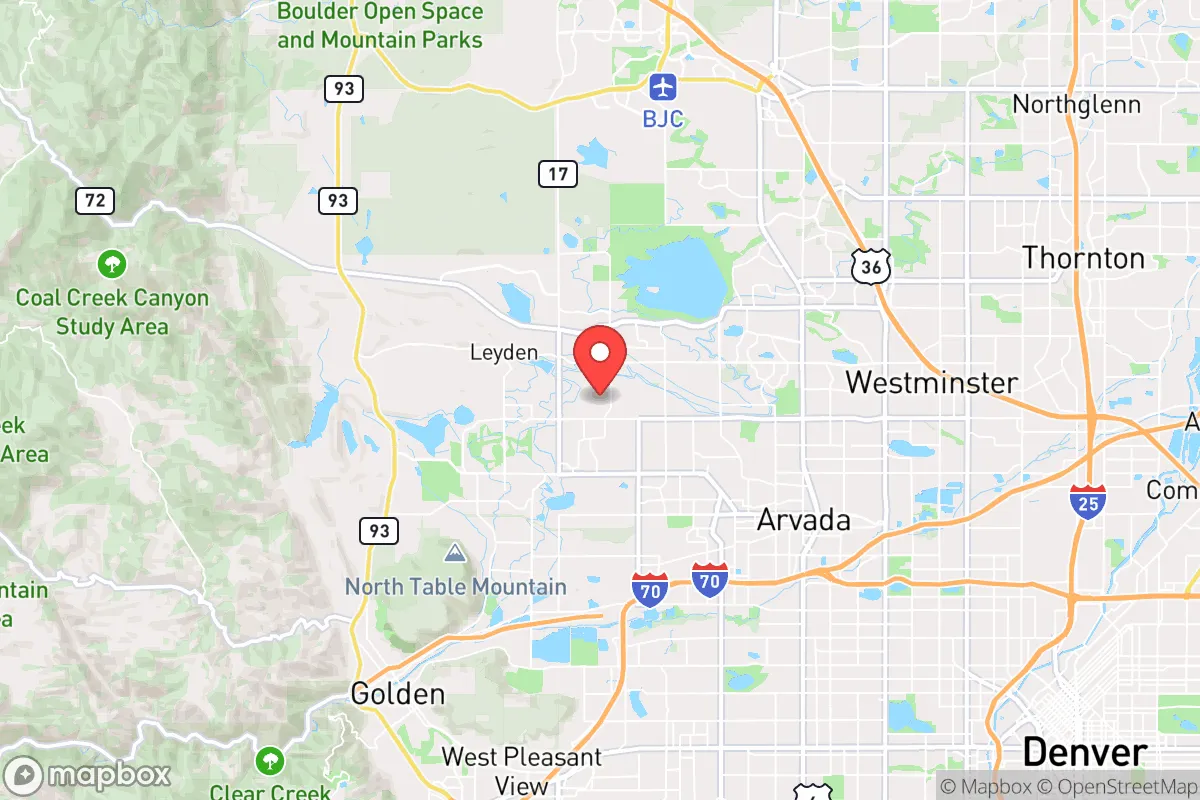
District shown is the primary district for this city’s centroid. Cities may span multiple districts.
Local Political AnalysisPolitical Analysis of Arvada, CO
Arvada’s political climate has shifted noticeably over the past decade, and if you’ve lived here as long as I have, you’ve felt it. The Cook PVI now sits at D+8, meaning the city leans about eight points more Democratic than the national average—a far cry from the reliably purple, often conservative-leaning suburb it was in the early 2000s. The trajectory is clear: each election cycle brings a little more blue, driven by an influx of younger families and remote workers from Denver, who bring big-city voting habits with them. It’s not a radical swing overnight, but the trend line is unmistakable, and it’s changing the feel of local governance.
How it compares
To understand Arvada’s politics, you have to look at the neighbors. Head west a few miles to Golden, and you’ll find a similar D+ lean, though Golden’s smaller, more college-town vibe makes it even more progressive. Drive north to Westminster or Broomfield, and you’re in similar territory—purple trending blue. But the real contrast is south and east: Littleton and Centennial still hold a more balanced, sometimes conservative tilt, while rural areas like Wheat Ridge and unincorporated Jefferson County remain reliably red. Arvada sits right in the middle of this patchwork, but it’s the city that’s moving fastest toward the left. Where you used to see a mix of “Don’t Tread on Me” and “Coexist” bumper stickers in the same parking lot, now the latter dominates, especially in newer developments like Candelas.
What this means for residents
For folks who value personal freedoms and limited government, the shift is concerning. The city council has become more willing to impose regulations that feel like overreach—think stricter land-use rules, higher impact fees on new construction, and a growing appetite for zoning changes that prioritize density over single-family neighborhoods. There’s also been quiet pressure on local businesses to adopt progressive policies, from mandated paid leave to sustainability reporting, which can feel like a slow creep of government into daily life. Property taxes have ticked up to fund expanded public transit and bike lanes, even though many residents prefer their cars. The school board has followed suit, with curriculum changes that emphasize social-emotional learning and diversity initiatives over traditional academics. It’s not dystopian, but it’s a steady erosion of the hands-off, live-and-let-live ethos that long-time residents remember.
On the cultural side, Arvada still has its old soul—the historic Olde Town area with its mom-and-pop shops and the annual Arvada Harvest Festival feel like throwbacks. But the new developments and the people moving in are reshaping the conversation. You’ll hear more talk about “equity” and “inclusion” at city meetings, and less about fiscal restraint or individual property rights. The long-term outlook? If the trend holds, Arvada could look a lot like Boulder County within a decade—progressive, regulated, and expensive. For those who value personal freedom and a government that stays out of the way, it might be time to keep an eye on the ballot box, or start looking at homes in Wheat Ridge or Golden’s more rural edges. The inside scoop is: enjoy the parks and the mountain views while they’re still unencumbered by new rules, because the political winds are blowing hard, and they’re not shifting back anytime soon.

State Political ClimatePolitical Climate in Colorado
State Political AnalysisPolitical Environment in the State
Colorado has shifted from a quintessential purple state to a solidly blue one over the past two decades, driven largely by explosive growth in the Denver metro and Front Range corridor. While the state still elects a few moderate Republicans in rural districts, Democrats now control every lever of statewide power—the governorship, both U.S. Senate seats, both chambers of the legislature, and the state supreme court. The 2024 presidential election saw Joe Biden carry Colorado by over 13 points, a far cry from the 2012 race when Barack Obama won it by just over 5 points. For a conservative considering relocation, the state’s political trajectory is unmistakable: what was once a live-and-let-live Western state has become a laboratory for progressive policy.
Urban vs. rural divide
The political map of Colorado is a tale of two worlds. The Denver-Aurora-Lakewood metro area, home to nearly 60% of the state’s population, is the engine of Democratic dominance. Denver County itself votes about 80% Democratic, while Boulder County is even more lopsided at roughly 85%. The I-25 corridor from Fort Collins down through Denver to Colorado Springs is where the election is decided. Colorado Springs, once a conservative stronghold, has been trending purple—El Paso County voted for Trump in 2024 but by a shrinking margin, and the city itself is now more evenly split. Meanwhile, the rural Eastern Plains, the Western Slope, and the San Luis Valley remain deeply Republican. Weld County (Greeley) and Mesa County (Grand Junction) are GOP bastions, often voting 65-70% Republican. But these areas simply don’t have the population to counterbalance the Front Range. The divide is stark: drive an hour east of Denver and you’re in Trump country; drive an hour west and you’re in liberal ski towns like Aspen and Telluride, which vote 85% Democratic.
Policy environment
Colorado’s policy environment has shifted hard left over the past decade. The state income tax is a flat 4.4%, which is moderate, but property taxes are relatively low thanks to the Gallagher Amendment (repealed in 2020, but its effects linger). However, the state’s regulatory posture is aggressive. In 2021, the legislature passed the Colorado Option, a government-mandated health insurance plan that effectively caps private insurer rates—a move that has driven some insurers out of the market. Education policy is dominated by the teachers’ unions; school choice exists via charter schools, but the state has resisted voucher programs. Election laws are among the most progressive in the nation: Colorado has universal mail-in voting, same-day registration, and automatic voter registration. The state also has a red flag law (Extreme Risk Protection Orders) passed in 2019, which allows courts to temporarily seize firearms from individuals deemed a risk. In 2023, the legislature passed a ban on the sale of certain semi-automatic firearms (the Colorado Firearm Safety Act), which is currently facing legal challenges. For a conservative, the regulatory creep is real—permitting for new housing, energy projects, and even small businesses has become more cumbersome.
Trajectory & freedom
Colorado is becoming less free by nearly any measure of personal liberty, especially for conservatives. The Colorado Firearm Safety Act (2023) bans the sale of many popular semi-automatic rifles and limits magazine capacity to 15 rounds. The state also passed a parental rights bill in 2023 that, while ostensibly about transparency, was opposed by many conservatives who felt it didn’t go far enough to protect parents’ authority over curriculum and medical decisions. On medical autonomy, Colorado has gone the opposite direction: in 2022, the state passed a law requiring insurance companies to cover gender-affirming care, and in 2023, it became a sanctuary state for transgender youth, protecting them from out-of-state parental consent laws. Property rights have been eroded by a series of land-use bills (SB 23-213 and HB 23-1255) that preempt local zoning to force higher-density housing—ostensibly to address affordability, but critics see it as state overreach into local control. On taxation, voters passed Proposition HH in 2023, which temporarily reduces property tax rates but also expands the state’s revenue cap, effectively allowing more government spending. The trend is clear: the state is using its power to reshape social and economic life in a progressive image.
Civil unrest & political movements
Colorado has seen its share of political flashpoints. The 2020 protests in Denver were among the largest in the country, with the city seeing several nights of property damage and clashes with police. The state’s sanctuary policies are a major point of contention: Colorado is a “sanctuary state” in practice, with a 2019 law limiting local law enforcement cooperation with federal immigration authorities. This has led to tensions in suburban communities like Aurora, where a 2024 incident involving a Venezuelan gang (Tren de Aragua) taking over an apartment complex made national headlines and fueled immigration debates. On the right, the Colorado Republican Party has fractured between establishment and populist factions, with some rural counties exploring secession rhetoric (the “State of Jefferson” movement has some support in the Eastern Plains). Election integrity remains a hot-button issue: despite the state’s mail-in system, many conservatives remain skeptical, and a 2022 audit of Dominion voting machines in Mesa County led to the indictment of the county clerk, Tina Peters, on charges of tampering. For a new resident, the political atmosphere is tense—you’ll see “Let’s Go Brandon” flags in rural areas and “Defund the Police” signs in Denver, and the two worlds rarely mix.
Projection
Over the next 5-10 years, Colorado will likely become even more Democratic and progressive. The state is growing by about 1.5% annually, and the new arrivals are overwhelmingly from blue states like California, Illinois, and New York—people who bring their voting habits with them. The rural population is stagnant or declining, while the Front Range continues to densify. The Democratic supermajority in the legislature is likely to hold, and we can expect further gun control (universal background checks on private sales are already law, but a full assault weapons ban is likely), more environmental regulations (the state has a goal of 100% renewable energy by 2040), and possibly a state-level public option for health insurance. The one wild card is the housing crisis: if affordability continues to deteriorate, it could slow in-migration and shift the political calculus. But for now, the trajectory is clear. A conservative moving to Colorado should expect to live in a state where their vote for president or Senate is effectively meaningless, but where local elections—especially in suburban counties like Douglas, El Paso, and Weld—still matter.
For a conservative considering Colorado, the bottom line is this: if you’re moving to a rural county like Mesa, Weld, or the San Luis Valley, you’ll find a community that shares your values, but you’ll be fighting an uphill battle at the state level. If you’re moving to the Front Range for a job, you’ll be living in a blue bubble where your political views may be in the minority. The state’s natural beauty, outdoor lifestyle, and economic opportunities are real, but the political climate is increasingly hostile to traditional conservative principles. You’ll need to be engaged locally—school boards, city councils, and county commissions are where the real fights are happening. Colorado is not Texas or Florida; it’s a state that has embraced progressive governance, and that’s not likely to change anytime soon.
* Values derived from national, state, county, city and local statistics and may differ in a specific area. Last updated: 2026-05-02T00:49:28.000Z
Narrative content on this page is AI-generated and may contain mistakes. Verify any details that matter before acting on them.
ReloMaps may earn a commission from affiliate links at no extra cost to you.

