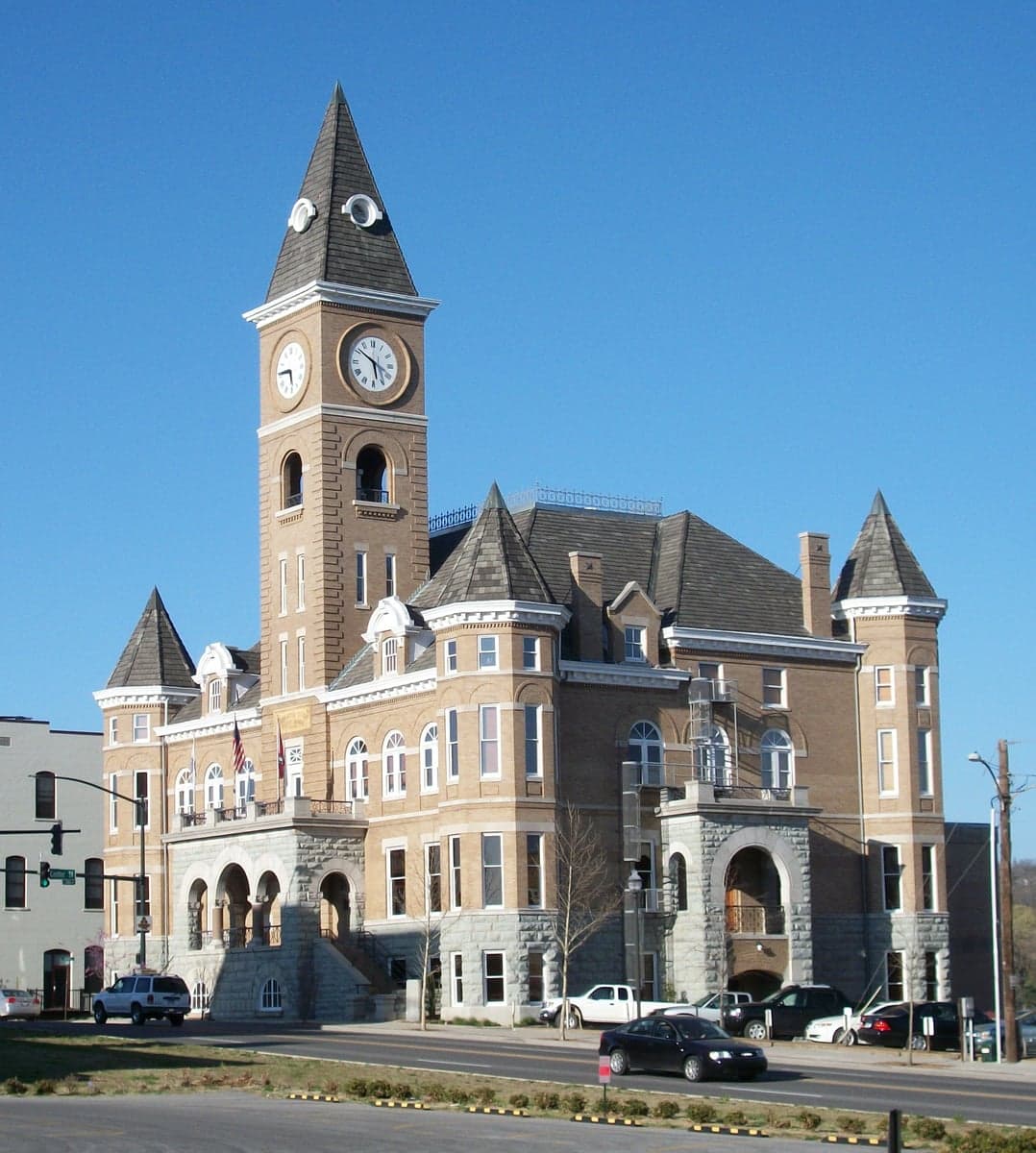
Photo: Wikipedia
Quality of Life in Washington County
A livable area that tracks near national norms for affordability, walkability, and neighborhood health.
What does Quality of Life tell us?
Quality of Life measures an area by evaluating factors like cost of living, nearby amenities, country club access, airport proximity, socioeconomic signals and neighborhood character. For large states, this is a general average — quality of life can vary dramatically between metro areas, suburbs, and rural communities within the same state.
What does this tell us?
Quality of Life measures an area by evaluating factors like cost of living, nearby amenities, country club access, airport proximity, socioeconomic signals and neighborhood character. For large states, this is a general average — quality of life can vary dramatically between metro areas, suburbs, and rural communities within the same state.
Cost of Living
10% below national average
87%
The Real Cost of Living in Washington County for 2026
| Tier | Individual | Family (4) |
|---|---|---|
| Survival | $16k | $30k |
| Comfortable | $52k | $76k |
| Luxury | $120k+ | $186k+ |
| Elite (Top 5%) | $160k+ | $247k+ |
Quality-of-Life Analysis
Washington County, Arkansas, offers a broad quality-of-life spectrum that ranges from the dense, amenity-rich college town of Fayetteville to quiet, unincorporated crossroads like Cincinnati and the rural stretches of the county's eastern and southern townships. The county draws a diverse mix of residents: University of Arkansas students and faculty, remote workers seeking a lower cost of living, retirees looking for small-town calm near a regional hub, and families priced out of Benton County to the north. With a cost-of-living index of 90 (10% below the national average), a median home value of $266,000, and a median rent of $1,005, the county provides a notably more affordable alternative to neighboring Washington County's pricier suburban corridor while still offering urban-level amenities in its largest population centers.
Largest town(s) & population centers
Fayetteville is the county's anchor and largest city, home to the University of Arkansas and roughly 95,000 residents. Daily life here centers on the university's cultural calendar—Razorback athletics, concerts at the Walton Arts Center, and a walkable downtown square lined with restaurants and independent shops. The city's extensive trail system, including the Razorback Greenway, connects neighborhoods to the square and to the regional trail network. Fayetteville's housing market is the county's most expensive, with median home values pushing above the county average, but it remains more affordable than comparable college towns like Boulder or Austin. Springdale, the second-largest city in the county (population ~85,000), has a distinctly different character: it is a major hub for the poultry and food-processing industries, anchored by Tyson Foods' headquarters. Springdale offers a more industrial, working-class feel with a large Marshallese and Hispanic population, and its housing stock is generally more affordable than Fayetteville's. Farmington (pop. ~8,000) and Greenland (pop. ~1,500) function as quieter, family-oriented bedroom communities just west of Fayetteville, offering newer subdivisions and easy access to the city's jobs and entertainment.
Smaller towns & rural pockets
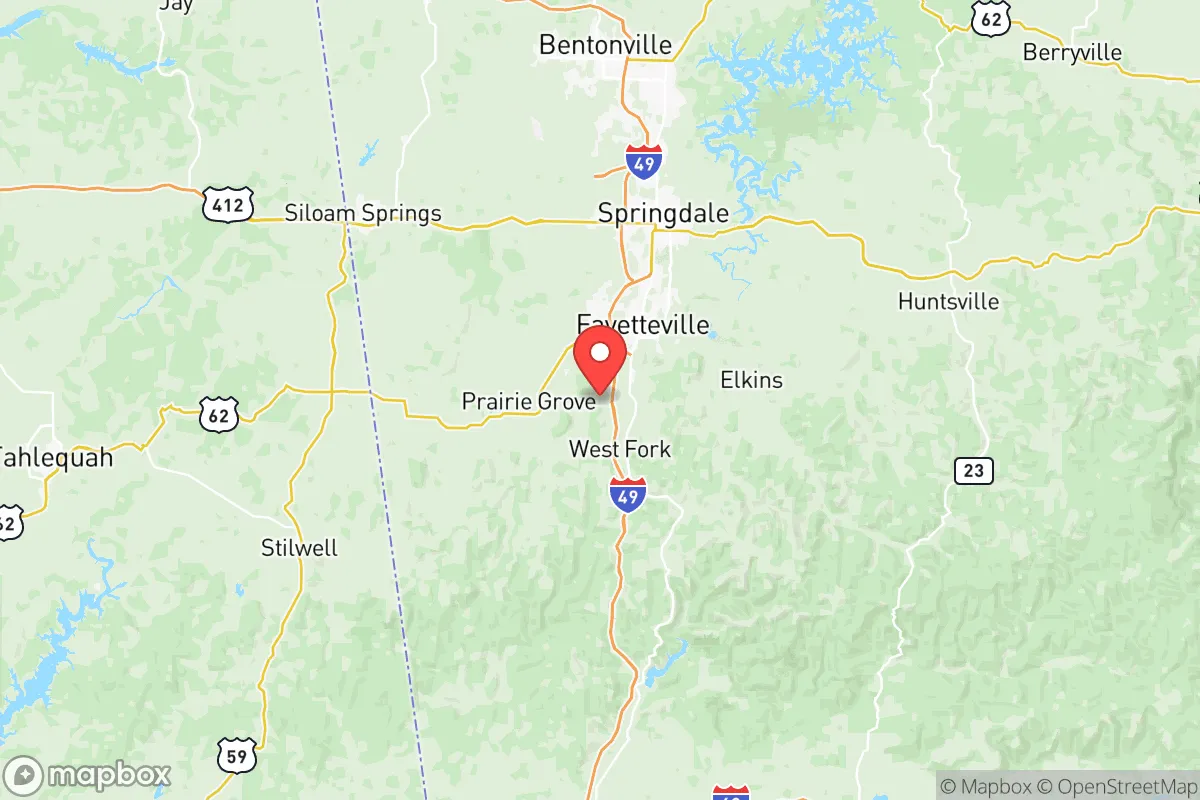
Beyond the main population centers, Washington County contains several distinct smaller communities. Prairie Grove (pop. ~5,000) sits south of Fayetteville and retains a historic downtown square with a Civil War battlefield park; it is a popular choice for families seeking a slower pace and lower home prices. Lincoln (pop. ~2,500), farther south near the county line, is a classic Ozark farm town with a strong sense of community and very low housing costs. Elkins (pop. ~3,500) lies northeast of Fayetteville along the White River and is growing as an exurban option for commuters. West Fork (pop. ~2,500) sits southwest of Fayetteville and offers a rural feel with a small downtown and access to the Boston Mountains. Unincorporated areas like Cincinnati (a tiny crossroads in the county's far east) and Strickler (in the south) are truly rural, with no commercial centers, limited services, and a landscape of pastureland and forest. These pockets offer the lowest housing prices in the county—often below $200,000—but require longer drives for groceries, healthcare, and employment.
Cost & lifestyle range
The cost-of-living spread across Washington County is significant. At the high end, Fayetteville's desirable neighborhoods near the university or the downtown square command median home values above $350,000, and rents for a one-bedroom apartment can exceed $1,200. At the low end, rural areas like Strickler or Cincinnati have median home values under $180,000, and rents in towns like Lincoln or West Fork can fall below $800 for a two-bedroom. The average commute across the county is 20.6 minutes, but that figure masks a wide range: a resident of central Fayetteville may commute 10 minutes to work, while someone living in rural southern Washington County may drive 35–40 minutes to a job in Springdale or Fayetteville. Amenities also vary sharply: Fayetteville and Springdale offer full-service hospitals, multiple grocery chains, and entertainment venues, while smaller towns like Prairie Grove or Elkins have only a basic grocery store and a pharmacy, requiring a drive for major shopping or specialized healthcare.
Washington County is best suited for people who want access to a vibrant college town and regional employment base but are willing to trade some convenience for lower housing costs. Remote workers and retirees often gravitate to the smaller towns for their quiet and affordability, while university-affiliated residents and young professionals cluster in Fayetteville. Families with school-age children should note that school quality varies: Fayetteville and Springdale public schools are well-regarded, while smaller districts like Lincoln and West Fork have fewer resources but stronger community ties. The county's overall affordability, combined with its mix of urban energy and rural calm, makes it a practical choice for a wide range of household types—provided they are clear about which trade-offs they are willing to make.

Crime in Washington County
Crime rates similar to the national median for U.S. locations.
Violent CrimeViolent Crime Analysis
Property CrimeProperty Crime Analysis
Crime Analysis
Washington County, Arkansas, presents a mixed safety profile where the overall crime rate exceeds both state and national averages, driven largely by property crime in its urban core. The county's violent crime rate of 523.1 incidents per 100,000 residents is significantly higher than the national average of roughly 380 per 100,000, while property crime stands at 1,634.7 per 100,000, also above the national benchmark. These figures, however, mask sharp contrasts between the county's primary city, Fayetteville, and its smaller, more rural communities like Springdale, Farmington, and Prairie Grove.
Crime in context
Washington County's violent crime rate is roughly 37% higher than the national average and sits well above the Arkansas state average of approximately 470 per 100,000. Property crime in the county is similarly elevated, running about 15% above the national rate. The bulk of these incidents are concentrated in Fayetteville, the county seat and home to the University of Arkansas, where the city's 2023 violent crime rate hit roughly 540 per 100,000. By contrast, smaller towns like Farmington (population ~7,500) and Prairie Grove (~5,000) report violent crime rates below 200 per 100,000, making them substantially safer options for families. Springdale, the county's second-largest city, falls between these extremes with a violent crime rate near 480 per 100,000, though its property crime rate is elevated due to retail theft and vehicle break-ins along the I-49 corridor.
What residents experience
For most residents, property crime is the most tangible safety concern. Vehicle burglaries, package theft, and bicycle theft are common complaints in Fayetteville's downtown and University Heights neighborhoods, while Springdale sees higher rates of residential burglary in areas near the industrial parks along Highway 412. Violent crime, while less frequent, is not evenly distributed: Fayetteville's violent incidents are heavily concentrated in the Dickson Street entertainment district and the Wedington Drive corridor, where late-night assaults and aggravated batteries occur. The county's judicial climate also warrants attention. Washington County falls within the 4th Judicial District, and while local prosecutors have historically taken a moderately tough stance on violent offenders, the broader trend in Northwest Arkansas has seen some progressive-leaning judges elected in recent cycles. This shift raises concerns about sentencing leniency for repeat property offenders and drug-related crimes, which can contribute to recidivism and keep more criminals on the street than in jurisdictions with stricter judicial philosophies.
Neighborhood-level variation
Safety in Washington County varies dramatically by location. The safest areas are the small towns on the county's periphery: Elkins, West Fork, and Greenland all report violent crime rates below 150 per 100,000, with property crime rates roughly half the county average. These communities benefit from smaller police forces with higher officer-to-resident ratios and less transient population. In Fayetteville, the Mount Sequoyah and Wilson Park neighborhoods are notably safer than the city average, while the area around the University of Arkansas campus sees elevated theft and minor assault numbers driven by student population density. Springdale's safest pockets include the neighborhoods east of Thompson Street and the wooded areas near the Shiloh Museum, while the corridor along Highway 412 west of I-49 sees the highest property crime volume. Prospective residents should prioritize homes in the county's smaller municipalities or in Fayetteville's established residential districts to minimize exposure to the county's elevated crime rates.
* Values derived from national, state, county, city and local statistics and may differ in a specific area. Last updated: 2026-07-03T20:03:58.000Z
Narrative content on this page is AI-generated and may contain mistakes. Verify any details that matter before acting on them.
ReloMaps may earn a commission from affiliate links at no extra cost to you.

