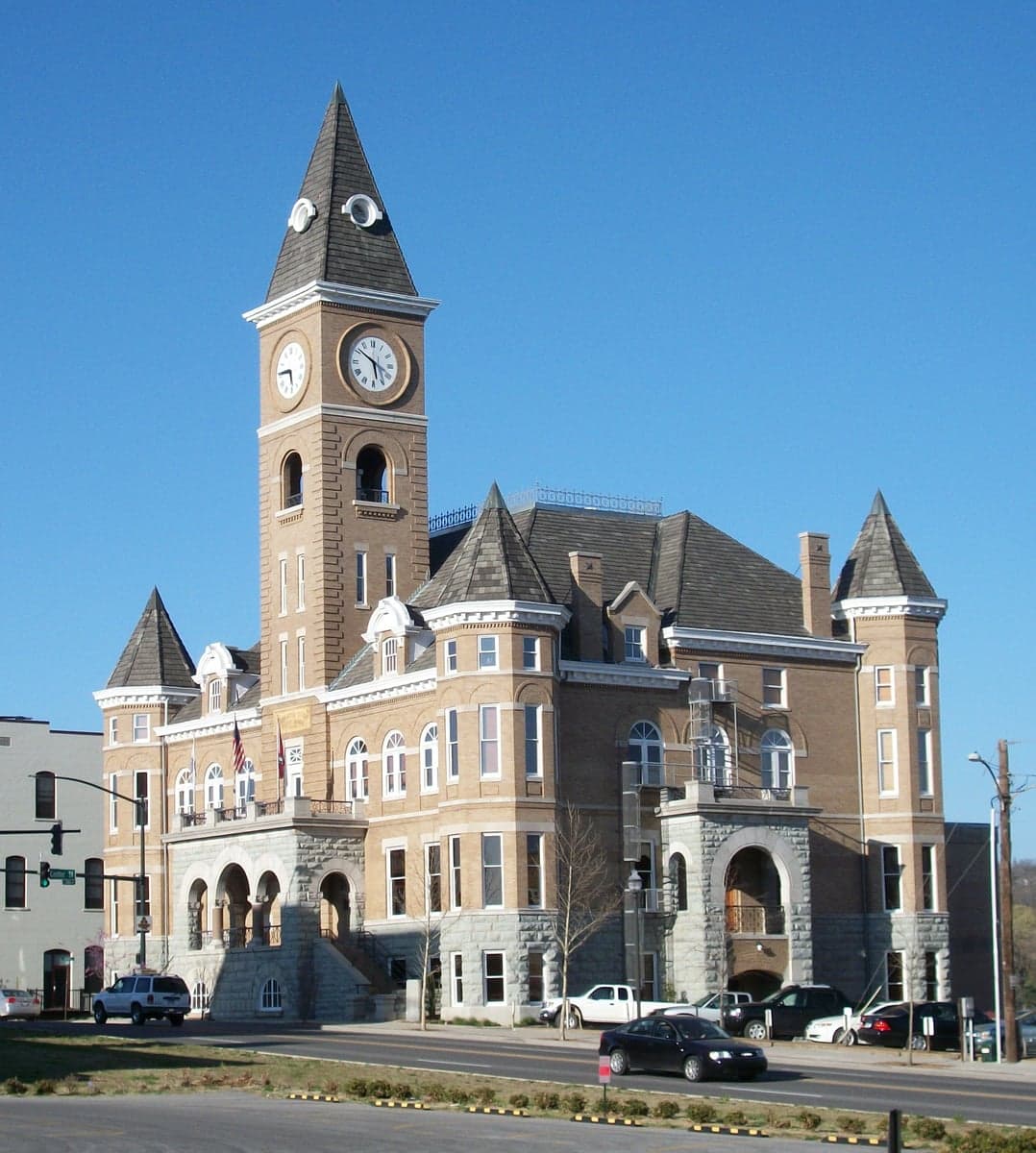
Photo: Wikipedia
Personal Sovereignty in Washington County
Viable for self-reliance. Generally workable, though some barriers may limit total independence.
What does Personal Sovereignty tell us?
Personal Sovereignty measures your capacity for self-reliance and independence with minimal government friction. Higher scores mean fewer barriers between you and the way you want to live... but it assumes you have the space you need and good neighbors.
What does this tell us?
Personal Sovereignty measures your capacity for self-reliance and independence with minimal government friction. Higher scores mean fewer barriers between you and the way you want to live... but it assumes you have the space you need and good neighbors.
State Policy
Energy independence: Importer (35% of energy produced in-state)
Personal Liberty
Homesteading

Personal Liberty Analysis
Washington County, Arkansas offers a notably high degree of personal sovereignty relative to much of the United States, driven by a combination of low state-level taxation, permissive gun laws, and a regulatory culture that generally favors individual autonomy over government oversight. The county, anchored by Fayetteville and Springdale, sits within a state that consistently ranks among the most freedom-oriented in the nation, yet local conditions vary significantly between the more urbanized, university-influenced areas and the rural, unincorporated stretches. For a relocation reader prioritizing self-reliance and minimal government interference, the county presents a mixed but largely favorable environment, with the strongest autonomy found outside the city limits of its largest municipalities.
Tax burden and regulatory posture in Washington County
Arkansas maintains a relatively light tax burden compared to the national average, and Washington County benefits from this state-level posture. There is no state property tax, though local property taxes apply; the county's effective property tax rate hovers around 0.6% of assessed value, which is below the national median. The state income tax is a flat 4.4% as of 2026, with a standard deduction that reduces the effective rate for most households. Sales tax in the county varies by municipality: Fayetteville levies a combined rate of approximately 9.25%, while unincorporated areas and smaller towns like Elkins or West Fork see rates closer to 8.5%. Regulatory posture is generally business-friendly at the state level, with no state-level minimum wage above the federal floor and a right-to-work law in effect. However, local zoning and permitting can be more restrictive within city limits. Fayetteville, for instance, has adopted more stringent building codes and environmental regulations than the county's rural areas, while Prairie Grove and Lincoln maintain a lighter touch, with fewer permitting hurdles for home construction and small-scale commercial activity.
Self-defense and gun law specifics in Northwest Arkansas
Arkansas is a constitutional carry state, meaning no permit is required to carry a concealed handgun for anyone legally allowed to possess a firearm. This applies uniformly across Washington County, including within Fayetteville and Springdale, though local ordinances may restrict carry in certain government buildings or public parks. The state preempts most local firearm regulations, preventing cities from enacting their own bans or stricter permitting requirements. Stand-your-ground laws are in effect, with no duty to retreat in any place where a person is lawfully present. Castle doctrine protections extend to occupied vehicles and workplaces. For those seeking firearms training, multiple ranges and private instruction options exist in Johnson and Farmington. The county sheriff's office in Fayetteville processes concealed carry permits for those who still want reciprocity with other states, though the permit is optional. The gun culture is deeply embedded in the region, with gun shows and private sales common, and no state-level universal background check requirement beyond federal law.
Self-reliance and homesteading viability across the county
Homesteading and off-grid living are feasible in Washington County, but viability depends heavily on location. Unincorporated areas and smaller towns like Elkins and Lincoln offer larger lot sizes with minimal zoning restrictions; five-acre parcels are common, and some properties exceed twenty acres. County regulations do not require building permits for agricultural structures, and there are no county-wide bans on rainwater collection or composting toilets. However, within the Fayetteville city limits, lot sizes are typically smaller (under a quarter-acre), and the city enforces building codes, requires permits for most construction, and restricts livestock. Springdale and Rogers (just over the county line) have similar urban restrictions. Off-grid solar is legal statewide, with net metering available but not mandated for all utilities. The county's water table is generally accessible for private wells in rural areas, and septic systems are permitted with standard health department approval. For those serious about self-reliance, the rural stretches near West Fork and Winslow offer the most freedom, with fewer neighbors and less regulatory oversight.
Personal liberties: parental rights, medical autonomy, speech, and property
Arkansas has enacted several laws that strengthen parental rights in education, including a Parents' Bill of Rights that grants parents access to curriculum materials and the ability to opt children out of certain instruction. School choice is robust, with charter schools, private schools, and homeschooling all legal and common; Washington County has a high density of private and religious schools, particularly in Fayetteville and Springdale. Medical autonomy is more limited: the state has a near-total abortion ban with narrow exceptions, and vaccine mandates are prohibited for public employees and students, though private employers may still require them. Free speech protections are strong, with no state-level hate speech laws that restrict expression beyond federal limits. Property rights are generally respected, with no statewide rent control and relatively low eminent domain usage. The county does not impose a transfer tax on real estate sales, and property taxes are capped at 1% of assessed value for homesteads under the state's Property Tax Relief Act. For those who value minimal interference in personal and family decisions, Washington County's legal framework is among the more accommodating in the South.
Overall, Washington County offers a high degree of personal sovereignty that compares favorably to most urbanized areas in the United States, though it is not as libertarian as rural counties in Idaho or Montana. The strongest autonomy is found in the unincorporated areas and smaller towns like Elkins, Lincoln, and West Fork, where zoning is minimal, taxes are lower, and neighbors are farther apart. Fayetteville and Springdale, while still freedom-oriented by national standards, impose more restrictions on housing, business, and daily life. For a conservative-leaning individual or family seeking a balance of economic opportunity and personal independence, Washington County represents a solid choice, with the caveat that the specific municipality or unincorporated area selected will significantly shape the actual experience of sovereignty.

* Values derived from national, state, county, city and local statistics and may differ in a specific area. Last updated: 2026-07-03T20:03:58.000Z
Narrative content on this page is AI-generated and may contain mistakes. Verify any details that matter before acting on them.
ReloMaps may earn a commission from affiliate links at no extra cost to you.

