Photo: Wikipedia
Political ClimatePolitical Climate in Washington County
Showing district-level results — no local-only data available.
Local Political AnalysisPolitical Analysis of Washington County
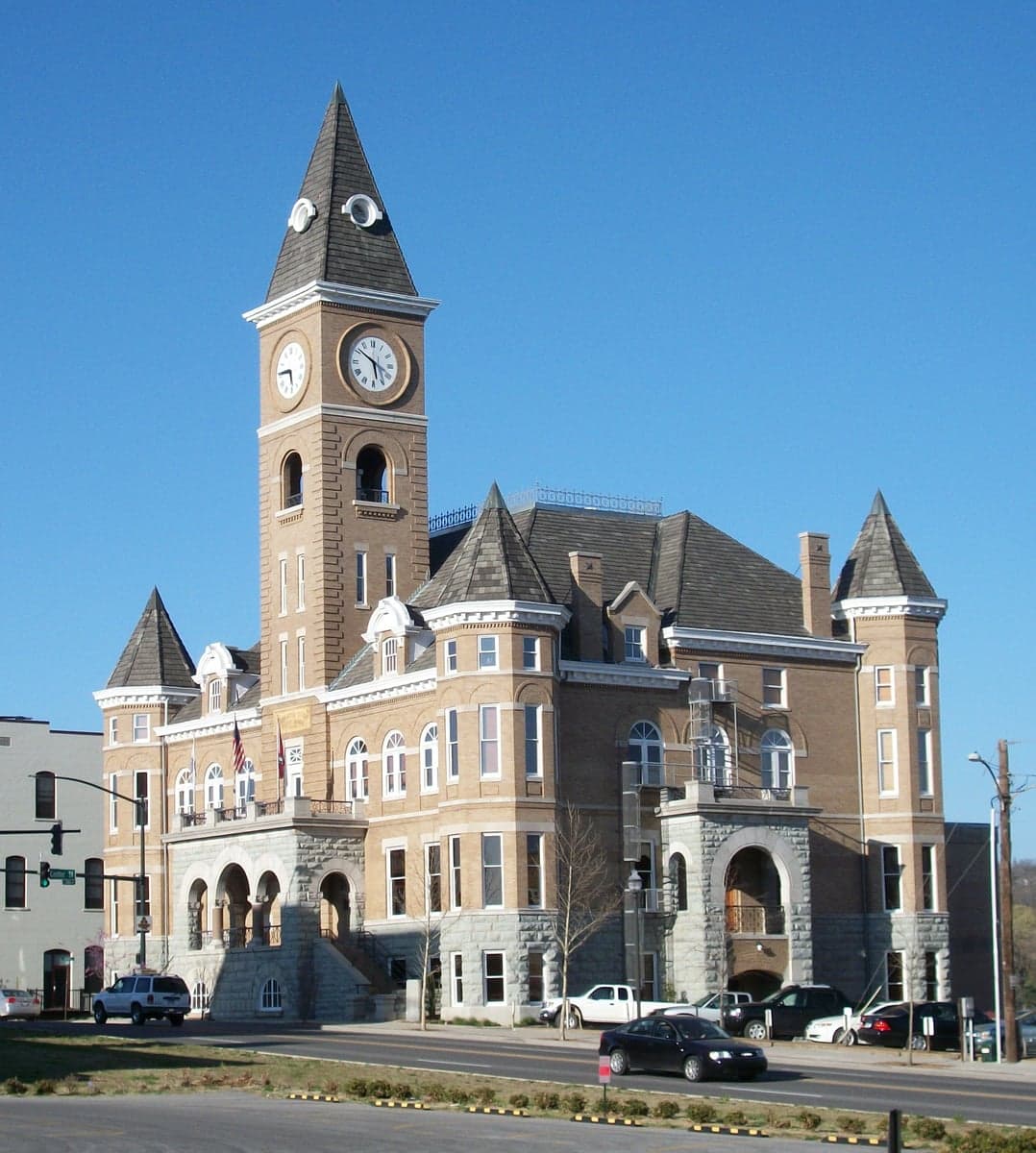
Washington County, Arkansas, is a political outlier in the Natural State, leaning Republican but with a much more competitive and dynamic character than the rest of Arkansas. The county holds a Cook Partisan Voting Index (PVI) of R+13, which is notably less conservative than the state’s overall R+16 rating. This difference is driven almost entirely by the explosive growth of Fayetteville and Springdale, which have pulled the county’s politics toward the center and, in some precincts, into the blue column. The long-term trajectory points toward a continued purple shift, as the region attracts a younger, more educated, and more diverse population than the rest of the state.
How it compares
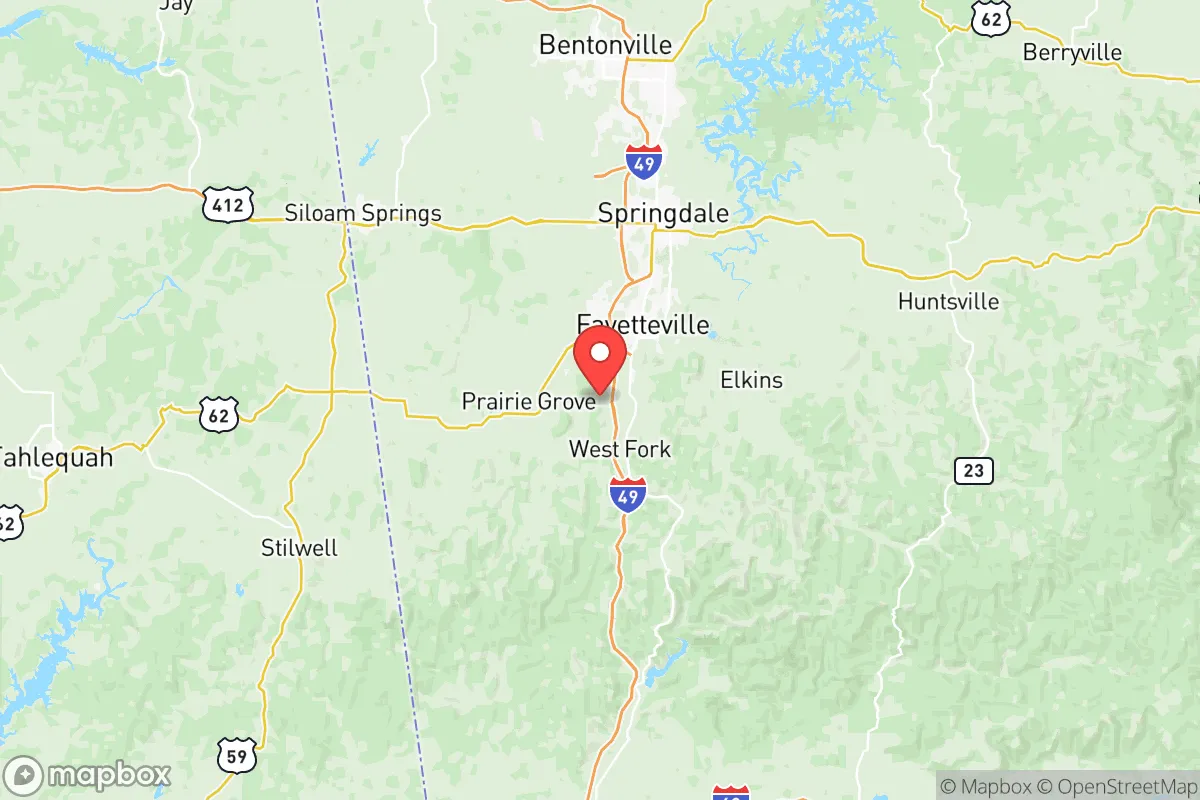
While the rest of Arkansas has trended steadily redder over the past decade, Washington County has moved in the opposite direction. The state’s R+16 PVI reflects deep dominance by the GOP in most rural and suburban areas, but Washington County’s R+13 tells a story of a genuine two-party fight in its urban core. Fayetteville, home to the University of Arkansas, consistently votes blue in presidential and statewide races, with precincts near the campus and downtown often delivering margins of 60-70% for Democratic candidates. Springdale, the county’s largest city, is more of a bellwether, with working-class and Latino-heavy precincts leaning Democratic while the newer subdivisions on the west side vote Republican. In contrast, the smaller towns outside the I-49 corridor—like Prairie Grove, Lincoln, and West Fork—vote heavily red, often by 70% or more. This creates a stark urban-rural split within the county that mirrors national trends but is unusual for Arkansas, where even most cities are reliably Republican.
What this means for residents
For conservative residents, Washington County remains a comfortable place to live politically, with Republicans holding most county-level offices and a strong presence in the state legislature. The county GOP is well-organized, and conservative voters in places like Elm Springs or Tontitown can expect their values to be reflected in local policy on taxes, gun rights, and school choice. For liberal residents, the picture is more nuanced but increasingly hopeful. Fayetteville functions as a progressive island, with a city council that has passed nondiscrimination ordinances and a community that supports environmental initiatives and public transit. However, statewide policies—such as restrictions on abortion and LGBTQ+ rights—still apply, and Democratic voters in the rural parts of the county can feel isolated. The practical reality is that your political experience in Washington County depends heavily on which city you live in, with Fayetteville offering a blue haven and the rest of the county remaining solidly red.
Cultural and policy distinctions
The most notable cultural distinction in Washington County is the influence of the Marshallese and Latino communities, particularly in Springdale, which has created a more diverse and politically engaged population than anywhere else in Arkansas. This diversity has pushed local conversations on immigration, language access, and economic equity to the forefront in ways that are rare in the rest of the state. Additionally, the University of Arkansas acts as a powerful liberalizing force, attracting faculty and students from across the country who bring progressive views on climate, social justice, and education funding. Policy-wise, the county has seen heated debates over school board elections, with Fayetteville Public Schools often at the center of fights over curriculum and library books that mirror national culture wars. Meanwhile, the county’s rapid growth has made infrastructure, housing affordability, and transportation the dominant local issues, cutting across party lines. For anyone moving to the area, the key takeaway is that Washington County offers a political environment that is far more varied and interesting than the rest of Arkansas, with a future that looks increasingly competitive and diverse.

State Political ClimatePolitical Climate in Arkansas
State Political AnalysisPolitical Environment in the State
Arkansas is a deeply red state with a Cook PVI of R+16, meaning it consistently votes about 16 points more Republican than the national average in presidential elections. Over the past 20 years, the state has shifted dramatically from a competitive, Democrat-leaning Southern state to a solidly Republican stronghold, driven by the realignment of rural white voters and the collapse of the old "Blue Dog" Democratic coalition that once dominated local offices. Today, Republicans hold every statewide office, supermajorities in both chambers of the legislature, and all four U.S. House seats, making it one of the most reliably conservative states in the country for a relocator to consider.
Urban vs. rural divide
The political map of Arkansas breaks down along a clear urban-rural line, but with a twist: even the state's largest city, Little Rock, is not a deep-blue stronghold. Pulaski County, home to Little Rock and its suburbs, voted for Joe Biden in 2020, but only by about 10 points — a far cry from the 30-40 point margins seen in cities like Atlanta or Dallas. The real Democratic base is concentrated in the Delta region along the Mississippi River, in towns like Pine Bluff and West Memphis, where older Black populations still vote reliably Democratic. Meanwhile, the fast-growing northwest corner — Fayetteville, Bentonville, and Springdale — has become a fascinating political battleground. Washington and Benton Counties were historically Republican but are now trending purple as transplants from California and the Midwest move in for jobs at Walmart, Tyson Foods, and JB Hunt. Benton County still votes Republican, but by shrinking margins, while Fayetteville itself has become a liberal island in a red sea, with the University of Arkansas driving younger, more progressive voters. The rural counties in the Ozarks and the southern timberlands — places like Harrison and El Dorado — are among the most conservative in the nation, often voting 80%+ Republican.
Policy environment
Arkansas's policy environment is aggressively conservative across the board. The state has a flat income tax that was recently cut from 4.9% to 4.4%, with a path toward 3.9% by 2027, and no state-level property tax on vehicles. Sales tax is high, averaging over 9.5% in many cities when local options are included, which hits lower-income residents hardest. The state is a "right-to-work" state with weak labor unions and minimal business regulation. Education policy has been a flashpoint: the LEARNS Act, passed in 2023, created a universal school voucher program, banned "critical race theory" and "indoctrination" in classrooms, and restricted transgender students' participation in sports and bathroom access. Healthcare is limited — Arkansas did not expand Medicaid under the ACA in the traditional way, instead using a "private option" model, and the state has some of the strictest abortion laws in the country, with a near-total ban in effect since the 2022 Dobbs decision. Election laws have tightened: voter ID is required, early voting is available but limited compared to other states, and absentee ballot drop boxes were banned in 2021.
Recent policy direction
Over the past three years, Arkansas has moved decisively to the right on nearly every front a relocator might care about. On gun rights, the state became a "constitutional carry" state in 2021, allowing permitless carry of handguns for anyone 21 or older, and in 2023 it passed a law prohibiting local police from enforcing federal gun laws they deem unconstitutional — a form of state-level nullification. On parental and education rights, the LEARNS Act is the marquee achievement: it created the largest school voucher program in the South, allows parents to sue school districts over instructional materials, and requires schools to post all curricula online. On speech and privacy, the state passed a law in 2023 requiring social media platforms to verify the ages of users and obtain parental consent for minors, and it banned TikTok on government devices. On medical and bodily autonomy, the Arkansas Abortion Ban Act of 2023 prohibits nearly all abortions with no exceptions for rape or incest, only to save the mother's life. On property rights, the state has strong eminent domain protections and no statewide zoning mandates, but local control varies widely. On voting and ballot access, the 2021 Election Integrity Act added stricter voter ID requirements, shortened the absentee ballot request window, and banned private funding of election administration. The overall direction is clear: Arkansas is doubling down on conservative governance, with no signs of moderation.
Civil unrest & political movements
Arkansas has not seen the kind of large-scale civil unrest seen in larger states, but there have been notable flashpoints. In 2020, Little Rock saw several nights of protests following George Floyd's murder, with some property damage and arrests, but the scale was modest compared to Portland or Seattle. The state has a small but active militia movement, particularly in the Ozarks around Harrison, which has a history of white nationalist activity — the city was once a Klan stronghold and still hosts a small but visible far-right presence. On the left, the Arkansas Public Policy Panel and local Indivisible chapters organize around voting rights and healthcare access, but they have limited influence. Immigration politics are less heated than in border states, but in 2023 the legislature passed a bill requiring law enforcement to cooperate with federal immigration authorities and banning "sanctuary city" policies — though no Arkansas city had adopted such policies. Election integrity controversies have been minimal; the 2020 and 2022 elections were conducted without major incidents, and the state's Republican Secretary of State has been praised for election administration by both parties. A new resident would likely notice more political polarization in the northwest corridor, where transplants bring different views, than in the rest of the state, where conservative consensus is the norm.
Projection
Over the next 5-10 years, Arkansas is likely to remain solidly Republican, but the nature of that conservatism may evolve. The northwest corridor — Bentonville, Fayetteville, Rogers — is growing fast, attracting younger, more educated, and slightly more moderate residents. This area could become a political battleground within the state, similar to how the Texas suburbs have shifted. However, the rural counties are losing population, which means the overall state map may not change dramatically. The Democratic Party in Arkansas is in a deep hole, with no obvious path to statewide competitiveness in the near term. The biggest wildcard is national migration patterns: if the northwest continues to boom with corporate relocations, it could pull the state's politics slightly toward the center on economic issues while remaining culturally conservative. For a relocator, the key takeaway is that Arkansas will almost certainly be a red state for the foreseeable future, but the flavor of that red — populist, libertarian, or establishment — is still being contested.
For a new resident, the bottom line is straightforward: if you are conservative, you will find Arkansas's political climate welcoming and aligned with your values, with low taxes, strong gun rights, school choice, and limited government regulation. If you are liberal, you will find yourself in a clear minority, especially outside of Little Rock and Fayetteville, and you should expect policy outcomes that reflect the majority's views on abortion, education, and social issues. Either way, the state's political trajectory is stable and predictable — Arkansas is not a swing state and is unlikely to become one. The practical takeaway is to choose your community carefully: the political culture of Bentonville is very different from Pine Bluff, and your daily experience will vary enormously depending on where you land.
* Values derived from national, state, county, city and local statistics and may differ in a specific area. Last updated: 2026-07-03T20:03:58.000Z
Narrative content on this page is AI-generated and may contain mistakes. Verify any details that matter before acting on them.
ReloMaps may earn a commission from affiliate links at no extra cost to you.

