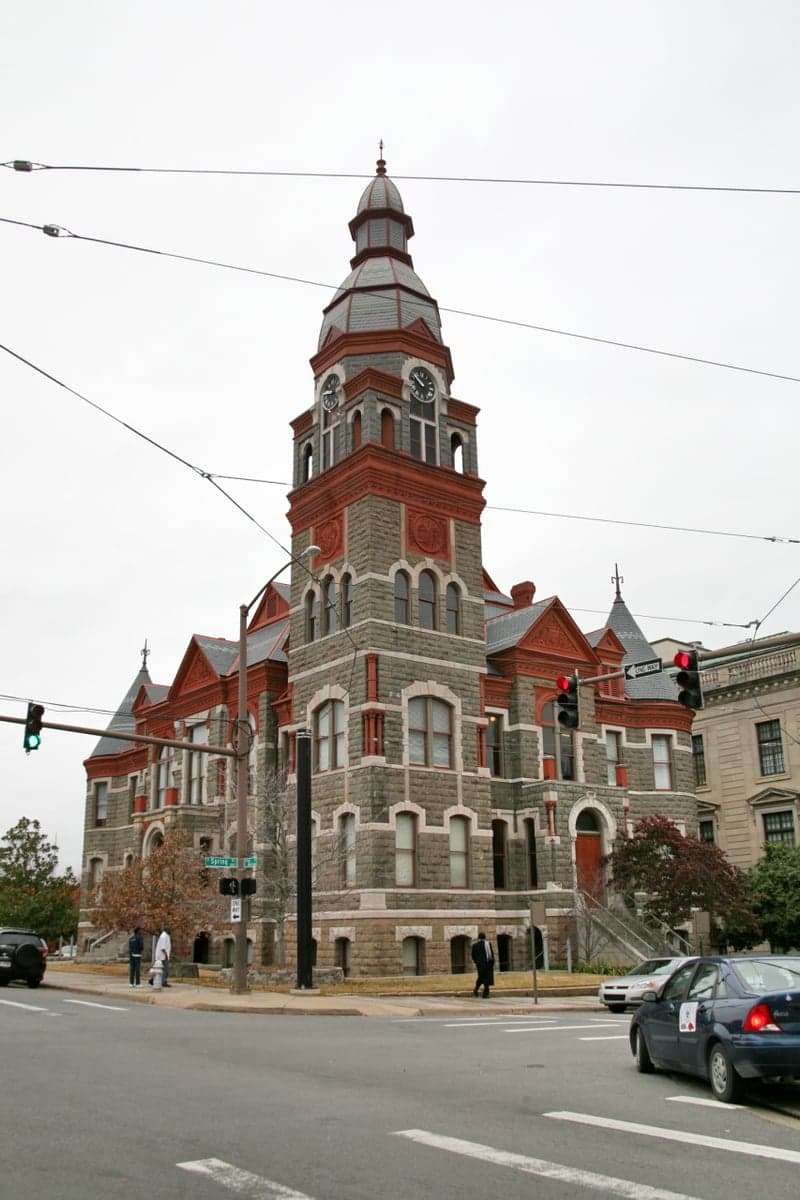
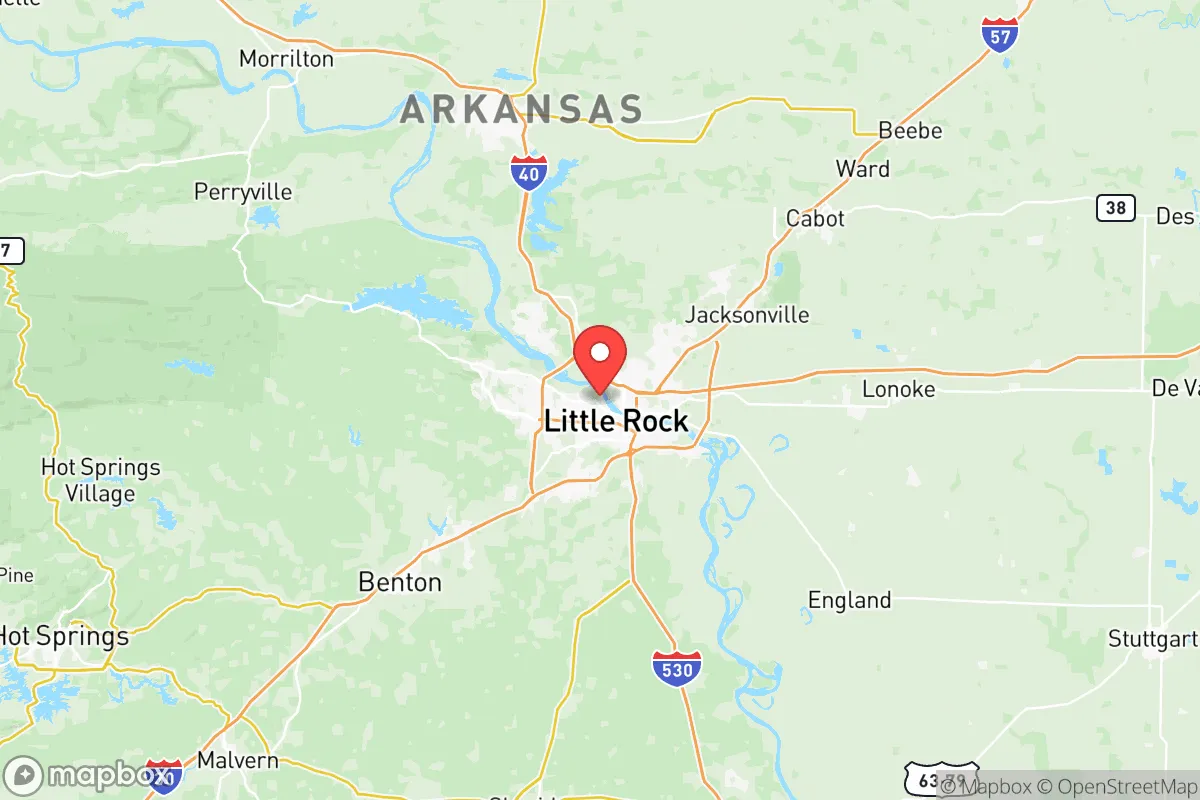
Photo: Wikipedia
Political ClimatePolitical Climate in Pulaski County
Showing district-level results — no local-only data available.
Local Political AnalysisPolitical Analysis of Pulaski County
Pulaski County has a Cook Partisan Voting Index of R+8, making it meaningfully less Republican than Arkansas as a whole, which sits at R+16. That spread isn't just a number on a page; it reflects a county that's been drifting leftward over the past couple of decades while the rest of the state has moved decisively right. If you've lived here long enough, you've watched the Little Rock metro become a reliable blue foothold in a deeply red region, especially in precincts around the Heights, Hillcrest, and downtown. Meanwhile, the outlying towns tell a different story.
How it compares
The R+8 for Pulaski County means it votes about eight points more Republican than the national average, but that's still a far cry from the state's R+16. In practice, that gap shows up in election returns: in 2024, Pulaski County went for Trump by a much narrower margin than the rest of Arkansas — roughly a 52–46 split countywide, compared to a 64–34 blowout statewide. Within the county, the political geography is stark. Little Rock's urban core, particularly wards around the River Market, Hillcrest, and the Heights, consistently vote 70–80% Democratic. Maumelle and Sherwood are classic swing territory, often tilting just a few points red. On the other end, Jacksonville and Wrightsville lean heavily Republican, frequently by 20–30 points. That internal divide means the county's overall R+8 is a compromise between a blue city and red suburbs and exurbs.
What this means for residents
For conservative residents, Pulaski County isn't a hostile environment — you'll find plenty of like-minded neighbors in Jacksonville, Sherwood, and even parts of West Little Rock around Chenal Valley. The county government and school boards tend to be more moderate than the state legislature, but Republican voters still hold seats and influence. For liberal residents, the county offers a genuine political oasis: you can live in Little Rock proper and rarely feel outnumbered, with a city council that's reliably blue and a local culture that embraces progressive policies on issues like LGBTQ+ rights and urban development. The practical effect is that Pulaski County often votes against statewide ballot measures that pass everywhere else, like the 2024 abortion rights proposal that failed statewide but won in the county. That split creates a sense of two Arkansases — one inside the I-430 loop, and one beyond it.
On the cultural and policy front, Pulaski County stands out for its urban amenities — a vibrant food scene, a major medical and tech hub, and the state's only significant public transit system (Rock Region Metro). The county's leadership has pursued initiatives like regional park expansions and economic incentives for downtown renewal that you won't see in more rural counties. But the trade-off is real: property taxes in Little Rock and Maumelle are higher than in surrounding counties like Saline or Faulkner, and the school district faces perennial funding challenges despite strong local backing. If you're looking for a place where your vote actually influences state-level outcomes, Pulaski County is the only spot in Arkansas that reliably bucks the statewide trend — which is exactly why both parties focus their ground game here every election cycle.

State Political ClimatePolitical Climate in Arkansas
State Political AnalysisPolitical Environment in the State
Arkansas leans solidly Republican with a Cook PVI of R+16, making it one of the most reliably red states in the South. But it wasn’t always this way—back in the 1990s, Arkansans elected Bill Clinton governor and then sent a moderate Democratic delegation to Congress; the state’s shift toward the GOP has been steady but not uniform, accelerating after 2010 as rural areas hardened and the old Dixiecrat coalition faded. Today, Republicans hold every statewide office, both U.S. Senate seats, and supermajorities in the legislature, while registered Republicans outnumber Democrats about two to one. For a relocator, that means conservative policy is baked in, but the actual experience depends heavily on whether you land in the Ozarks, the Delta, or the booming northwest corner.
Urban vs. rural divide
The political map breaks cleanly: deep red everywhere except a handful of urban pockets. Pulaski County (Little Rock) is the main Democratic stronghold, delivering roughly 60% for Biden in 2020, but the city’s influence is diluted by a shrinking population and Republican suburbs like Maumelle and Conway. The real political engine is Northwest Arkansas—Bentonville, Rogers, Fayetteville, and Springdale—which votes more moderately thanks to the corporate and libertarian-leaning influence of Walmart and Tyson Foods. Fayetteville has gone Democratic in recent presidential elections, while Bentonville and Rogers lean right but less intensely than rural counties. Everywhere else—places like Jonesboro in the northeast, Texarkana in the southwest, and Mountain Home in the north—runs deeply Republican. The rural-urban divide here is as sharp as anywhere in the country, but the urban centers are small enough that the statewide total is never seriously contested.
Policy environment
The policy climate is shaped by low-tax, limited-government conservatism. Arkansas has a flat personal income tax of 4.4% as of 2025, with further reductions scheduled, and the state sales tax base is broad but local rates push it to around 9% in some cities. Property taxes are among the lowest nationally, capped by the state constitution. The state did not expand traditional Medicaid but created a “private option” that uses federal dollars to buy private plans for the working poor—a pragmatic hybrid that survives because it's popular in rural hospitals. Education policy took a sharp turn in 2023 with the LEARNS Act, which created a universal school voucher program, eliminated teacher tenure, and allowed hiring of uncertified teachers. Election laws require photo ID, limit absentee voting, and ban ballot harvesting. On social issues, abortion is banned with no exceptions for rape or incest (only medical emergency), and medical marijuana is legal but heavily regulated—no dispensaries can market themselves, and home cultivation is illegal.
Recent policy direction
The last five years have pushed Arkansas further toward a specific vision of liberty that prioritizes gun rights, parental authority, and tax cuts over privacy or healthcare access. Act 777 of 2021 allowed permitless carry of concealed handguns; in 2023, the state passed one of the nation’s strictest bans on gender-affirming care for minors, overriding a gubernatorial veto. The LEARNS Act in 2023 redirected public school funding into private school choice, and a 2024 law banned TikTok on state devices and restricted Chinese land ownership, playing to national security concerns. On property rights, a 2023 bill banned foreign adversaries from buying agricultural land. Meanwhile, there has been no significant privacy or surveillance legislation—Arkansas police may use facial recognition and automatic license plate readers without warrants, and there is no state-level data privacy law. Ballot access remains restrictive: signature requirements for third-party candidates are high, and the legislature has made it harder to put initiatives on the ballot. For a relocator weighing personal freedoms, Arkansas offers broad autonomy in carrying a weapon and spending your money, but very little leeway on bodily autonomy or marijuana use beyond the strict medical program.
Civil unrest & political movements
Organized political conflict is muted compared to coastal states, but flashpoints exist. Abortion-rights rallies have drawn hundreds in Little Rock and Fayetteville, especially after the Dobbs decision, and there have been tense counter-protests outside Planned Parenthood clinics. The Black Lives Matter protests in Little Rock in 2020 were largely peaceful but saw some vandalism, and the state Capitol became a recurring site for both left-wing and right-wing gatherings—including a 2021 rally where demonstrators stormed the building briefly (though less intense than at other capitols). Immigration politics are subdued because the immigrant population remains small, but local officials in Springdale and Rogers have debated whether to cooperate with ICE after a 2019 law required compliance. Election integrity remains a live issue among grassroots conservatives, though no major controversies have shaken the state. For a new resident, the most visible political movements are the solidly Republican county party events and the occasional protest on the Capitol lawn; it’s not a state where you'll find regular street-level agitation.
Projection
Over the next decade, Arkansas will stay Republican but the nature of that majority is shifting. Northwest Arkansas is growing fast, attracting younger, college-educated workers from outside the South who tend to be more moderate—especially on social issues and marijuana. If that trend continues, the state could see a slight softening on the margins: medical marijuana might expand, and the school voucher program may face pushback from new suburban voters who like their public schools. Meanwhile, rural counties are losing population, which means their political weight diminishes slowly. The wildcard is in-migration from blue states driving up housing costs and creating resentment. Expect the next decade to bring more intraparty fights between the business-friendly Chamber wing and the populist culture-war faction, but no serious chance of a Democratic statewide win. The 2026 governor’s race will be a test of whether that tension breaks into the open.
For anyone moving to Arkansas, the practical takeaway is straightforward: if you lean conservative, you’ll feel at home in most communities, and your tax burden will be low. If you lean liberal, you can find a comfortable enclave in Fayetteville or the Heights neighborhood of Little Rock, but state policy will feel restrictive on abortion, LGBTQ rights, and drug laws. Either way, Arkansas is a place where politics stays local—your county judge, sheriff, and school board matter more than anything coming out of the Capitol. That’s the real insider tip: look at the politics of your specific city and county, because the state label only tells part of the story.
* Values derived from national, state, county, city and local statistics and may differ in a specific area. Last updated: 2026-06-16T02:00:33.000Z
Narrative content on this page is AI-generated and may contain mistakes. Verify any details that matter before acting on them.
ReloMaps may earn a commission from affiliate links at no extra cost to you.

