Photo: Wikipedia
Demographics of Pulaski County
Affluence Level in Pulaski County
A middle-class area roughly in line with national averages across income, home values, education, and employment.
People of Pulaski County
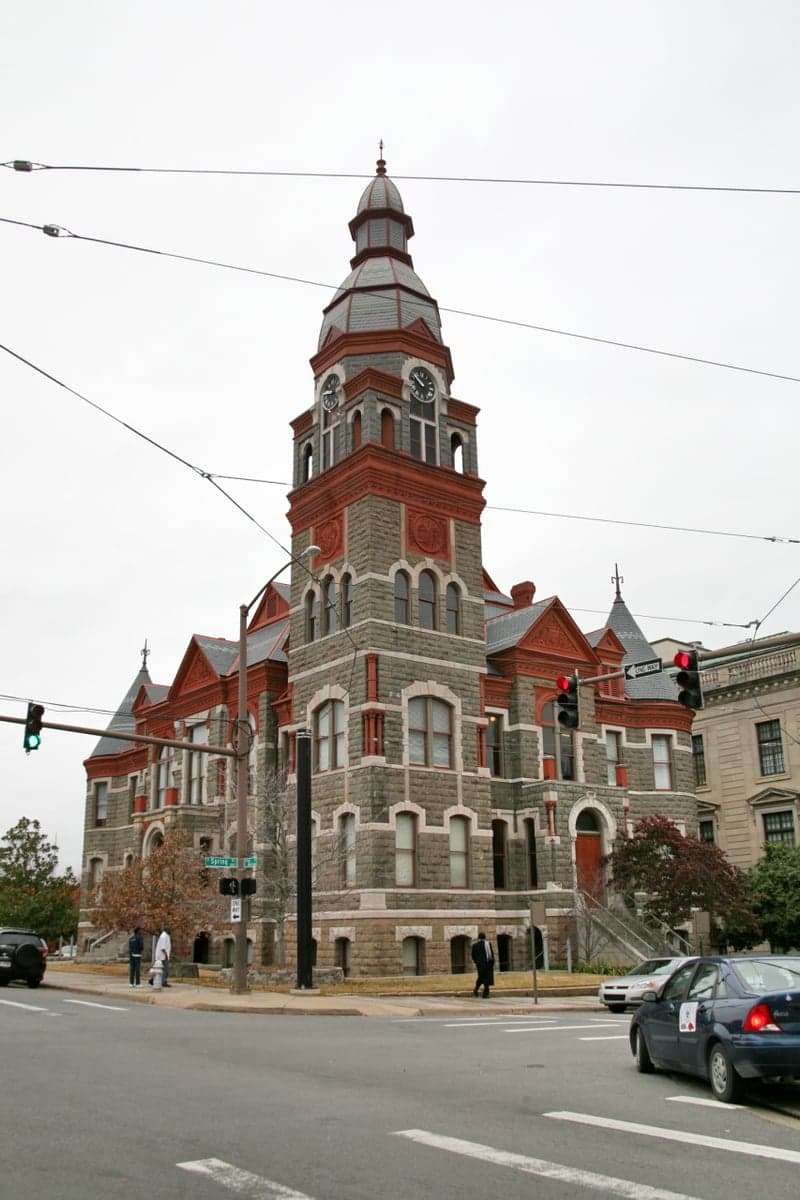
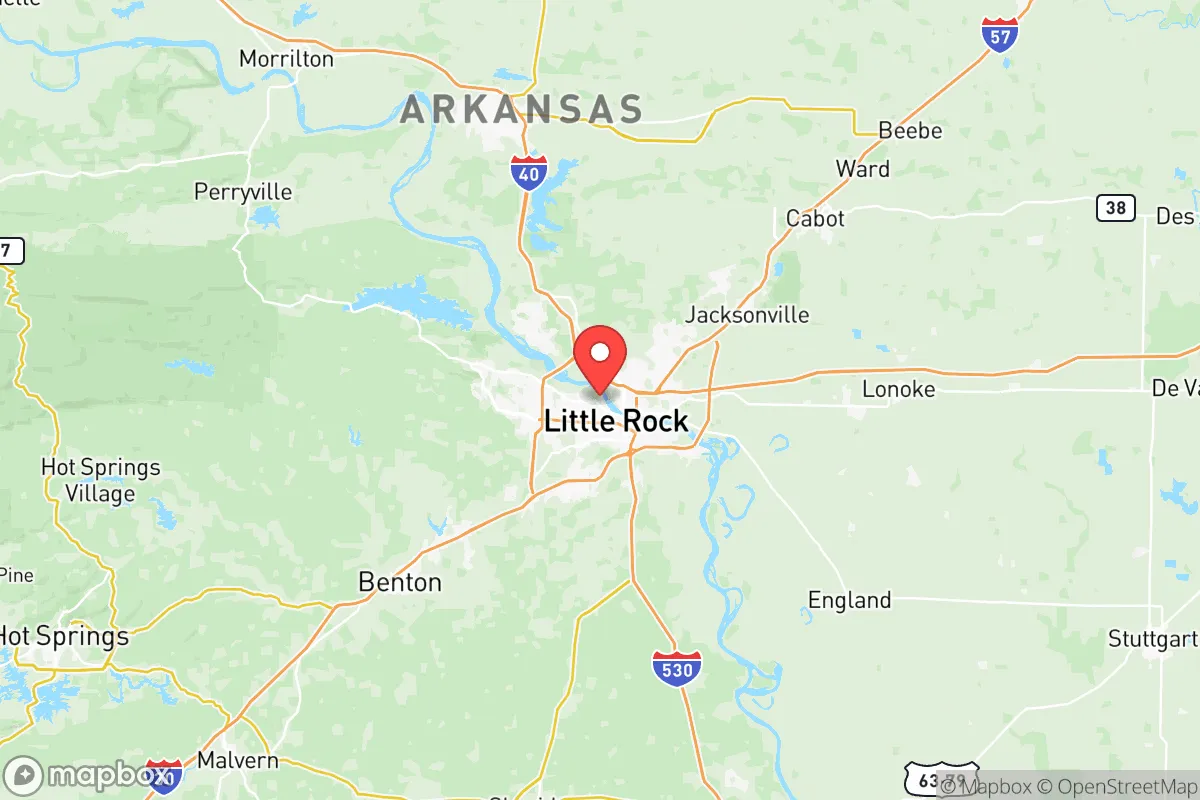
Pulaski County, Arkansas, is home to 398,949 residents, making it the state's most populous county and the economic and political heart of Arkansas. Its population is notably diverse for the mid-South, with a demographic profile of 48.7% White, 36.7% Black, 8.2% Hispanic, and 1.3% East/Southeast Asian, alongside a small but growing Indian subcontinent community at 0.9%. The county's identity is a blend of Deep South history, post-industrial transformation, and Sun Belt suburban expansion, anchored by the state capital of Little Rock and its surrounding cities like North Little Rock, Sherwood, Jacksonville, and Maumelle.
Settlement & growth (pre-1960)
Before American settlement, the area now known as Pulaski County was inhabited by the Quapaw people, who controlled the confluence of the Arkansas and Mississippi rivers. French explorers and trappers passed through in the 17th and 18th centuries, but permanent European settlement did not begin until after the Louisiana Purchase in 1803. The county was formally established in 1818, named after Polish Revolutionary War hero Casimir Pulaski, and the city of Little Rock was founded as the territorial capital in 1821.
The first major wave of American settlers were Scots-Irish and English migrants moving west from Tennessee, Kentucky, and the Carolinas, drawn by fertile river bottomland and the promise of cotton cultivation. These early arrivals established plantations along the Arkansas River, and by the 1830s, enslaved African Americans made up a significant portion of the county's labor force. The city of Little Rock grew as a river port and administrative center, while smaller settlements like Jacksonville (founded 1870) emerged as railroad towns.
After the Civil War and Reconstruction, Pulaski County's Black population swelled as freedmen moved to Little Rock and North Little Rock for industrial jobs and relative safety. The early 20th century brought a second wave: German and Irish immigrants arrived to work on railroads and in the timber industry, settling in neighborhoods like Little Rock's Argenta District (now part of North Little Rock) and the Quapaw Quarter. The Great Migration (1910–1970) saw tens of thousands of Black Arkansans move from rural Delta plantations to Little Rock's Dunbar and Granite Mountain neighborhoods, seeking factory work and educational opportunities at Philander Smith College and Arkansas Baptist College.
World War II transformed the county's economy. The establishment of the Little Rock Air Force Base in 1955 in Jacksonville brought a wave of military families and civilian contractors, many of whom stayed after service. The post-war boom also spurred suburban development in Sherwood (incorporated 1948) and Maumelle (planned community from the 1960s), attracting white families leaving central Little Rock. By 1960, Pulaski County was 70% White and 30% Black, with a tiny foreign-born population.
Modern era (post-1965)
The 1965 Hart-Cellar Act had a modest but noticeable effect on Pulaski County. Unlike coastal gateways, the county did not see mass immigration, but it did attract specific refugee and professional flows. The fall of Saigon in 1975 brought a small wave of Vietnamese refugees, who settled primarily in Little Rock's Southwest City neighborhood and parts of North Little Rock, establishing the area's first East/Southeast Asian community. Today, the 1.3% Asian population includes Vietnamese, Filipino, and Chinese families, many of whom work in healthcare and higher education.
The most significant post-1965 demographic shift, however, was domestic: the Second Great Migration of Black Americans from the rural South to urban centers continued through the 1970s, but Pulaski County also experienced white flight to suburbs. Between 1970 and 1990, Little Rock's population became majority Black, while the county's overall White share dropped from 70% to 55%. New suburban cities like Maumelle (planned in the 1960s, boomed in the 1980s) and Sherwood absorbed much of the white middle-class exodus, while Jacksonville remained a working-class, racially mixed community anchored by the air base.
The Hispanic population began growing in the 1990s, driven by construction, poultry processing, and service industry jobs. Mexican and Central American immigrants settled in Little Rock's Southwest Little Rock corridor and in North Little Rock, where a cluster of tiendas and churches now serves the 8.2% Hispanic community. The Indian subcontinent population (0.9%) is a more recent arrival, concentrated among professionals in medicine and technology, with families living in West Little Rock and Maumelle.
Since 2000, the county has seen a modest reversal of white flight, with young professionals and empty-nesters moving back to Little Rock's historic neighborhoods like the Heights and Hillcrest. The foreign-born share remains low at 3.7%, but the county is more ethnically diverse than at any point in its history.
The future
Pulaski County is projected to become slightly more diverse over the next 10–20 years, but the pace is slow compared to the Sun Belt's fastest-growing metros. The White population share is expected to continue declining gradually, while the Hispanic and Asian shares will grow modestly through both immigration and higher birth rates. The Black population share is likely to remain stable, as outmigration to other Southern metros is offset by natural increase.
New immigrant communities are dispersing rather than forming dense ethnic enclaves. Hispanic families are moving into suburban Jacksonville and Sherwood, while East/Southeast Asian professionals are settling in West Little Rock and Maumelle. The Indian subcontinent community, though small, is growing through the tech and medical sectors and is likely to concentrate in the same affluent western suburbs.
The county's cultural identity is evolving from a biracial Black-White dynamic to a multiethnic one, though the shift is gradual. The biggest demographic wildcard is domestic migration: if Arkansas continues to attract remote workers and retirees from higher-cost states, Pulaski County could see an influx of white newcomers from the Northeast and West Coast, potentially slowing the diversification trend.
For someone moving to Pulaski County today, the region offers a rare combination: a mid-sized Southern metro with a genuine Black-white cultural history, a small but growing Hispanic and Asian presence, and a suburban landscape that is still affordable. The county is becoming more diverse and more suburban, but it retains a distinctly Arkansan character—politically moderate, religiously observant, and rooted in its river-valley geography. The people of Pulaski County are not a melting pot in the coastal sense, but they are a place where different waves of settlement have layered on top of each other, creating a community that is both historic and quietly changing.

* Values derived from national, state, county, city and local statistics and may differ in a specific area. Last updated: 2026-06-16T02:00:33.000Z
Narrative content on this page is AI-generated and may contain mistakes. Verify any details that matter before acting on them.
ReloMaps may earn a commission from affiliate links at no extra cost to you.

