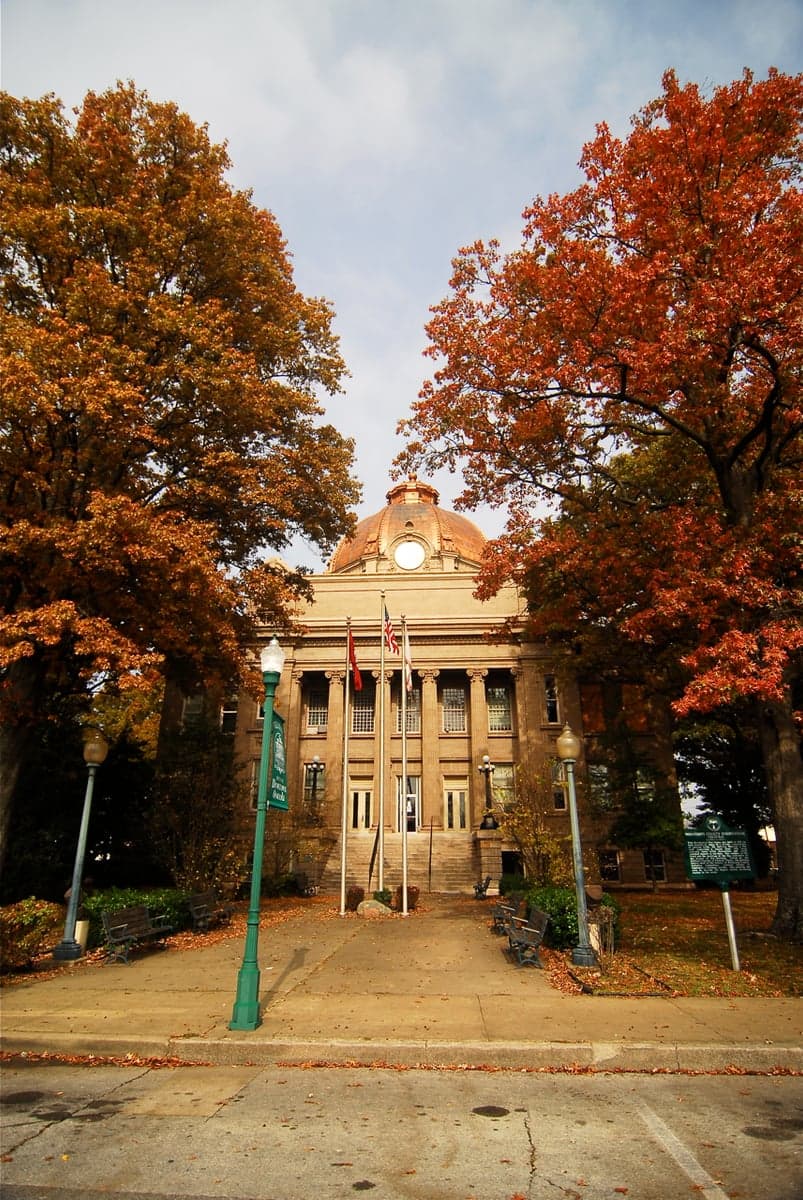
Photo: Wikipedia
Strategic Assessment of Mississippi County
Workable tactical position. Some exposure to population density or targets, but generally defensible in a crisis.
What does the Strategic Assessment tell us?
Our Strategic Assessment grades tactical survivability of an area. Major population centers, military targets, fallout zones, natural disasters, and border exposure all drive risk — lower exposure means a more defensible position in a crisis.
This is heavily inspired by Joel Skousen's Strategic Relocation book. Highly recommended you checkout the book ($)What does this tell us?
Our Strategic Assessment grades tactical survivability of an area. Major population centers, military targets, fallout zones, natural disasters, and border exposure all drive risk — lower exposure means a more defensible position in a crisis.
This is heavily inspired by Joel Skousen's Strategic Relocation book. Highly recommended you checkout the book ($)Strategic Pillars

Key Distances
Strategic Assessment Analysis
Mississippi County, Arkansas, occupies a unique strategic position in the nation's midsection that rewards careful study. Anchored by the Mississippi River to the east and bisected by Interstate 55, the county offers a blend of industrial muscle and agricultural self-sufficiency that appeals to relocation-minded readers prioritizing resilience. The twin cities of Blytheville and Osceola serve as the county's economic and logistical hubs, while the surrounding farmlands and river bottoms provide a buffer that many more densely populated areas lack.
Geographic position and natural advantages for long-term stability
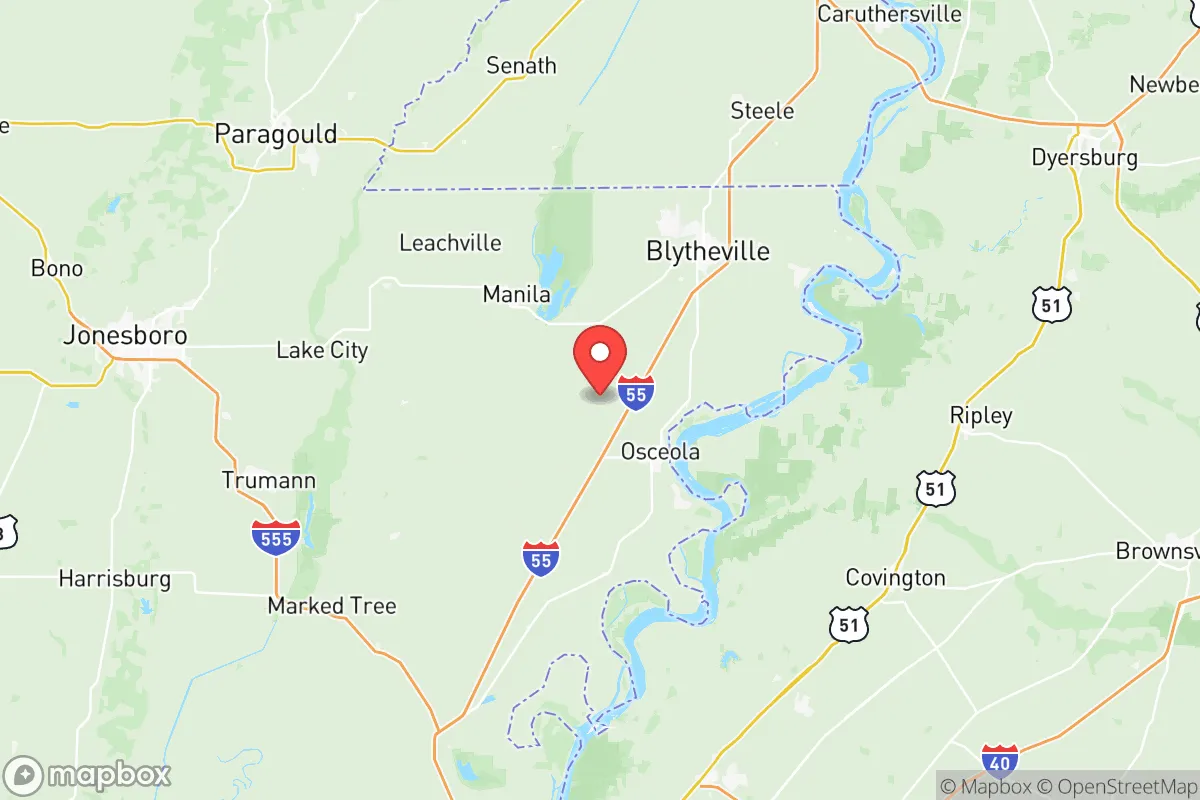
Mississippi County sits in Arkansas's northeastern corner, bordered by Missouri to the north and Tennessee to the east across the Mississippi River. This location places it within a day's drive of Memphis (roughly 60 miles south), St. Louis (about 180 miles north), and Little Rock (roughly 130 miles southwest), yet far enough from each to avoid the sprawl and congestion that characterize those metro areas. The county's position along the Mississippi River provides access to one of the continent's most significant freshwater arteries, a critical asset for any resilience-minded household. The surrounding landscape is predominantly flat, fertile Delta farmland, which historically has supported robust rice, soybean, and cotton production. This agricultural base means that local food supply chains are shorter and more direct than in regions dependent on long-haul trucking. The climate is humid subtropical, with hot summers and mild winters, supporting a long growing season for those interested in home food production. The county's relatively low population density outside the main towns — roughly 40,000 residents spread over 920 square miles — reduces the risks associated with dense urban living, including rapid disease transmission and resource competition during disruptions.
Risks, exposures, and proximity to fallout-relevant landmarks
No strategic assessment is complete without a clear-eyed look at vulnerabilities, and Mississippi County has several that a relocator must weigh. The most significant natural risk is flooding. The county sits within the Mississippi River floodplain, and both Blytheville and Osceola have experienced major inundation events, particularly during the historic floods of 2011 and 2019. Properties outside designated levees face real, recurring risk, and flood insurance is a practical necessity for any home near the river or its tributaries. Tornadoes are another genuine concern; the region falls within the traditional Dixie Alley, and severe weather outbreaks are common in spring and early summer. The county's flat terrain offers no natural shielding from storm systems. On the man-made risk side, Mississippi County hosts several industrial facilities that merit attention. The Blytheville area is home to a major steel mill (operated by Nucor-Yamato) and a large fertilizer storage and distribution facility. The Osceola port handles significant barge traffic, including chemicals and petroleum products. While these facilities are not nuclear targets in the traditional sense, they represent potential secondary hazards — chemical releases, fires, or supply chain disruptions — during a broader emergency. The county's proximity to Memphis, a major transportation and logistics hub with a FedEx superhub and multiple rail yards, means that any disruption affecting that city would quickly ripple north. For readers specifically concerned about nuclear fallout, Mississippi County is not near any known primary target zones, but its location downwind of potential Midwestern targets (such as Scott Air Force Base in Illinois, roughly 200 miles north) is worth noting in a worst-case scenario. The absence of major military installations, refineries, or population centers within the county itself is a relative positive in this context.
Practical resilience for a relocator: food, water, energy, and defensibility
For the reader serious about self-sufficiency, Mississippi County offers a mixed but workable picture. Food is the strongest category. The county's agricultural output is immense, and local farmers' markets in Blytheville and Osceola operate during the growing season. The flat, fertile soil is ideal for home gardening, and the long growing season (typically April through October) allows for multiple crop cycles. Hunting and fishing are viable options — deer, waterfowl, and catfish are abundant in the river bottoms and oxbow lakes. Water is abundant but requires planning. The Mississippi River is a massive surface water source, but it requires significant treatment for safe consumption. The county's groundwater is generally good, with the alluvial aquifer providing consistent yields for wells. For a relocator, securing a property with an existing well or the ability to drill one is a meaningful resilience advantage. Energy infrastructure is adequate but centralized. The county is served by electric cooperatives (Mississippi County Electric Cooperative) and Entergy Arkansas, with power primarily generated from natural gas and coal plants outside the county. Solar potential is reasonable, with roughly 4.5 peak sun hours per day, making off-grid solar a feasible supplement but not a full replacement without battery storage. Defensibility is the weakest category. The terrain is flat and open, offering little natural cover or chokepoints. A rural homestead with good visibility and a perimeter plan is more practical than trying to defend a town lot. The county's low crime rate (violent crime in Blytheville is below the national average, and Osceola is lower still) suggests a generally stable social environment, but the proximity to the interstate means that any large-scale population movement during a crisis could pass through the area. The local law enforcement presence is thin outside the main towns, so personal preparedness and community networks are essential.
The overall strategic picture for Mississippi County is one of moderate resilience with clear trade-offs. Its agricultural strength, low population density, and access to the Mississippi River provide a solid foundation for a self-sufficient lifestyle. The flood and tornado risks are real but manageable with proper site selection and construction. The industrial facilities and proximity to Memphis introduce some man-made risk, but the county is far enough from primary target zones to avoid the worst-case scenarios that plague areas near major cities or military bases. For a relocator who values space, growing their own food, and being part of a rural community with a working-class ethos, Mississippi County deserves serious consideration. The key is to choose a property outside the floodplain, secure a reliable water source, and build relationships with neighbors before a crisis arrives. The county won't offer the amenities of a mountain redoubt, but it provides a defensible, productive, and affordable base for those willing to put in the work.

* Values derived from national, state, county, city and local statistics and may differ in a specific area. Last updated: 2026-06-23T15:07:02.000Z
Narrative content on this page is AI-generated and may contain mistakes. Verify any details that matter before acting on them.
ReloMaps may earn a commission from affiliate links at no extra cost to you.

