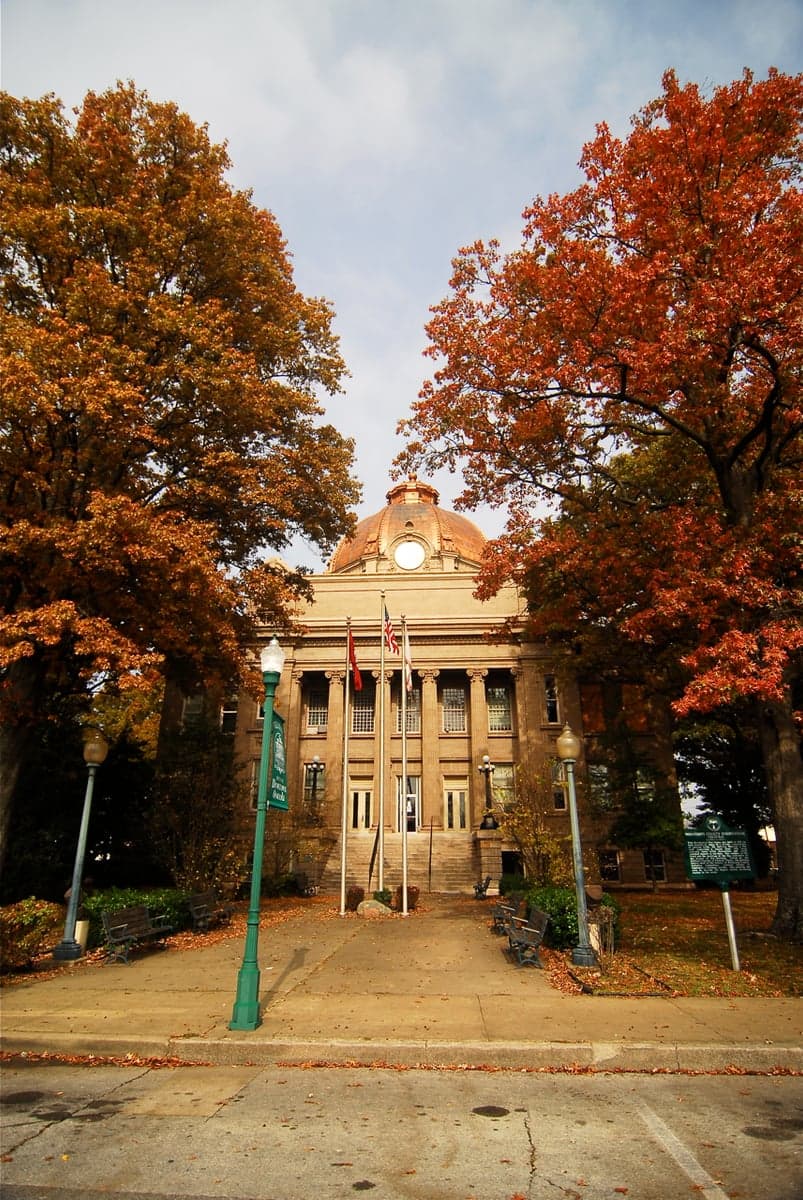
Photo: Wikipedia
Personal Sovereignty in Mississippi County
Viable for self-reliance. Generally workable, though some barriers may limit total independence.
What does Personal Sovereignty tell us?
Personal Sovereignty measures your capacity for self-reliance and independence with minimal government friction. Higher scores mean fewer barriers between you and the way you want to live... but it assumes you have the space you need and good neighbors.
What does this tell us?
Personal Sovereignty measures your capacity for self-reliance and independence with minimal government friction. Higher scores mean fewer barriers between you and the way you want to live... but it assumes you have the space you need and good neighbors.
State Policy
Energy independence: Importer (35% of energy produced in-state)
Personal Liberty
Homesteading

Personal Liberty Analysis
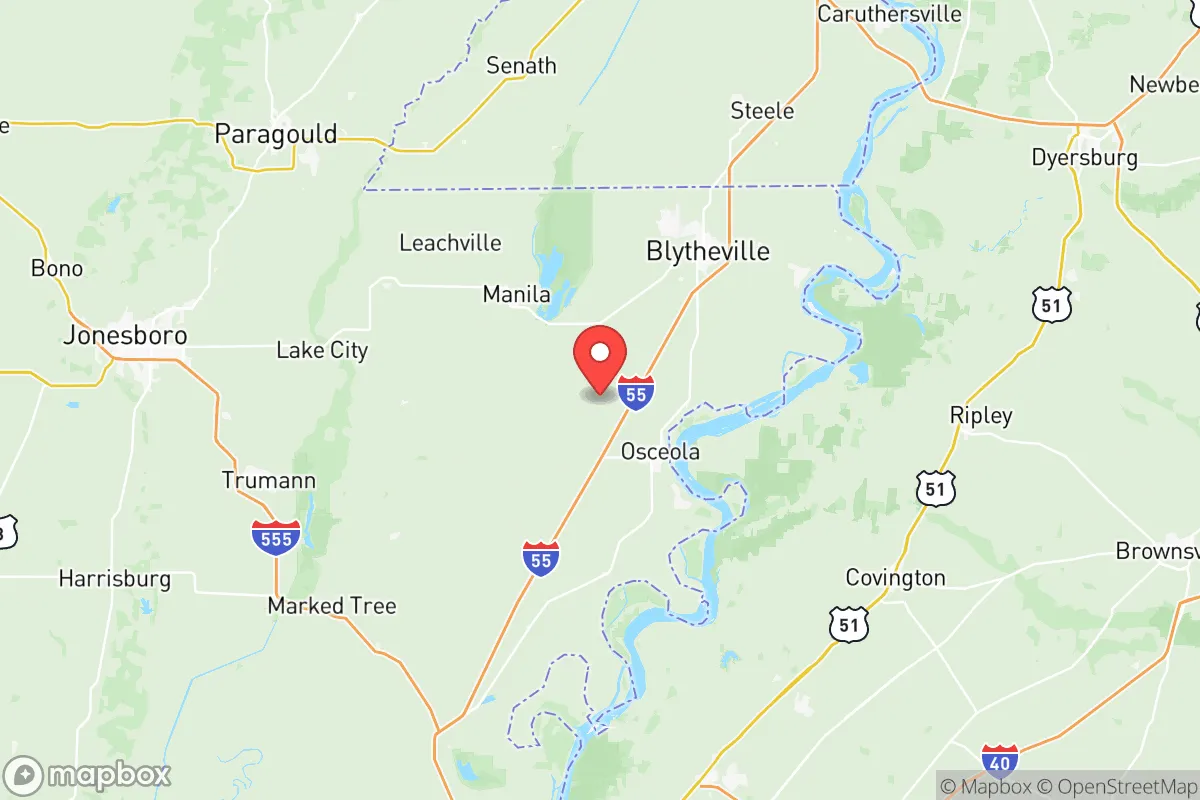
Mississippi County, Arkansas, offers a personal sovereignty environment shaped by its rural Delta character, a state-level legal framework that prioritizes individual autonomy, and local conditions that vary noticeably between its two main population centers, Blytheville and Osceola, and the unincorporated areas like Luxora, Wilson, and Joiner. For single individuals and families who value self-reliance, the county presents a low-tax, lightly regulated baseline, but the practical experience of personal freedom depends heavily on whether you live within a city limit or on an acreage outside it. The state's constitutional carry law, right-to-work status, and absence of a state income tax create a foundation of personal sovereignty that is further reinforced by local zoning policies that are among the most permissive in the Mid-South.
Tax burden and regulatory posture in Mississippi County
Arkansas imposes no state income tax on wages as of 2026, and Mississippi County's property tax millage is among the lowest in the state, typically ranging from 45 to 55 mills depending on the school district. This means a home valued at $100,000 carries an annual property tax bill of roughly $450 to $550, a figure that is significantly lower than comparable rural counties in Tennessee or Missouri. Sales tax in the county is 9.5% in Blytheville and Osceola, but drops to the state minimum of 6.5% in unincorporated areas, creating a meaningful incentive to shop outside city limits for large purchases. The regulatory posture is light-touch: there is no county-wide building code enforcement outside of incorporated towns, no mandatory energy code for residential construction, and no county-level business licensing requirement for most sole proprietorships. The Arkansas Department of Environmental Quality does enforce basic well and septic standards, but the county itself does not impose additional environmental regulations on private landowners. This combination of low taxation and minimal bureaucratic overhead makes Mississippi County one of the more fiscally autonomous places in the region for both individuals and small business owners.
Self-defense and gun law specifics in Mississippi County
Arkansas is a constitutional carry state, meaning any person 18 or older who can legally possess a firearm may carry it openly or concealed without a permit. Mississippi County's sheriff's office, led by Sheriff Dale Cook as of 2026, has a publicly stated policy of not enforcing federal firearm regulations that conflict with state law, a stance that aligns with the Second Amendment sanctuary resolution passed by the county quorum court in 2021. The practical effect is that gun owners in places like Blytheville, Osceola, and the smaller communities of Luxora and Joiner experience no local impediments to carrying, purchasing, or storing firearms. There is no county-level waiting period, no local registry, and no additional background check requirement beyond the federal NICS check. Stand-your-ground and castle doctrine laws are fully in effect, with no duty to retreat in any place where the individual is lawfully present. For residents who prioritize self-defense autonomy, Mississippi County offers one of the most permissive legal environments in the South, with the only notable restriction being the state-level prohibition on carrying in certain posted government buildings and private property where the owner has posted signage.
Self-reliance and homesteading viability across the county
Homesteading and off-grid living are genuinely feasible in Mississippi County, but the viability varies sharply between the incorporated towns and the rural areas. In unincorporated parts of the county, including the areas around Wilson, Joiner, and the Mississippi River levee corridor, there are no county zoning ordinances, no minimum acreage requirements for keeping livestock, and no building permit requirements for owner-built dwellings. Lot sizes for raw land typically start at one to five acres, with prices ranging from $1,500 to $3,500 per acre as of 2026, making entry-level homesteading affordable. Off-grid systems are legal: residents can install solar panels without a county permit, drill a private well for water, and use composting toilets or septic systems approved by the Arkansas Department of Health. The main constraint is that the county does not have a formal alternative energy net-metering policy that is favorable to small producers, so full grid disconnection is more practical than selling power back. Within Blytheville and Osceola, city codes require minimum lot sizes of 6,000 to 8,000 square feet for residential construction, and both cities enforce basic building codes and require permits for structural work. For a family seeking maximum self-reliance, the rural areas outside city limits offer near-total freedom to build, grow, and live with minimal government involvement.
Personal liberties in Mississippi County
Parental rights in Mississippi County are reinforced by Arkansas state law, which grants parents broad authority over their children's education, medical decisions, and religious upbringing. The county is home to several private and religious schools, particularly in Blytheville and Osceola, and homeschooling is straightforward under Arkansas's low-regulation homeschool statute, which requires only a notice of intent and annual standardized testing. Medical autonomy is similarly broad: Arkansas does not mandate COVID-19 or other adult vaccinations, and there is no county-level health ordinance that overrides individual medical choice. Free speech and religious expression are protected under state law, and the county's public spaces, including the courthouse square in Blytheville and the parks in Osceola, have seen no local restrictions on public assembly or expressive activity. Property rights are strong, with no county-level rent control, no inclusionary zoning mandates, and no local ordinances restricting short-term rentals like Airbnb in unincorporated areas. The main limitation on personal liberty is the county's status as a dry county for alcohol sales in some precincts, though Blytheville and Osceola have both voted to allow alcohol sales within city limits. For a conservative-leaning individual or family, Mississippi County's legal environment supports a high degree of personal autonomy across education, health, speech, and property decisions.
Compared to other areas of the Mid-South, Mississippi County offers a notably high degree of personal sovereignty, particularly for those who choose to live outside the incorporated towns. The combination of no state income tax, constitutional carry, minimal zoning, and strong parental and property rights places it in the top tier of Arkansas counties for individual autonomy. The trade-off is that this freedom comes with limited public services, lower population density, and a rural infrastructure that requires self-reliance in areas like emergency medical response and road maintenance. For a single individual or family who values personal sovereignty above urban convenience and is willing to accept the responsibilities that come with it, Mississippi County represents one of the more genuinely autonomous places to live in the region.

* Values derived from national, state, county, city and local statistics and may differ in a specific area. Last updated: 2026-06-23T15:07:02.000Z
Narrative content on this page is AI-generated and may contain mistakes. Verify any details that matter before acting on them.
ReloMaps may earn a commission from affiliate links at no extra cost to you.

