Photo: Wikipedia
Demographics of Mississippi County
Affluence Level in Mississippi County
A below-average socioeconomic profile. Incomes, home values, and educational attainment trail the U.S., with higher poverty and unemployment.
People of Mississippi County
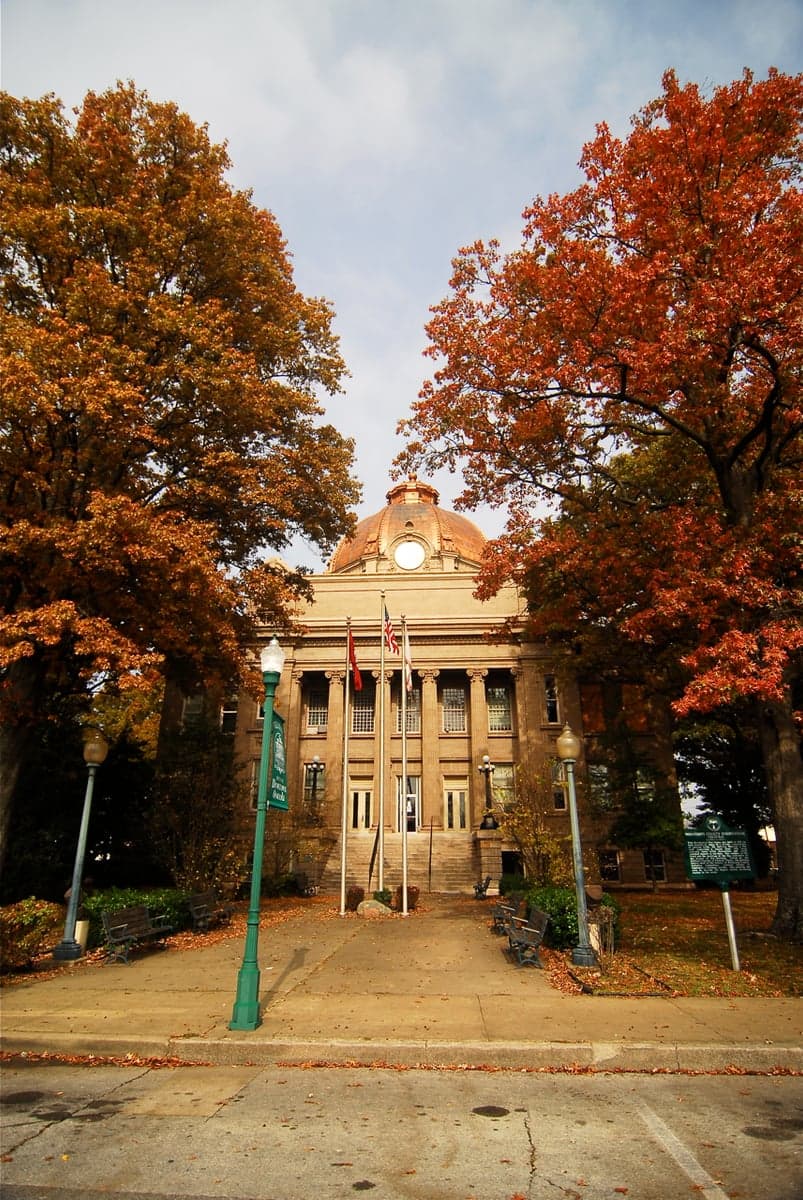
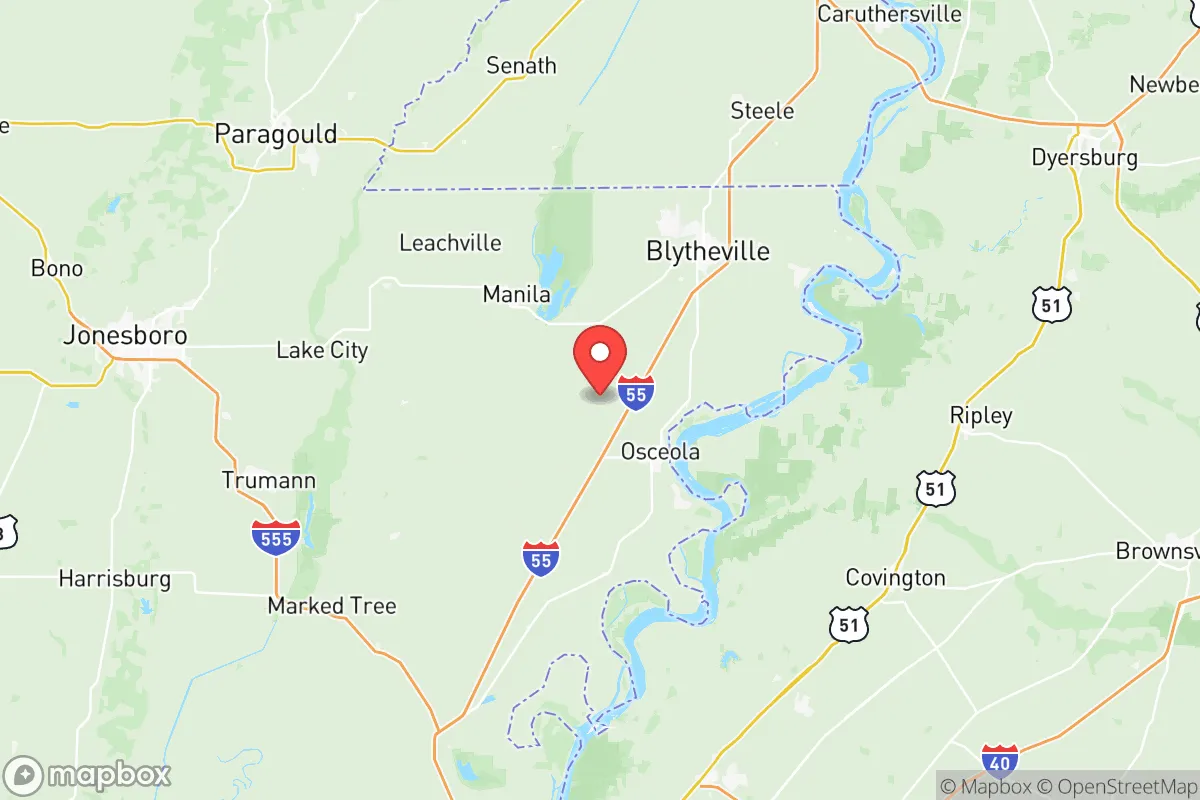
The people of Mississippi County, Arkansas today number 39,749, a population shaped by a deep agricultural history and a starkly biracial character that sets it apart from much of the modern South. With a population that is 56.4% White and 34.8% Black, the county is one of the most heavily African American counties in Arkansas, a direct legacy of the plantation-era cotton economy. A small but growing Hispanic community (4.7%) and a very low foreign-born rate (1.3%) round out a population that remains overwhelmingly native-born, rural in character, and concentrated in a handful of historic Mississippi River towns.
Settlement & growth (pre-1960)
Before American settlement, the region that is now Mississippi County was part of the hunting and trading grounds of the Quapaw and Osage nations. The first European presence was French, with fur traders and explorers traveling the Mississippi River in the 17th and 18th centuries, but no permanent French settlements took root. The area passed to the United States in the Louisiana Purchase of 1803 and remained sparsely populated frontier until the 1820s and 1830s, when American settlers—primarily Scots-Irish and English yeoman farmers from Tennessee, Kentucky, and the Upper South—began arriving to clear bottomland forests for cotton cultivation.
The defining demographic event of Mississippi County was the forced migration of enslaved African Americans to work the cotton plantations that dominated the rich alluvial soil of the Mississippi Delta. By 1860, enslaved people made up a majority of the county's population, a pattern that persisted through Reconstruction and into the 20th century. After the Civil War, freedmen and their descendants remained in the county as sharecroppers and tenant farmers, forming the foundation of the Black communities in towns like Blytheville, Osceola, Luxora, and Wilson. Wilson, in particular, was a company town owned by the Lee Wilson & Company, which employed thousands of Black and White tenant farmers in a semi-feudal cotton economy well into the 1930s.
The early 20th century brought a wave of White settlement from the Ozarks and the Upper South, drawn by the expansion of drainage districts and the conversion of swamp into some of the most productive cotton land in the world. Towns like Manila, Leachville, and Keiser grew as commercial centers for this new agricultural population. The mechanization of cotton farming in the 1940s and 1950s, however, triggered a massive out-migration of Black sharecroppers and laborers in the Great Migration, heading north to Chicago, St. Louis, and Detroit. This exodus permanently reduced the county's Black population share and left many rural communities depopulated. By 1960, the county's population had peaked at over 80,000, nearly double its current size, before the agricultural economy contracted.
Modern era (post-1965)
The post-1965 period in Mississippi County is defined not by new immigration but by continued domestic out-migration and a slow, uneven economic transition away from agriculture. The Hart-Cellar Act had little direct effect here: the foreign-born population remains just 1.3%, and the county did not attract the immigrant streams that reshaped urban and Sun Belt counties. Instead, the demographic story of the last 50 years is one of population decline, suburbanization within the county, and a modest diversification driven by Hispanic workers.
The most significant modern shift has been the growth of the Hispanic population, which rose from negligible levels in 1990 to 4.7% today. These residents are primarily Mexican and Central American immigrants and their U.S.-born children, drawn by work in the poultry processing plants and agricultural support industries that have partially replaced cotton farming. The Hispanic community is most visible in Blytheville, the county's largest city and economic hub, where a small but growing enclave of Hispanic-owned businesses and churches has formed. Osceola and Manila have also seen Hispanic settlement, though in smaller numbers.
The Black population, while still a large share at 34.8%, has continued a slow decline in absolute numbers as younger residents leave for better economic opportunities in Memphis, Little Rock, and beyond. The White population, too, has aged and shrunk. Suburbanization within the county has been minimal; there is no major exurban boom. Instead, the population has concentrated in Blytheville and Osceola, while smaller towns like Wilson, Luxora, and Keiser have lost residents. The county's college-educated share is just 14.2%, well below the national average, reflecting the limited white-collar job base.
The future
Mississippi County's population is projected to continue its slow decline over the next 10 to 20 years, barring a major economic catalyst. The county is not becoming more diverse in the way that metropolitan areas are; the Hispanic share will likely grow gradually, possibly reaching 7-8% by 2040, but the county will remain predominantly White and Black. The Black population share may stabilize as the out-migration of younger generations slows, but the absolute number of Black residents is unlikely to rise without new job creation.
The cultural identity of the county is evolving in subtle ways. The old plantation-era social structure has faded, but the legacy of racial separation remains visible in residential patterns and social networks. The growing Hispanic presence is adding a third cultural strand, particularly in Blytheville, where bilingual signage and Hispanic-owned businesses are becoming more common. The county's political character remains conservative, with a strong rural and evangelical influence, though Black voters in Blytheville and Osceola form a reliable Democratic base.
For someone moving in now, Mississippi County offers a low-cost, slow-paced, deeply rooted community where agriculture still defines the rhythm of life. The population is older, less educated, and less diverse than the national average, but it is also stable and family-oriented. The future will likely see continued population loss in the smallest towns, with Blytheville and Osceola consolidating their roles as the county's anchors, while the Hispanic community slowly grows into a more visible part of the social fabric.

* Values derived from national, state, county, city and local statistics and may differ in a specific area. Last updated: 2026-06-23T15:07:02.000Z
Narrative content on this page is AI-generated and may contain mistakes. Verify any details that matter before acting on them.
ReloMaps may earn a commission from affiliate links at no extra cost to you.

