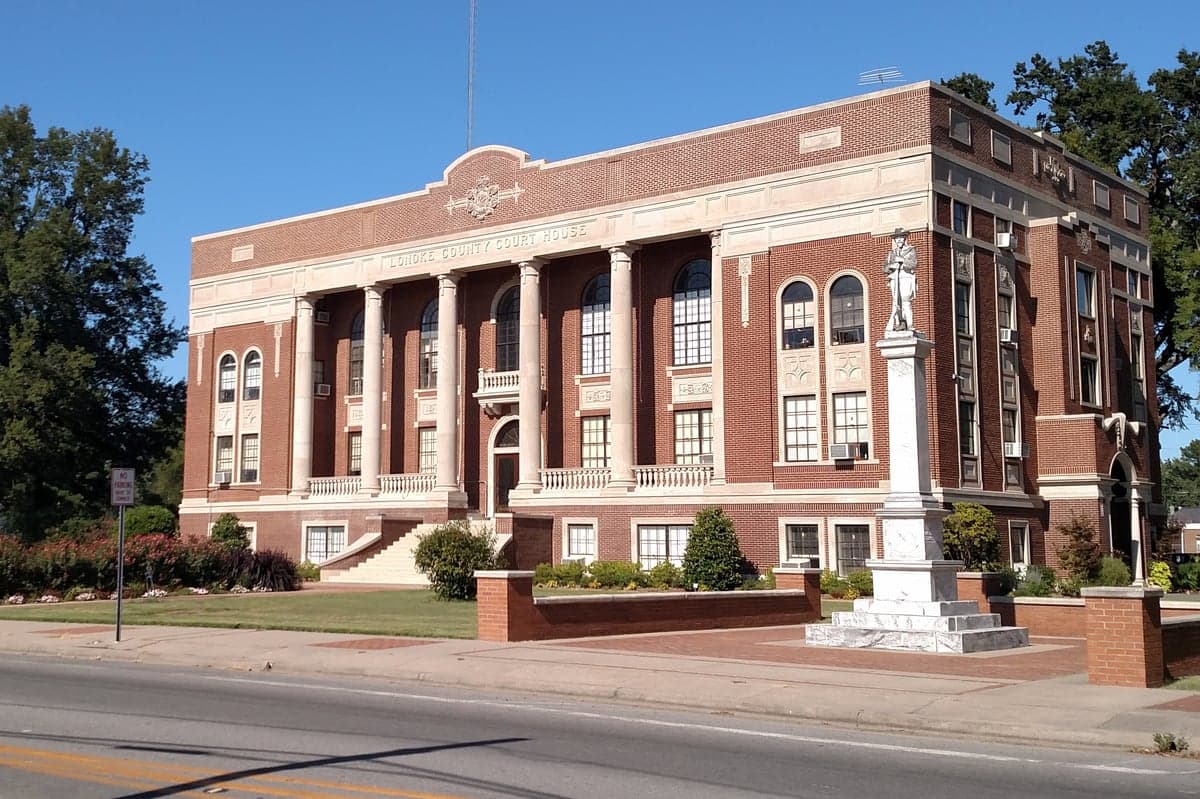
Photo: Wikipedia
Political ClimatePolitical Climate in Lonoke County
Showing district-level results — no local-only data available.
Local Political AnalysisPolitical Analysis of Lonoke County
Lonoke County is deep-red territory, and it’s been getting redder. The Cook Partisan Voting Index (PVI) sits at R+23, meaning the county votes about 23 points more Republican than the national average. That’s a full 7 points more conservative than Arkansas as a whole, which has a PVI of R+16. In the 2024 presidential race, Donald Trump carried Lonoke County by roughly 68% to 30%, a margin that has widened steadily since 2016. The shift isn’t subtle—it’s a clear, accelerating trend driven by population growth and the exodus of moderate Democrats from local politics.
How it compares
Arkansas’s R+16 PVI already places it among the most reliably Republican states in the country, but Lonoke County is in a different league. The county’s R+23 rating puts it on par with places like Oklahoma’s Panhandle or the Texas Hill Country. The gap isn’t just statistical—it shows up in local elections. While Arkansas still elects a handful of Democratic state legislators and county officials in pockets like Pulaski County (Little Rock) and the Delta, Lonoke County hasn’t sent a Democrat to the state legislature in over a decade. The county’s largest town, Cabot, is a Republican stronghold where GOP candidates routinely win by 70% or more. The smaller towns tell a more nuanced story: England and Carlisle, both in the county’s rural eastern half, have a few precincts that lean slightly more moderate, occasionally breaking 40% for Democratic candidates in statewide races. Ward, a fast-growing bedroom community north of Cabot, is solidly red but has a handful of swing precincts near the Pulaski County line where independent voters can tip a local school board or city council race. Austin and Lonoke City itself are reliably Republican, though not with the same lopsided margins as Cabot. The real outlier is Keo, a tiny town in the south with a majority-Black population that consistently votes Democratic by 60% or more—a rare blue dot in a sea of red.
What this means for residents
For conservative residents, the political climate is comfortable and predictable. Local government, school boards, and law enforcement are overwhelmingly Republican, and policy debates tend to focus on tax cuts, Second Amendment rights, and growth management. There’s little friction in daily life for conservatives—their values are reflected in everything from the county’s zoning decisions to the curriculum in public schools. For liberal residents, the reality is more isolating. They’re a distinct minority, and they often feel it in social settings, at town hall meetings, and in the local media landscape. That said, the county’s rapid growth—Cabot’s population has nearly doubled since 2000—has brought a small but noticeable influx of younger, more moderate families from central Arkansas. These newcomers don’t flip elections, but they do create pockets of political diversity, especially in the newer subdivisions along Highway 67/167. The practical effect is that while Democrats rarely win, they can still influence local races by turning out in those swing precincts in Ward and along the Pulaski County border.
Culturally, Lonoke County is more rural and church-oriented than the state as a whole. The county has a higher-than-average rate of evangelical Protestant affiliation, and that shapes policy priorities: school prayer, anti-abortion ordinances, and opposition to marijuana legalization are common talking points. Unlike in more urban parts of Arkansas, there’s little appetite for expanding gambling or alcohol sales. The county’s agricultural roots—rice, soybeans, and cattle—mean that land-use and water rights debates are perennial, and the local GOP tends to favor property rights over environmental regulation. For anyone moving here, the key takeaway is that Lonoke County isn’t just Republican—it’s a place where the political culture is woven into everyday life, from the church potlucks to the county fair. It’s a comfortable fit for conservatives, and a manageable challenge for liberals who value small-town community over political alignment.

State Political ClimatePolitical Climate in Arkansas
State Political AnalysisPolitical Environment in the State
Arkansas is a deeply red state with a Cook PVI of R+16, meaning it votes about 16 points more Republican than the national average in presidential elections. Over the past 20 years, the state has shifted from a competitive, ancestrally Democratic stronghold to a solidly Republican one, driven by the realignment of rural white voters and the collapse of the old "Blue Dog" Democratic coalition. The last Democrat to win statewide office was Governor Mike Beebe in 2010, and since then, Republicans have held every constitutional office, both U.S. Senate seats, and all four U.S. House seats. The state’s political trajectory is one of steady, unbroken conservative consolidation, with no signs of a return to competitive two-party politics at the state level.
Urban vs. rural divide
The political map of Arkansas is a textbook study in the urban-rural split. The state’s two major metros—Little Rock (Pulaski County) and Fayetteville-Springdale-Rogers (Washington and Benton Counties)—are the only significant blue or purple areas. Pulaski County, home to the state capital and a sizable Black population (about 37%), has voted Democratic in every presidential election since 2008, though it’s not a deep blue stronghold; it went for Biden by about 12 points in 2020. Washington County, anchored by the University of Arkansas in Fayetteville, has trended blue in recent cycles, flipping to Biden in 2020 by a slim margin, driven by college-educated professionals and a growing Hispanic population in Springdale. Meanwhile, the rest of the state is overwhelmingly red. The Arkansas Delta counties along the Mississippi River—like Lee, St. Francis, and Phillips—are the only other Democratic-leaning areas, but they are depopulating and economically distressed, with shrinking electoral clout. The fast-growing northwest corridor (Benton and Washington counties) is actually a mix: Benton County, home to Walmart’s headquarters in Bentonville, is reliably Republican but has a moderate, business-friendly flavor, while rural counties like Stone and Van Buren in the Ozarks vote 80%+ Republican. The divide isn’t just about party—it’s about culture: the rural south and east are older, poorer, and more reliant on agriculture and timber, while northwest Arkansas is younger, wealthier, and driven by corporate and tech growth.
Policy environment
Arkansas’s policy environment is aggressively conservative, with a low-tax, low-regulation posture that appeals to many relocators. There is no state income tax on capital gains, and the top marginal income tax rate was cut from 6.9% to 4.9% in 2023, with a goal of reaching 3.9% by 2027. The state sales tax is 6.5%, but local add-ons can push it over 10% in some cities like Little Rock and Texarkana. Property taxes are among the lowest in the nation, averaging about 0.6% of assessed value. Education policy is a flashpoint: the state passed the LEARNS Act in 2023, a sweeping school choice law that created universal Education Freedom Accounts (vouchers) for private school tuition, expanded charter schools, and banned "critical race theory" and "indoctrination" in classrooms. Teacher pay was raised to a minimum of $50,000, but the law also weakened tenure protections. Healthcare is a mixed bag: Arkansas expanded Medicaid under the private option (Arkansas Works), but the state has some of the strictest abortion laws in the country—a near-total ban with no exceptions for rape or incest, only to save the mother’s life. Election laws have tightened: voter ID is required, absentee ballot drop boxes are banned, and early voting hours were reduced in 2021. Gun laws are permissive: permitless carry (constitutional carry) was enacted in 2021, and there are no red flag laws or waiting periods.
Recent policy direction
The last three years have seen a sharp rightward turn on nearly every front. On gun and self-defense law, the 2021 permitless carry law (Act 777) allows any adult who can legally possess a firearm to carry it openly or concealed without a license. Stand-your-ground laws have been on the books since 2017. On parental and education rights, the LEARNS Act (2023) is the biggest shift: it lets parents use state funds for private school tuition, bans instruction on sexual orientation and gender identity in K-3, and requires schools to notify parents of any "mental, emotional, or physical health" changes in their child—effectively a forced outing policy for LGBTQ+ students. On speech and privacy, the state passed a law in 2023 requiring public libraries to create policies for removing "obscene" materials or face loss of funding, and it banned TikTok on state devices. On medical and bodily autonomy, the abortion ban (Act 180 of 2019, triggered by Roe’s reversal) is total, with no exceptions for rape or incest. The state also passed a law in 2023 banning gender-affirming care for minors, including puberty blockers and hormones, with providers facing loss of license. On property rights, Arkansas is a strong "right-to-farm" state, limiting nuisance lawsuits against agricultural operations. On taxation, the trend is toward elimination of the income tax entirely—Governor Sarah Huckabee Sanders has called it a "goal." On voting and ballot access, the 2021 law (Act 249) shortened the absentee ballot application window, banned unsolicited absentee ballot applications, and required a copy of ID with absentee applications. The state also purged over 80,000 voters from the rolls in 2022 under a law targeting inactive voters.
Civil unrest & political movements
Arkansas has not seen the kind of large-scale civil unrest seen in larger states, but there have been notable flashpoints. In 2020, Black Lives Matter protests in Little Rock and Fayetteville drew hundreds, with some clashes and property damage in Little Rock’s downtown. The state’s response was to pass a law in 2021 increasing penalties for blocking highways during protests and protecting drivers who hit protesters if they feel "threatened." On the right, the "Moms for Liberty" movement is active in northwest Arkansas, pushing for book bans and school board takeovers. Immigration politics are relatively low-key because Arkansas has a small foreign-born population (about 5%), but the state passed a law in 2023 requiring law enforcement to cooperate with federal immigration authorities (Act 237). There is no sanctuary city policy anywhere in the state. Election integrity remains a live issue: the 2022 primary saw a controversy in Faulkner County (Conway) when a Republican county clerk was sued for refusing to certify a primary election result, citing unfounded fraud claims. Secession or nullification rhetoric is rare but not absent—a 2021 resolution calling for a "convention of states" to amend the U.S. Constitution passed the legislature. A new resident would notice the political divide mostly in the cultural markers: "Let’s Go Brandon" flags on rural pickup trucks, and "In This House We Believe" signs in Fayetteville yards.
Projection
Over the next 5-10 years, Arkansas will likely become even more Republican, but with a growing internal tension between the business-friendly, moderate conservatism of northwest Arkansas and the populist, culture-war-driven conservatism of the rural south and east. The northwest corridor is the state’s economic engine—Walmart, Tyson Foods, J.B. Hunt, and the University of Arkansas are all there—and it’s attracting in-migrants from California, Texas, and the Midwest. These newcomers tend to be more educated and less culturally conservative, which could slowly moderate the region’s politics. However, the rural areas are depopulating, and the state legislature is gerrymandered to amplify rural voices. The Democratic Party is essentially non-functional outside of Little Rock and a few Delta counties; there is no bench of statewide candidates. The most likely scenario is continued Republican dominance, with the income tax eventually eliminated, further school choice expansion, and more culture-war legislation on LGBTQ+ issues and abortion. A wild card is the growing Hispanic population in northwest Arkansas (about 20% in Springdale), which could shift the political calculus over a longer horizon, but for the next decade, the state will remain R+16 or redder.
For a new resident, the bottom line is straightforward: if you are a conservative, you will find a state that aligns with your values on taxes, guns, education, and social issues, with a government that actively pushes those priorities. If you are a liberal, you will be in a clear minority, especially outside of Little Rock and Fayetteville. You’ll have fewer legal protections on issues like abortion access, LGBTQ+ rights, and voting convenience, but you’ll also find low taxes and a low cost of living. The political climate is stable, not volatile—don’t expect sudden shifts. What you see is what you get: a deeply red state that is comfortable with its identity and moving further in that direction.
* Values derived from national, state, county, city and local statistics and may differ in a specific area. Last updated: 2026-06-15T22:00:17.000Z
Narrative content on this page is AI-generated and may contain mistakes. Verify any details that matter before acting on them.
ReloMaps may earn a commission from affiliate links at no extra cost to you.

