
Photo: Wikipedia
Quality of Life in Garland County
A livable area that tracks near national norms for affordability, walkability, and neighborhood health.
What does Quality of Life tell us?
Quality of Life measures an area by evaluating factors like cost of living, nearby amenities, country club access, airport proximity, socioeconomic signals and neighborhood character. For large states, this is a general average — quality of life can vary dramatically between metro areas, suburbs, and rural communities within the same state.
What does this tell us?
Quality of Life measures an area by evaluating factors like cost of living, nearby amenities, country club access, airport proximity, socioeconomic signals and neighborhood character. For large states, this is a general average — quality of life can vary dramatically between metro areas, suburbs, and rural communities within the same state.
Cost of Living
26% below national average
110%
The Real Cost of Living in Garland County for 2026
| Tier | Individual | Family (4) |
|---|---|---|
| Survival | $15k | $28k |
| Comfortable | $34k | $50k |
| Luxury | $100k+ | $155k+ |
| Elite (Top 5%) | $119k+ | $185k+ |
Quality-of-Life Analysis
Garland County, Arkansas, offers a spectrum of living environments that range from the bustling tourist hub of Hot Springs to quiet, unincorporated rural communities, attracting retirees, outdoor enthusiasts, and families seeking different paces of life. The county’s character is defined by its dual identity: the commercial and recreational energy of its largest city contrasts sharply with the agricultural and lakefront solitude found in smaller towns like Mountain Pine and Pearcy. This diversity means a resident’s daily experience—from commute length to housing costs—can vary dramatically depending on whether they live near the historic Bathhouse Row or along a quiet stretch of Lake Ouachita.
Largest town(s) & population centers
Hot Springs is the county seat and by far the largest population center, home to roughly 38,000 residents and the primary draw for tourism, healthcare, and employment. Daily life here revolves around the historic downtown corridor, the Hot Springs National Park, and a robust service economy fueled by attractions like Oaklawn Racing Casino Resort and the Hot Springs Convention Center. The city offers a walkable core with restaurants, art galleries, and bathhouses, while suburban-style neighborhoods stretch along Highway 70 and Airport Road. Commute times in Hot Springs average 21.9 minutes, slightly below the national average, making it feasible for workers to live in the city and commute to jobs in retail, hospitality, or the medical sector. The city also hosts National Park College and a regional medical center, providing stable employment anchors.
Smaller towns & rural pockets
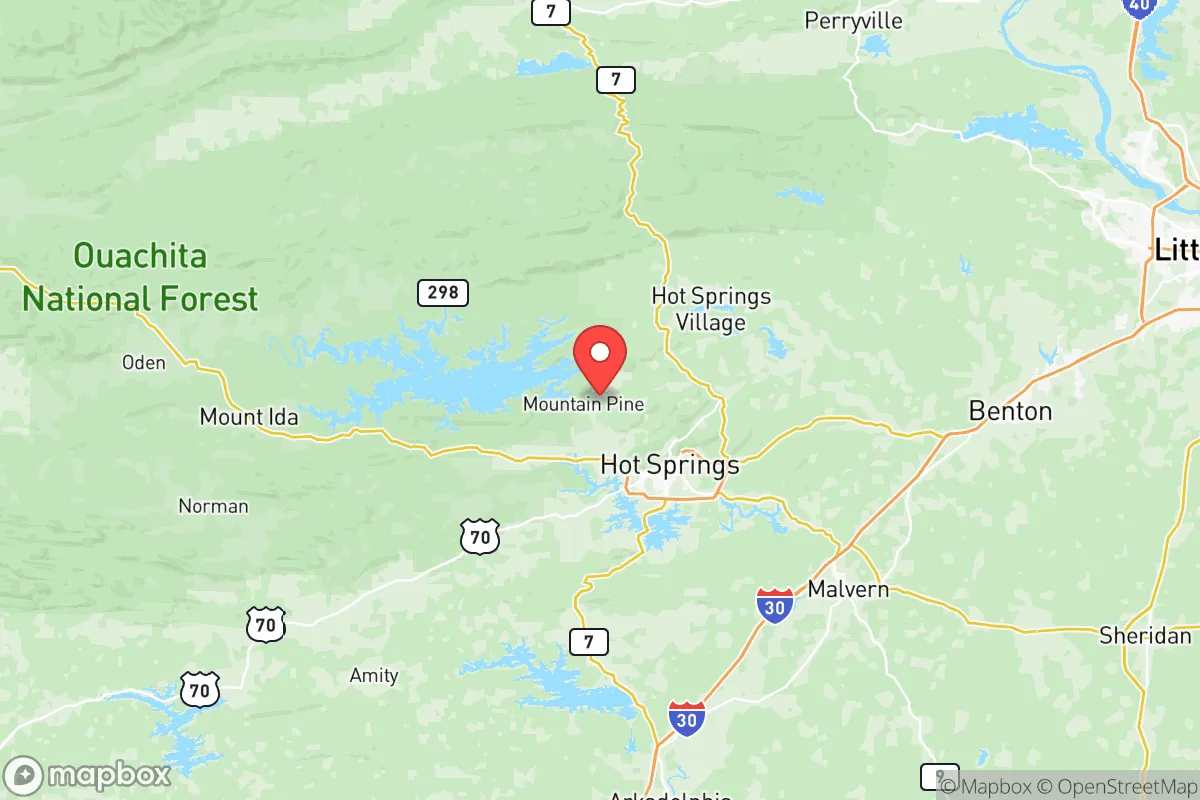
Beyond Hot Springs, the county includes several smaller incorporated towns and unincorporated communities that offer a markedly different lifestyle. Mountain Pine (pop. ~700) sits west of Hot Springs near Lake Ouachita and is a quiet, working-class community with limited commercial services, where many residents work in forestry or at the nearby Entergy power plant. Pearcy (unincorporated) is a rural crossroads along Highway 270 with a handful of churches and a volunteer fire department, serving as a bedroom community for Hot Springs commuters. Lonsdale (pop. ~100) in the northern part of the county is even more isolated, surrounded by Ouachita National Forest land, with no grocery store and a median home value well below the county average. Lake Hamilton (a census-designated place) straddles the line between suburban and rural, with many lakefront homes and vacation rentals, but lacks a centralized downtown. These areas share a slower pace, lower property taxes, and direct access to hunting, fishing, and hiking trails, but require longer drives for groceries, healthcare, and schools.
Cost & lifestyle range
The cost of living in Garland County is notably low, with a composite index of 74 (100 = U.S. average), and the spread between the most and least expensive areas is significant. At the lower end, rural communities like Lonsdale and Mountain Pine see median home values around $176,400 (the county average) or below, with some fixer-uppers available for under $100,000. Median rent countywide is $942, but in Hot Springs proper, rents for a one-bedroom apartment average closer to $850–$950, while lakefront properties in the Lake Hamilton area can command $1,500+ per month. The lifestyle range is equally broad: Hot Springs offers nightlife, festivals, and the Hot Springs Farmers Market, while rural residents trade those amenities for larger lots, lower noise, and direct lake access. Property taxes are among the lowest in Arkansas, with a millage rate around 45–50 in most areas, keeping carrying costs low for homeowners. The trade-off in rural pockets is limited internet access (some areas still rely on satellite) and fewer nearby medical facilities, with the nearest hospital often being CHI St. Vincent Hot Springs.
This county is best suited for people who value affordability and outdoor recreation over urban density. Retirees on fixed incomes are drawn to the low cost of living and the social opportunities in Hot Springs, while families seeking space and quiet often choose the rural outskirts. Remote workers with reliable internet can leverage the low housing costs, but should verify connectivity before moving to areas like Pearcy or Lonsdale. For those who want a mix of small-city amenities and immediate access to lakes and forests, Garland County delivers a rare balance—provided they are comfortable with the trade-offs in rural infrastructure and limited public transit.

Crime in Garland County
Crime rates similar to the national median for U.S. locations.
Violent CrimeViolent Crime Analysis
Property CrimeProperty Crime Analysis
Crime Analysis
Garland County, Arkansas, presents a mixed safety profile where violent crime rates significantly exceed both state and national averages, while property crime rates are closer to the national norm. The county, anchored by the tourist destination of Hot Springs, recorded a violent crime rate of 523.1 per 100,000 residents and a property crime rate of 1,634.7 per 100,000 in the most recent data. These figures place Garland County among the more dangerous jurisdictions in Arkansas, a concern amplified by the progressive-leaning judicial policies in the 18th Judicial District, which covers the county and has been criticized for prioritizing offender rehabilitation over public safety.
Crime in context
Garland County’s violent crime rate is roughly 50% higher than the national average and significantly above the Arkansas state average of approximately 480 per 100,000. The property crime rate, while elevated, is closer to the national average of 1,954 per 100,000, suggesting that theft and burglary are less of an outlier issue than violent offenses. The county’s crime problems are not uniform; the city of Hot Springs, which accounts for the majority of the county’s population, drives much of the violent crime, particularly aggravated assaults and robberies linked to the area’s tourism and nightlife economy. Smaller communities like Lake Hamilton and Mountain Pine report lower overall crime volumes but still experience rates that reflect the county’s broader challenges. The 18th Judicial District, which includes Garland County, has seen a pattern of lenient sentencing and early release programs under progressive prosecutors, a trend that directly correlates with repeat offenses and a diminished deterrent effect for violent criminals.
What residents experience
For residents, the daily reality of crime in Garland County often centers on property crimes like vehicle break-ins and package theft, particularly in tourist-heavy areas near Lake Ouachita and the Hot Springs National Park corridor. However, the more pressing concern is the frequency of violent encounters, especially in the downtown Hot Springs area and along the Central Avenue strip. Residents in neighborhoods like Whittington and Park Avenue report a heightened sense of vigilance, with many avoiding certain areas after dark. The county’s sheriff’s office and local police departments are understaffed relative to the call volume, a situation exacerbated by the judicial system’s tendency to release repeat offenders on low or no bail. This creates a cycle where residents feel the justice system is not adequately protecting them, leading to increased demand for private security measures and neighborhood watch programs.
Neighborhood-level variation
Safety in Garland County varies sharply by location. The Hot Springs Village area, a gated retirement community, consistently reports the lowest crime rates in the county, with violent crime nearly absent and property crime well below the county average. Conversely, the downtown Hot Springs core and the Malvern Avenue corridor are considered high-risk zones, with concentrated poverty and drug activity driving violent incidents. Suburban areas like Lake Hamilton and Pearcy offer a middle ground, with property crime rates that are manageable but still above the national average. For prospective residents, the safest choices are the planned communities and rural subdivisions outside of Hot Springs proper, while those considering homes near the lake or downtown should factor in the elevated risk and the local justice system’s track record of leniency.
* Values derived from national, state, county, city and local statistics and may differ in a specific area. Last updated: 2026-06-28T23:09:21.000Z
Narrative content on this page is AI-generated and may contain mistakes. Verify any details that matter before acting on them.
ReloMaps may earn a commission from affiliate links at no extra cost to you.

