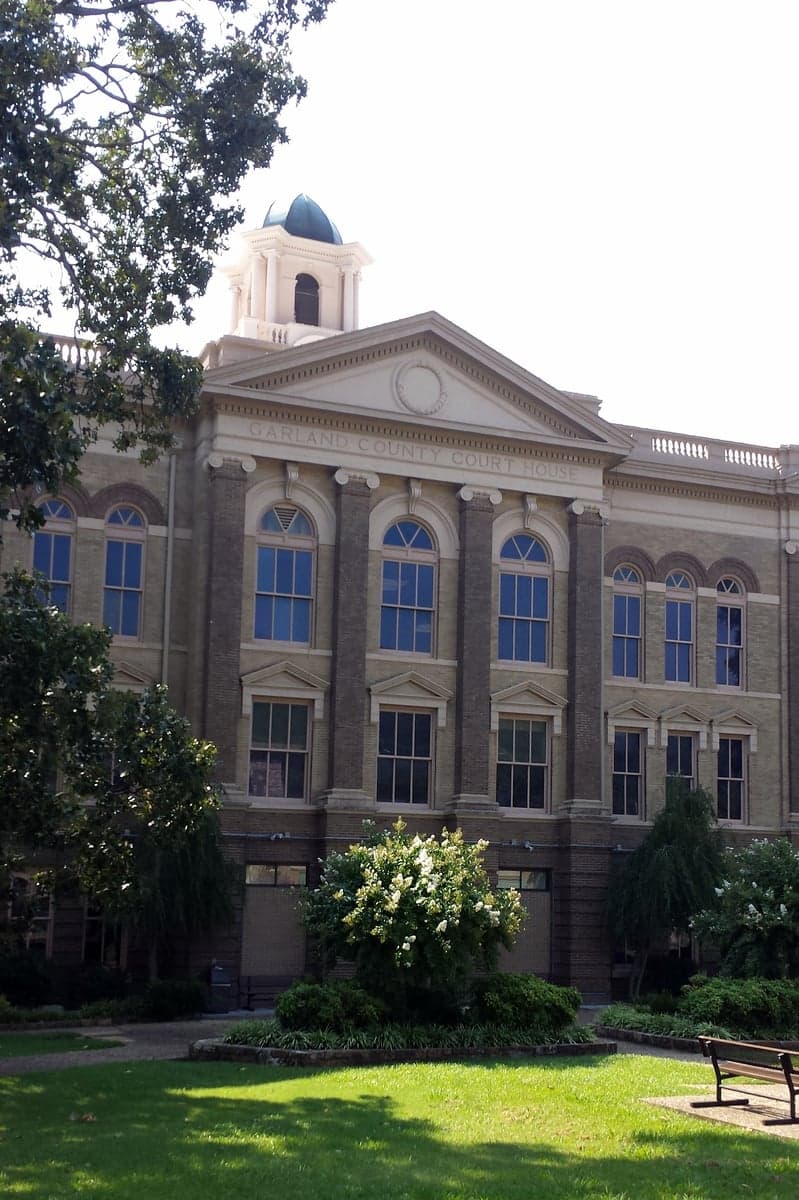
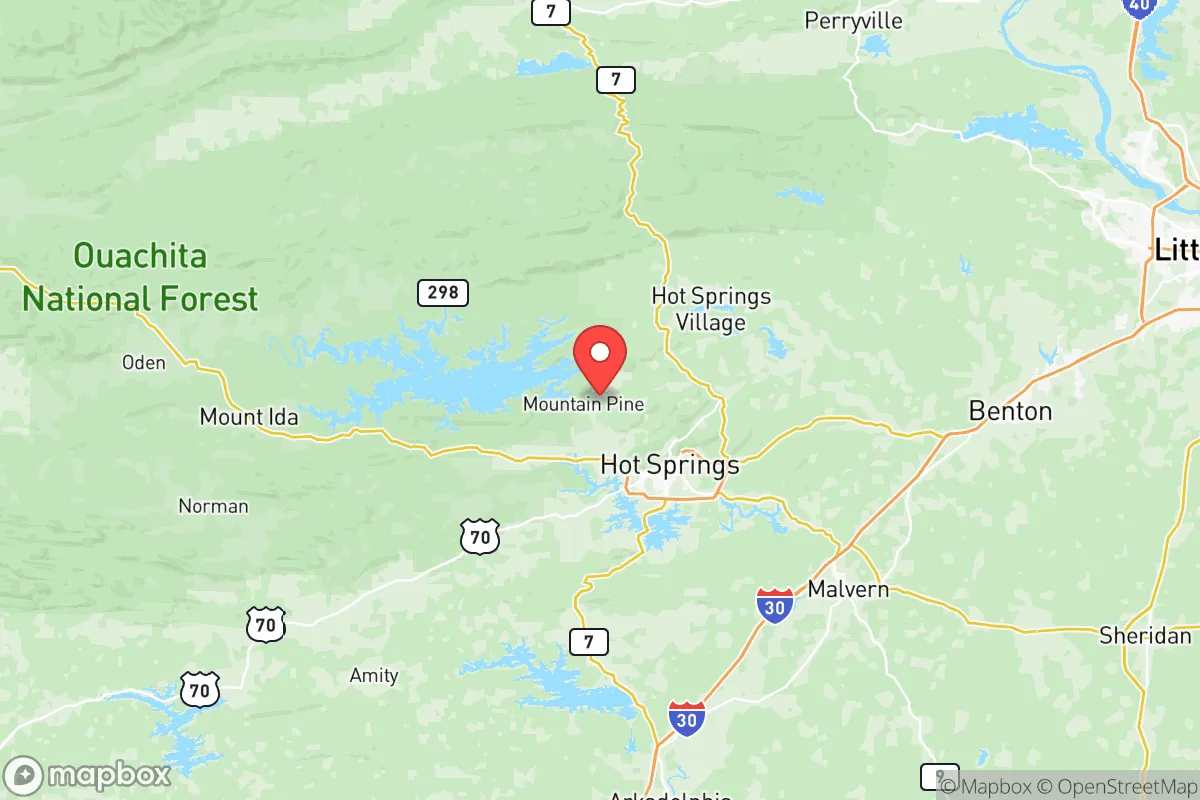
Photo: Wikipedia
Political ClimatePolitical Climate in Garland County
Showing district-level results — no local-only data available.
Local Political AnalysisPolitical Analysis of Garland County
Garland County, Arkansas, is a reliably Republican stronghold with a Cook Partisan Voting Index (PVI) of R+20, making it significantly more conservative than the state of Arkansas as a whole, which sits at R+16. This isn't a recent shift; the county has been trending red for decades, driven by a combination of retiring Baby Boomers moving to the lakes, a strong local gun culture, and a general distrust of federal oversight. While the county as a whole is deeply red, there are notable pockets of blue, particularly in the more tourist-oriented and artsy parts of Hot Springs, which can create a more nuanced political landscape than the raw numbers suggest.
How it compares
The four-point gap between Garland County (R+20) and the state (R+16) is meaningful. In practical terms, it means that while Arkansas as a whole is solidly Republican, Garland County is one of the most reliably conservative areas in the state, often voting for GOP candidates by margins that are 5-10 percentage points higher than the state average. For example, in the 2024 presidential election, the county voted for the Republican candidate by a margin of roughly 68% to 30%, while the state overall was closer to 64% to 33%. This isn't a purple county; it's a deep red one with a few blue dots. The real political variation isn't between parties, but within the Republican primary itself, where the more conservative candidates often win out over establishment figures. The city of Hot Springs itself is the most politically diverse area, with precincts around the downtown historic district and the arts corridor leaning more Democratic, while the sprawling suburbs like Lake Hamilton and Hot Springs Village are deeply conservative. The rural areas outside the city limits, such as Mountain Pine and Fountain Lake, are also heavily Republican, but with a more populist, anti-establishment flavor.
What this means for residents
For conservative residents, Garland County is a comfortable environment where their values are reflected in local policy and social norms. You'll find that local government, from the county quorum court to the school boards, is dominated by Republicans, and issues like gun rights, lower taxes, and limited government are generally popular. For liberal residents, the reality is more about finding your niche. While you won't find many elected Democrats, you will find a vibrant, if small, progressive community centered around the arts and the downtown Hot Springs scene. The key is that the political climate is not hostile in a personal sense; most people are neighborly regardless of party affiliation. The real friction tends to be over growth and development, with conservative residents often favoring less regulation and more business-friendly policies, while more liberal residents push for environmental protections and historic preservation. The county's strong Republican lean also means that national political debates often feel distant, with local issues like lake levels, tourism, and infrastructure taking center stage.
Culturally, Garland County is distinct from the more rural, agricultural parts of Arkansas. The presence of Hot Springs National Park and the tourism industry gives it a slightly more cosmopolitan feel, but the underlying politics remain deeply conservative. One notable policy distinction is the county's strong support for the Second Amendment, which is reflected in the prevalence of gun shops and the ease of obtaining a concealed carry permit. There's also a strong libertarian streak, particularly in the more rural areas, where residents value their independence and are skeptical of government overreach. Looking ahead, the county's political trajectory is likely to remain steady, with the retirement of more conservative Baby Boomers potentially offset by an influx of younger, more diverse residents drawn to the area's natural beauty and lower cost of living. For now, though, Garland County remains a reliably red bastion in a red state, offering a clear political identity for those who share its values and a manageable, if sometimes isolating, environment for those who don't.

State Political ClimatePolitical Climate in Arkansas
State Political AnalysisPolitical Environment in the State
Arkansas is a deeply red state with a Cook PVI of R+16, meaning it votes about 16 points more Republican than the national average in presidential elections. Over the past 20 years, the state has shifted from a competitive Democratic-leaning state (Bill Clinton’s home turf) to a solidly Republican stronghold, driven by the realignment of rural white voters and the collapse of the old conservative Democratic “Dixiecrat” tradition. Today, every statewide office is held by Republicans, and the GOP holds supermajorities in both chambers of the state legislature, making it one of the most reliably conservative states in the country.
Urban vs. rural divide
The political map of Arkansas is a classic story of a few blue islands in a vast red sea. The state’s two major metro areas—Little Rock (Pulaski County) and Fayetteville-Springdale-Rogers (Washington and Benton counties)—are the only population centers that consistently vote Democratic. Pulaski County, home to the state capital and a more diverse, college-educated population, has voted blue in every presidential election since 2008, often by double digits. Northwest Arkansas, anchored by the University of Arkansas in Fayetteville and the corporate headquarters of Walmart, Tyson Foods, and J.B. Hunt, has been a fascinating battleground: Benton and Washington counties were reliably red through the 2000s, but as the region has boomed with transplants and younger professionals, they’ve trended purple. In 2020, Washington County flipped to Biden by a narrow margin, while Benton County remained red but by a shrinking gap. Outside these two corridors, the state is overwhelmingly Republican. The Arkansas Delta—counties like Lee, St. Francis, and Phillips—is historically poor, majority-Black, and still votes heavily Democratic, but these areas have tiny populations and shrinking influence. The rest of the state, from the Ozarks in the north to the timberlands of the south, votes 70-80% Republican. A telling example: Faulkner County (Conway), home to a large university and a growing suburban population, has shifted from a swing county in the 1990s to a solidly red one today, voting +20 R in 2024.
Policy environment
Arkansas’s policy environment is aggressively conservative, with a low-tax, low-regulation posture that appeals to many relocators. The state has a flat income tax rate of 4.4% (down from 7% a decade ago), with a goal of reaching 3.9% by 2027. Sales tax is around 6.5% state-level, but local add-ons can push it to 9% or more in cities like Little Rock and Hot Springs. Property taxes are among the lowest in the nation, averaging about 0.5% of assessed value. The state is a “right-to-work” state with weak unions, and it has no statewide zoning or land-use regulations outside of municipal codes, making it easy to build or develop. Education policy is a major focus: Arkansas has a robust school choice program, including the “Arkansas LEARNS” Act (2023), which created universal Education Savings Accounts (ESAs) for any student, regardless of income, and eliminated teacher tenure. The state also bans nearly all abortions (with exceptions for rape, incest, and life of the mother) and has a trigger law that went into effect after Dobbs. Election laws are restrictive: voter ID is required, early voting is limited to 15 days, and absentee voting requires an excuse. The state has no ballot initiative process for constitutional amendments (only for statutory ones, and those are rarely used), meaning policy changes are almost entirely driven by the legislature.
Recent policy direction
Over the past five years, Arkansas has moved decisively to the right on nearly every front. On gun and self-defense law, the state enacted permitless carry (Act 777) in 2021, allowing any adult who can legally possess a firearm to carry it openly or concealed without a license. On parental and education rights, the LEARNS Act (2023) not only created universal ESAs but also banned “critical race theory” and “indoctrination” in public schools, and required schools to post all instructional materials online for parental review. On speech and privacy, the state passed a law (Act 372) in 2023 requiring public libraries to create policies for removing “obscene” materials or face loss of funding, and it has a broad “right to farm” constitutional amendment protecting agricultural operations from nuisance lawsuits. On medical and bodily autonomy, the state has one of the strictest abortion bans in the country (no exceptions for rape or incest until 2023, when a limited exception was added), and it has banned gender-affirming care for minors (Act 626, 2021). On property rights, Arkansas is a strong “private property rights” state, with no statewide rent control and a very low property tax burden. On taxation, the trend is toward elimination: the state has cut the top income tax rate from 7% to 4.4% since 2015, and there’s a push to phase out the income tax entirely. On voting and ballot access, the state has tightened rules: in 2021, it passed a law requiring absentee ballots to be notarized or signed by two witnesses, and it shortened the early voting window. The overall direction is toward maximum individual liberty in economic and self-defense matters, combined with strong government intervention in social and cultural issues.
Civil unrest & political movements
Arkansas has not seen the kind of large-scale civil unrest seen in larger states, but there have been notable flashpoints. In 2020, Little Rock saw several nights of protests after George Floyd’s murder, with some property damage and clashes between demonstrators and police, but nothing on the scale of Portland or Seattle. The state has a small but active progressive movement centered in Fayetteville and Little Rock, focused on racial justice, LGBTQ+ rights, and environmental issues. On the right, the state has a strong gun-rights culture, and there have been occasional “open carry” rallies at the state capitol. Immigration politics are relatively muted because Arkansas has a small foreign-born population (about 5%), but there is a vocal anti-sanctuary movement: in 2019, the legislature passed a law (Act 1090) requiring local law enforcement to cooperate with federal immigration authorities, and no city in Arkansas has declared itself a sanctuary city. There has been some election integrity controversy: in 2022, a group of Republican activists challenged the eligibility of thousands of voters in Pulaski County, alleging irregularities, but the challenges were largely dismissed by courts. Secession or nullification rhetoric is rare but not unheard of—a few rural county GOP committees have passed symbolic resolutions asserting “county supremacy” over federal land management, but these have no legal force. Overall, the political climate is stable, with most activism happening through the legislature rather than the streets.
Projection
Over the next 5-10 years, Arkansas is likely to remain solidly red, but the margins may narrow slightly in the northwest corridor. The biggest demographic shift is the continued growth of Northwest Arkansas, which is attracting young, college-educated workers from out of state (many from California and Texas) who tend to be more moderate or libertarian-leaning. If this trend continues, Benton and Washington counties could become competitive at the state level, potentially flipping a few legislative seats. However, the rural areas are depopulating, which actually concentrates political power in the hands of the GOP base. The state’s Republican supermajority is unlikely to be threatened, but internal divisions may grow between the business-friendly, Chamber of Commerce wing (dominant in Northwest Arkansas) and the more populist, culture-war-focused wing (stronger in the Delta and southern Arkansas). On policy, expect continued tax cuts, further expansion of school choice, and possibly a push to eliminate the income tax entirely. Social issues will remain a battleground, with likely attempts to further restrict abortion access (e.g., banning the mailing of abortion pills) and to expand religious liberty protections. The state’s low cost of living and business-friendly environment will continue to attract relocators, especially from high-tax states, but the political culture will remain deeply conservative.
For a new resident, the bottom line is this: if you’re a conservative, you’ll find Arkansas to be a state where your values are reflected in law and where you can live with minimal government interference in your business, your guns, and your children’s education. If you’re a liberal, you’ll find yourself in a clear minority, especially outside of Little Rock and Fayetteville, but you won’t face active hostility in daily life—just a political system that consistently votes against your preferences. The state is stable, affordable, and growing, but it’s not a place where political change is likely to come from the ballot box anytime soon. Choose Arkansas if you want low taxes, wide-open spaces, and a government that stays out of your wallet and your personal defense—but don’t expect much in the way of social services, public transit, or progressive policy.
* Values derived from national, state, county, city and local statistics and may differ in a specific area. Last updated: 2026-06-28T23:09:21.000Z
Narrative content on this page is AI-generated and may contain mistakes. Verify any details that matter before acting on them.
ReloMaps may earn a commission from affiliate links at no extra cost to you.

