Photo: Wikipedia
Demographics of Garland County
Affluence Level in Garland County
A below-average socioeconomic profile. Incomes, home values, and educational attainment trail the U.S., with higher poverty and unemployment.
People of Garland County
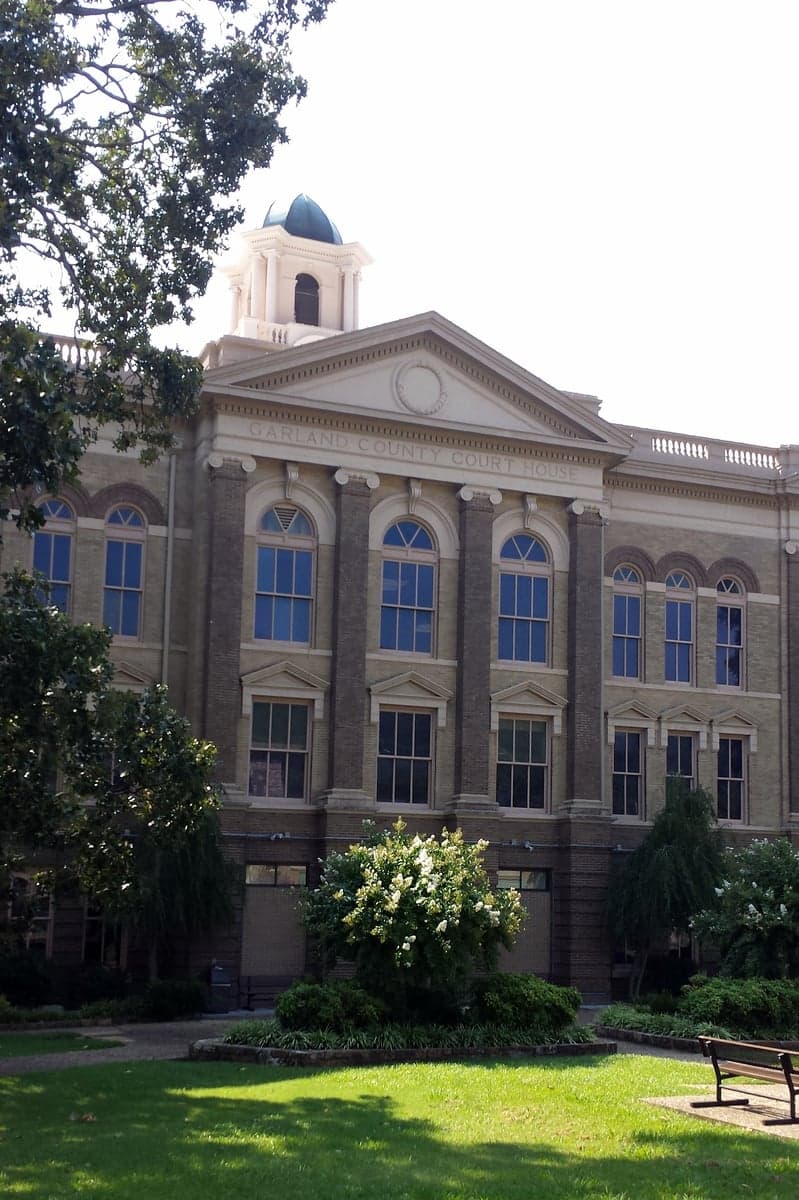
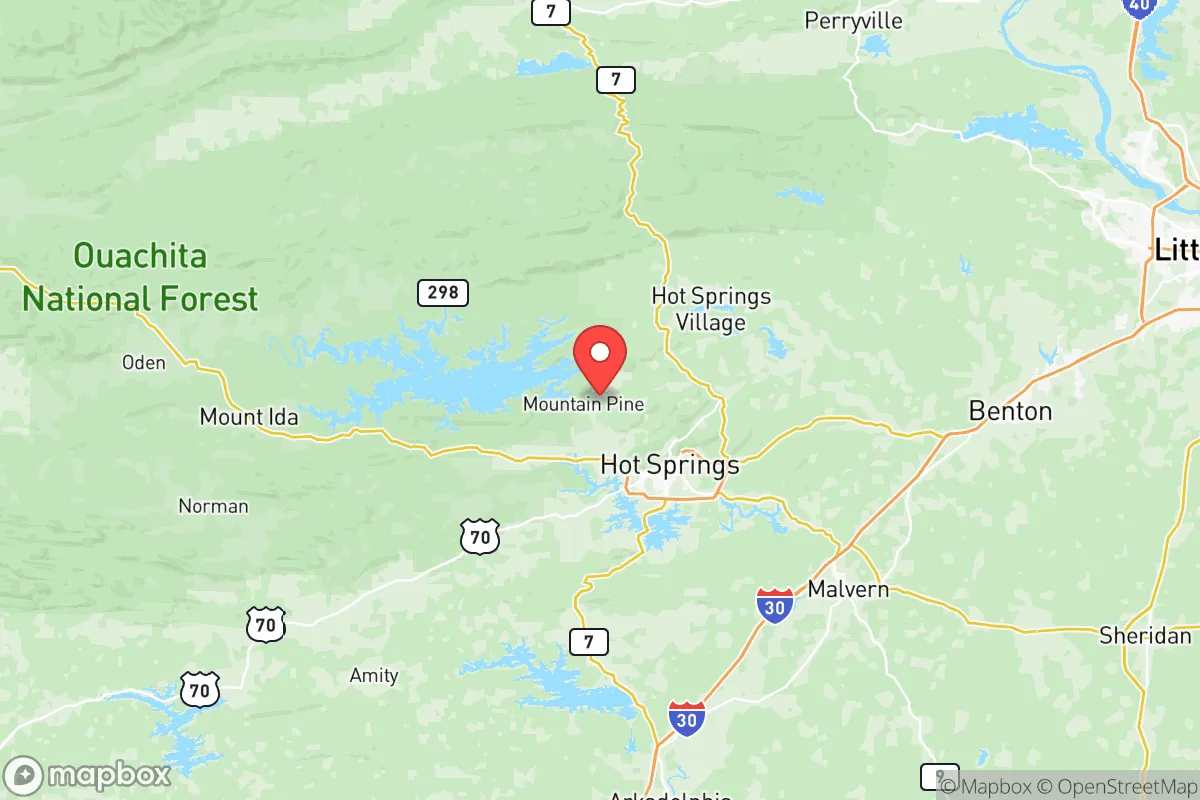
The people of Garland County, Arkansas, today number just over 100,000, forming a predominantly white (79.8%) and politically conservative community centered on the tourist hub of Hot Springs and its surrounding towns. With a low foreign-born share of 2.3% and a modest college attainment rate of 26.2%, the county’s identity is rooted in a blend of Ozark mountain heritage, a historic resort economy, and a slow but steady diversification driven by Hispanic (7.2%) and Black (7.8%) populations. This is a place where the legacy of 19th-century settlers and 20th-century spa visitors still shapes daily life, even as new residents arrive from other parts of Arkansas and the broader Sun Belt.
Settlement & growth (pre-1960)
Long before European arrival, the area now known as Garland County was part of the ancestral homeland of the Caddo and Quapaw nations, who used the region’s natural hot springs for centuries as a neutral gathering ground for healing and trade. The first permanent non-Native settlers arrived in the early 1800s, primarily Scots-Irish and English families moving west from the Appalachian frontier. These early homesteaders, drawn by cheap land and the promise of the Ouachita Mountains’ timber and game, established small farming communities like Mountain Pine and Pearcy in the 1830s and 1840s.
The creation of Hot Springs National Park in 1832—the oldest federal reserve in the U.S.—transformed the area’s destiny. By the 1850s, the town of Hot Springs itself was a booming health resort, attracting wealthy Southerners and Northerners alike to its thermal baths. The post-Civil War period saw a significant influx of freed African Americans, many of whom settled in Hot Springs’ “West End” neighborhood and worked as laborers, servants, and later as small business owners in the growing tourist economy. By 1900, Hot Springs had become a notorious but prosperous vice haven, with illegal gambling and speakeasies drawing a transient population of gangsters, entertainers, and politicians—a demographic that was largely white and male, but also included a notable Black middle class that ran many of the city’s service establishments.
The early 20th century brought a wave of European immigrants, though in smaller numbers than in industrial cities. Italian and Irish immigrants arrived to work on the railroad and in the timber industry, settling in Fountain Lake and Lake Hamilton areas. The 1920s and 1930s saw Dust Bowl migrants from Oklahoma and Texas—often called “Okies”—move into the county, finding work in the sawmills and on the newly constructed Lake Hamilton and Lake Catherine dams. These newcomers were overwhelmingly white and Protestant, reinforcing the county’s cultural conservatism. By 1950, Garland County’s population had reached 39,000, with Hot Springs as the undisputed urban center and the surrounding rural areas—Royal, Lonsdale, and Jessieville—remaining small, tight-knit farming and timber communities.
Modern era (post-1965)
The 1965 Hart-Cellar Act had a muted direct effect on Garland County, as the area never became a major destination for post-1965 immigration. The foreign-born population remains low at 2.3%, far below the national average. However, the county has experienced significant domestic migration since the 1970s, driven by retirees from the Midwest and Rust Belt seeking the mild climate and low cost of living around the lakes. This “lake retirement” wave concentrated in Hot Springs Village—a massive gated retirement community founded in 1970 that now houses over 12,000 residents, overwhelmingly white and over 55. This influx has kept the county’s white share high and its median age elevated.
The Hispanic population has grown steadily since the 1990s, rising to 7.2% today. Most are Mexican-American families drawn by construction, hospitality, and landscaping jobs in the Hot Springs metro area. They have concentrated in Hot Springs’ south side and in the unincorporated community of Piney, where a small but growing Spanish-language commercial corridor has emerged. The Black population, at 7.8%, remains concentrated in the historic West End of Hot Springs, though some middle-class Black families have moved to newer subdivisions in Lake Hamilton and Fountain Lake school districts. East/Southeast Asian communities (0.5%) and Indian-subcontinent residents (0.3%) are very small, mostly professionals working at the local hospitals or the National Park, with no distinct ethnic enclave. The county has seen little of the coastal or tech-industry migration that has reshaped Northwest Arkansas, remaining a relatively insular, retirement-and-tourism-driven economy.
The future
Garland County’s population is projected to grow modestly, reaching roughly 105,000–110,000 by 2035, driven primarily by continued domestic in-migration of retirees and remote workers from higher-cost states. The Hispanic share is likely to rise to 9–10% as younger families settle in to fill service-sector gaps, while the white share will gradually decline from its current 79.8%. The Black population is expected to remain stable or grow slightly, as younger Black Arkansans move from the Delta region to the county’s more stable economy. The county will not become a diverse melting pot; rather, it will remain a predominantly white, conservative, and older community, with pockets of diversity in Hot Springs proper. New residential development is concentrating in the Hot Springs Village expansion areas and along the Highway 7 corridor north of the city, while the rural towns of Mountain Pine and Pearcy continue to lose population to urban consolidation.
For someone moving in now, Garland County offers a stable, low-crime, and culturally traditional environment where the pace of change is slow. The population is aging, but the influx of remote workers and retirees from the Midwest is bringing new economic energy to Hot Springs. The county’s future is not one of rapid transformation but of gradual, managed growth—a place where the historic character of the Ouachita Mountains and the thermal springs will remain the central draw for decades to come.

* Values derived from national, state, county, city and local statistics and may differ in a specific area. Last updated: 2026-06-28T23:09:21.000Z
Narrative content on this page is AI-generated and may contain mistakes. Verify any details that matter before acting on them.
ReloMaps may earn a commission from affiliate links at no extra cost to you.

