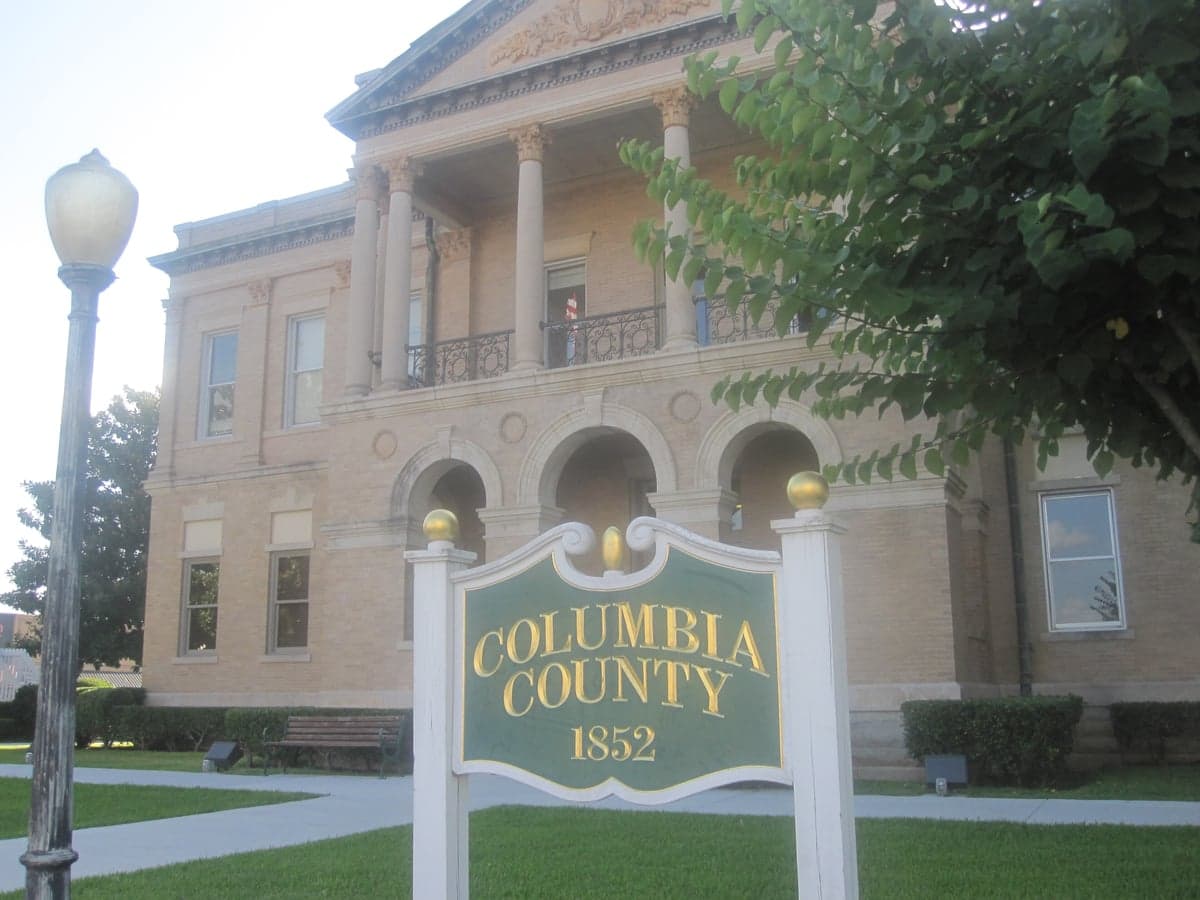
Photo: Wikipedia
Quality of Life in Columbia County
A livable area that tracks near national norms for affordability, walkability, and neighborhood health.
What does Quality of Life tell us?
Quality of Life measures an area by evaluating factors like cost of living, nearby amenities, country club access, airport proximity, socioeconomic signals and neighborhood character. For large states, this is a general average — quality of life can vary dramatically between metro areas, suburbs, and rural communities within the same state.
What does this tell us?
Quality of Life measures an area by evaluating factors like cost of living, nearby amenities, country club access, airport proximity, socioeconomic signals and neighborhood character. For large states, this is a general average — quality of life can vary dramatically between metro areas, suburbs, and rural communities within the same state.
Cost of Living
47% below national average
117%
The Real Cost of Living in Columbia County for 2026
| Tier | Individual | Family (4) |
|---|---|---|
| Survival | $10k | $19k |
| Comfortable | $28k | $40k |
| Luxury | $86k+ | $133k+ |
| Elite (Top 5%) | $109k+ | $169k+ |
Quality-of-Life Analysis
Columbia County, Arkansas offers a quality-of-life spectrum that ranges from the historic, amenity-rich hub of Magnolia to quiet unincorporated crossroads and working farmlands, attracting everyone from university faculty and healthcare professionals to retirees seeking low costs and families wanting space. The county’s overall cost of living index sits at a remarkably low 53 (100 is the U.S. average), with a median home value of $141,700 and median rent of just $631, making the entire county affordable but with distinct trade-offs in convenience and pace of life between its population centers and its rural pockets.
Largest town(s) & population centers
Magnolia is the county seat and by far the largest population center, home to roughly 12,000 residents and the economic and cultural heart of Columbia County. Daily life here revolves around Southern Arkansas University (SAU), which brings a steady flow of students, faculty, and cultural events to the community, and major employers like Murphy USA’s corporate headquarters and the local medical center. Residents enjoy a compact downtown with locally owned restaurants, a historic square, and big-box retail along U.S. 82. The average commute in the county is a short 21.9 minutes, and in Magnolia itself most errands are a five-to-ten-minute drive. The town offers a solid K-12 public school system and a range of housing from historic homes near the SAU campus to newer subdivisions on the outskirts, all at a median home value well below the national figure.
Smaller towns & rural pockets
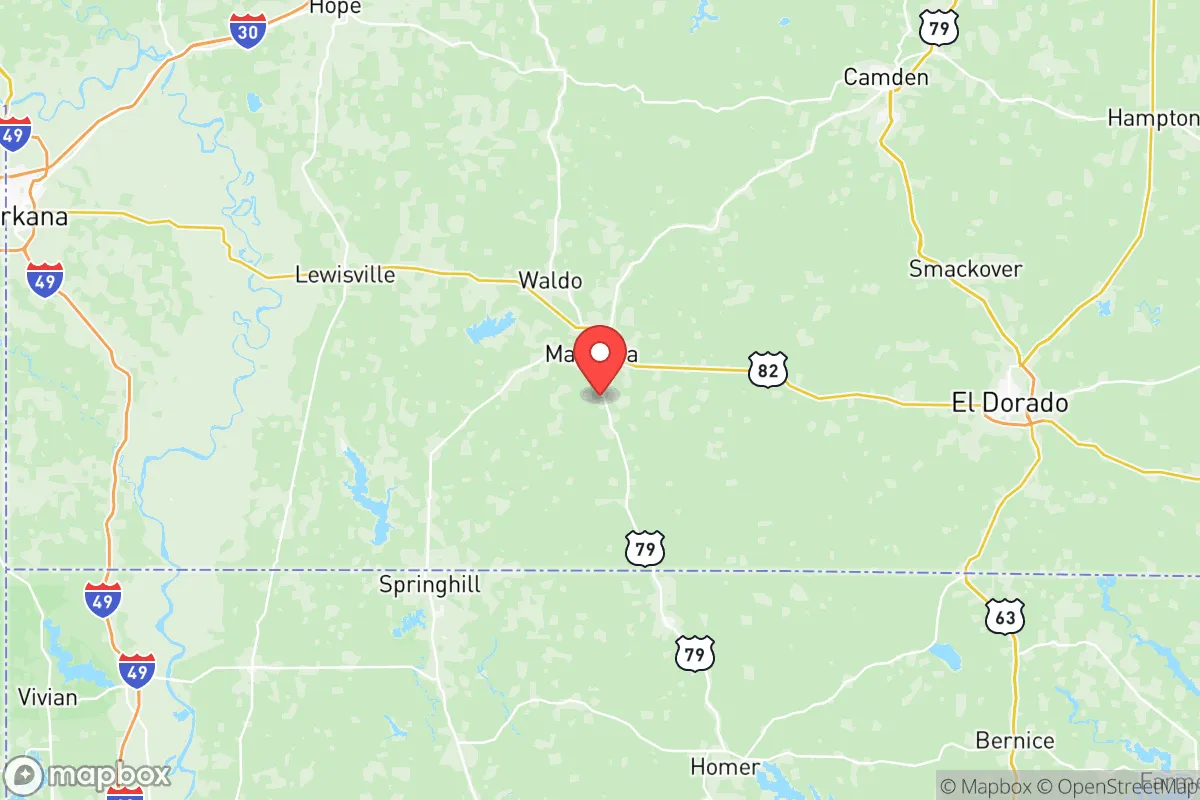
Outside Magnolia, the county’s smaller communities offer a quieter, more self-reliant lifestyle. Waldo, about 10 miles northeast, is a small town of roughly 1,300 residents with a historic downtown core, a few local businesses, and a strong sense of community anchored by its school system. Taylor, even smaller at around 550 people, sits along the county’s northern edge and offers little more than a post office and a handful of churches — daily life here means driving into Magnolia or even to Springhill, Louisiana for most shopping and services. Emerson, in the southern part of the county, is a quiet unincorporated community where many residents work in the timber industry or commute to Magnolia. These areas are characterized by larger lots, older manufactured homes alongside traditional site-built houses, and a pace of life dictated by the seasons and farm work rather than a town clock.
Cost & lifestyle range
The cost spread across Columbia County is narrow in absolute terms but meaningful in lifestyle impact. At the higher end, Magnolia’s newer subdivisions — such as those near the SAU golf course or along the eastern bypass — see home values from $180,000 to $250,000, still far below national averages but offering modern floor plans, paved streets, and proximity to schools and hospitals. At the lower end, rural properties in areas like Mount Holly or Village can be had for under $80,000, often with acreage but requiring a longer drive for groceries and medical care. Renters pay a median of $631 per month countywide, but in Waldo or Taylor, rental options are scarce and often older; Magnolia offers the widest selection of apartments and rental houses, including units near SAU popular with students. Utility costs are slightly below the national average, and property taxes in Arkansas are among the lowest in the region, further stretching a fixed income or modest salary.
Families and professionals who want a walkable downtown, university amenities, and a short commute tend to settle in Magnolia proper. Retirees, hunters, and those who value land and privacy over convenience find their fit in the county’s smaller towns and rural stretches, where the low cost of living and quiet roads are the primary draws. Anyone who needs frequent access to major urban amenities — such as a regional airport, specialty medical care, or a wide variety of dining — will find Columbia County limiting, but for those who prioritize affordability, community, and a slower pace, the county offers a clear choice between small-town energy and genuine rural solitude.

Crime in Columbia County
Crime rates similar to the national median for U.S. locations.
Violent CrimeViolent Crime Analysis
Property CrimeProperty Crime Analysis
Crime Analysis
Columbia County, Arkansas, reports a violent crime rate of 523.1 incidents per 100,000 residents and a property crime rate of 1,634.7 per 100,000, placing it above both state and national averages for violent offenses. The county seat of Magnolia and the smaller communities of Waldo, Taylor, and Emerson collectively shape this safety profile, with the majority of reported incidents concentrated in Magnolia’s commercial corridors and multi-family housing areas. While property crime is a persistent concern, the violent crime rate is driven primarily by aggravated assaults rather than homicides or robberies, a pattern that reflects broader regional trends in southern Arkansas.
Crime in context
Columbia County’s violent crime rate of 523.1 per 100,000 is roughly 50% higher than the national average of approximately 380 per 100,000 and significantly exceeds the Arkansas state average of around 530 per 100,000. Property crime in the county, at 1,634.7 per 100,000, sits slightly below the state average of roughly 2,100 per 100,000 but remains elevated compared to the safest rural counties in the region. For context, neighboring Lafayette County reports a violent crime rate near 300 per 100,000, while Union County to the east hovers around 480 per 100,000. The disparity is partly attributable to Magnolia’s role as a regional retail and education hub—home to Southern Arkansas University—which draws transient populations and concentrates economic activity, a dynamic that often correlates with higher theft and assault rates in smaller cities. By contrast, the unincorporated areas around Emerson and Taylor see far fewer incidents, though underreporting in sparsely populated precincts may mask some activity.
What residents experience
Residents of Columbia County most frequently encounter property crimes such as burglary, larceny-theft, and motor vehicle theft, with the latter being a particular nuisance around the SAU campus and Magnolia’s downtown district. Violent crime, while less common, is not rare: aggravated assaults account for roughly 70% of violent incidents, often stemming from domestic disputes or alcohol-fueled altercations rather than stranger-on-stranger attacks. The county’s judicial system, overseen by the 13th Judicial District, has historically taken a moderate-to-conservative approach to sentencing, but progressive-leaning policies in nearby larger jurisdictions—such as those in Union County and the Texarkana area—can influence regional parole and diversion patterns, potentially allowing repeat offenders to cycle back into smaller communities like Waldo or Stephens. Residents in Magnolia’s older neighborhoods near the city center report higher rates of vandalism and trespassing, while those in the county’s outlying areas, particularly around McNeil and Village, describe a quieter environment with occasional theft from vehicles or farm equipment.
Neighborhood-level variation is pronounced in Columbia County. The safest areas tend to be the rural precincts west of Magnolia, including the Emerson and Taylor communities, where violent crime is nearly nonexistent and property crime is limited to isolated incidents. Conversely, the highest-risk zones are concentrated in Magnolia’s central wards, especially along North Jackson Street and the commercial strip near U.S. Route 82, where late-night businesses and apartment complexes see disproportionate police activity. The SAU campus itself maintains a relatively low crime rate due to dedicated campus security, but off-campus student housing in the surrounding blocks experiences elevated theft and occasional assault reports. For prospective residents, choosing a home in the county’s unincorporated areas or smaller towns like Waldo (population ~1,300) can substantially reduce exposure to both violent and property crime, though it also means longer response times from the Columbia County Sheriff’s Office, which covers over 766 square miles with limited patrol density.
* Values derived from national, state, county, city and local statistics and may differ in a specific area. Last updated: 2026-06-23T12:51:58.000Z
Narrative content on this page is AI-generated and may contain mistakes. Verify any details that matter before acting on them.
ReloMaps may earn a commission from affiliate links at no extra cost to you.

